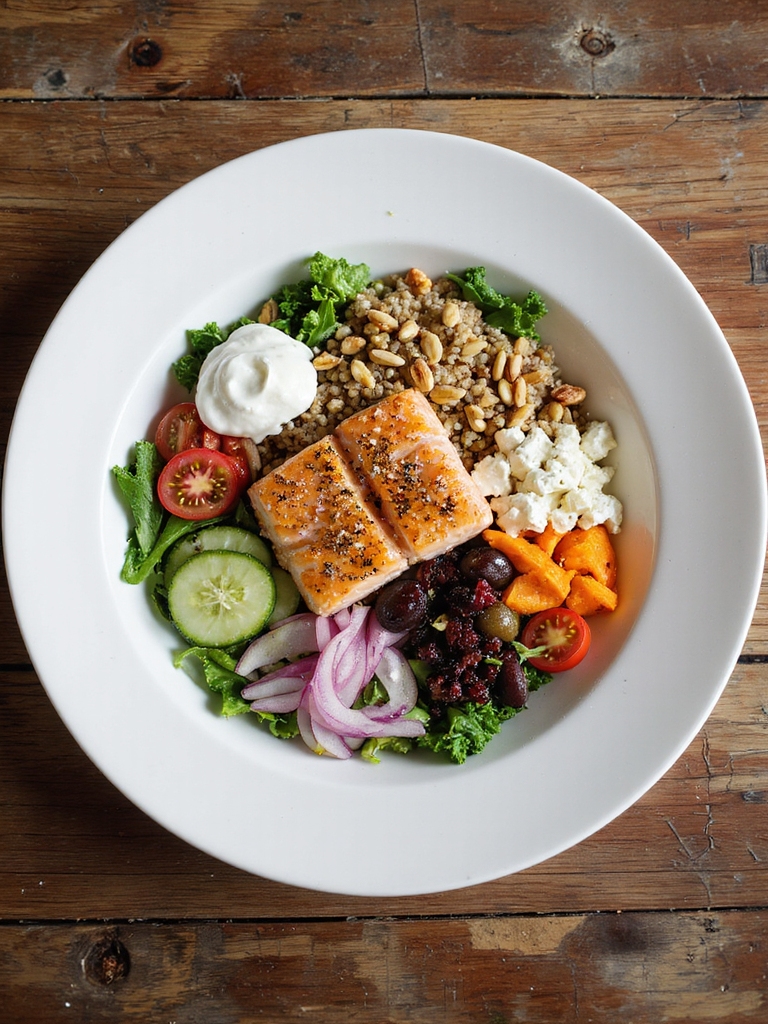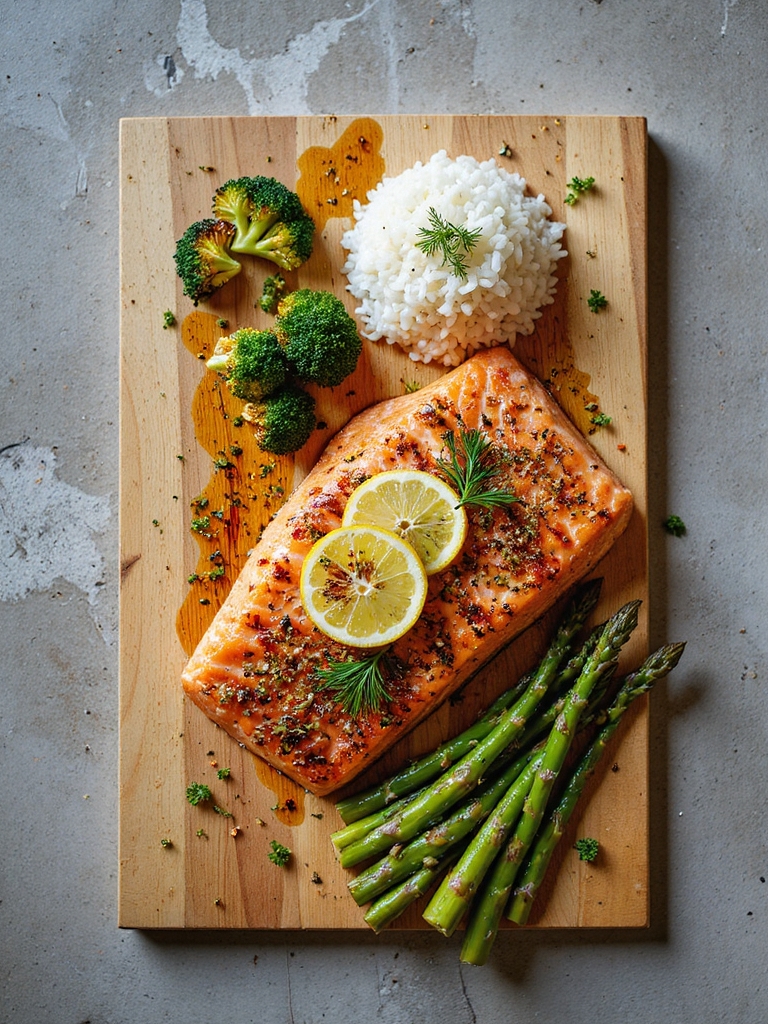
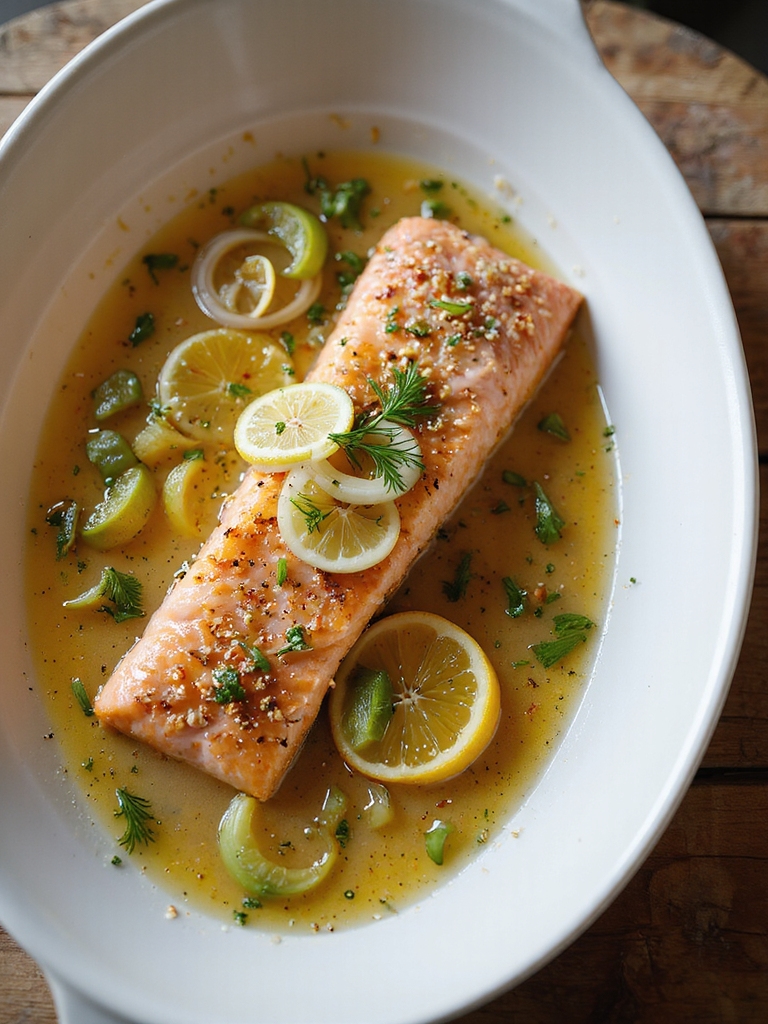
I love how oven‑baked salmon makes me look like a kitchen pro with almost no fuss; I pat the fillet dry, season or glaze it, slide it into a hot oven, and minutes later I’m rewarded with tender, flaky salmon that still sparkles.
I’ll show you choices, timings, glazes, and a few clever tricks to keep it juicy and full of flavor—plus a couple of simple one‑pan ideas that save time and clean‑up—so you can…
Why Oven-Baked Salmon Is the Easiest Way to Impress
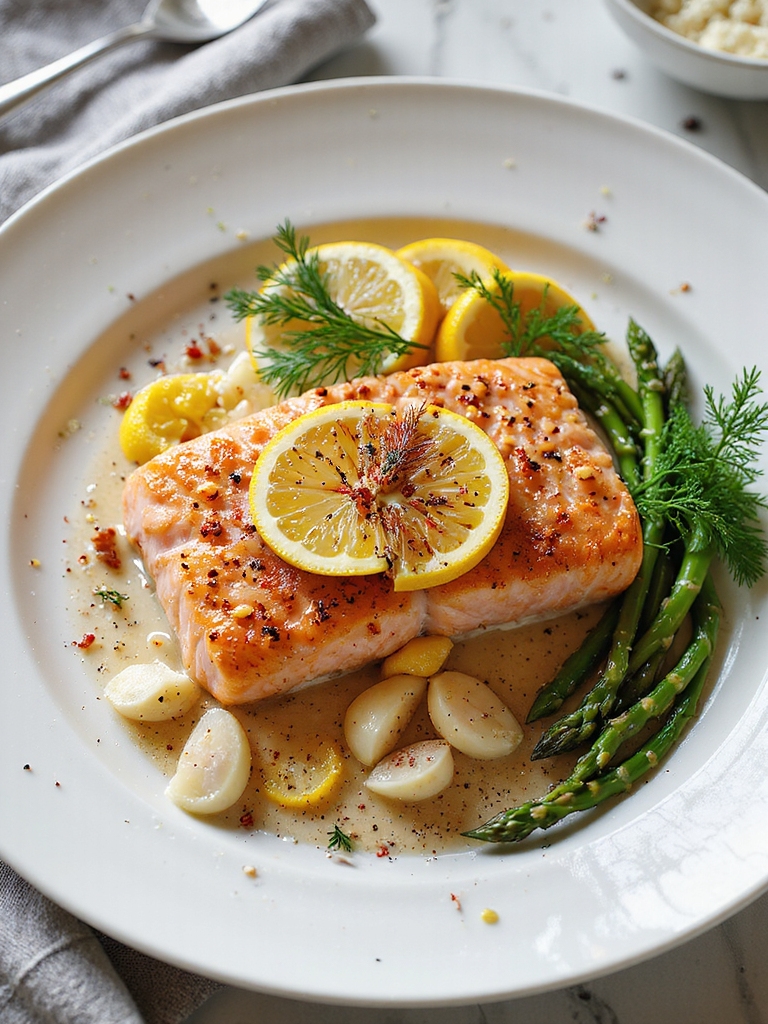
Oven-baked salmon is the easiest way to impress because it requires minimal hands-on time, yields reliably moist fish, and allows for flexible flavors from simple lemon and herbs to bold miso glazes; a short bake at moderate temperature gives tender, flaky salmon with a golden surface, making it perfect for weeknight dinners or entertaining without fuss.
- 1 to 1.5 lb salmon fillet (skin-on or off)
- 1 tbsp olive oil or melted butter
- 1 tsp kosher salt
- 1/2 tsp freshly ground black pepper
- 1 lemon, thinly sliced and halved
- 2 cloves garlic, thinly sliced or minced
- 1 tbsp fresh dill or parsley, chopped (optional)
- 1 tsp honey or maple syrup (optional for glaze)
- 1/2 tsp smoked paprika or lemon zest (optional)
Preheat oven to 400°F (200°C), line a baking sheet with foil or parchment, pat salmon dry and place skin-side down, drizzle with olive oil, season with salt, pepper, garlic and herbs, arrange lemon slices on top, and roast in the center of the oven for 10–14 minutes (10 minutes for rare-medium, up to 14 for well done) until the flesh flakes easily with a fork and reaches 125–135°F for medium doneness.
For a glaze, brush honey or maple syrup mixed with mustard or soy during the last 2–3 minutes of baking and broil 1 minute if you want extra caramelization, then rest the salmon 5 minutes before serving.
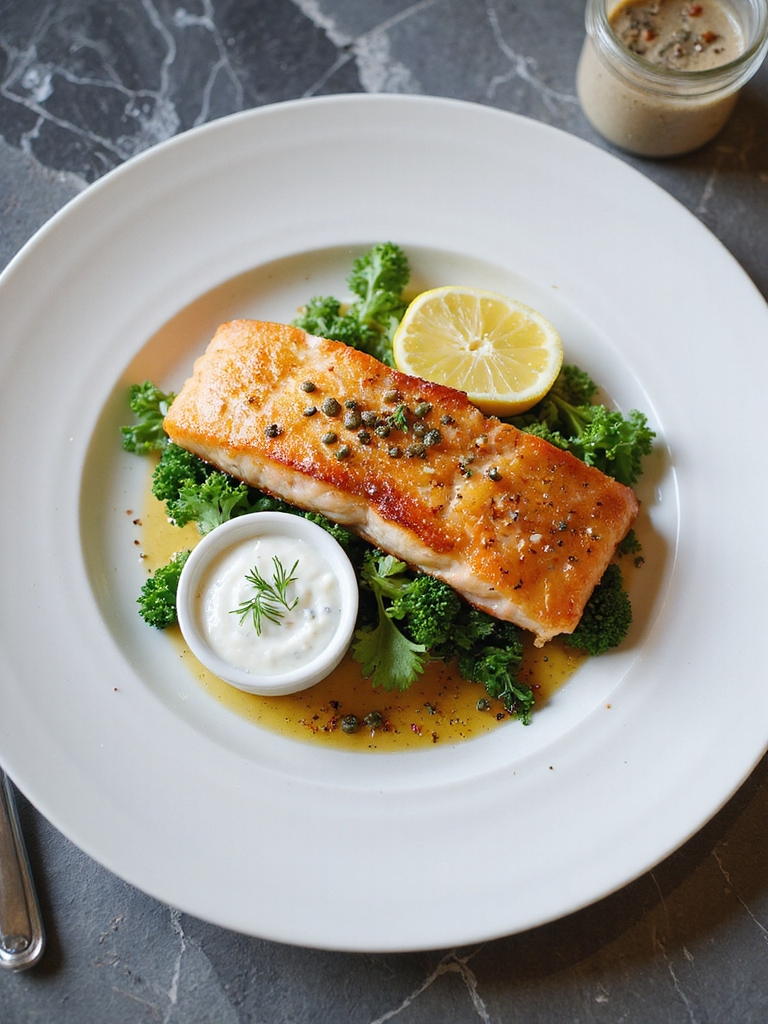
Use a thermometer if you want precise doneness—125–130°F yields moist, slightly translucent center while 140°F is fully firm—and remember residual heat continues to cook during resting; if cooking skin-on, you can crisp the skin by starting skin-side down in a hot skillet for 2 minutes before transferring to the oven.
You can also start the salmon briefly skin-side down in a hot skillet to help crisp the skin before transferring it to the oven.
Choosing the Best Salmon: Wild vs. Farmed and Fresh vs. Frozen
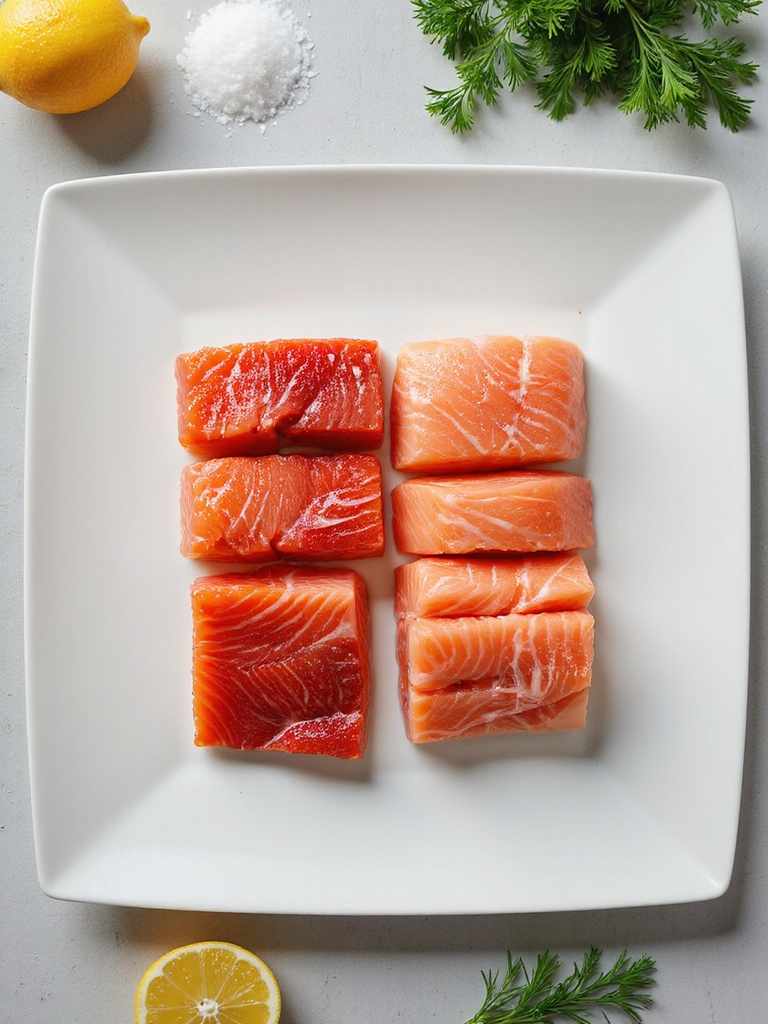
Choosing the best salmon for baking comes down to balancing flavor, sustainability, texture and convenience: wild salmon (e.g., sockeye, coho) offers a firmer texture and brighter flavor while farmed salmon is milder, fattier and often more affordable and available year-round; fresh fillets are ideal but frozen-at-sea, properly thawed salmon can equal fresh in quality — choose bright, firm flesh with no off-odor, opt for skin-on for flavor and easier handling, and consider certified sustainable options (MSC, ASC) if environmental impact matters.
- 1 to 1.5 lb salmon fillet (skin-on preferred)
- 1 tbsp olive oil or melted butter
- 1 tsp kosher salt
- 1/2 tsp freshly ground black pepper
- 1 lemon, thinly sliced
- 2 cloves garlic, thinly sliced or minced
- 1 tbsp fresh dill or parsley, chopped (optional)
- 1 tsp honey or maple syrup (optional for glaze)
- 1/2 tsp smoked paprika or lemon zest (optional)
- 1 sheet parchment or lightly oiled baking tray
Preheat oven to 400°F (200°C) and line a baking sheet with parchment; pat the salmon dry, leave skin on if possible, brush with oil, season with salt, pepper, garlic and herbs, arrange lemon slices on top, and roast in the center of the oven for 10–14 minutes (10 for rare-medium, up to 14 for well done) until the flesh flakes with a fork and reaches 125–135°F for medium, optionally brush glaze during the last 2–3 minutes and broil 1 minute for caramelization then rest 5 minutes before serving.
Tip: If using frozen salmon, thaw it overnight in the refrigerator or under cold running water in its sealed packaging, pat thoroughly dry before seasoning to make certain even browning and proper texture.
Wild salmon tends to be leaner and seasonal, while farmed salmon is available year-round and often has a higher fat content, which can affect cooking times and flavor — choose the type that best fits your taste and cooking plan and look for certified sustainable options when possible.
Essential Tools and Bakeware for Perfect Fillets
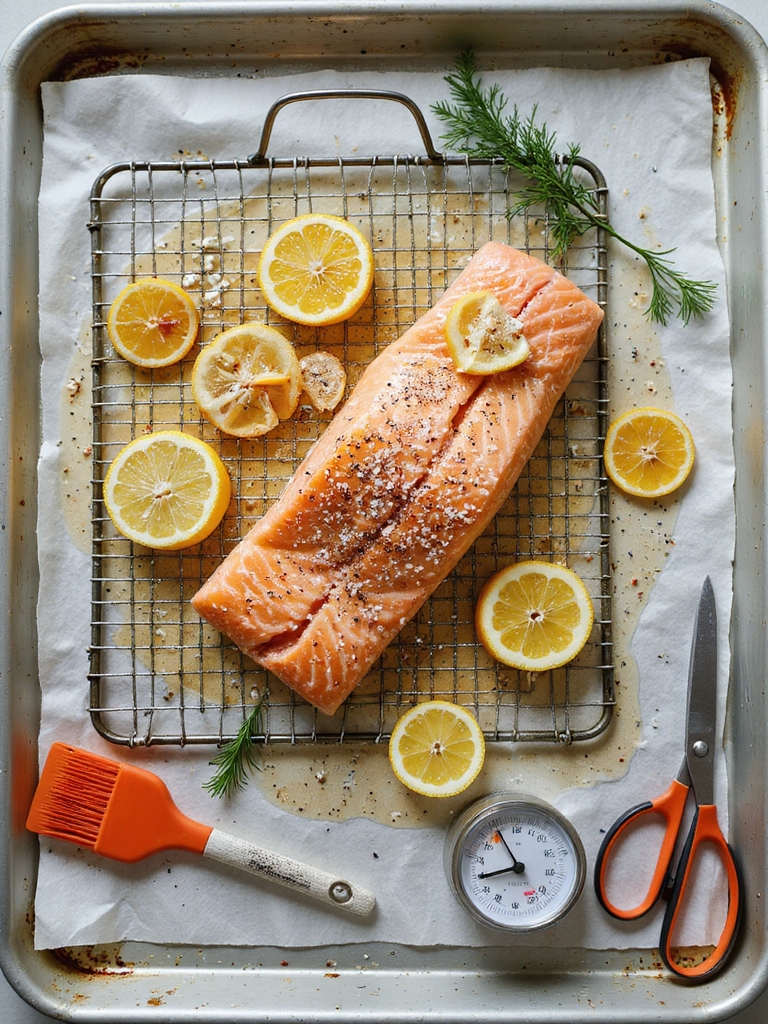
Perfectly baked salmon starts with the right tools and bakeware: choose a rimmed baking sheet or shallow roasting pan for even heat and easy juices, line with parchment or foil for cleanup and to prevent sticking, use a wire rack when you want air circulation under the fillet for crisper skin, keep a reliable instant-read thermometer for accurate doneness, have a nonstick spatula or fish spatula for gentle transfer, and keep small tools like a sharp knife, kitchen shears, silicone basting brush, and tongs handy to prep and finish the fish.
- 1 to 1.5 lb salmon fillet (skin-on)
- 1 tbsp olive oil or melted butter
- 1 tsp kosher salt
- 1/2 tsp freshly ground black pepper
- 1 lemon, thinly sliced
- 2 cloves garlic, thinly sliced or minced
- 1 tbsp fresh dill or parsley, chopped (optional)
- 1 tsp honey or maple syrup (optional)
- 1/2 tsp smoked paprika or lemon zest (optional)
- Parchment paper or aluminum foil
- Rimmed baking sheet or shallow roasting pan
- Wire rack (optional)
- Instant-read thermometer
- Fish spatula or wide nonstick spatula
Preheat oven to 400°F (200°C) and line a rimmed baking sheet with parchment or foil; pat salmon dry, place skin-side down on the sheet or on a wire rack set over the sheet, brush with oil/butter and season with salt, pepper, garlic, herbs and optional glaze, arrange lemon slices atop, roast in the center of the oven for 10–14 minutes until the flesh flakes easily and an instant-read thermometer reads 125–135°F for medium doneness, optionally broil 1 minute at the end for crisping the top, then remove and rest 5 minutes before serving.
Use the wire rack for crisper skin and drainage, always pat thawed or fresh fillets dry to promote browning, insert the instant-read thermometer into the thickest part for true doneness, and avoid overcooking by checking a few minutes early since residual heat will continue to cook the fish. A well-rested fillet will redistribute juices for better texture and flavor, so let it rest for a few minutes before serving and consider a final squeeze of fresh lemon for brightening finished salmon.
Mastering Temperature and Timing for Flaky, Juicy Salmon
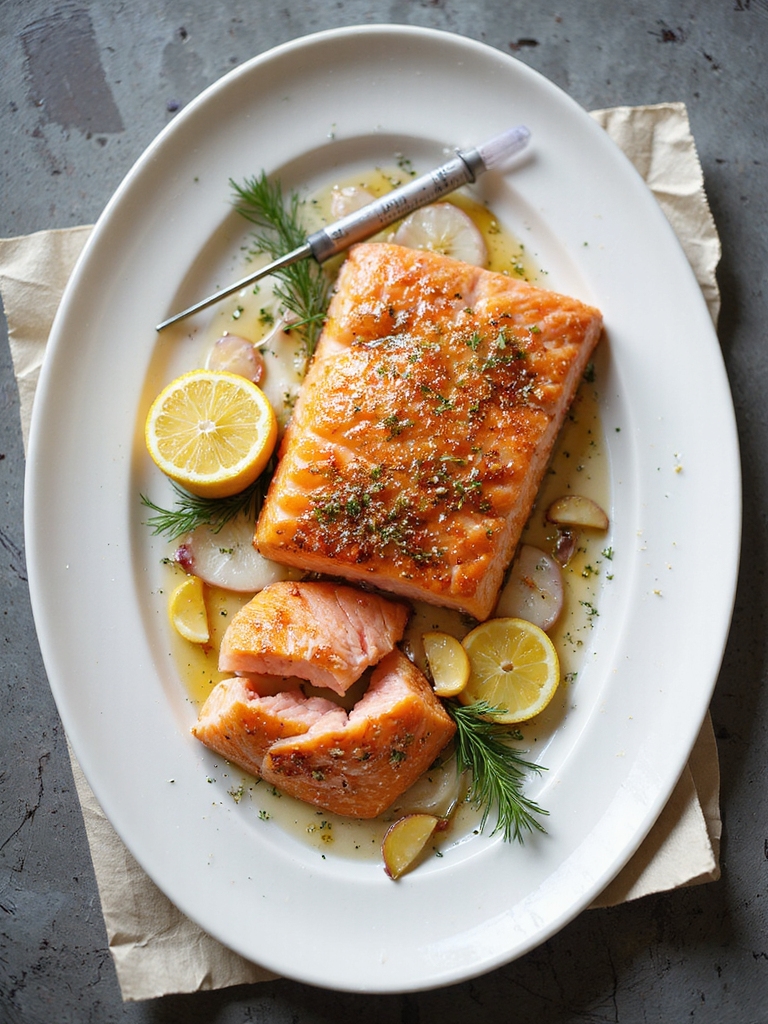
Mastering temperature and timing is the key to flaky, juicy baked salmon: start with a room-temperature, patted-dry skin-on fillet, use high initial heat or a steady moderate oven depending on your desired texture, monitor internal temperature with an instant-read thermometer, and remove the fish a few degrees before your target because carryover will finish cooking while it rests for perfect doneness.
- 1 to 1.5 lb salmon fillet (skin-on)
- 1 tbsp olive oil or melted butter
- 1 tsp kosher salt
- 1/2 tsp freshly ground black pepper
- 1 lemon, thinly sliced
- 2 cloves garlic, thinly sliced or minced
- 1 tbsp fresh dill or parsley, chopped (optional)
- 1 tsp honey or maple syrup (optional)
- 1/2 tsp smoked paprika or lemon zest (optional)
Preheat oven to 425°F (220°C) for a quicker, slightly crisp exterior or 400°F (200°C) for a gentler bake; place the salmon skin-side down on a parchment-lined rimmed sheet (or wire rack), brush with oil/butter and season, insert an instant-read thermometer into the thickest part, roast 8–12 minutes until the thermometer reads 120–125°F for rare, 125–135°F for medium, or 140°F for well done, then remove and tent loosely to rest 3–5 minutes allowing carryover to raise the temp 3–5°F before serving.
Tip: For even cooking, bring the fillet to room temperature before baking, always pat it very dry to encourage browning, check temp in the thickest part, and remember residual heat will continue to cook the fish so pull it out slightly under your final desired temp. For an easy, reliable method, try baking on a parchment-lined sheet to prevent sticking and simplify cleanup.
Simple Marinades and Dry Rubs for Everyday Flavor
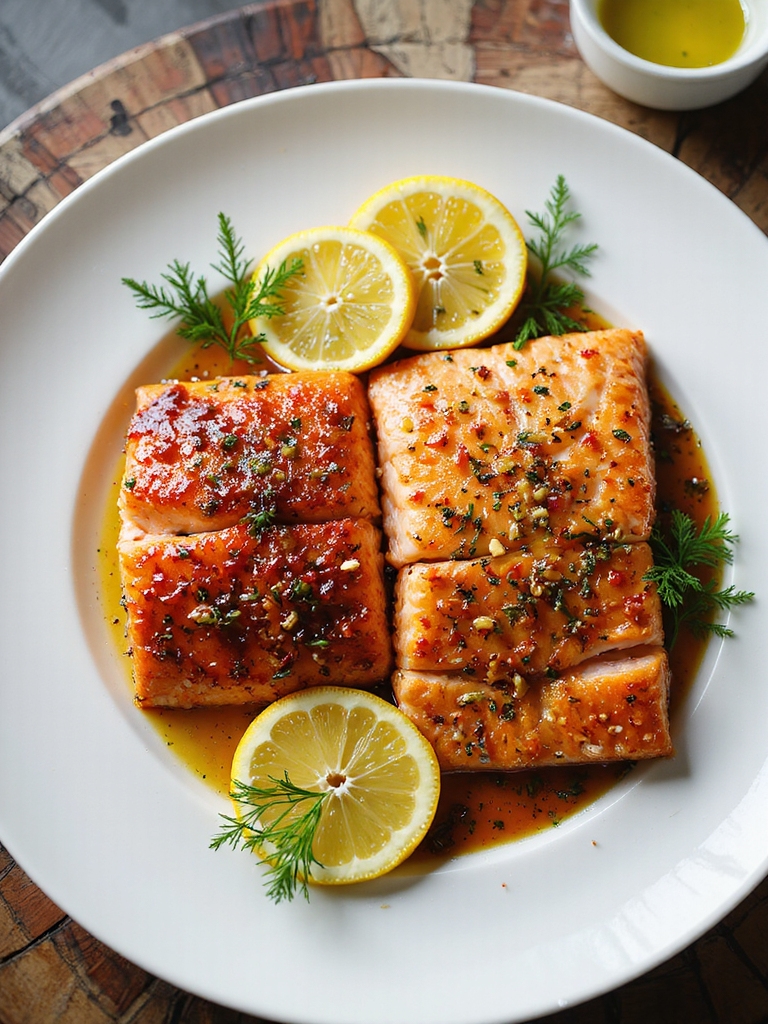
A quick, flavorful baked salmon that uses a versatile simple marinade or dry rub to amp up everyday meals: choose a short 15–30 minute marinade of olive oil, lemon, garlic and herbs for bright, tender flesh or a dry rub of smoked paprika, brown sugar, salt and pepper for a caramelized crust; both approaches are ideal for 1–1.5 lb skin-on fillets and pair well with roasted vegetables or a crisp salad.
- 1 to 1.5 lb salmon fillet (skin-on)
- 1 tbsp olive oil (for marinade) or 1 tbsp melted butter (optional)
- 1 tbsp lemon juice (for marinade) or 1 tsp lemon zest (for rub)
- 2 cloves garlic, minced (marinade) or 1/2 tsp garlic powder (rub)
- 1 tsp kosher salt
- 1/2 tsp freshly ground black pepper
- 1 tsp smoked paprika (rub) or 1 tbsp chopped fresh dill/parsley (marinade)
- 1 tsp brown sugar or honey (optional for rub/marinade)
- 1/4 tsp crushed red pepper flakes (optional)
Pat the salmon dry and either toss marinade ingredients together, coat the fillet and refrigerate 15–30 minutes (no longer for acidic marinades) or rub dry mix evenly over the flesh.
Then preheat oven to 400°F (200°C), place skin-side down on a parchment-lined rimmed sheet, roast 8–12 minutes until an instant-read thermometer reads 120–135°F depending on desired doneness, remove and tent loosely to rest 3–5 minutes before serving; serve with lemon slices and fresh herbs.
Tip: If using a sugary rub, watch closely near the end of baking to prevent burning and always bring the salmon briefly to room temperature and pat dry before seasoning for the most even cooking and best crust.
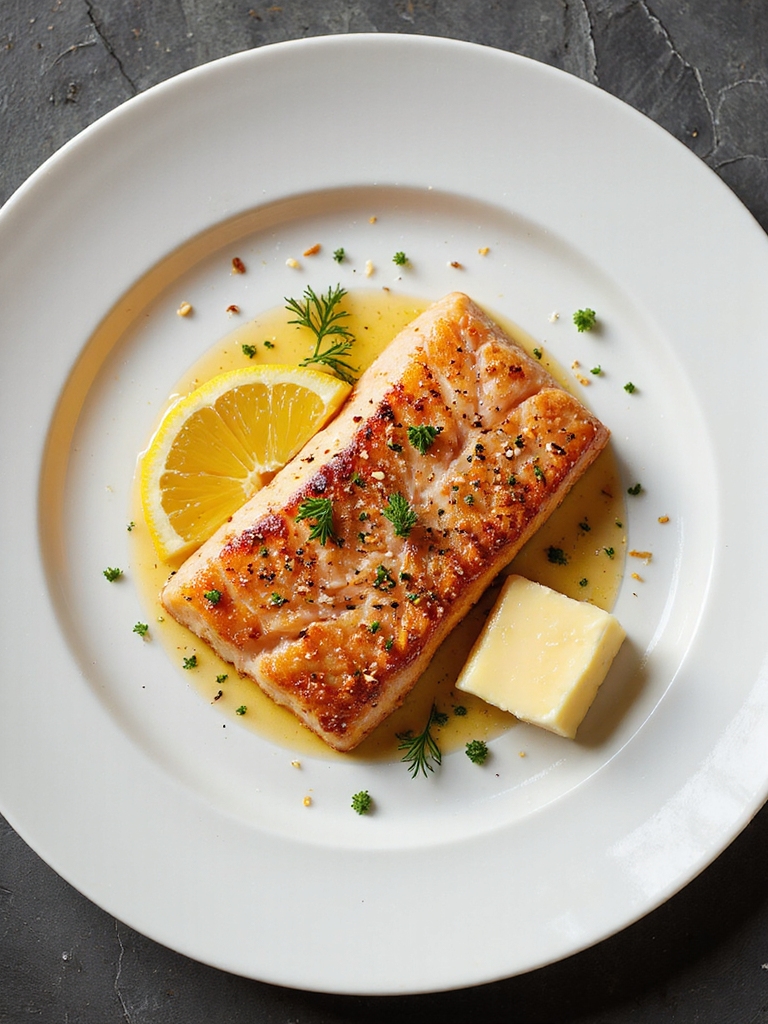
Garlic butter adds rich flavor and helps keep the fish moist when baked, making it ideal for finishing with a pat of garlic butter.
Citrus and Herb Pairings That Brighten Every Bite
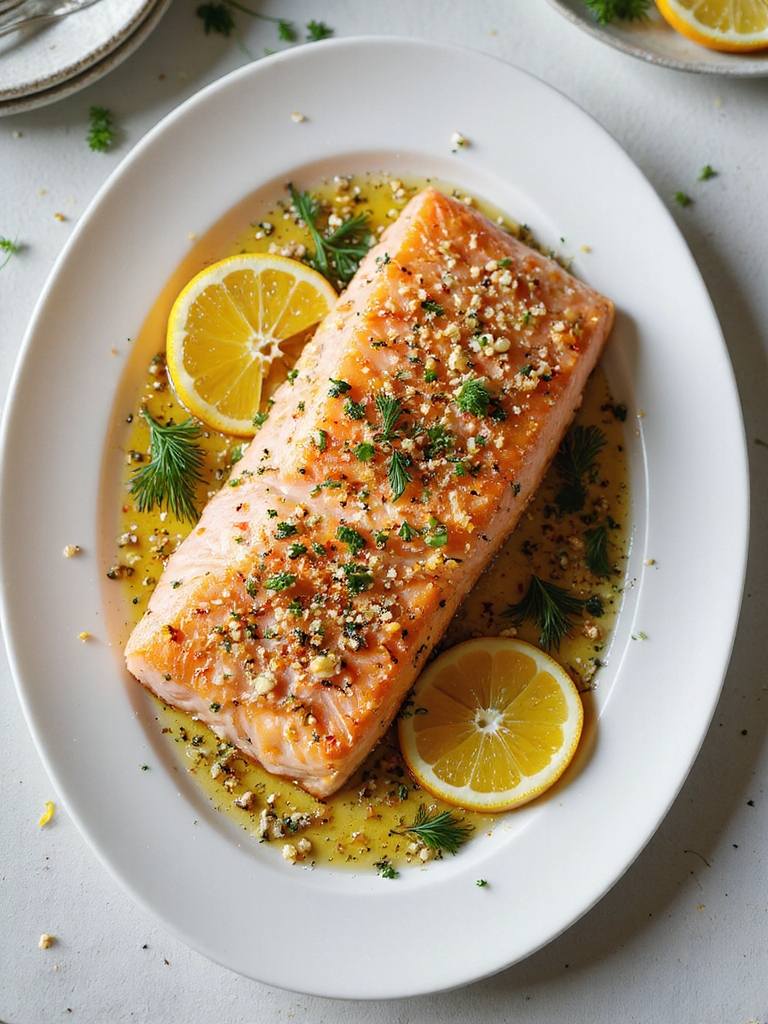
Bright, aromatic citrus and herb–crusted baked salmon brings a lively, fresh flavor to weeknight meals or dinner guests; a short bright marinade of orange and lemon with lots of fresh herbs and garlic adds acidity and lift while a finishing squeeze of citrus and chopped herbs keeps the fish vibrant—use skin-on fillets for moist flesh and crisp skin and roast briefly at a high temperature for tender, flaky salmon.
- 1 to 1.5 lb salmon fillet (skin-on)
- 1 tbsp olive oil
- 1 tbsp lemon juice
- 1 tbsp orange juice
- 1 tsp lemon zest
- 1 tsp orange zest
- 2 cloves garlic, minced
- 2 tbsp chopped fresh parsley
- 2 tbsp chopped fresh dill
- 1 tbsp chopped fresh basil or tarragon
- 1 tsp kosher salt
- 1/2 tsp freshly ground black pepper
- 1/4 tsp crushed red pepper flakes (optional)
Preheat oven to 400°F (200°C); pat salmon dry, whisk together olive oil, citrus juices and zests, garlic, herbs, salt, pepper and red pepper flakes, coat the fillet flesh-side with the mixture and let sit 15–30 minutes in the fridge, then place skin-side down on a parchment-lined rimmed baking sheet and roast 8–12 minutes until an instant-read thermometer reads 120–135°F depending on desired doneness, remove, squeeze a bit more fresh citrus over the top and let rest 3–5 minutes before serving.
Tip: Bring the salmon briefly to room temperature and pat dry before marinating for even cooking, avoid marinating longer than 30 minutes with citrus to prevent texture changes, and watch closely in the last minutes of baking so the herbs don’t burn.
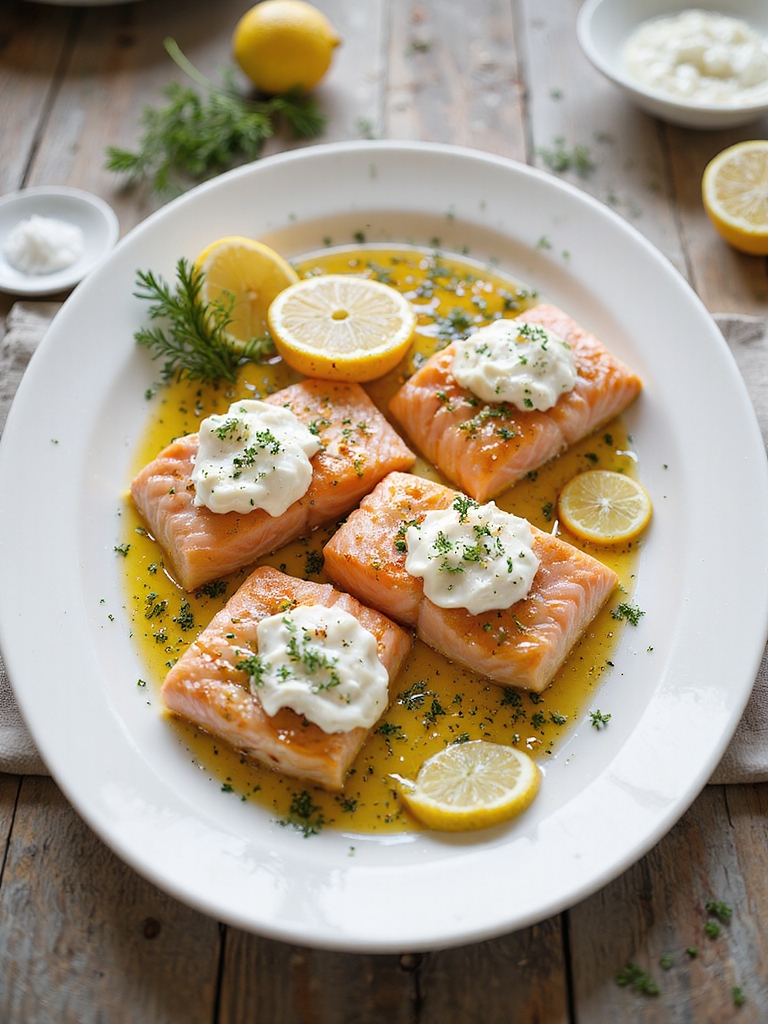
Lemon salmon is a popular choice for its bright flavor and juicy, flaky texture and makes an elegant yet easy main course.
Sweet and Savory Glazes: Honey, Mustard, and Soy Variations
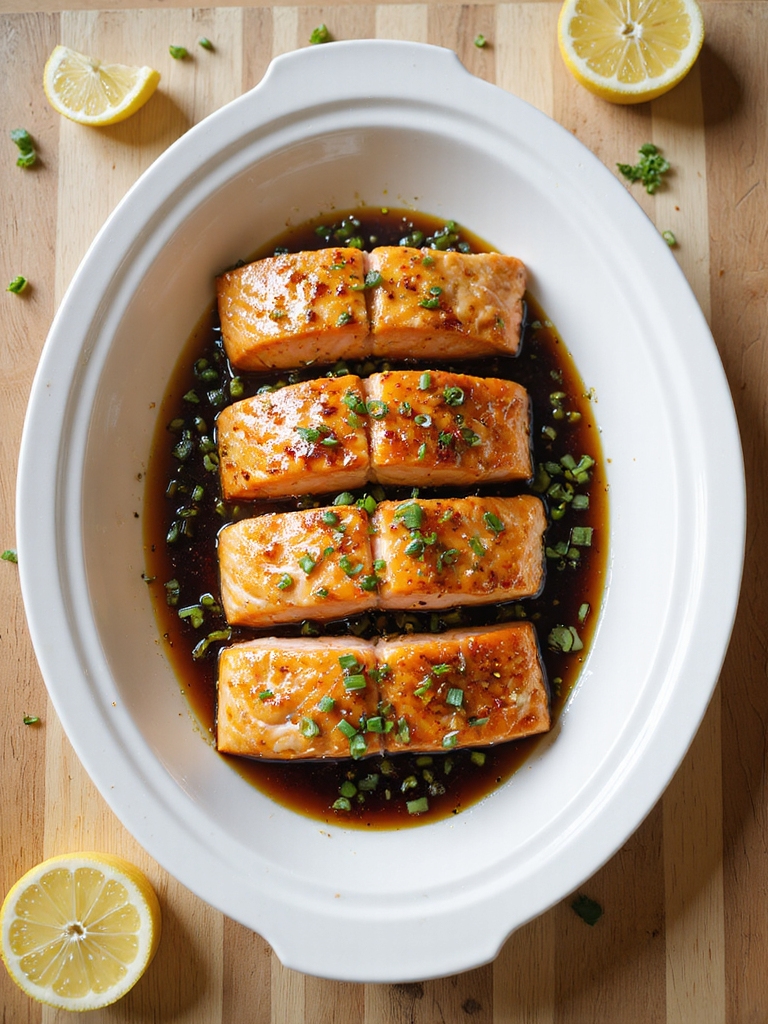
A sticky, sweet-and-salty glaze transforms salmon into a glossy, flavor-packed centerpiece; this recipe layers honey, mustard, and soy (with optional ginger and garlic) to balance sweetness, tang, and umami, and it bakes quickly so the glaze caramelizes without drying the fish—perfect for weeknights or entertaining when you want a simple, impressive dish.
- 1 to 1.5 lb salmon fillet (skin-on)
- 2 tbsp honey
- 1 tbsp Dijon mustard
- 1 tbsp low‑sodium soy sauce
- 1 tsp rice vinegar or lemon juice
- 1 tsp grated fresh ginger (optional)
- 1 clove garlic, minced
- 1 tbsp olive oil
- 1/4 tsp crushed red pepper flakes (optional)
- 1/2 tsp kosher salt
- 1/4 tsp freshly ground black pepper
- 1 tbsp chopped green onion or parsley for garnish
Preheat oven to 425°F (220°C); whisk honey, Dijon, soy sauce, rice vinegar, ginger, garlic, olive oil, red pepper flakes, salt and pepper in a small bowl and pat salmon dry, place skin-side down on a parchment-lined rimmed baking sheet, brush two-thirds of the glaze over the flesh, roast 8–12 minutes depending on thickness until an instant-read thermometer reads 120–135°F, brush with remaining glaze and broil 1–2 minutes if you want extra caramelization, then remove and rest 3–5 minutes before sprinkling with green onion or parsley and serving.
Tip: Pat salmon dry and use skin-on fillets to keep the flesh moist, brush glaze toward the end to prevent burning and watch closely during broiling so the sugars caramelize without charring.
For an even more classic pairing, try using honey mustard made from equal parts honey and Dijon for a bright, balanced glaze.
One-Pan Meals: Roasted Veggies and Salmon Together
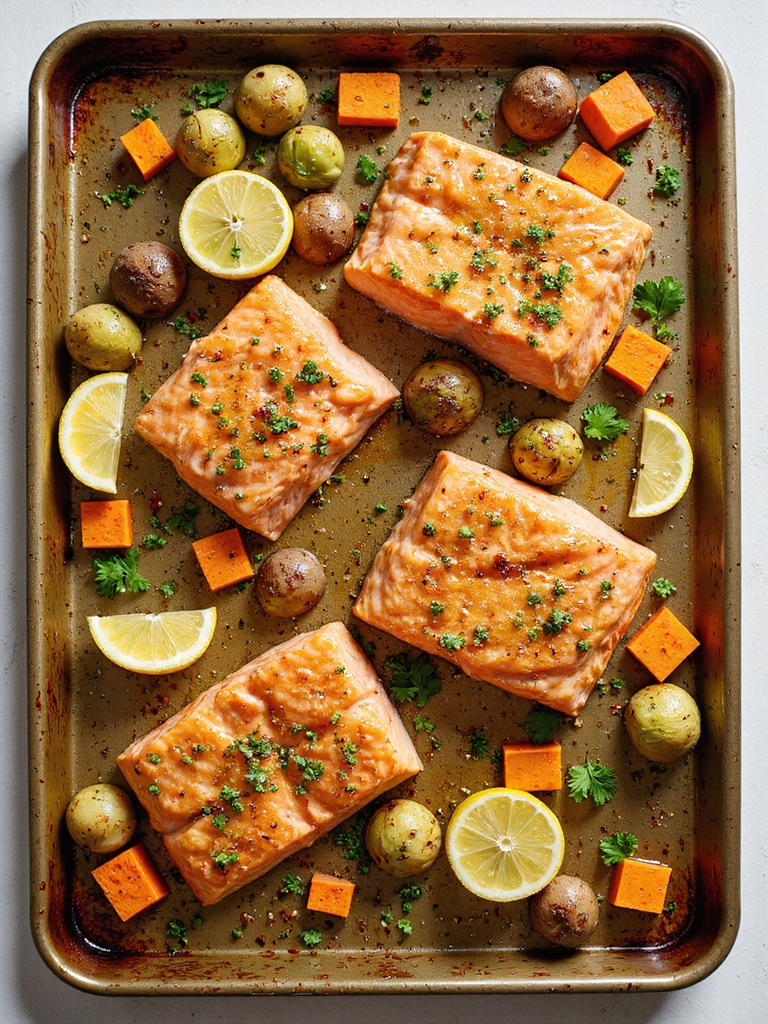
A simple, healthy one-pan roasted salmon and vegetable meal lets the fish cook alongside colorful veggies so everything finishes at once with minimal cleanup; this version uses a sheet pan, olive oil, lemon and herbs to season both salmon and vegetables, and a short blast of high heat to give the vegetables a caramelized edge while keeping the salmon moist and flaky.
- 1 to 1.5 lb salmon fillet (skin-on), cut into 2–3 portions
- 1 lb mixed vegetables (e.g., fingerling potatoes halved, Brussels sprouts halved, carrots sliced, or broccoli florets)
- 3 tbsp olive oil
- 1 tbsp Dijon mustard
- 1 tbsp lemon juice
- 1 tsp lemon zest
- 1 tsp dried thyme or 1 tbsp fresh chopped thyme
- 2 cloves garlic, minced
- 1/2 tsp kosher salt
- 1/4 tsp black pepper
- 1/4 tsp red pepper flakes (optional)
- Lemon wedges and chopped parsley for serving
Preheat oven to 425°F (220°C); toss vegetables with 2 tbsp olive oil, half the garlic, half the thyme, salt and pepper on a rimmed baking sheet and spread in a single layer, roast for 12–15 minutes until beginning to brown.
Meanwhile whisk remaining oil with mustard, lemon juice, zest, remaining garlic, thyme and red pepper flakes and pat salmon dry, arrange salmon skin-side down among the vegetables, brush tops with the lemon-mustard mixture and roast 8–12 more minutes (depending on thickness) until vegetables are tender and salmon registers about 120–135°F for medium; remove, let rest 3–4 minutes, squeeze lemon over and scatter parsley before serving.
Tip: Arrange thicker vegetables or par-cook potatoes so everything finishes together, brush glaze late to avoid burning, and use an instant-read thermometer to prevent overcooking.
This sheet pan method is ideal for busy weeknights because it minimizes hands-on time and cleanup while delivering consistent results with salmon on a sheet pan.
How to Tell When Salmon Is Done Without Overcooking
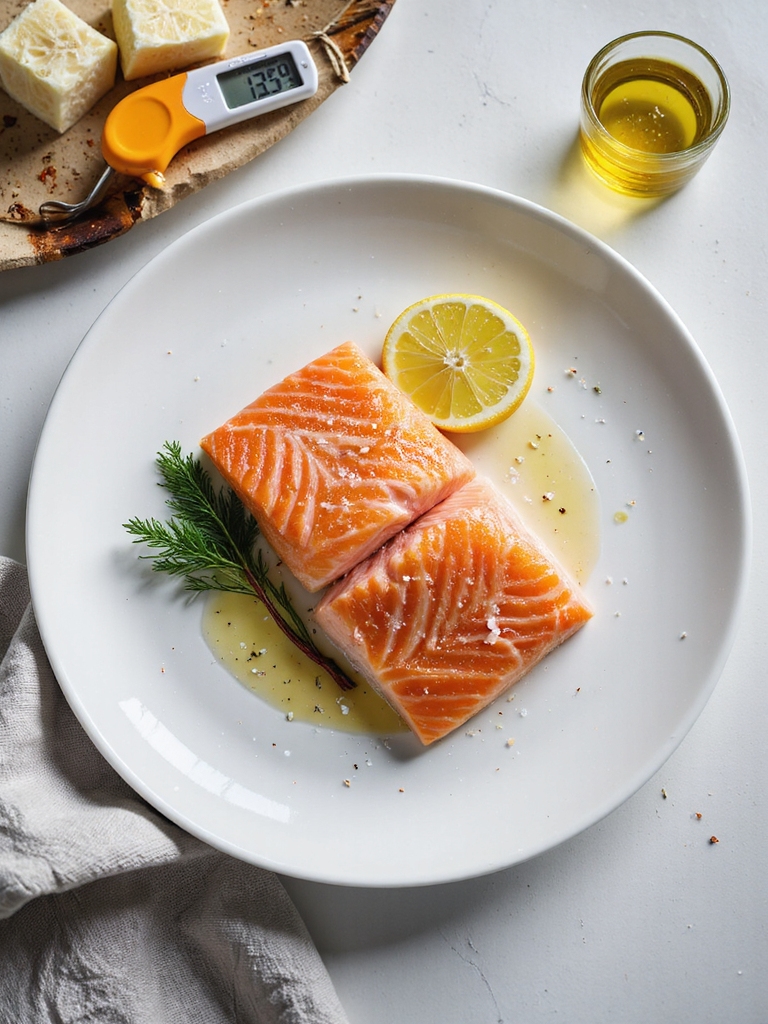
Knowing when salmon is done without overcooking comes from watching texture, color, and internal temperature: aim for 120–135°F (49–57°C) depending on desired doneness, look for opaque flesh that flakes easily but still has a slightly translucent center, and use gentle visual cues like the meat separating into flakes along the muscle lines and juices running clear.
- 1 to 1.5 lb salmon fillet (skin-on), cut into 2–3 portions
- 1 tbsp olive oil
- 1 tsp butter (optional)
- 1 tsp lemon juice
- 1/2 tsp kosher salt
- 1/4 tsp black pepper
- 1/4 tsp smoked paprika or 1/2 tsp fresh dill (optional)
- Instant-read thermometer
Preheat a skillet over medium-high heat and pat salmon dry, season with salt, pepper and paprika or dill, add oil and a small knob of butter to the pan, place salmon skin-side down and cook undisturbed 3–5 minutes until the skin is crisp and the sides start to change color about two-thirds up the fillet, flip and cook 30–90 seconds for rare (about 110–115°F), 1–2 minutes for medium (120–125°F) or 2–4 minutes for well-done (130–135°F), remove from heat when the thermometer reads your target and let rest 3–4 minutes before serving so carryover heat finishes cooking.
Tip: Use the poke test—press lightly with a finger or fork: rare feels soft and springs back very little, medium springs back more and flakes gently, and always rest the fish so the internal temperature evens out and you avoid dryness.
Pan-frying can produce a wonderfully crisp skin and a tender interior when cooked with proper technique, especially using a hot skillet and minimal handling.
Storage, Reheating, and Leftover Salmon Ideas
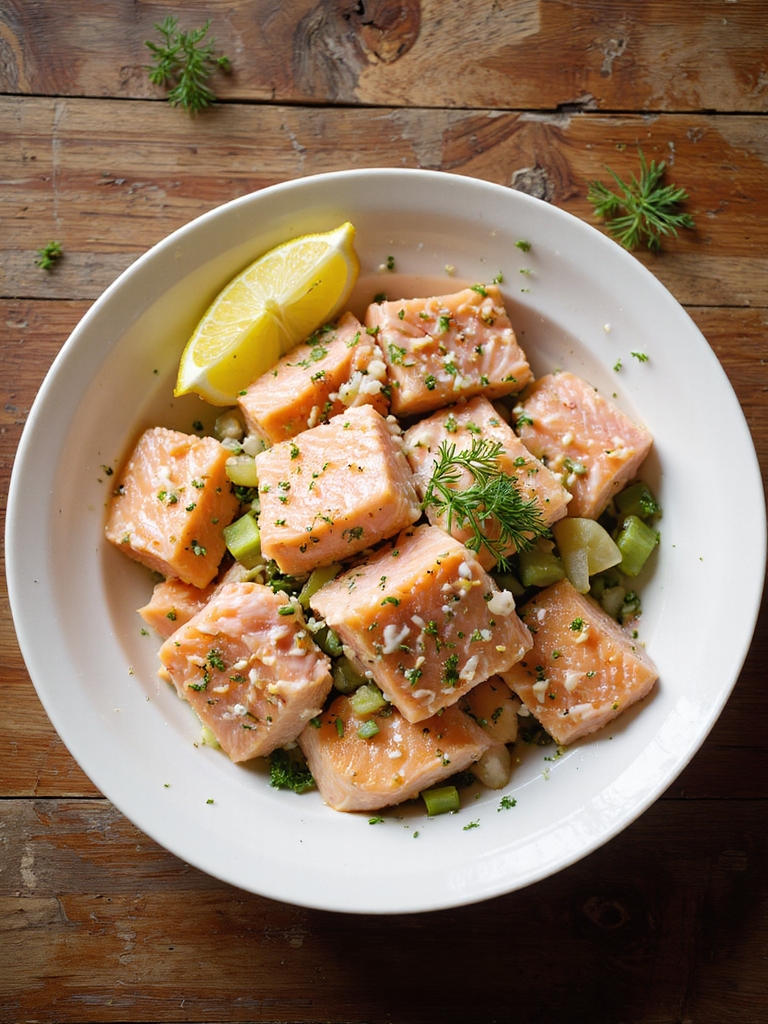
This recipe shows how to store, reheat, and transform leftover baked salmon into a simple, delicious meal-ready approach: gently refrigerate or freeze portions, reheat to preserve moisture, and use leftovers in salads, sandwiches, pasta, or fritters so nothing goes to waste.
- 1 to 1.5 lb cooked baked salmon, flaked into large chunks
- 2 tbsp olive oil or butter (for reheating)
- 1 tbsp lemon juice or vinegar
- 2 tbsp mayonnaise or Greek yogurt (for salads/sandwiches)
- 1 small shallot or 2 tbsp red onion, finely chopped
- 1 stalk celery, finely diced (optional)
- 2 tbsp fresh herbs (dill, parsley, or chives), chopped
- 1/4 tsp kosher salt and 1/8 tsp black pepper
- 1 cup mixed salad greens or 4 slices bread / 8 oz cooked pasta (optional)
To reheat: preheat oven to 275°F (135°C), place salmon in a shallow baking dish, sprinkle with lemon juice, add a splash of water or broth, cover tightly with foil and warm 10–15 minutes until 120–125°F for moist reheated fish;
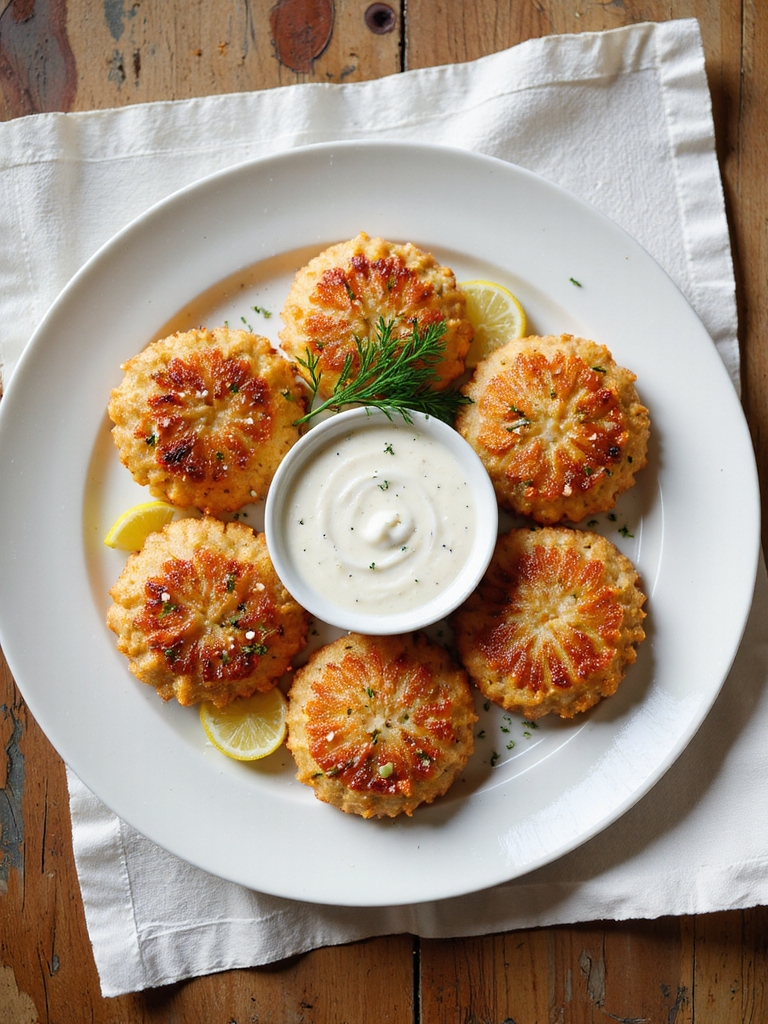
to make a salad or sandwich, toss flaked salmon with mayo, shallot, celery, herbs, salt and pepper and serve chilled or at room temperature.
Tip: Cool cooked salmon completely before refrigerating in an airtight container for up to 3 days (or freeze up to 2 months), avoid high heat when reheating to prevent drying, and always reheat only once.
Frozen salmon can be cooked directly from frozen for many simple preparations like baking or pan-searing, which makes meal planning easier when you keep frozen salmon on hand.