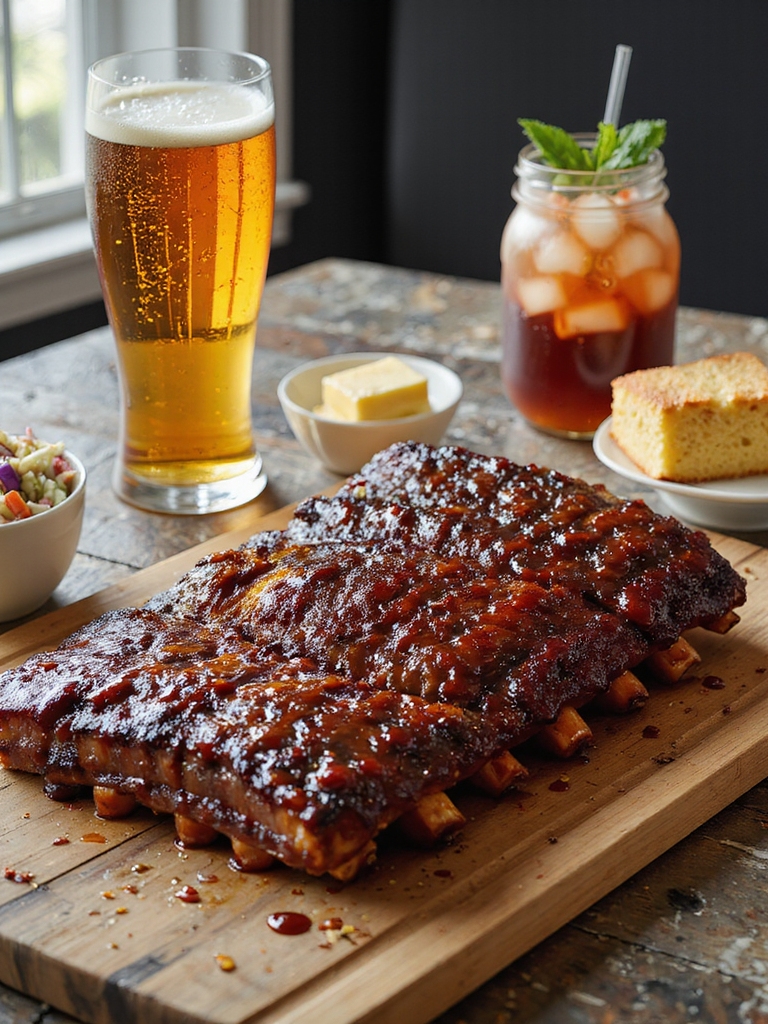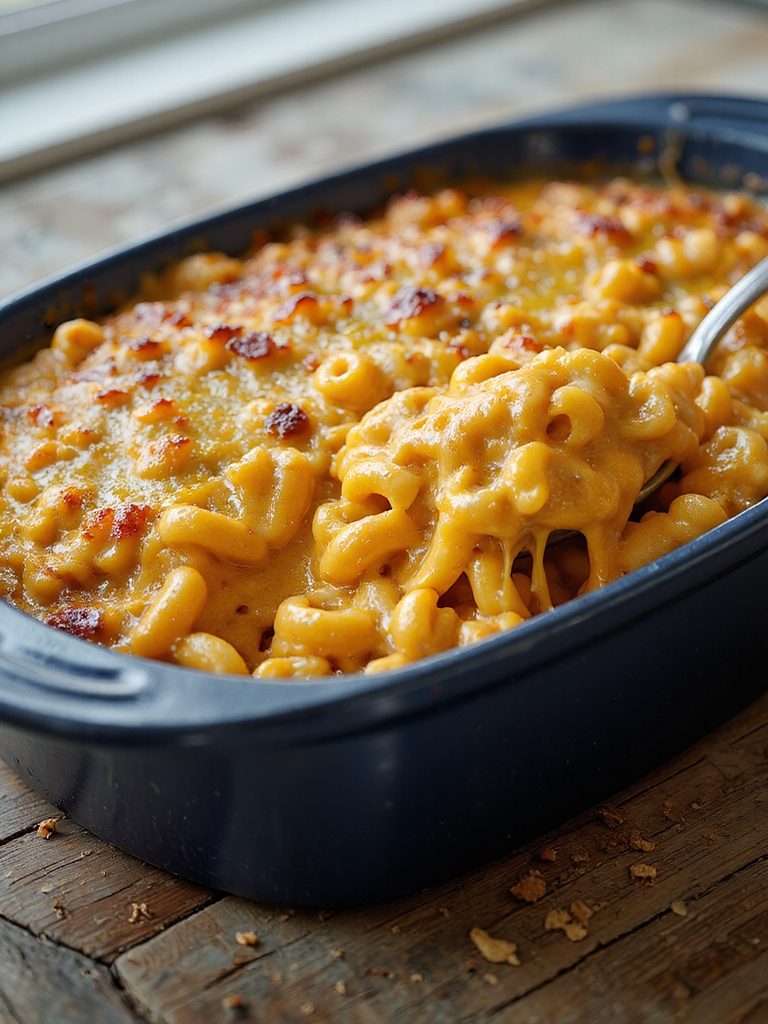
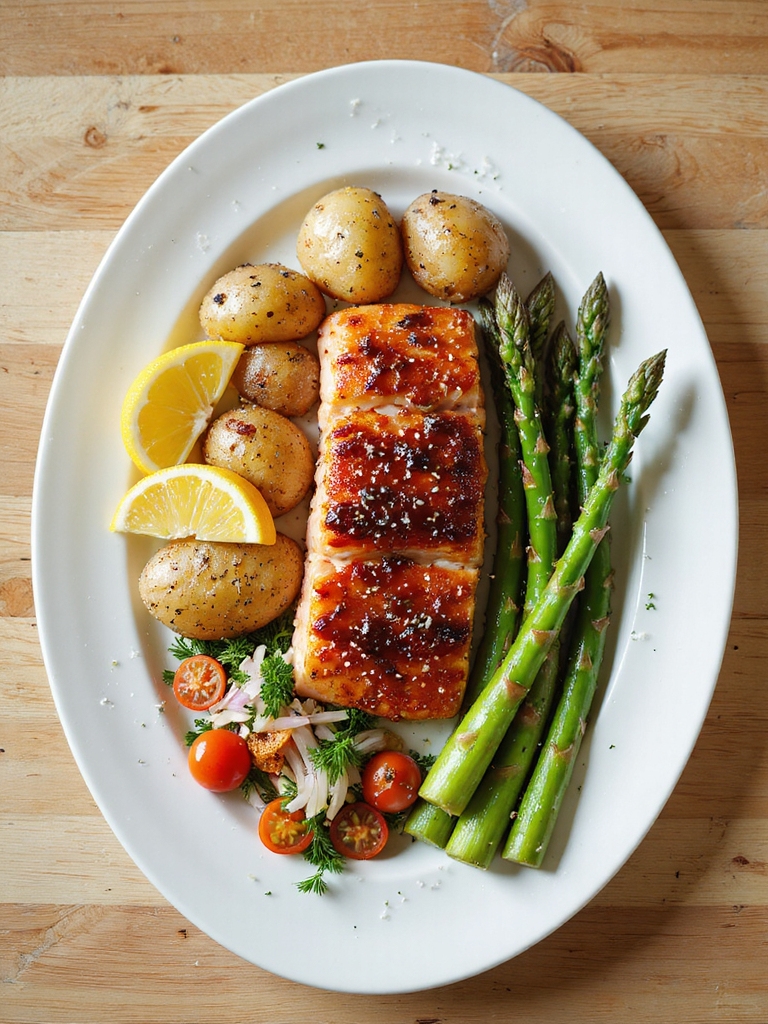
I love firing up the grill for salmon that’s glazed, smoky, and still tender inside, and I’ll show you how to pick the right cut, prep the grates, and use simple rubs or low‑sugar glazes to get restaurant results at home.
I’ll explain searing skin‑side down, when to brush on sticky sauces, and how to finish to a perfect 125–130°F so it stays moist — plus a few sides that make the whole meal sing, if you want to keep going.
Choosing the Right Salmon Cut for Grilling
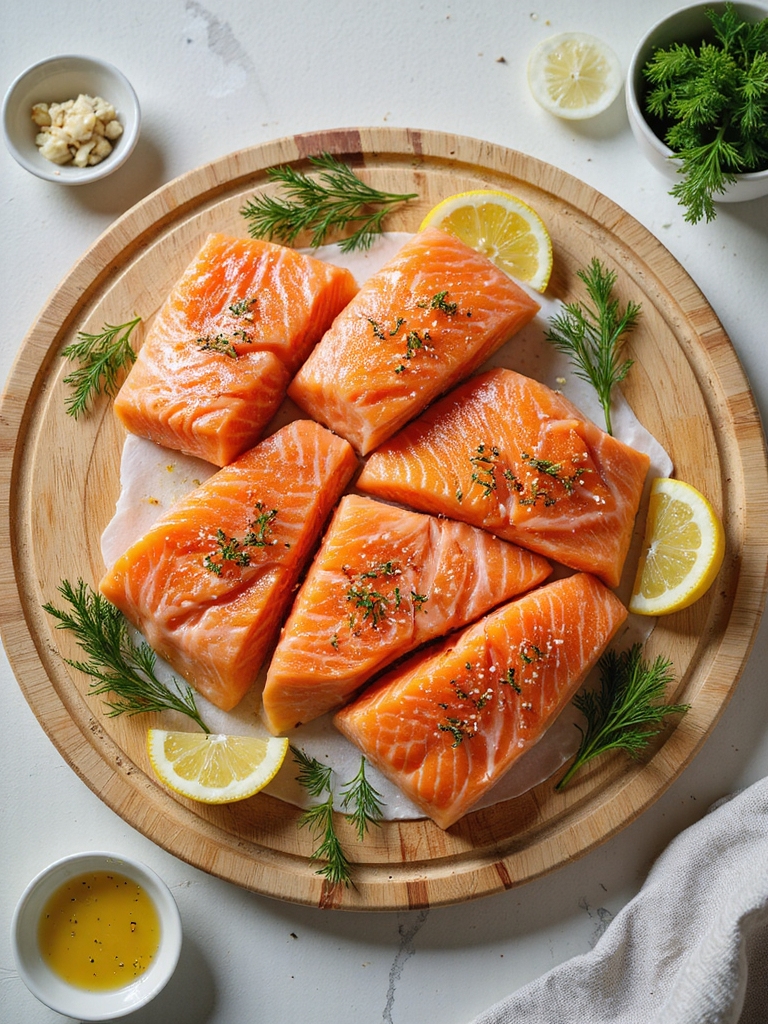
Choosing the right salmon cut for grilling sets you up for success: I recommend using center-cut salmon fillets (about 1 to 1.5 inches thick) or skin-on salmon steaks for even cooking and easy handling on the grill; these cuts hold together well, get a nice char, and benefit from a simple marinade or dry rub to highlight the fish’s flavor without overpowering it.
- 4 center-cut salmon fillets (6–8 oz each), skin-on, about 1–1.5 inches thick
- 2 tablespoons olive oil
- 1 tablespoon lemon juice
- 1 teaspoon sea salt
- 1/2 teaspoon freshly ground black pepper
- 1 teaspoon smoked paprika or mild chili powder
- 1 teaspoon brown sugar or honey (optional)
- 1 clove garlic, minced
- Lemon wedges and chopped fresh dill or parsley for serving
Bring the salmon to room temperature for 15–20 minutes, pat dry, and brush both sides lightly with olive oil, then season with salt, pepper, smoked paprika and garlic (add brown sugar/honey if you like a glaze).
Preheat the grill to medium-high (about 400°F/200°C) and oil the grates well to prevent sticking, place fillets skin-side down, close the lid and grill for 4–5 minutes without moving to develop grill marks, then flip and cook 3–5 more minutes until internal temperature reaches 125–130°F (52–54°C) for medium; transfer to a platter, rest 2 minutes, squeeze lemon over and garnish before serving.
Choose skin-on fillets when possible for easier flipping and moisture retention, use a hot clean grill and oil the grates thoroughly, avoid overcooking (salmon continues to carryover cook), and consider grilling on a cedar plank for extra flavor and to protect delicate fillets.
Summer is the perfect time to enjoy BBQ foods, and mastering grilled salmon will make it a standout dish with seasonal favorites.
Essential Tools and Grill Prep for Perfectly Seared Fish
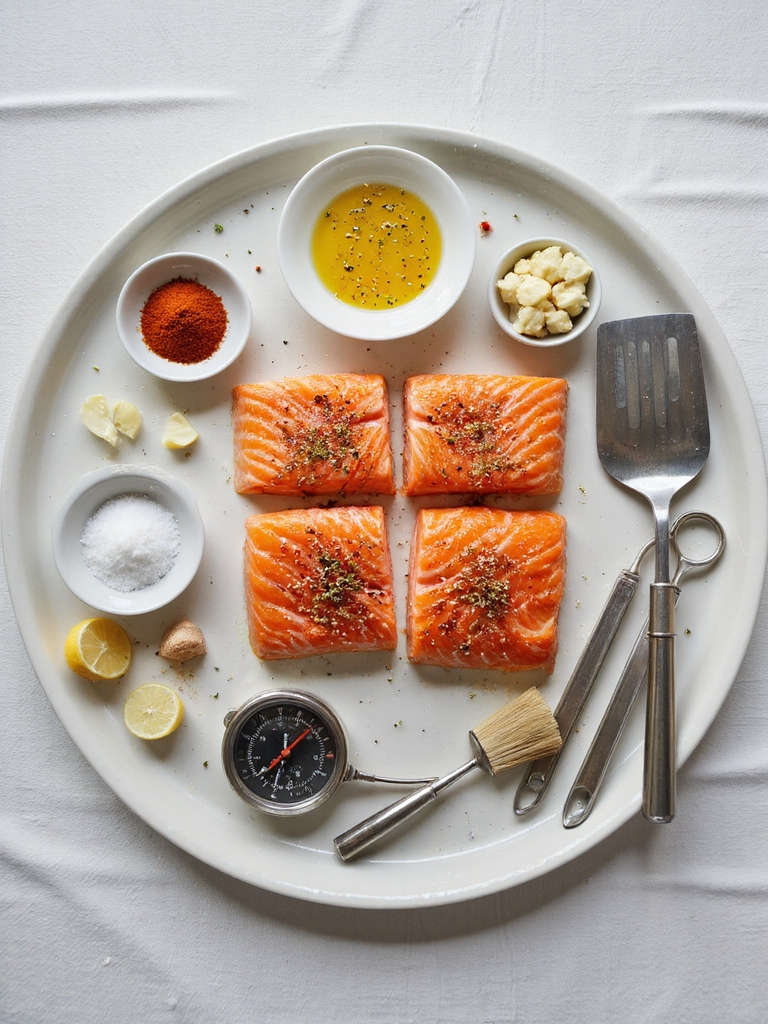
Getting your grill and tools ready is as important as the seasoning when aiming for a perfectly seared salmon; this recipe focuses on essential equipment and prep steps to prevent sticking, make certain even heat, and deliver a crisp sear with moist flaky flesh.
- 4 center-cut salmon fillets (6–8 oz each), skin-on, about 1–1.5 inches thick
- 2 tablespoons olive oil
- 1 teaspoon sea salt
- 1/2 teaspoon freshly ground black pepper
- 1 teaspoon smoked paprika
- 1 clove garlic, minced
- Nonstick grilling spray or high-heat oil for the grates
- Fish spatula or wide, thin metal spatula
- Long-handled tongs
- Instant-read thermometer
- Clean grill brush or scraper
- Optional cedar plank or aluminum foil
Preheat and clean the grill thoroughly: heat to medium-high (about 400°F/200°C), scrub and oil the grates well or oil a folded paper towel and rub the grates with tongs to prevent sticking, then bring salmon to room temperature, pat dry, rub with olive oil, season with salt, pepper, smoked paprika and garlic, place skin-side down, close the lid and cook undisturbed 4–5 minutes to develop a sear before carefully flipping with a fish spatula and finishing 3–5 minutes until 125–130°F (52–54°C).
Always test cleanliness and heat by holding your hand 4–5 inches above the grate—if you can hold it 4–5 seconds it’s about medium-high—and use an instant-read thermometer to avoid overcooking while letting the fish rest 2 minutes after grilling. For a smoky finish, consider finishing the salmon with a quick brush of your favorite barbecue sauce made for grilling to echo the flavors of air-fryer BBQ chicken.
Simple Olive Oil and Herb Rub for Weeknight Grilling
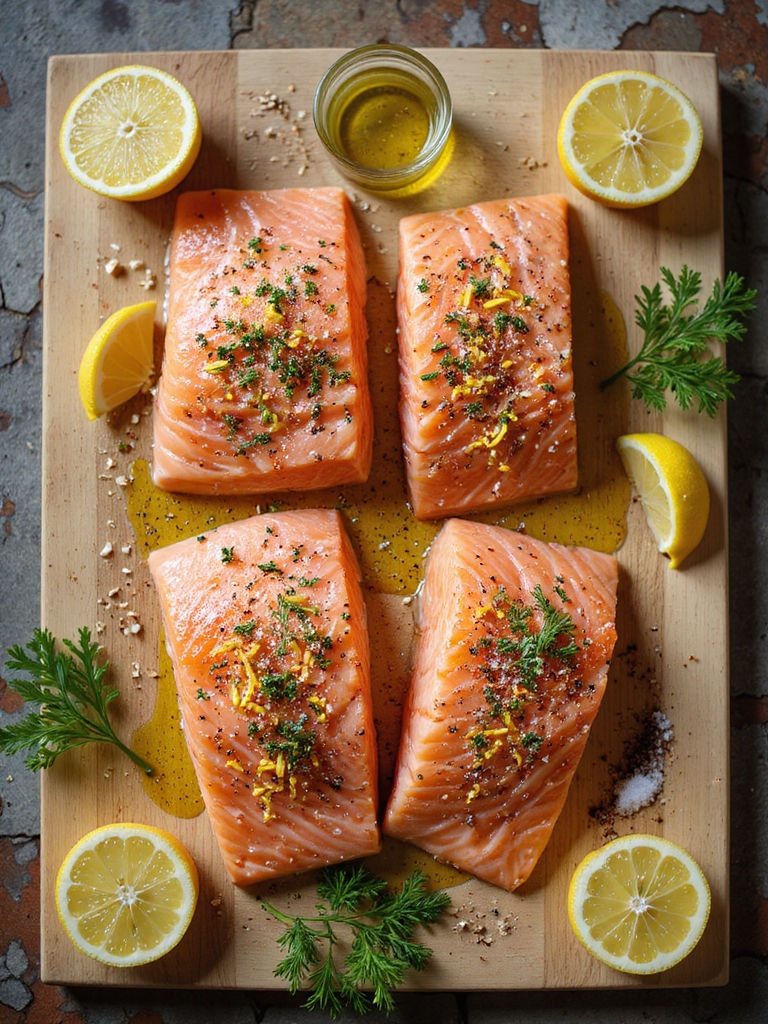
For busy weeknights, this simple olive oil and herb rub brightens salmon with pantry staples for a fast, flavorful grill: it crisps the skin, keeps the flesh moist, and takes about 10–12 minutes from prep to plate, making it perfect paired with a crisp salad or quick grilled vegetables.
- 4 center-cut salmon fillets (6–8 oz), skin-on
- 2 tablespoons extra-virgin olive oil
- 1 tablespoon chopped fresh parsley
- 1 tablespoon chopped fresh dill or 1 teaspoon dried dill
- 1 teaspoon lemon zest
- 1 teaspoon sea salt
- 1/2 teaspoon freshly ground black pepper
- 1/2 teaspoon garlic powder
- 1/4 teaspoon crushed red pepper flakes (optional)
- Lemon wedges, for serving
Pat the fillets dry, rub both sides with olive oil, then evenly press on the herb mix (parsley, dill, lemon zest, salt, pepper, garlic powder and red pepper if using);
preheat grill to medium-high (about 400°F/200°C), oil grates, place skin-side down and cook undisturbed 4–5 minutes, flip carefully and cook 3–5 more minutes until an instant-read thermometer reads 125–130°F (52–54°C) for medium; remove and rest 2 minutes before serving with lemon wedges.
When grilling, make sure the fillets are near room temperature and very dry to prevent sticking, oil the grates well or use a fish spatula, and avoid overcooking by checking temperature early—salmon carries over cooks while resting. Grilled vegetables are a great complement to salmon and add smoky flavor and texture when served alongside the fish, especially when you use BBQ vegetables prepared over the same heat.
Sticky Honey-Soy Glaze With Low-Sugar Alternatives
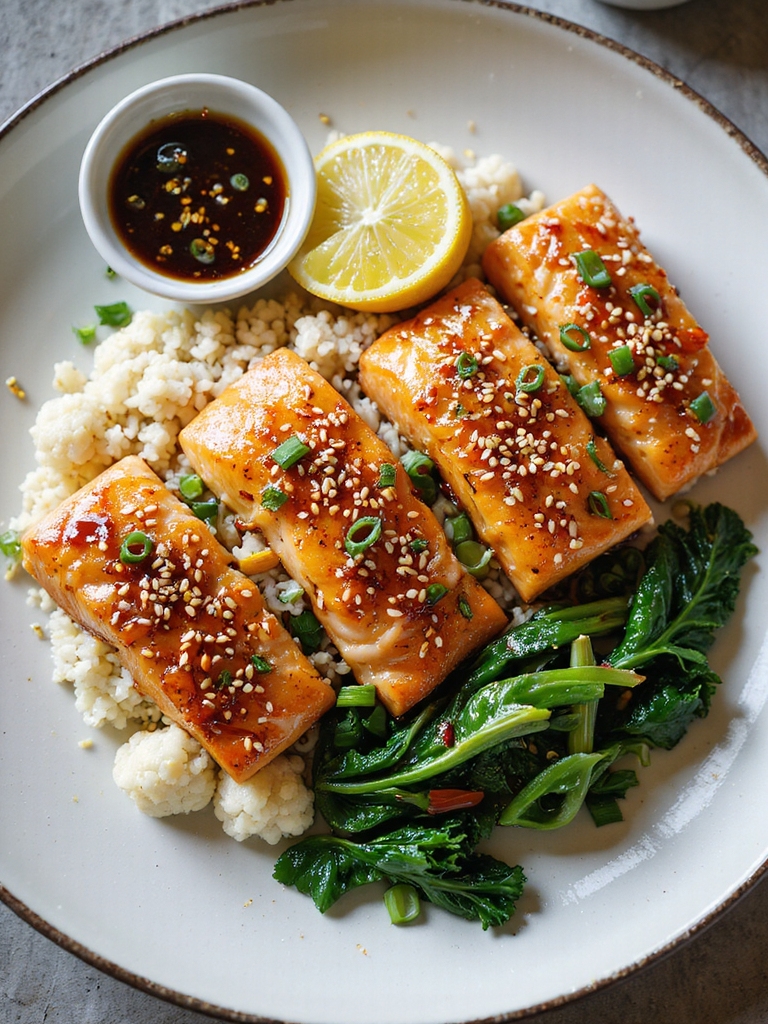
This sticky honey-soy glaze brings sweet, savory, and umami notes to grilled salmon while offering low-sugar swaps so you can keep the glaze glossy without excess sugar; the method uses a quick reduction with rice vinegar, garlic, ginger, and a touch of sesame oil, then broils or grills the salmon briefly to caramelize the glaze for a shiny, flavorful finish that pairs well with steamed greens or cauliflower rice.
- 4 center-cut salmon fillets (6–8 oz), skin-on
- 2 tablespoons low-sodium soy sauce or tamari
- 2 tablespoons honey or 1 tablespoon honey + 1 tablespoon erythritol (or 2 tablespoons allulose)
- 1 tablespoon rice vinegar
- 1 tablespoon grated fresh ginger
- 1 clove garlic, minced
- 1 teaspoon sesame oil
- 1 teaspoon toasted sesame seeds
- 1/4 teaspoon crushed red pepper (optional)
- 1 tablespoon water (to adjust consistency)
- Lemon or lime wedges and sliced scallions for serving
Pat fillets dry and season lightly with salt and pepper, whisk soy/tamari with honey or chosen low‑sugar sweetener, rice vinegar, ginger, garlic, sesame oil and water, simmer gently in a small saucepan until slightly thickened (about 4–5 minutes) then remove from heat.
Preheat grill to medium-high or oven broiler, oil the grates or a foil-lined tray, brush fillets with half the glaze and cook skin-side down 4–5 minutes, flip, brush with more glaze and cook 2–4 more minutes until 125–130°F (52–54°C), finish with a final quick brush of glaze and sprinkle sesame seeds and scallions before serving.
Tip: Monitor the glaze closely while reducing to avoid burning, use heat-stable low‑sugar sweeteners like allulose for best caramelization, and apply glaze in stages near the end of cooking to prevent charring while still achieving a sticky finish.
This recipe is inspired by classic Korean BBQ flavors and techniques, especially the balance of sweet and savory found in many traditional Korean BBQ sauces.
Citrus-Herb Marinade for Bright, Fresh Flavor
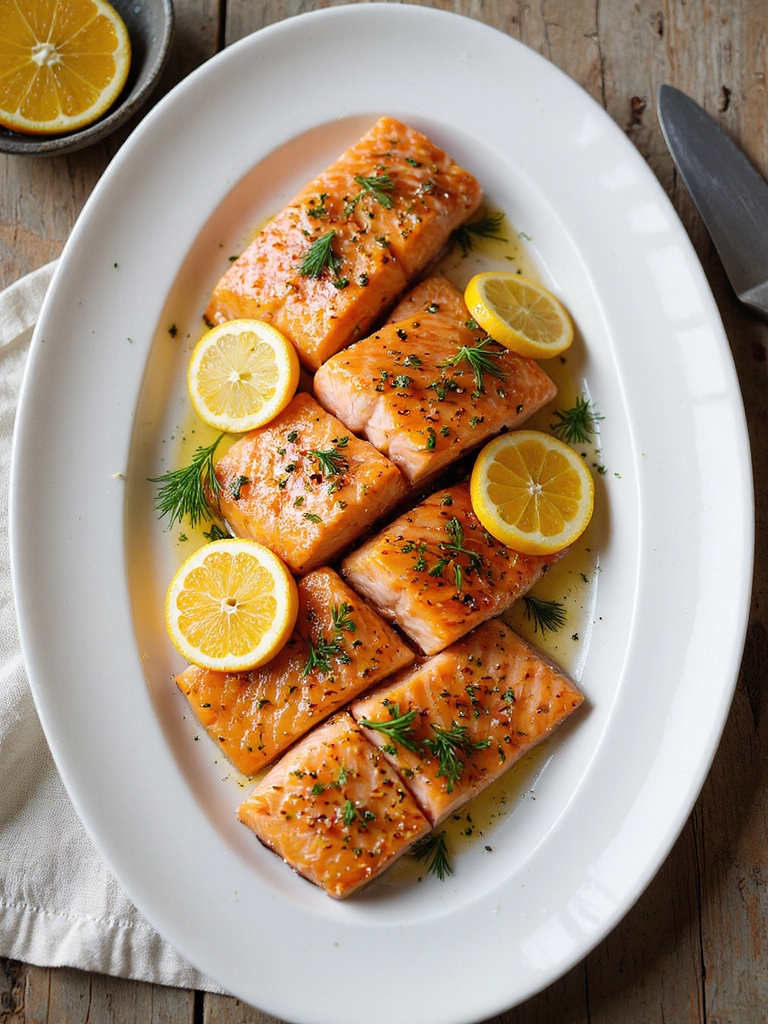
This bright citrus-herb marinade infuses salmon with lively acidity and fresh aromatics — a simple, make-ahead blend of lemon, orange, olive oil, garlic, and herbs creates a glossy, flavorful coating that keeps the fish moist on the grill or in the oven; marinate briefly for maximum brightness, then cook just until medium-rare for tender flakes and a vibrant finish.
- 4 center-cut salmon fillets (6–8 oz), skin-on
- 2 tablespoons extra-virgin olive oil
- Zest and juice of 1 lemon
- Zest and juice of 1 orange
- 2 garlic cloves, minced
- 2 tablespoons chopped fresh parsley
- 1 tablespoon chopped fresh dill (or basil)
- 1 teaspoon Dijon mustard
- 1/2 teaspoon kosher salt
- 1/4 teaspoon freshly ground black pepper
- 1/4 teaspoon crushed red pepper flakes (optional)
- 1 teaspoon honey or maple syrup (optional for balance)
- Lemon wedges and extra herbs for serving
Whisk all marinade ingredients in a shallow dish, add salmon skin-side up and spoon some over the tops, cover and refrigerate 20–30 minutes (no longer than 1 hour to avoid “cooking” the fish with citrus).
Preheat grill to medium-high or oven to 425°F, oil grates or a foil-lined sheet, cook skin-side down 4–6 minutes, flip and cook 2–4 more minutes until 125–130°F (52–54°C) for moist doneness, rest 3–5 minutes and garnish with lemon wedges and herbs.
Tip: Pat salmon dry before marinating to help the marinade adhere, don’t over-marinate to prevent texture change from the citrus, and always watch doneness closely since salmon continues to cook while resting.
Fresh and Flavorful BBQ Salad Delight adds a bright, complementary side that balances the richness of the salmon and showcases BBQ Salad ingredients.
Keto-Friendly BBQ Variations and Sugar-Free Glazes
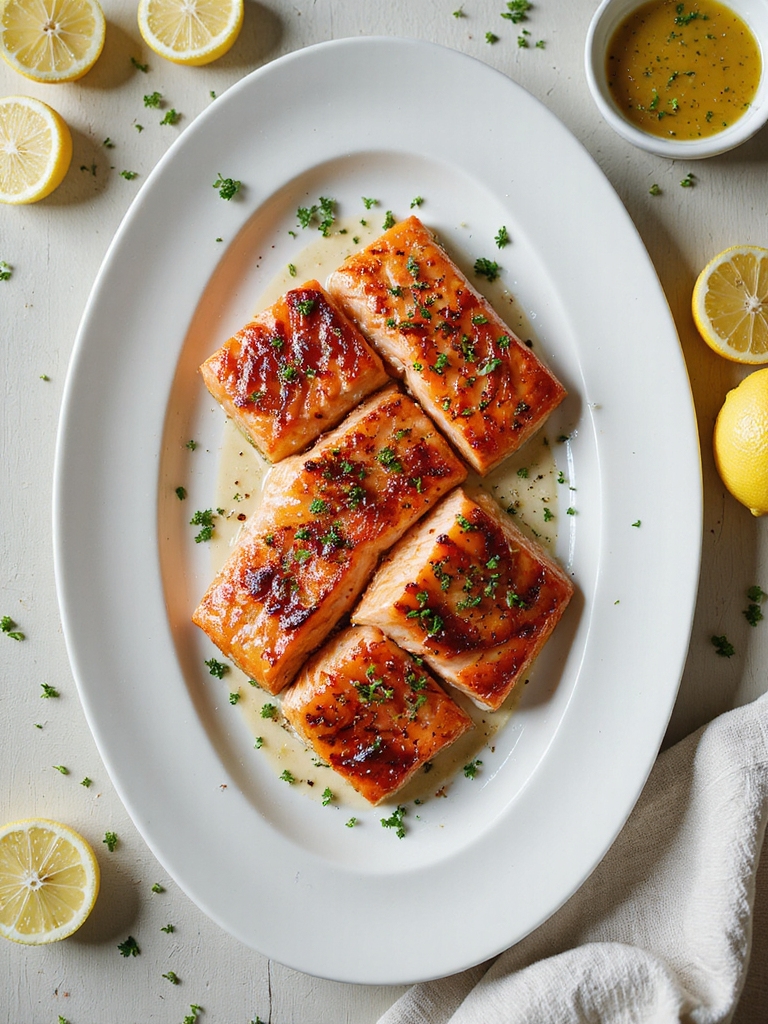
For a keto-friendly BBQ salmon, skip sugary glazes and instead build layers of flavor with savory, acid, fat — a mustard-herb coating, smoked paprika, and a touch of erythritol-free BBQ rub deliver caramel-like browning without carbs, while a buttery garlic-basil finishing sauce keeps the fish rich and moist; this recipe works on a gas or charcoal grill or under the broiler and is tailored to maintain texture and low carbs.
- 4 center-cut salmon fillets (6–8 oz), skin-on
- 2 tablespoons Dijon mustard
- 1 tablespoon olive oil
- 2 teaspoons apple cider vinegar
- 1 teaspoon Worcestershire sauce (sugar-free)
- 1 teaspoon smoked paprika
- 1 teaspoon garlic powder
- 1/2 teaspoon onion powder
- 1/2 teaspoon kosher salt
- 1/4 teaspoon freshly ground black pepper
- 1/4 teaspoon cayenne (optional)
- 1 tablespoon finely chopped fresh parsley
- 2 tablespoons unsalted butter
- 1 clove garlic, minced
- 1 tablespoon chopped fresh basil or dill
- 1 teaspoon powdered erythritol or another keto sweetener (optional)
Whisk mustard, olive oil, vinegar, Worcestershire, smoked paprika, garlic and onion powders, salt, pepper and optional erythritol, pat salmon dry and brush skin-side up with the mixture, refrigerate 15–30 minutes while you preheat the grill to medium-high (about 400°F) and oil the grates; place salmon skin-side down, grill covered 4–6 minutes, flip and cook 2–4 more minutes until internal temperature reaches 125–130°F, then rest 3–5 minutes.
In a small skillet melt butter over medium-low, add minced garlic and herbs just until fragrant (30–45 seconds), spoon over rested fillets for richness and serve immediately.
Tip: Keep marinating short to avoid texture change from acids, use a thermometer to prevent overcooking, and if flare-ups occur move fillets to indirect heat and finish with the butter-herb sauce for moist, flavorful results.
This approach adapts BBQ techniques from classic chicken preparations to fish, emphasizing grill temperature control for best results.
Techniques to Keep Salmon Moist and Prevent Flaking
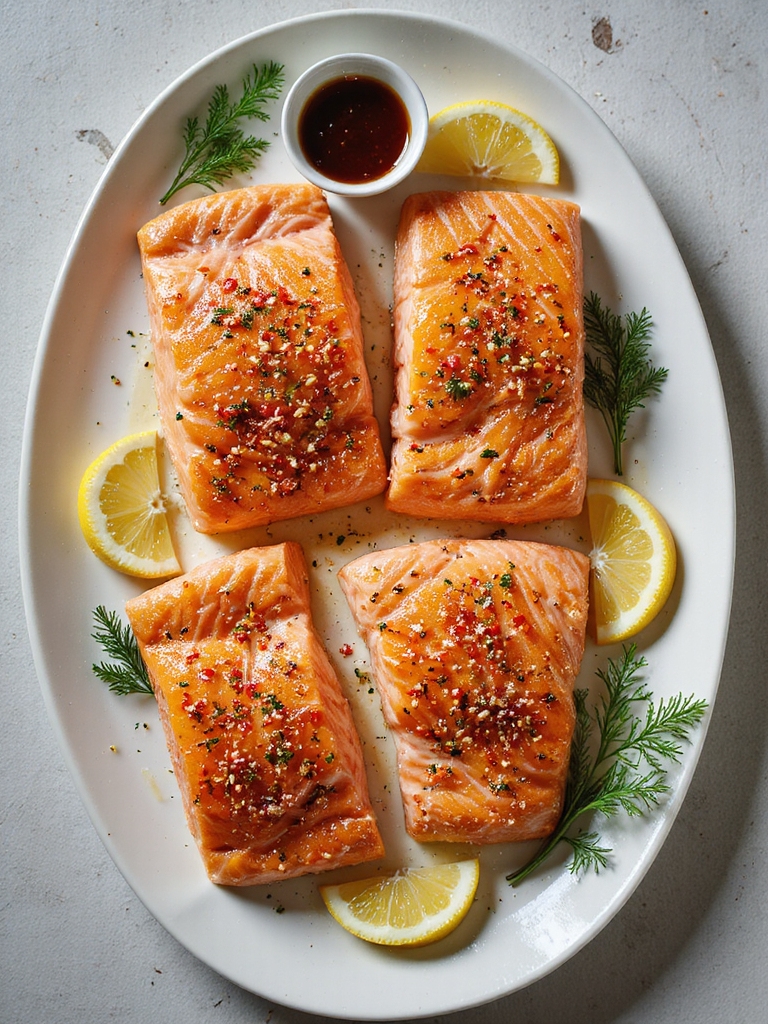
Keeping salmon moist and preventing it from turning into dry, flaky shards on the grill or under the broiler is all about managing heat, timing, surface protection, and gentle finishing; this recipe uses a short brine, an oil-herb rub, foil or a plank option, and a brief high-then-low cooking approach to seal juices while producing a tender, sliceable fillet.
- 4 center-cut salmon fillets (6–8 oz), skin-on
- 4 cups cold water
- 2 tablespoons kosher salt
- 1 tablespoon brown sugar substitute (erythritol optional)
- 2 tablespoons olive oil
- 1 tablespoon Dijon mustard
- 1 tablespoon lemon juice
- 1 teaspoon smoked paprika
- 1 teaspoon garlic powder
- 1/2 teaspoon black pepper
- 1 tablespoon chopped fresh dill or parsley
- 2 tablespoons unsalted butter (optional finish)
- 1 lemon, sliced (for plank or foil)
- Cedar plank or heavy-duty foil (optional)
Pat fillets dry, dissolve salt and sweetener in cold water to make a quick brine and submerge salmon for 10–15 minutes, remove and dry thoroughly then brush with a mixture of olive oil, mustard, lemon, spices and herbs; preheat grill to medium-high (400°F) or broiler 6 inches from heat, if using a plank soak it 30 minutes, sear skin-side down 3–4 minutes over direct heat to set the skin then move to indirect heat or lower broiler area and cook 4–7 more minutes until internal temp reaches 125–130°F, rest 3–5 minutes and finish with a little melted butter and lemon.
Tip: Use a thermometer for accuracy, keep brine short to avoid texture change, use a plank or foil to protect from flare-ups, and remove from heat a few degrees below final temp since carryover will finish the salmon. For a reliably even cook and char you can also follow classic oven BBQ timing and searing techniques learned from popular oven-baked BBQ chicken methods.
Smoking and Char Options for Deeper Flavor
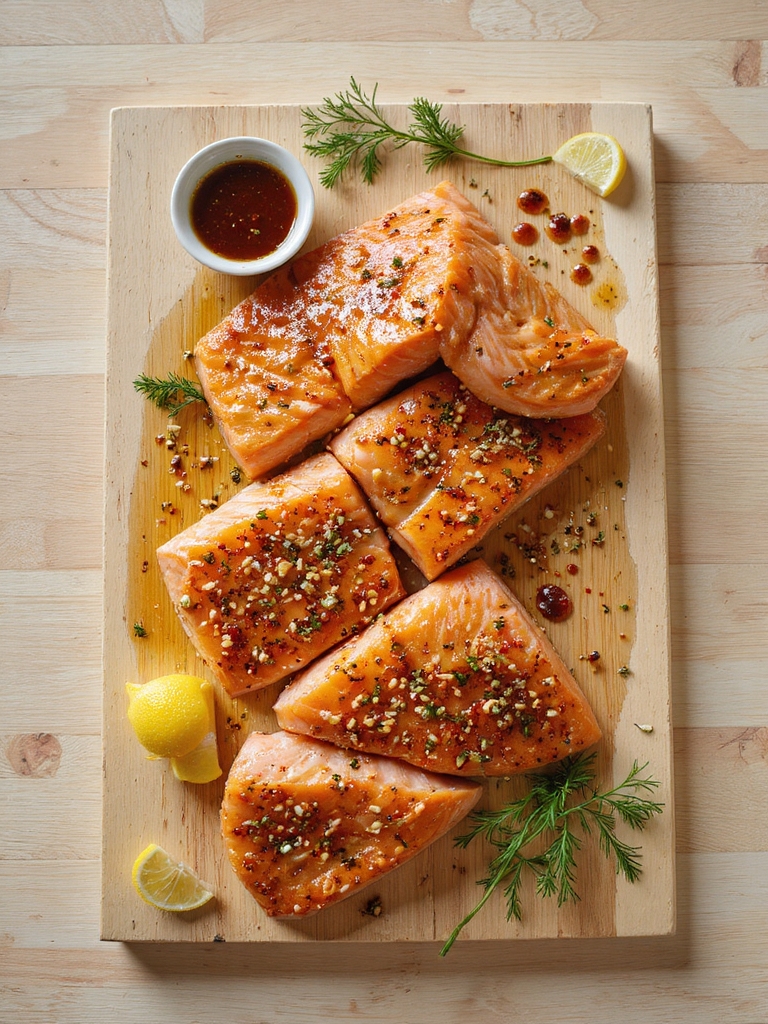
Smoking and char techniques layer smoky, savory depth onto salmon while still preserving moisture: this method uses a quick dry-brine, a flavorful glaze, controlled hot-and-slow grilling with wood chips or a plank for smoke, and a final direct-sear to add char without overcooking, producing flaky yet juicy fillets with a smoky crust.
- 4 center-cut salmon fillets (6–8 oz), skin-on
- 2 teaspoons kosher salt
- 1 teaspoon brown sugar or erythritol
- 2 tablespoons olive oil
- 1 tablespoon soy sauce or tamari
- 1 tablespoon maple syrup or honey
- 1 teaspoon smoked paprika
- 1/2 teaspoon ground black pepper
- 1 teaspoon Dijon mustard
- 1 tablespoon lemon juice
- 1 tablespoon chopped fresh dill or chives
- 1 cedar or alder plank (soaked 30 minutes) or 1/2 cup wood chips (apple/hickory)
- Lemon wedges, for serving
Pat salmon dry and lightly sprinkle salt and sugar over flesh for 10–15 minutes to firm, rinse and dry.
Whisk together oil, soy, maple, smoked paprika, mustard, lemon and herbs and brush onto fillets; prepare grill for two-zone cooking with a smoker box or soaked plank over direct heat to generate smoke.
Start skin-side down over indirect medium heat (about 300–325°F) with lid closed for 8–12 minutes until internal temp reads 115–120°F, then move directly over high heat or remove plank and sear 30–60 seconds per side to develop char and finish to 125–130°F, rest 3–5 minutes and serve with lemon.
Tip: Monitor temperature with an instant-read thermometer and keep smoke light—strong smoke for short time prevents bitterness; if flare-ups occur, move fish to indirect heat or use foil to shield.
For added flavor variations, experiment with different wood chips and plank types like cedar or alder to match the flavor profile you prefer.
Quick Sides and Plate-Up Ideas for Balanced Meals
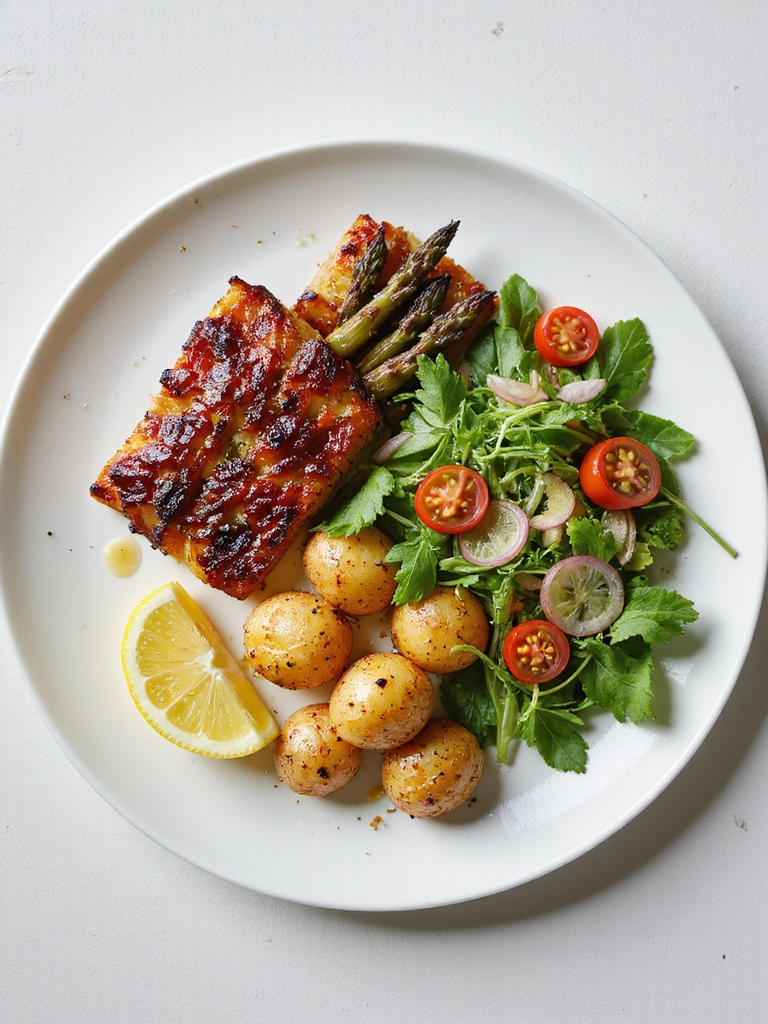
A quick, balanced plate to complement smoky, charred salmon features a bright herb-citrus salad, fast roasted fingerling potatoes, and a simple charred asparagus — all can be prepped while the fish smokes so the meal finishes hot and cohesive.
- 1 lb fingerling potatoes, halved
- 1 lb asparagus, woody ends trimmed
- 4 cups mixed greens (arugula, spinach, baby kale)
- 1 small shallot, thinly sliced
- 1 cup cherry tomatoes, halved
- 2 tablespoons olive oil
- 1 tablespoon avocado oil or neutral oil
- 1 teaspoon smoked paprika
- 1 teaspoon garlic powder
- Kosher salt and black pepper
- 1 lemon, zested and juiced
- 2 tablespoons chopped fresh parsley
- 2 tablespoons chopped fresh dill or chives
- 1 tablespoon Dijon mustard
- 1 tablespoon honey or maple syrup
Toss potatoes with 1 tbsp olive oil, smoked paprika, garlic powder, salt and pepper and roast at 425°F on a rimmed sheet for 20–25 minutes until golden and fork-tender, then during the last 8–10 minutes toss asparagus with remaining oil, salt and pepper and roast alongside until tender-crisp; meanwhile whisk lemon juice, zest, mustard, honey and remaining oil into a dressing, toss mixed greens, shallot, tomatoes and parsley just before serving, plate roasted potatoes and asparagus next to your salmon, spoon salad and drizzle dressing over everything and garnish with dill.
Tip: Par-cook potatoes in boiling water 8–10 minutes to cut roasting time, keep salad dressing separate until serving to prevent wilting and use residual salmon juices to lightly dress the potatoes for extra flavor. Fresh summer sides are essential for a well-rounded BBQ plate and pair especially well with grilled seafood like salmon; learn more about Delicious Summer BBQ pairings.
Storage, Reheating, and Meal-Prep Tips
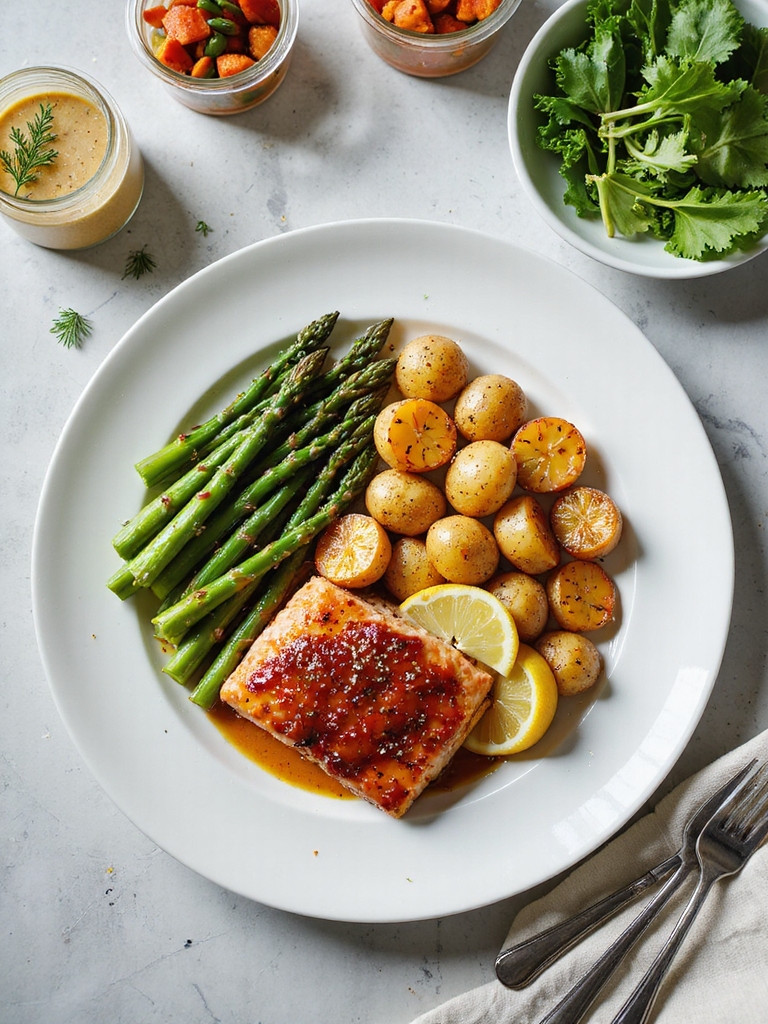
This meal-prep recipe explains how to roast the fingerling potatoes and asparagus, assemble the herb-citrus salad, and store and reheat everything so your BBQ salmon dinner can be prepared ahead and finished quickly for weeknight meals or packed lunches; it covers cooling, refrigerating, freezing options, reheating guidance to preserve texture, and how to keep the salad crisp by storing dressing separately.
- 1 lb fingerling potatoes, halved
- 1 lb asparagus, woody ends trimmed
- 4 cups mixed greens (arugula, spinach, baby kale)
- 1 small shallot, thinly sliced
- 1 cup cherry tomatoes, halved
- 2 tablespoons olive oil
- 1 tablespoon avocado oil or neutral oil
- 1 teaspoon smoked paprika
- 1 teaspoon garlic powder
- Kosher salt and black pepper
- 1 lemon, zested and juiced
- 2 tablespoons chopped fresh parsley
- 2 tablespoons chopped fresh dill or chives
- 1 tablespoon Dijon mustard
- 1 tablespoon honey or maple syrup
Toss potatoes with 1 tbsp olive oil, smoked paprika, garlic powder, salt and pepper and roast at 425°F on a rimmed sheet for 20–25 minutes until golden and fork-tender, then during the last 8–10 minutes toss asparagus with remaining oil, salt and pepper and roast alongside until tender-crisp.
Meanwhile whisk lemon juice, zest, mustard, honey and remaining oil into a dressing, toss mixed greens, shallot, tomatoes and parsley just before serving, plate roasted potatoes and asparagus next to your salmon, spoon salad and drizzle dressing over everything and garnish with dill.
Cool roasted vegetables to room temperature within 1 hour and store in airtight containers in the fridge up to 4 days (or freeze potatoes in a single layer up to 3 months).
Keep salad and dressing separate and reheat vegetables in a 375°F oven for 8–12 minutes or in a hot skillet to refresh crispness, adding a squeeze of lemon or a splash of reserved salmon juices before serving to revive flavor.
Tip: For meal prep, par-cook potatoes to speed roasting, pack components separately (salad, dressing, veg, and salmon), and reheat only the vegetables and fish to prevent limp greens and maintain best texture.
Slow cook methods also work well for shredding meats like pork for BBQ, so consider trying a slow cooker recipe to expand your meal-prep repertoire.