When I make beef gravy, I start with well-browned meat so the fond does the heavy lifting. I deglaze the pan with stock or a splash of red wine, then thicken with a quick roux or a cold cornstarch slurry—whichever saves time.
I finish with butter, Worcestershire, and fresh pepper for a glossy, savory sauce. If lumps or grease show up, I’ve got simple fixes. Want the foolproof steps and make-ahead tips?
Understanding Pan Drippings and Fond
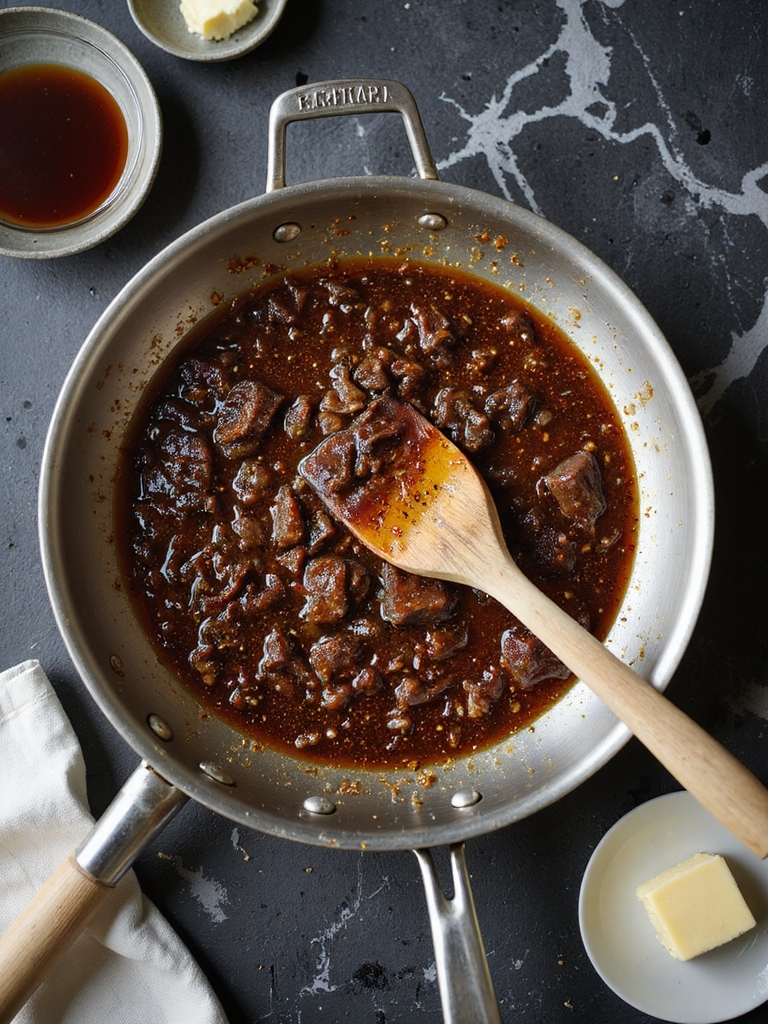
Pan drippings and fond are the flavorful base of classic beef gravy: the drippings are the rendered fat and juices left after searing or roasting beef, while the fond is the browned, caramelized bits stuck to the pan; together they deliver deep, savory richness when deglazed and thickened into a silky sauce.
- 1/4 cup pan drippings (fat plus juices)
- Fond from seared or roasted beef (from 1 pan)
- 2 tablespoons unsalted butter (optional, as needed)
- 2 tablespoons all-purpose flour
- 1 1/2 to 2 cups beef stock (low sodium), warmed
- 1 teaspoon Worcestershire sauce (optional)
- Kosher salt, to taste
- Freshly ground black pepper, to taste
Place the still-hot pan over medium heat; tilt and spoon off excess fat, leaving about 2 tablespoons plus all the fond, then add butter if drippings are scant. Sprinkle in flour and whisk, scraping up fond, cooking 2–3 minutes until the roux smells nutty and turns light brown. Gradually whisk in warm stock, then Worcestershire; simmer 3–5 minutes until glossy and nappe-thick, season with salt and pepper, strain if desired, and serve.
Don’t burn the fond: if it’s very dark or acrid, add a splash of water and wipe clean before proceeding; better to build new fond with a quick butter sear. Warm stock prevents lumps and keeps the gravy smooth; adjust thickness with more stock to loosen or a brief simmer to tighten. For a heartier, slow-cooked option, you can use leftover crock pot beef and its juices to enrich the gravy, especially when incorporating the hearty crock pot flavors.
Essential Tools and Pantry Staples
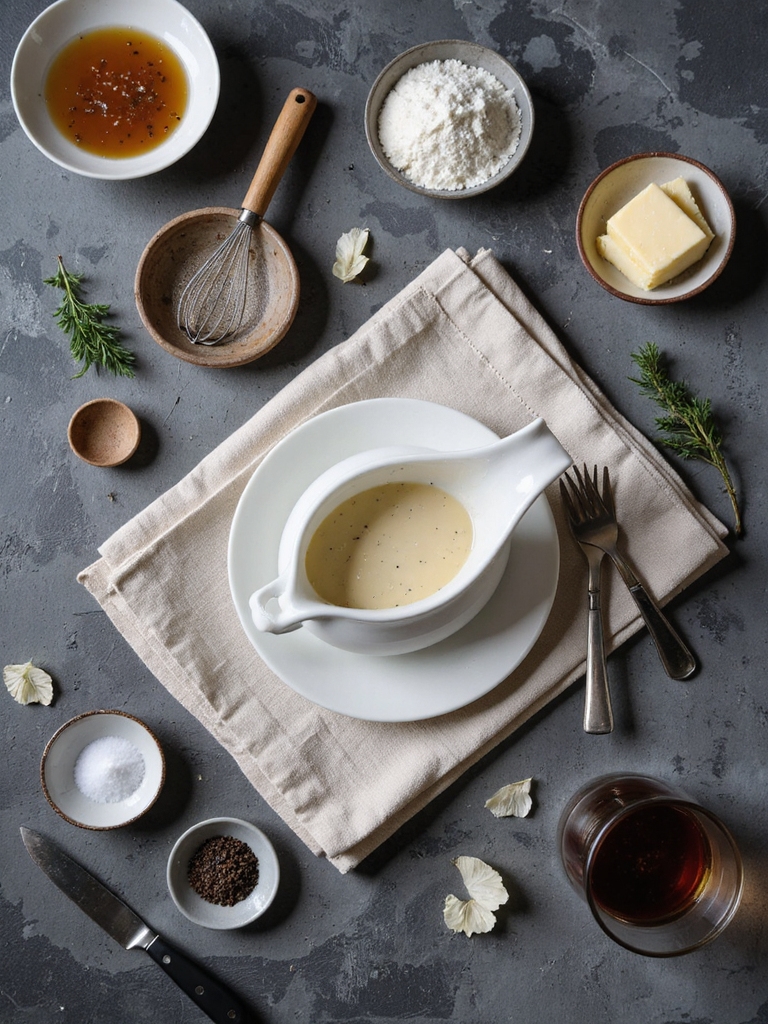
A well-equipped station makes beef gravy foolproof: gather sturdy cookware to build fond and whisk in stock smoothly, plus pantry staples that guarantee consistent flavor and texture every time.
- Heavy stainless-steel or cast-iron skillet or roasting pan
- Medium saucepan
- Heatproof fat separator (or measuring cup)
- Fine-mesh strainer
- Balloon whisk and wooden spoon
- Measuring cups and spoons
- Low-sodium beef stock (or broth)
- Unsalted butter
- All-purpose flour
- Kosher salt
- Freshly ground black pepper
- Worcestershire sauce (optional)
- Onion powder or granulated garlic (optional)
- Fresh herbs like thyme or rosemary (optional)
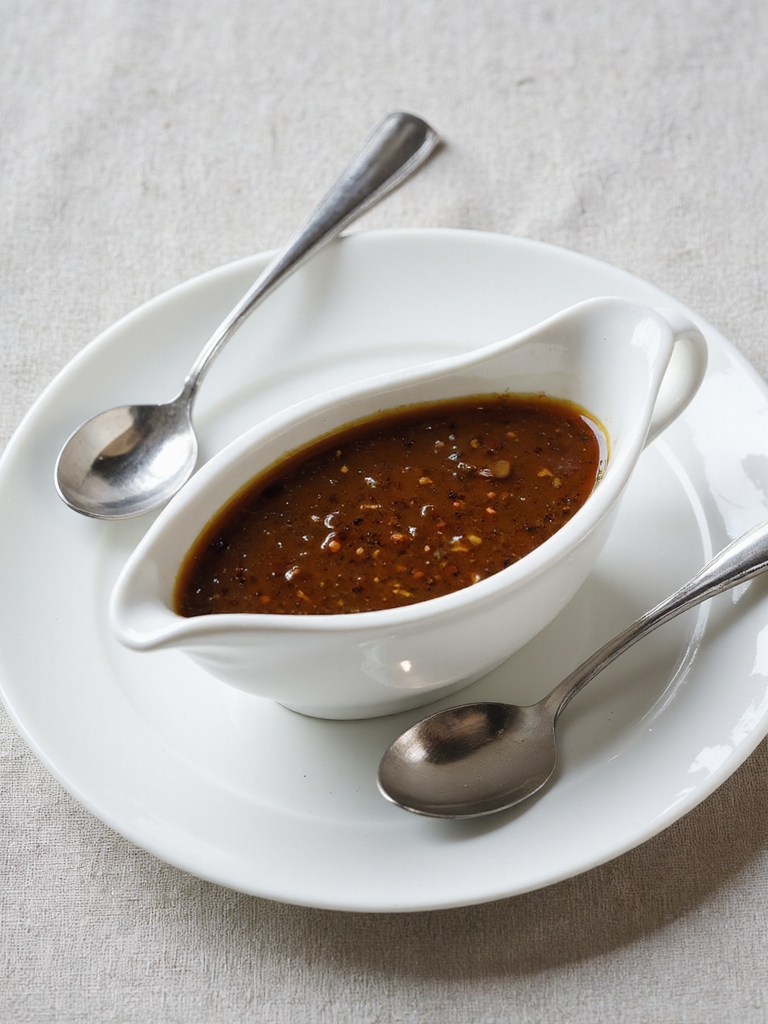
Set your skillet or roasting pan over medium heat and use the fat separator or a measuring cup to reserve about 2 tablespoons fat from the drippings, transferring the remaining juices to a saucepan with warmed low-sodium beef stock. Place the pan with fat on medium heat, whisk in all-purpose flour to make a light-brown roux, then gradually whisk in warm stock and any reserved juices until smooth and glossy, scraping up fond with a wooden spoon. Simmer gently to thicken, then season with kosher salt, black pepper, and a dash of Worcestershire; strain through a fine-mesh sieve into a warm gravy boat.
Pre-warm stock to avoid lumps and keep a balloon whisk handy for quick emulsification. If the fond looks too dark or bitter, deglaze and wipe the pan, then rebuild flavor by briefly browning a knob of butter with a sprig of thyme before starting the roux. Slow-cooking a roast first often yields richer drippings and more concentrated beef flavor.
Classic Roux-Based Beef Gravy
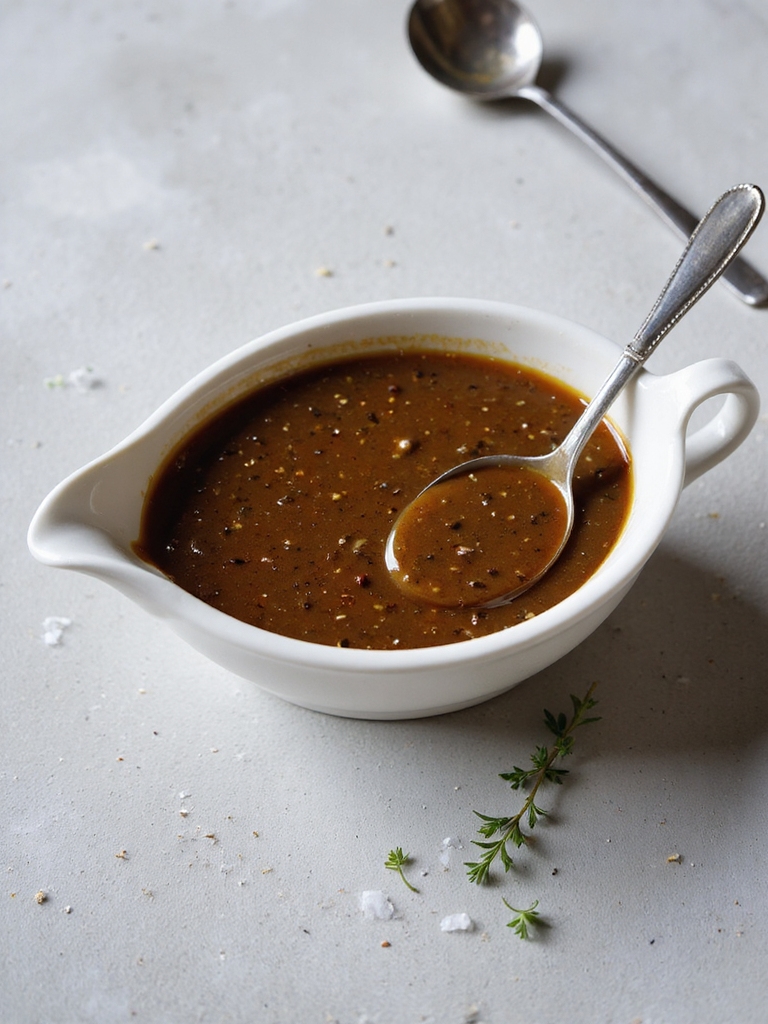
A deep, glossy, restaurant-style beef gravy starts with a classic roux: equal parts fat and flour cooked to a toasty blond-brown, then slowly whisked with warm stock to build body and shine while capturing every bit of pan fond for meaty depth; finish clean with a quick strain and balanced seasoning.
- 2 tablespoons beef drippings or unsalted butter
- 2 tablespoons all-purpose flour
- 2 cups warm low-sodium beef stock
- 1 teaspoon Worcestershire sauce
- Kosher salt
- Freshly ground black pepper
Set a skillet with drippings (or melt butter) over medium heat, sprinkle in flour, and whisk constantly 2–4 minutes until the roux turns light brown and smells nutty; avoid burning. Slowly drizzle in warm stock while whisking, scraping up fond, then add Worcestershire; bring to a gentle simmer and cook 5–8 minutes until velvety and nappe-thick. Taste and season with salt and pepper, then strain through a fine-mesh sieve into a warm gravy boat.
Warm stock prevents lumps and speeds emulsification; if gravy thickens too much, whisk in hot stock a splash at a time off heat. For deeper flavor, brown the butter lightly before the roux or infuse the stock with a smashed garlic clove and thyme sprig, removing before straining. Beef tips add extra richness and can be seared and incorporated into the gravy for a heartier finish with savory beef tips.
Quick Cornstarch Slurry Method
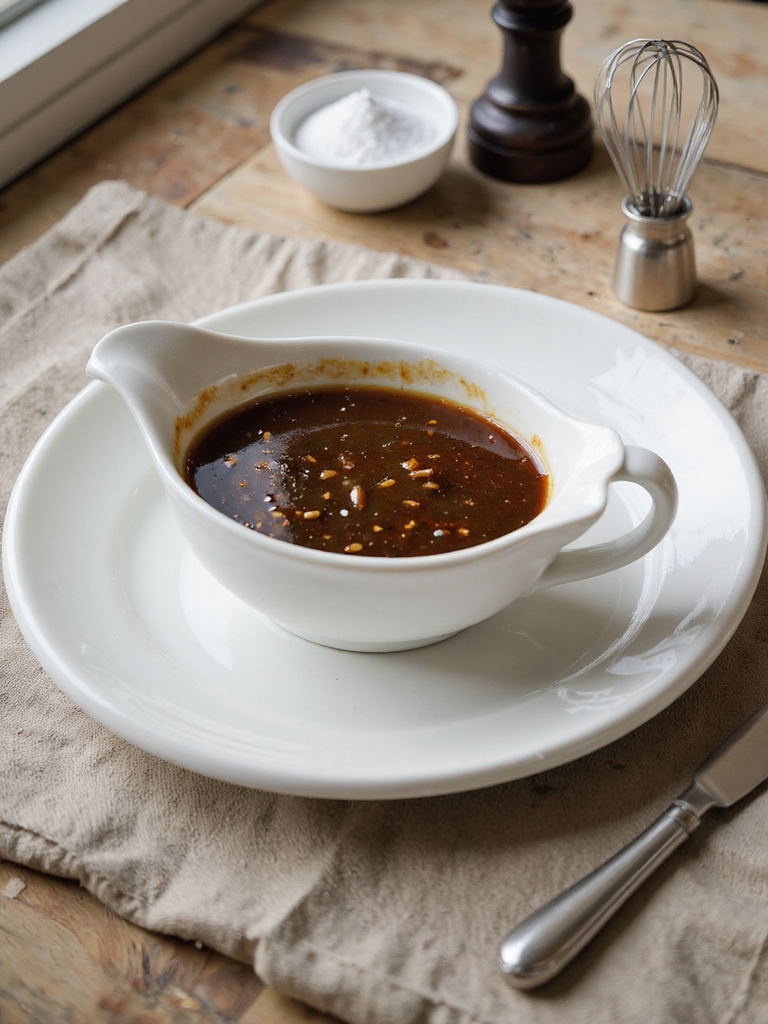
When you need silky beef gravy in minutes, a cornstarch slurry delivers gloss and body without a roux: whisk cornstarch with cold water until smooth, simmer flavorful beef stock with pan drippings or butter, then stream in the slurry and cook just until thick and clear; finish with Worcestershire, salt, and pepper for balanced, meaty depth.
- 1 3/4 cups beef stock (low-sodium), divided
- 2 tablespoons beef drippings or unsalted butter
- 1 tablespoon cornstarch
- 1 teaspoon Worcestershire sauce
- Kosher salt
- Freshly ground black pepper
In a small bowl, whisk cornstarch with 1/4 cup cold stock until completely smooth; set aside. In a skillet or saucepan over medium heat, warm drippings or melt butter, then add remaining 1 1/2 cups stock and Worcestershire; bring to a gentle simmer. Whisk the slurry to re-suspend, then drizzle it into the simmering liquid while whisking; cook 1–2 minutes until glossy and nappe-thick, season with salt and pepper, and serve immediately.
Use cold liquid for the slurry to prevent clumps, and simmer—not boil—after thickening to avoid thinning or a gummy texture. If too thick, whisk in hot stock a splash at a time; for extra savor, add a dash of soy sauce or a pat of butter off heat. This method pairs especially well with tender Beef Tips and their rich pan juices.
Deglazing Like a Pro: Wine, Stock, and More
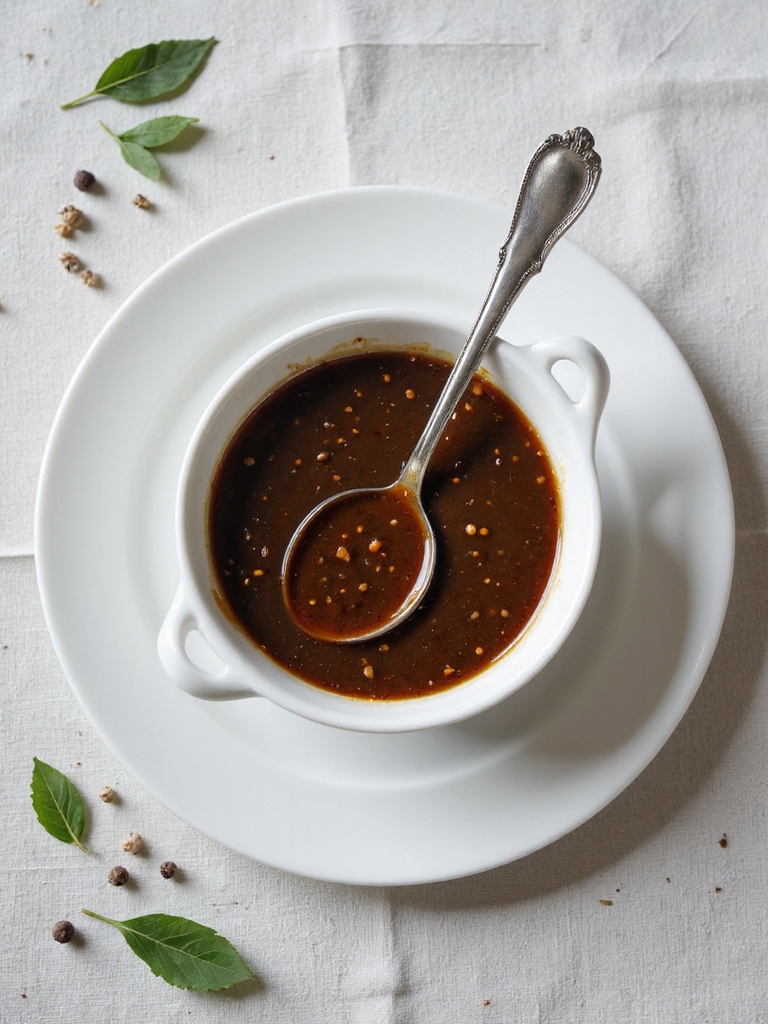
Harness browned fond and a smart splash of liquid to build restaurant-quality beef gravy right in the pan: deglaze with wine, stock, or even beer to dissolve caramelized bits, reduce to concentrate flavor, then finish with butter or a light thickener for silky body and a glossy, savory finish.
- 2 tablespoons beef drippings or unsalted butter
- 1 small shallot, finely minced (optional)
- 1/2 cup dry red wine or dry white wine (optional but classic)
- 1 1/2 cups low-sodium beef stock
- 1 teaspoon Worcestershire sauce
- 1 teaspoon Dijon mustard (optional)
- 1 tablespoon cold unsalted butter (for finishing)
- Kosher salt
- Freshly ground black pepper
After searing beef, pour off excess fat, leaving about 2 tablespoons and the browned fond; add shallot and cook 30–60 seconds until fragrant. Off heat, add wine (or 1/2 cup stock if skipping wine), return to medium-high, scraping with a wooden spoon to dissolve fond; reduce by about half. Add remaining stock and Worcestershire, simmer to reduce to a napping consistency, whisk in Dijon if using, then off heat swirl in cold butter; season to taste with salt and pepper and serve.
Use a dry wine to avoid sweetness, and reduce sufficiently so alcohol cooks off and flavors concentrate. If the pan threatens to scorch, lower heat and add a splash more stock; for extra depth, add a few drops of soy sauce or a teaspoon of balsamic during reduction. For best results, start with well-browned meat to build a robust beef flavor that forms the foundation of the gravy.
Smart Ratios for Thickness and Body
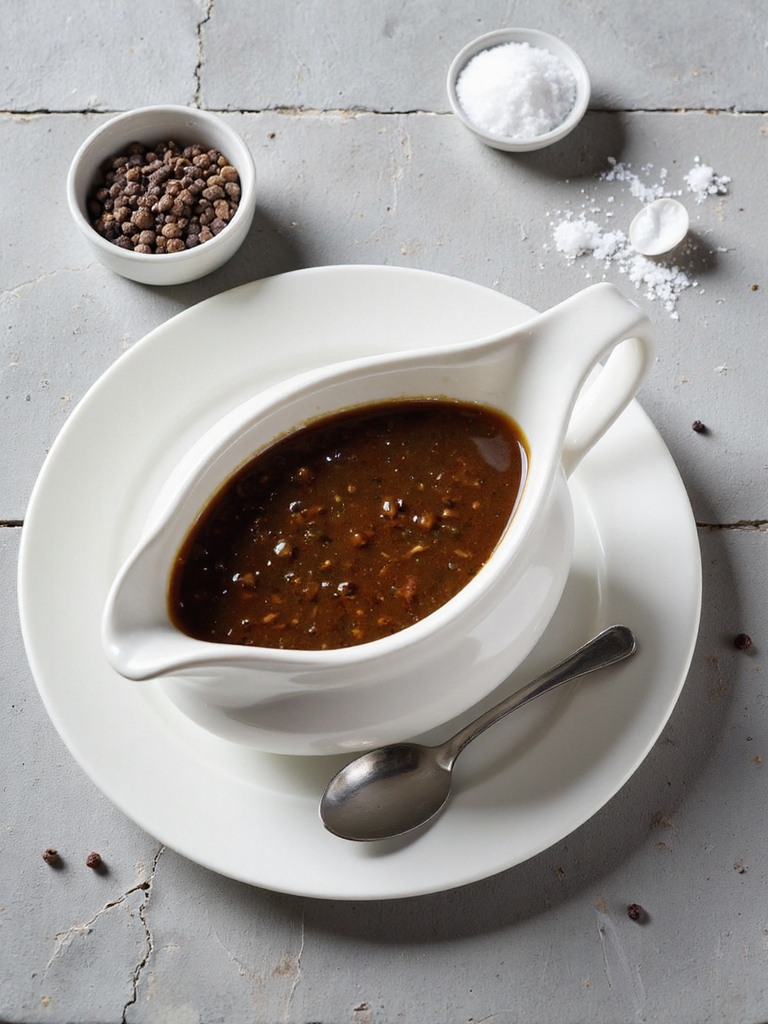
Building silky beef gravy is all about ratio control: pair your liquid base with the right thickener and fat for the texture you want—lightly napping, spoon-coating, or plush and luxurious. Use a base of deglazed pan juices and stock, then choose between a cornstarch slurry for clean shine, a flour roux for classic body, or beurre manié for last-minute fixes. Aim for about 1 cup finished gravy per diner.
- 2 tablespoons beef drippings or unsalted butter
- 2 tablespoons all-purpose flour (for roux method) or 2 teaspoons cornstarch (for slurry method)
- 2 cups low-sodium beef stock (plus more as needed)
- 1 tablespoon cold unsalted butter (optional finish)
- Kosher salt
- Freshly ground black pepper
Heat drippings/butter over medium; for roux, whisk in flour and cook 2–3 minutes until blond; for slurry, skip flour and reserve fat in pan. Whisk in stock: for light gravy use 2 cups stock to 2 teaspoons cornstarch (mixed with 2 tablespoons cold water); for classic body use 2 cups stock to 2 tablespoons roux; for extra plush reduce stock to 1½ cups with same thickener amounts. Simmer 3–5 minutes until it coats a spoon, whisk in cold butter if using, season with salt and pepper, and adjust thickness with splashes of stock or a touch more slurry.
If too thick, thin with warm stock; if too thin, simmer to reduce or add small amounts of slurry (¼ teaspoon cornstarch at a time) or beurre manié (equal parts soft butter and flour kneaded together). Measure by volume for consistency, and note that gravy tightens as it cools, so finish slightly looser than your target. For a complete weeknight plan, pair these gravies with simple sides like mashed potatoes or roasted vegetables for satisfying beef dinner meals.
Seasoning Layers: Salt, Pepper, and Umami Boosters
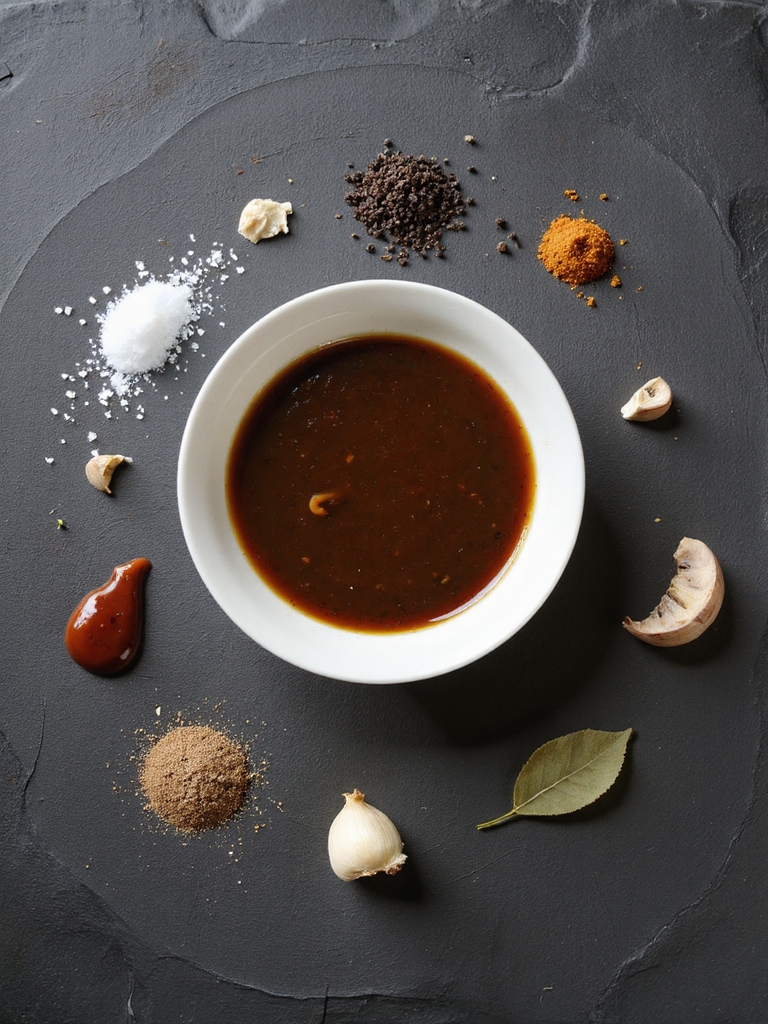
Build depth into beef gravy by seasoning in layers: salt early to open flavors, pepper late for brightness, and stack umami with browned drippings, reduced stock, and strategic boosters. Balance salinity from pan fond and stock with measured kosher salt, then add savory enhancers like soy, Worcestershire, anchovy, tomato paste, or mushroom powder in tiny increments. Taste at three checkpoints—after deglazing, mid-simmer, and just before serving—to steer intensity without overshooting.
- 2 cups low-sodium beef stock
- 2 tablespoons beef drippings or unsalted butter
- 2 teaspoons soy sauce
- 1 teaspoon Worcestershire sauce
- 1 teaspoon tomato paste
- 1/2 teaspoon mushroom powder or instant espresso (optional)
- 1 small garlic clove, smashed
- 1 bay leaf
- 1 teaspoon freshly ground black pepper, divided
- Kosher salt
Warm drippings in a saucepan over medium heat; stir in tomato paste and toast 1 minute, then add garlic and deglaze with a splash of stock, scraping up fond and salting lightly to start the base. Add remaining stock, bay leaf, soy, Worcestershire, and mushroom powder if using; simmer 5–8 minutes to meld, seasoning mid-simmer with a pinch more salt and half the pepper, adjusting salinity carefully since reduction concentrates flavor. Remove bay and garlic; finish with remaining pepper and final salt to taste, adding a teaspoon of water if flavors feel tight or another dash of soy for deeper umami, then hold warm.
Use kosher salt for control and grind pepper fresh for bloom; white pepper offers heat without visible specks. For extra savoriness, whisk in 1 teaspoon miso off heat or a knob of butter for roundness; if pan juices are very salty, start with unsalted stock and skip the early salt. For a richer, heartier stew base, consider using beef drippings from a Crockpot Beef Stew to layer more concentrated flavor into your gravy.
Fixing Lumps, Grease, and Other Common Problems
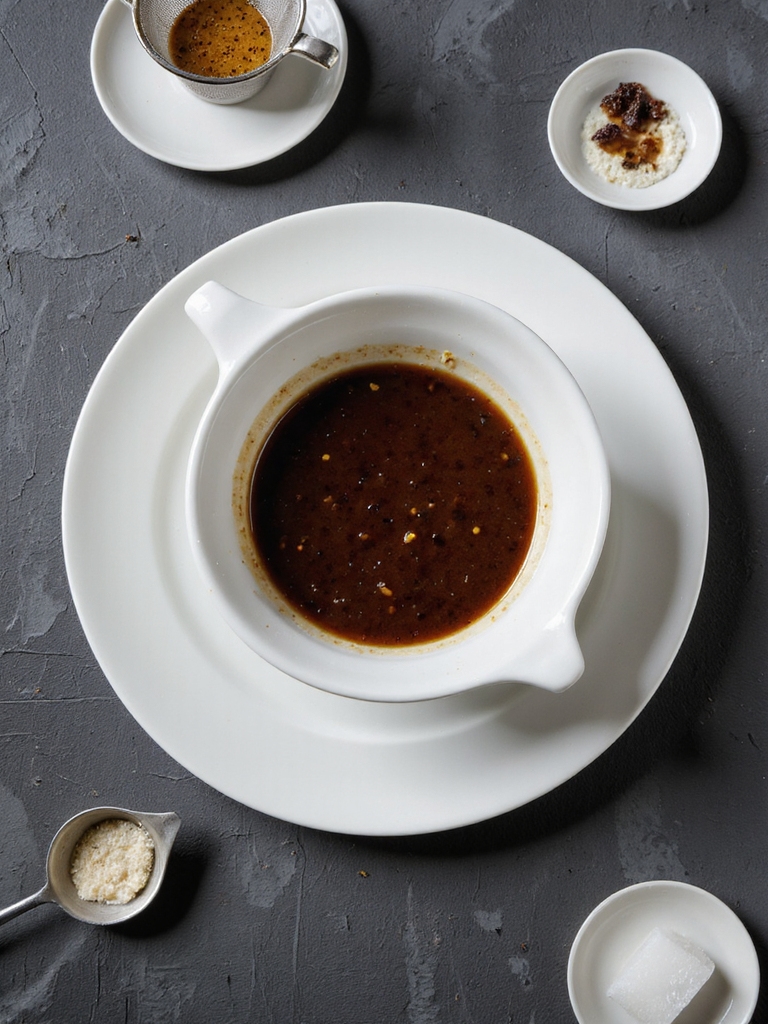
When gravy misbehaves—turning lumpy, greasy, too thin, or too salty—you can rescue it with a few smart techniques that protect flavor and texture without starting over; this recipe walks you through smoothing lumps, skimming fat, correcting thickness, and balancing seasoning so your beef gravy finishes glossy, velvety, and stable.
- 2 cups warm beef gravy (problem gravy you’re fixing)
- 1 cup hot low-sodium beef stock or water
- 1 tablespoon cornstarch or 2 tablespoons flour (for slurry)
- 2 tablespoons cold water (for slurry)
- 1–2 teaspoons soy sauce or Worcestershire (optional, to rebalance)
- 1–2 teaspoons unsalted butter (optional, to finish)
- Ice cubes (for grease rescue)
- Fine-mesh strainer or blender
Bring the gravy just to a simmer; for lumps, whisk vigorously and pass through a fine-mesh strainer or blend 10–20 seconds, then return to the pot. For grease, skim with a spoon or drag an ice cube across the surface to congeal fat, discarding solids; if still slick, whisk in a splash of hot stock to re-emulsify, then reduce gently. For thickness, thin with hot stock in small additions, or thicken by whisking in a cornstarch slurry (simmer 1 minute) or a flour slurry (simmer 3–5 minutes), then taste and adjust with salt sparingly and a dash of soy/Worcestershire; swirl in butter off heat for sheen.
If gravy tastes bitter or too salty after reducing, add a little hot water to “untighten,” then rebalance with a small knob of butter or a pinch of sugar and fresh pepper. Prevent future issues by fully dissolving thickeners in cold water before adding to hot liquid, keeping heat at a gentle simmer, and whisking continuously while adjusting texture. Slow-cooking beef often yields flavorful pan juices that make an excellent base for repaired gravy when you need extra depth, so consider incorporating slow cooker beef juices if available.
Make-Ahead, Reheat, and Storage Tips
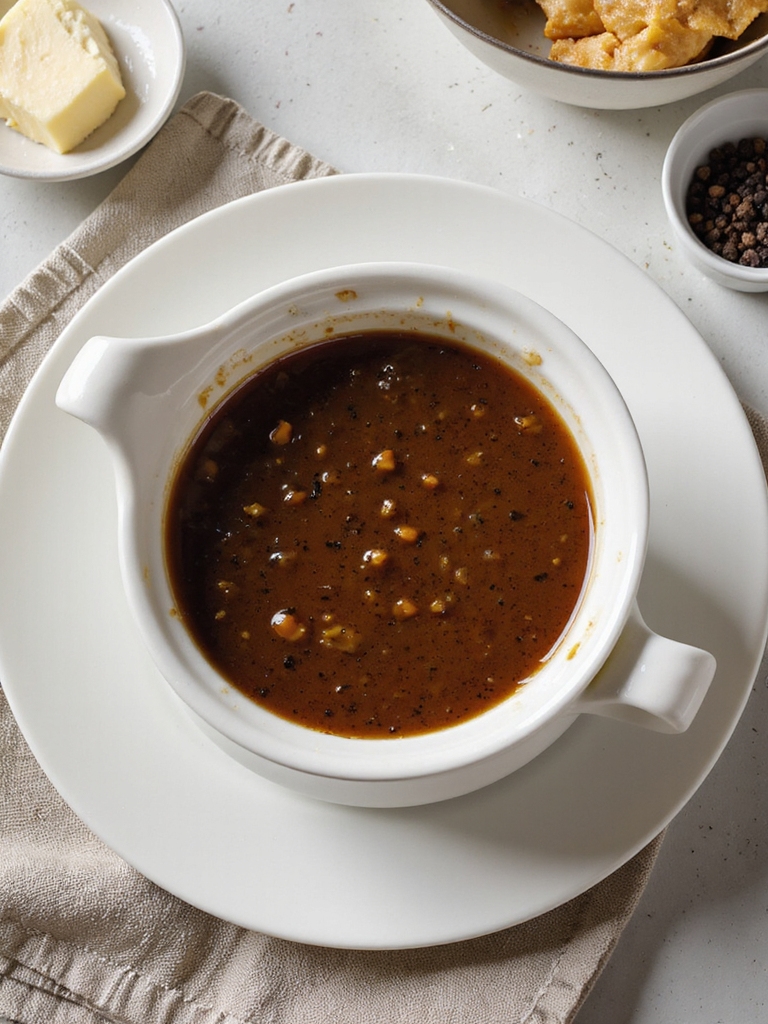
Planning ahead guarantees silky, richly flavored beef gravy on the table with zero stress—this make-ahead method builds a stable base, cools it quickly and safely, and shows you how to reheat without splitting, over-thickening, or dulling flavor so the finished gravy is glossy and dinner-ready anytime.
- 3 cups beef stock, low-sodium
- 3 tablespoons unsalted butter
- 3 tablespoons flour
- 1 teaspoon soy sauce or Worcestershire
- 1/2 teaspoon onion powder
- 1/4 teaspoon garlic powder
- 1 teaspoon black pepper
- Kosher salt, to taste
Melt butter over medium heat, whisk in flour, and cook 2–3 minutes for a light roux. Slowly whisk in stock, then add soy/Worcestershire, onion powder, garlic powder, and pepper; simmer 8–10 minutes until nappe-thick, salt lightly, and strain. Cool fast: divide into shallow containers, set over an ice bath, stir until lukewarm, cover, press parchment or plastic on the surface, seal, label/date, and refrigerate up to 4 days or freeze up to 3 months.
Reheat gently in a saucepan over low heat, whisking; if too thick, loosen with hot stock or water in small splashes; if separated or greasy, whisk vigorously or use a stick blender 10 seconds. Finish with a small knob of butter off heat for sheen and adjust seasoning after warming, not before; avoid boiling once reheated to prevent breaking and salt concentration. For added richness and body, you can incorporate strained beef drippings into the gravy during reheating to deepen flavor and mouthfeel.
Creative Flavor Variations and Serving Ideas

Bring classic beef gravy to life with bold twists and smart pairings: think umami-rich mushroom and thyme over mashed potatoes, peppercorn-cognac for steak au poivre vibes, balsamic-onion for roast veggies, miso-ginger for Asian-inspired bowls, or espresso-cocoa for deep, steakhouse tones. Use the same make-ahead base and finish each portion with the targeted add-ins so you can mix-and-match flavors for different plates at the table.
- 3 cups low-sodium beef stock
- 3 tablespoons unsalted butter
- 3 tablespoons flour
- 1 teaspoon soy sauce or Worcestershire
- 1/2 teaspoon onion powder
- 1/4 teaspoon garlic powder
- 1 teaspoon black pepper
- Kosher salt
- 1 cup sliced mushrooms + 1 teaspoon fresh thyme leaves (Variation A)
- 2 teaspoons crushed green peppercorns + 2 tablespoons cognac or brandy + 2 tablespoons cream (Variation B)
- 1 small red onion, thinly sliced + 1 tablespoon balsamic vinegar + 1 teaspoon brown sugar (Variation C)
- 1 teaspoon white miso + 1 teaspoon grated fresh ginger + 1 teaspoon toasted sesame oil (Variation D)
- 1 teaspoon espresso powder + 1/2 teaspoon cocoa powder + 1 teaspoon Dijon mustard (Variation E)
- Finishing butter, optional
Melt butter, whisk in flour, cook 2–3 minutes, then gradually whisk in stock with soy/Worcestershire, onion powder, garlic powder, and pepper; simmer 8–10 minutes until nappe. For Variation A, sauté mushrooms in a knob of butter, add thyme, fold into gravy; Variation B, simmer peppercorns in gravy, stir in cognac (off heat, then return to simmer) and cream; Variation C, caramelize onion, deglaze with balsamic, stir in sugar, fold into gravy. For Variation D, whisk miso and ginger into hot gravy, finish with sesame oil; Variation E, whisk in espresso, cocoa, and Dijon; season with salt, strain if desired, and swirl in finishing butter.
Serve mushroom-thyme over mashed potatoes, meatloaf, or roasted chicken; peppercorn-cognac with steak, burgers, or seared pork; balsamic-onion on roast veggies or sausages; miso-ginger over rice bowls or short ribs; espresso-cocoa with grilled steak or mushrooms. Keep heat gentle after enriching with dairy or miso, and thin with hot stock if holding; avoid boiling to prevent splitting and bitterness. The recipe pairs especially well with hearty beef dishes like Hearty Beef Stew that warm the soul.