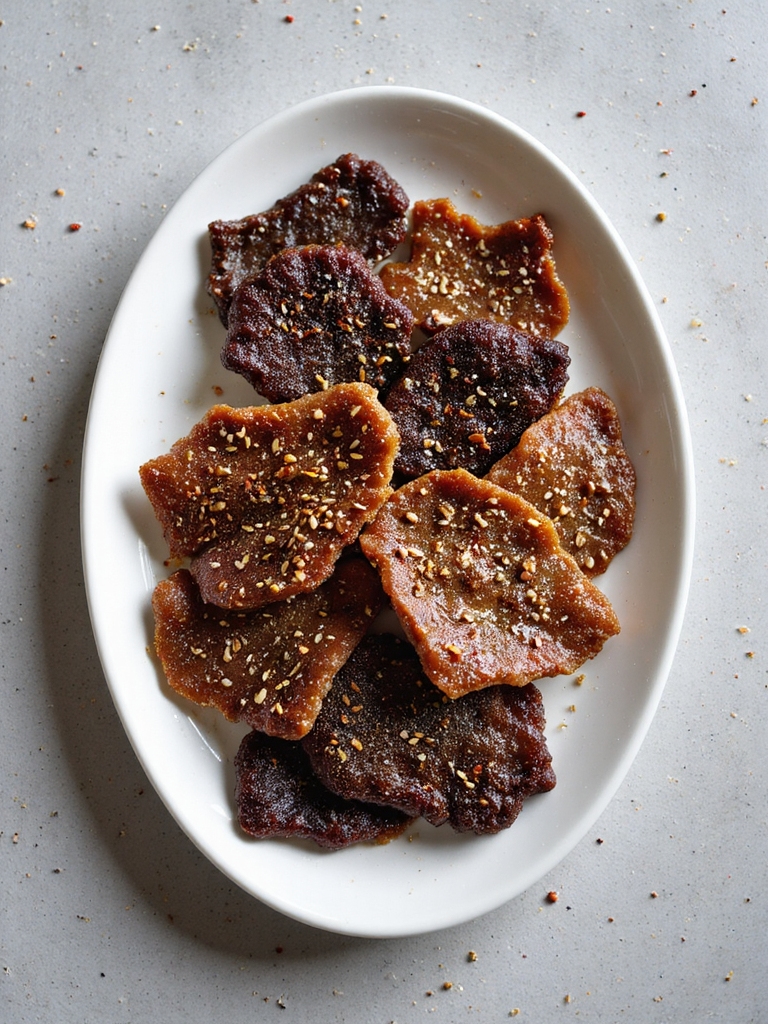
I make lean, smoky beef jerky with budget cuts like top or eye of round, sliced thin, marinated overnight, then heat-pasteurized and dehydrated until leathery and pliable. I’ll show you the exact gear setup, a balanced soy‑Worcestershire base, smoky add-ins, and safe doneness checks.
You’ll get low‑sugar options, packable portions, and storage that keeps it road-trip ready for weeks. If you want foolproof texture without wasting meat or time, here’s how.
Best Cuts of Beef for Lean, Chewy Jerky
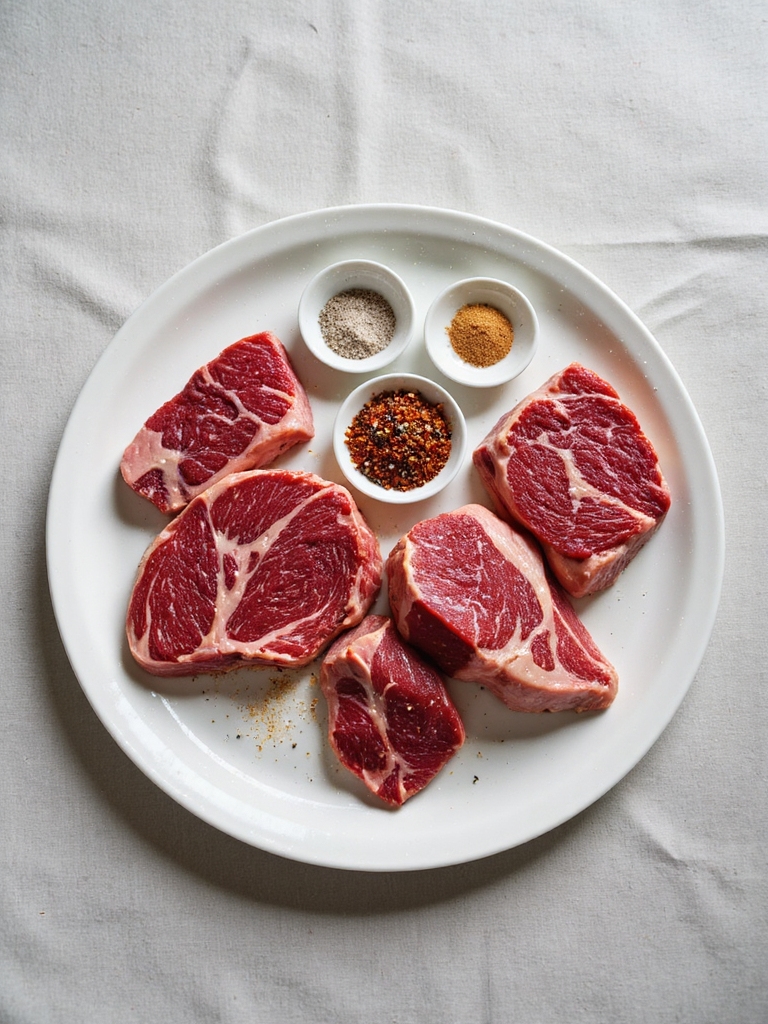
Lean, chewy beef jerky starts with choosing the right cut: look for very lean, well-worked muscles with minimal internal fat so slices dry evenly and keep a clean bite. Top round, bottom round, eye of round, sirloin tip, and flank or inside skirt (well-trimmed) are ideal; they slice neatly, absorb marinade well, and dehydrate to a satisfying chew without greasiness.
- 2 lb beef (top round, bottom round, eye of round, or sirloin tip), well-trimmed
- 1/3 cup low-sodium soy sauce
- 2 tbsp Worcestershire sauce
- 1 tbsp brown sugar
- 1 tsp kosher salt
- 1 tsp black pepper
- 1 tsp garlic powder
- 1 tsp onion powder
- 1/2 tsp smoked paprika
- 1/4 tsp red pepper flakes (optional)
- 1 tsp curing salt Prague Powder #1 (optional)
Freeze beef 45–60 minutes to firm, then slice 1/8–1/4 inch thick against the grain for chew or with the grain for extra chew; whisk marinade, toss slices to coat, add curing salt if using, and refrigerate 6–24 hours. Pat dry, arrange in a single layer on dehydrator trays or wire-racked sheet pans; dry at 160°F (71°C) for 1 hour, then 145–155°F (63–68°C) until dry but pliable, 3–6 hours, rotating as needed. Test by bending: it should crack but not snap; cool completely, then store airtight (room temp up to 1 week, fridge 3 weeks, freezer 3 months).
Trim all visible fat for longer shelf life, and keep slices uniform for even drying. If using an oven, prop the door slightly with a spoon for airflow; for smoky depth, add 1/2 tsp liquid smoke to the marinade or finish the last hour in a 170°F smoker. Properly trimming fat and using low temperatures helps prevent spoilage and ensures safe dehydration.
Essential Gear and Dehydrator Setup

A few smart tools make jerky-making easy, consistent, and food-safe. You’ll want a reliable dehydrator or steady low-temp oven, a sharp slicing knife, a scale for accuracy, racks for airflow, and a thermometer to verify both appliance temp and meat safety. Set up clean, organized stations to trim, marinate, dry, and cool so you can move efficiently without cross-contamination.
- Dehydrator with adjustable thermostat and fan
- Oven with wire racks (alternative)
- Instant-read thermometer
- Oven/dehydrator thermometer
- Sharp chef’s knife or slicer
- Cutting board
- Large zip-top bags or nonreactive containers
- Paper towels
- Cooling racks
- Kitchen scale
Place your dehydrator on a stable, ventilated surface; clean trays, then lightly oil or use mesh screens to prevent sticking and improve airflow. Preheat to 160°F (71°C) for the first hour to pasteurize, confirming with an appliance thermometer, and arrange beef in a single, non-overlapping layer on trays or wire racks if using an oven. After the first hour, lower to 145–155°F (63–68°C), rotate trays front-to-back and top-to-bottom every 60–90 minutes, and keep a small gap in the oven door with a spoon for airflow until slices are dry but pliable.
Sanitize tools and surfaces before and after handling raw beef, and keep raw and dried product strictly separate. Monitor room humidity—high humidity slows drying—so use a fan for gentle room airflow or a dehumidifier if needed. When serving or storing, remember that proper storage in airtight containers or vacuum sealing will extend shelf life and maintain texture for road trips beef ramen.
Trim, Slice, and Prep for Perfect Texture
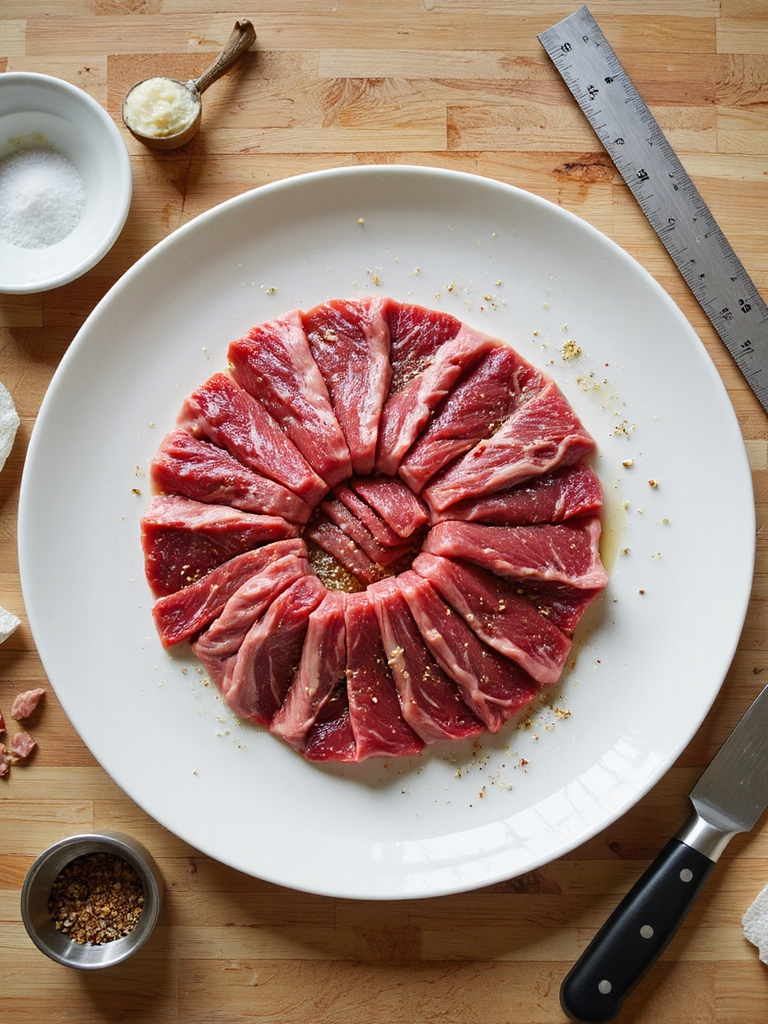
Great jerky starts with choosing the right cut and treating it with care before it ever meets heat. Opt for lean roasts like eye of round, top round, sirloin tip, or flank; fat turns rancid and hinders drying, so trimming is critical. Decide on texture: slicing with the grain yields chewier strips; across the grain makes tender bites. Chill meat until very firm (even partially frozen) to get uniform, safe, and thin slices that dry evenly and finish with a perfect pliable snap.
- 2–3 lb beef roast (eye of round, top round, or sirloin tip), well-trimmed
- 1 tsp kosher salt (for pre-seasoning)
- 1 tsp black pepper, coarse
- 1 tsp garlic powder
- 1 tsp onion powder
- 1 tbsp Worcestershire or soy (light pre-seasoning)
- 1 tbsp neutral oil (optional, very light coating)
- Disposable gloves
Working on a sanitized board, remove all surface fat, silverskin, and membranes until only lean remains; square the roast for even planks. Chill the beef 30–60 minutes or partially freeze 60–90 minutes, then slice 1/8–1/4 inch thick either with or against the grain for your preferred chew, keeping thickness consistent; stack and lightly pound any uneven pieces to match thickness. Toss slices with salt, pepper, garlic, onion powder, and a splash of Worcestershire or soy just to season the surface, optionally mist with a film of oil to minimize sticking, then pat dry with paper towels and hold cold while you prepare trays for marinating and drying.
Freeze the trimmed fat scraps to use for other cooking—don’t mix them into jerky. Keep raw and prepped slices below 40°F, sanitize knives and boards between trimming and slicing, and weigh meat for accurate marinade ratios in the next step. A simple homemade beef gravy can complement cooked jerky when serving at home, especially using drippings and savory techniques to build depth.
Balanced Marinade: Salty, Sweet, Umami, Heat
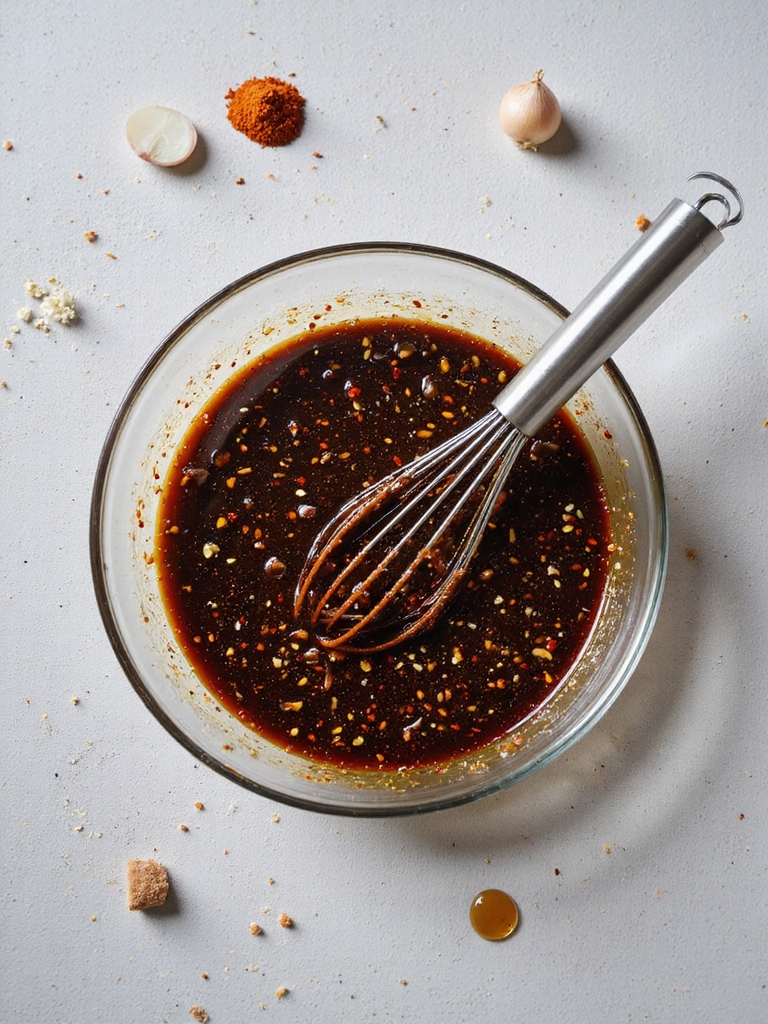
A great jerky marinade balances salt for preservation, sweet for caramelization, umami for depth, and heat for a clean finish while keeping overall water activity in check. Aim for assertive seasoning because flavors mute during drying; use measured ratios by meat weight for safety and consistency. This batch suits 2–3 lb of trimmed beef slices and can be scaled precisely; whisk until fully dissolved so every strip absorbs evenly.
- 1/3 cup soy sauce (low-sodium preferred)
- 1/4 cup Worcestershire sauce
- 2 tbsp dark brown sugar
- 1 tbsp honey or maple syrup
- 1 tsp kosher salt
- 1 tsp freshly ground black pepper
- 1 tsp garlic powder
- 1 tsp onion powder
- 1 tsp smoked paprika
- 1/2 tsp crushed red pepper flakes
- 1/2 tsp ground cayenne (optional, to taste)
- 1 tsp toasted sesame oil (optional richness)
- 1 tsp rice vinegar or apple cider vinegar
- 1/4 cup cold water or unsalted beef stock
- 1/2 tsp Prague Powder #1 (optional; only if using for food safety, 2.5 g per kg meat)
Whisk soy, Worcestershire, brown sugar, honey, salt, pepper, garlic, onion powder, smoked paprika, red pepper, cayenne, sesame oil, vinegar, and water until the sugar dissolves and the mixture is homogenous; if using curing salt, weigh your trimmed meat and add precisely 2.5 g Prague Powder #1 per kilogram of meat, mixing it thoroughly into the marinade. Place chilled beef slices in a gallon bag or shallow pan, pour in marinade, press out air, and massage to coat every surface; marinate 8–24 hours in the coldest part of the fridge, tossing once or twice for even uptake. Drain well, blot very dry, and proceed to drying or smoking, reserving no marinade; discard leftovers and sanitize surfaces.
Use weight-based ratios for repeatable results: roughly 6–8% marinade by meat weight is a good starting point, and total sugar at 1–2% of meat weight balances salinity without making jerky sticky. For spiciness control, keep cayenne modest—heat concentrates as moisture leaves—and always dry thoroughly for best texture and safe storage. Ground beef works for quick, budget-friendly jerky but requires extra care with fat content and handling to ensure safety; see savory ground beef stroganoff for related ground-beef guidance.
Smoky Variations: Liquid Smoke, Wood, and Spices
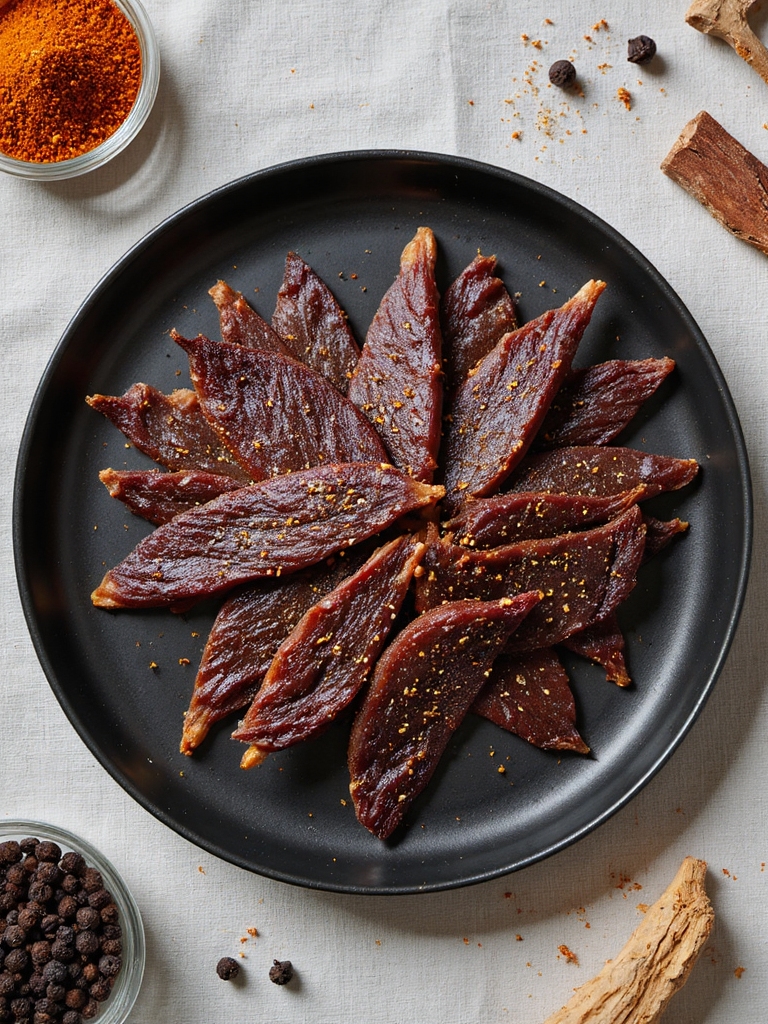
Harness smoke three ways to layer character into your jerky: add clean liquid smoke to the marinade for baseline campfire notes, dry with real hardwood in a smoker or pellet grill for authentic aromatics, and reinforce with spice-cabinet smoke like smoked paprika, chipotle, or black cardamom. Keep salt and sugar balanced so smoke doesn’t taste harsh, and avoid over-smoking—drying concentrates everything. Choose woods that fit beef: hickory for classic punch, oak for balance, cherry or apple for a touch of sweetness; mix small amounts for complexity.
- 2–3 lb trimmed beef, 1/8–1/4 inch slices
- 1/3 cup low-sodium soy sauce
- 1/4 cup Worcestershire sauce
- 2 tbsp dark brown sugar
- 1 tsp kosher salt
- 1 tsp black pepper
- 1 tsp garlic powder
- 1 tsp onion powder
- 2 tsp smoked paprika
- 1/2–1 tsp chipotle powder
- 1/2 tsp liquid smoke (mesquite or hickory), to taste
- 1 tsp apple cider vinegar
- 1/4 cup cold water or unsalted beef stock
- Optional: 1/2 tsp Prague Powder #1 (2.5 g/kg meat), wood chunks/chips (hickory, oak, cherry)
Whisk soy, Worcestershire, sugar, salt, pepper, garlic, onion, smoked paprika, chipotle, liquid smoke, vinegar, and water until dissolved; if curing, weigh meat and add Prague Powder #1 precisely, then combine with beef and marinate 8–24 hours cold. Drain, blot very dry, and arrange strips on racks; dry in a smoker at 160–175°F with a small, clean-burning hickory-oak mix for 60–90 minutes of active smoke, then continue without added smoke until leathery but pliable. Alternatively, dehydrate in an oven/dehydrator at 160°F and finish with a brief kiss of smoke in a grill/smoker, or keep only the liquid smoke route if indoors.
Use light blue, thin smoke—thick white smoke makes jerky bitter—and keep vents open for clean combustion and moisture escape. Spice smoke adds depth but can overdo it quickly; start modest, note results, and adjust wood species and liquid smoke next batch for your ideal profile. For a richer, more savory base note, you can adapt the marinade with elements from a Beef Teriyaki recipe like reduced soy and a touch more brown sugar for glaze-like depth, especially when using a low-sodium soy sauce.
Dehydrating Time and Temperature Guide
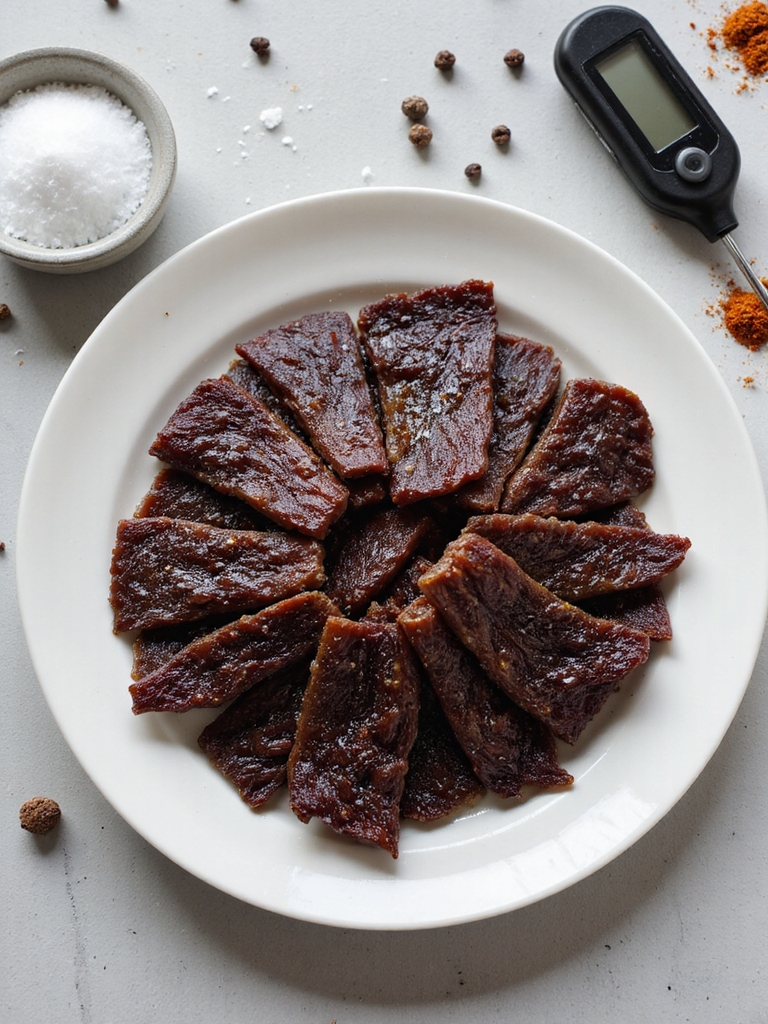
Dialing in dehydrating time and temperature is how you get jerky that’s safe, evenly dried, and pleasantly chewy rather than brittle; target a steady 160°F/71°C to pasteurize beef early, then hold gentle heat with good airflow until slices are uniformly leathery, with total time driven by slice thickness, marinade moisture, and your appliance’s efficiency.
- 2–3 lb trimmed beef, 1/8–1/4 inch slices
- 1/3 cup low-sodium soy sauce
- 1/4 cup Worcestershire sauce
- 2 tbsp dark brown sugar
- 1 tsp kosher salt
- 1 tsp black pepper
- 1 tsp garlic powder
- 1 tsp onion powder
- 2 tsp smoked paprika
- 1/2–1 tsp chipotle powder
- 1/2 tsp liquid smoke
- 1 tsp apple cider vinegar
- 1/4 cup cold water or unsalted beef stock
- Optional: 1/2 tsp Prague Powder #1
Whisk marinade ingredients, combine with beef (add Prague Powder #1 precisely if using), and chill 8–24 hours; drain and blot very dry. Preheat dehydrator or oven to 160°F/71°C (use an external thermometer for accuracy), arrange strips in a single layer with space, and heat at 160°F for 10–15 minutes to pasteurize, then continue drying at 150–160°F with active airflow. Total time ranges 3–6 hours in a dehydrator and 4–8 hours in an oven; rotate trays every hour, flip strips once, and finish when pieces are uniformly dark, dry to the touch, and bend without cracking.
Aim for 1/8-inch slices to dry faster (3–4 hours) and 1/4-inch for chewier results (5–8 hours), factoring in sugar and oil-heavy marinades which slow drying; denser racks and humid rooms extend time. Keep vents open on smokers/ovens, avoid stacking, and cool jerky on racks before packing; if in doubt, brief post-dry heat at 275°F for 10 minutes guarantees safety without over-drying. For a convenient, set-it-and-forget-it option, consider using an Instant Pot for other stew recipes alongside jerky prep to maximize kitchen efficiency and timing with a multi-use appliance.
Doneness Tests and Safe Handling
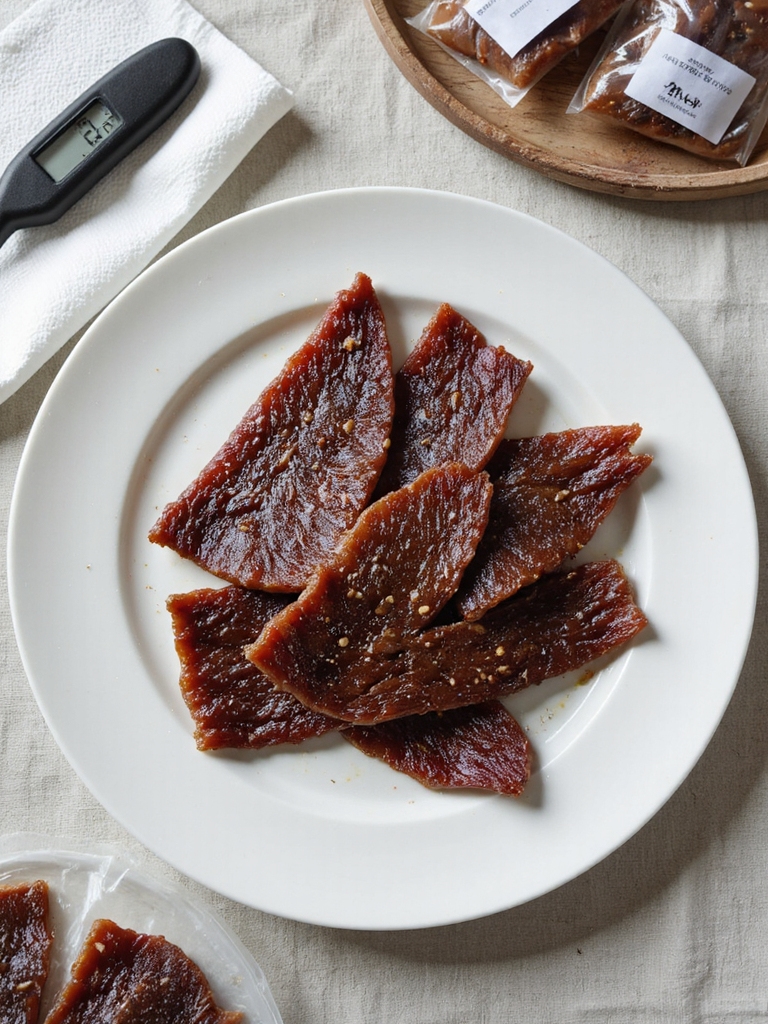
Master jerky like a pro by checking doneness with both feel and bend tests, then handling it safely to prevent post-dry contamination; aim for slices that are uniformly dry, darkened, and leathery, that bend about 90 degrees and show fine white fibers without cracking or bead-up moisture, and confirm safety with a calibrated thermometer and clean storage practices.
- Finished jerky slices
- Instant-read thermometer
- Clean tongs
- Paper towels
- Zip-top bags or vacuum sealer
- Labels and marker
Work on a clean surface with washed hands; after drying at 160°F/71°C early to pasteurize, test a cooled piece: it should be dry to the touch, not sticky, and when bent 90 degrees, it should flex and show fine white fibers without snapping; if it cracks sharply, it’s over-dry, if it feels soft or beads moisture, keep drying. Optionally verify internal temp reached 160°F/71°C during the initial heat; if unsure, do a post-dry safety bake at 275°F/135°C for 10 minutes, then cool completely on racks. Blot excess surface oil, then package in small portions using clean tongs; label with date, store at room temp up to 1 week, refrigerated up to 1 month, or vacuum-sealed and frozen up to 6 months.
For best texture, let jerky rest 12–24 hours after drying for moisture equilibration inside sealed bags, which evens chew; if condensation forms, reopen and dry 15–30 minutes more. Use desiccant packs in sealed containers, and always discard any jerky that smells sour, feels tacky after resting, or shows mold. A slow cooker can be used for initial low-and-slow cooking before dehydrating to tenderize tougher cuts and improve flavor Crockpot Beef and Noodles.
Low-Sugar and Extra-Lean Options
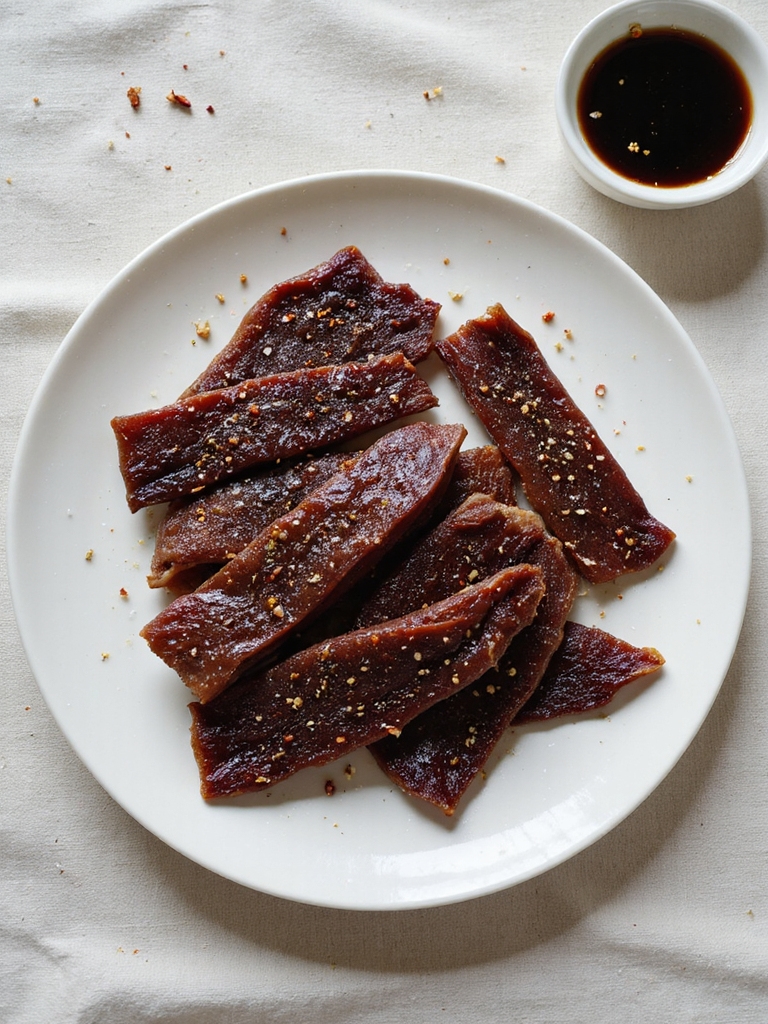
Lean, lightly sweetened jerky is absolutely doable: choose extra-lean cuts and use umami, acids, and spices to replace sugar’s browning and tenderness, then manage dryness with precise slicing and controlled heat. These options keep carbs low while preserving safety and chew with smart marinades, brief preheat pasteurization, and careful drying to a leathery bend.
- 2 lb extra-lean beef (eye of round, top round, or sirloin tip), trimmed well
- 1/4 cup low-sodium soy sauce or coconut aminos
- 2 tbsp apple cider vinegar or rice vinegar
- 1 tbsp Worcestershire sauce (no-sugar-added if possible)
- 1–1.5 tsp kosher salt
- 1 tsp coarse black pepper
- 1 tsp smoked paprika
- 1 tsp garlic powder
- 1/2 tsp onion powder
- 1/4–1/2 tsp crushed red pepper or chipotle powder (optional)
- 1 tsp gelatin powder or 1 tbsp fish sauce (optional tenderness/umami)
- 1 tsp liquid smoke (optional)
- Nonstick spray or parchment
- Desiccant packs (optional for storage)
Trim all visible fat, partially freeze the beef 45–60 minutes, then slice 1/8–1/4 inch across the grain for chewy or with the grain for extra chew; whisk marinade, add optional gelatin or fish sauce for body, toss slices to coat, and refrigerate 6–12 hours. Drain well, pat dry, arrange on racks; pasteurize at 160°F/71°C for 10–15 minutes in a 275°F/135°C oven, then dehydrate at 145–160°F (or smoker 160°F with light draft) until leathery, darkened, and bends to 90 degrees with fine white fibers, 2.5–5 hours depending on thickness. Cool fully, blot oil, rest sealed 12–24 hours for moisture equilibration; if any slice feels tacky after resting, dry 15–30 minutes more before packaging with desiccants.
Sugar-free marinades brown less, so rely on smoke, paprika, and umami to build flavor; for extra-lean cuts, avoid overdrying by keeping slices even and checking early. If your dehydrator can’t reach 160°F/71°C initially, do a 275°F/135°C post-dry safety bake for 10 minutes, cool on racks, then package in small portions. For more meal ideas using ground beef, see Easy Ground Beef Recipes to inspire complementary snacks and dishes.
Storage, Shelf Life, and Packable Portions
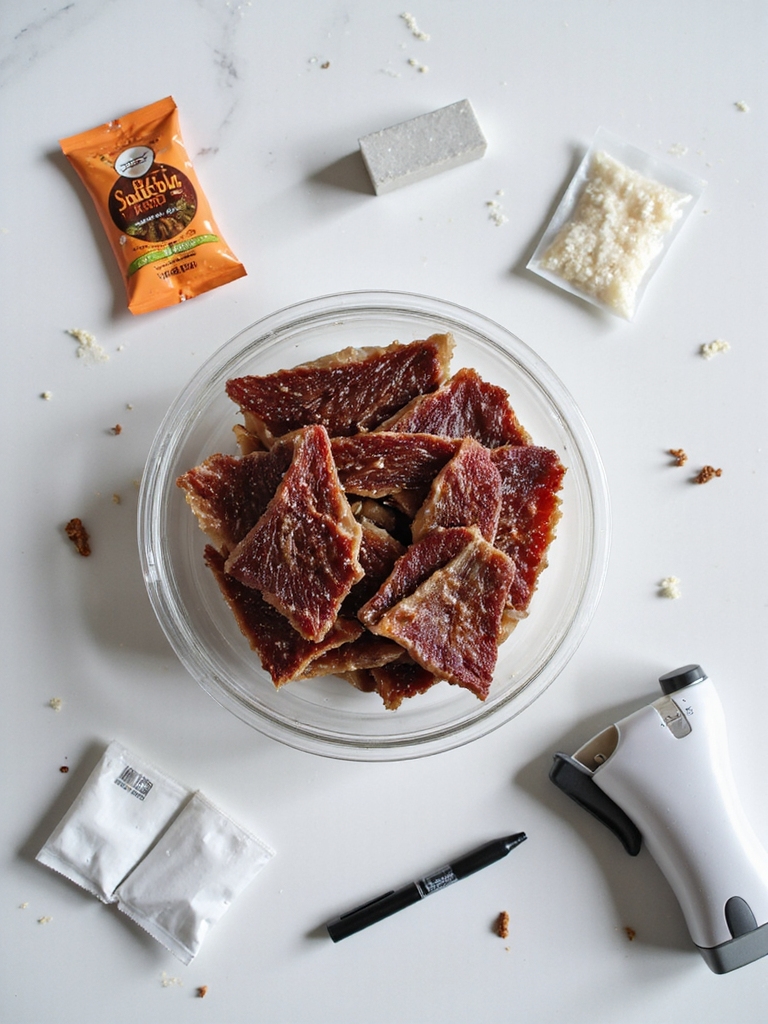
Jerky is hardy but not invincible: control moisture, oxygen, and heat to maximize shelf life and keep it perfectly packable. Aim for a dry, leathery bend with no tackiness, cool completely, then rest sealed 12–24 hours so slices equalize moisture before final packaging. Use oxygen barriers, desiccants, and portioned packs to reduce repeated exposure and make grab-and-go trail servings foolproof.
- Finished beef jerky, fully cooled and rested 12–24 hours
- Food-safe gloves
- Paper towels
- Vacuum sealer bags or Mylar bags (3–5 mil) or freezer-grade zip bags
- Oxygen absorbers (300–500 cc for 1-qt bags)
- Silica gel/desiccant packs (food-safe)
- Labels and marker
- Resealable snack pouches (1–2 oz portions)
- Clean wire rack and sheet pan
Pat jerky with paper towels to remove any surface oil, then sort by thickness and dryness so like pieces store together; place 1–2 oz portions into snack pouches for daily carry, and bulk backup into vacuum or Mylar bags with one oxygen absorber plus a desiccant per quart, then seal airtight and label with date and batch. Pantry storage (cool, dark, <70°F/21°C) keeps vacuum-sealed jerky 1–2 months; refrigerate for 3–6 months, or freeze for 9–12 months, thawing unopened in the fridge to prevent condensation; for daily carry, pack only what you’ll eat in 24–48 hours. For added safety, keep water activity low: if any piece feels tacky after the 24-hour rest, return to a 145–160°F dehydrator for 15–30 minutes, cool again, and repackage with fresh absorbers.
Open-and-close cycles shorten life; keep a “working” bag for snacking and leave long-term packs sealed until needed. On the trail, double-bag in zip pouches inside a rigid container to prevent crushing and protect from heat; if you see condensation in a bag, discard or re-dry immediately to avoid mold. For quick shelf-stable protein options when you want an easy meal or snack, consider using canned beef as an instant convenience ingredient in jams or stews.
Flavor Profiles and Batch Make-Ahead Tips
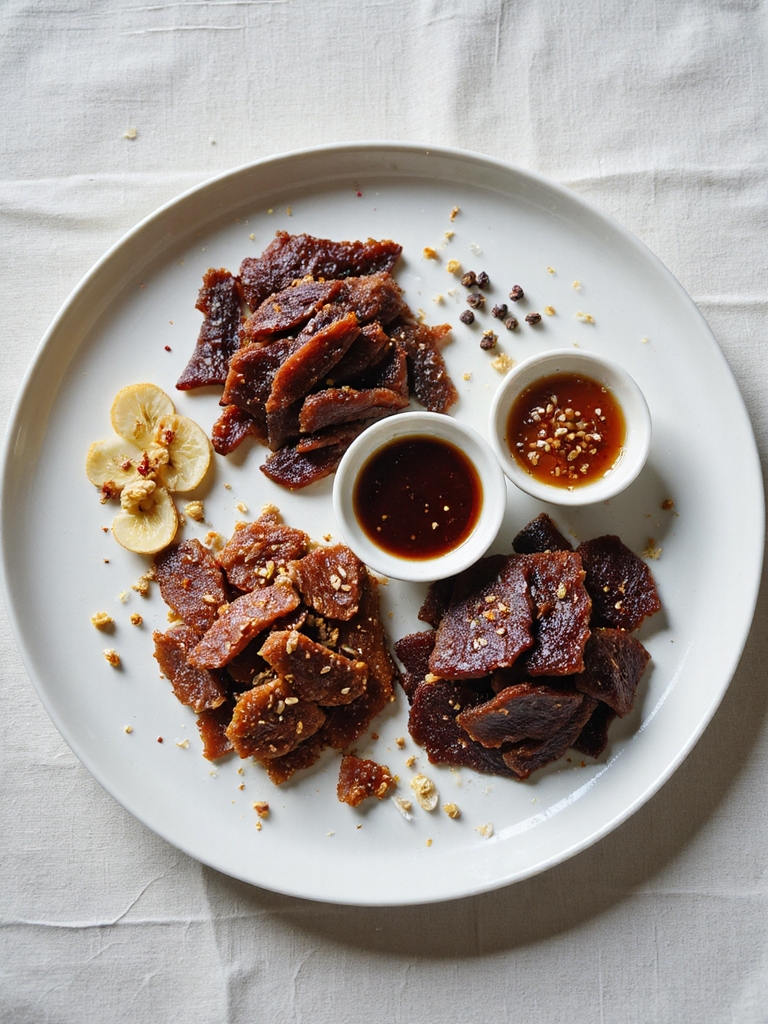
Build a jerky lineup that covers classic savory, sweet-heat, and global riffs so you can marinate multiple labeled bags at once, dehydrate in a single run, and enjoy variety for weeks; mix master bases, then split and finish with distinct accents to create clear profiles without remaking from scratch.
- 3 lb beef eye of round or top round, trimmed and sliced 1/8–1/4 inch
- 1 cup low-sodium soy sauce
- 1/3 cup Worcestershire sauce
- 3 tbsp brown sugar or maple syrup
- 2 tsp kosher salt
- 2 tsp black pepper, freshly ground
- 2 tsp garlic powder
- 1 tsp onion powder
- 1 tsp smoked paprika
- Optional Sweet-Heat: 2 tbsp hot honey, 1 tsp red pepper flakes
- Optional Teriyaki-Ginger: 3 tbsp mirin, 1 tbsp fresh grated ginger, 1 tsp toasted sesame oil
- Optional Peppercorn-Coriander: 1 tbsp cracked peppercorn blend, 1 tsp crushed coriander
- Optional Espresso-Chile: 2 tsp finely ground espresso, 1 tsp ancho or chipotle chile powder
Whisk soy, Worcestershire, sugar, salt, pepper, garlic, onion, and paprika; divide marinade into 3–4 bowls and stir in one optional accent per bowl for distinct flavor profiles. Split sliced beef evenly among bags, pour in marinades, press out air, label (base + accent), and chill 8–24 hours, flipping once; drain and blot very dry. Arrange on dehydrator trays or racks at 160°F/71°C for 2–4 hours then 145–155°F until dry-leathery with a bend-and-crack, cool completely, rest sealed 12–24 hours to equalize, then package by flavor in portion packs.
Batch tip: double the base marinade, then finish each split bowl with accents so salt level stays consistent while flavor varies; track heat/sweet levels on labels for future tweaks. For reliable results across profiles, keep slice thickness uniform, avoid excess sugar in high-heat batches to prevent tackiness, and dehydrate flavors together but store separately to preserve aroma. A slow cooker can also be used for other ground beef dishes like chili and tacos, useful when planning meals alongside jerky prep for batch cooking.