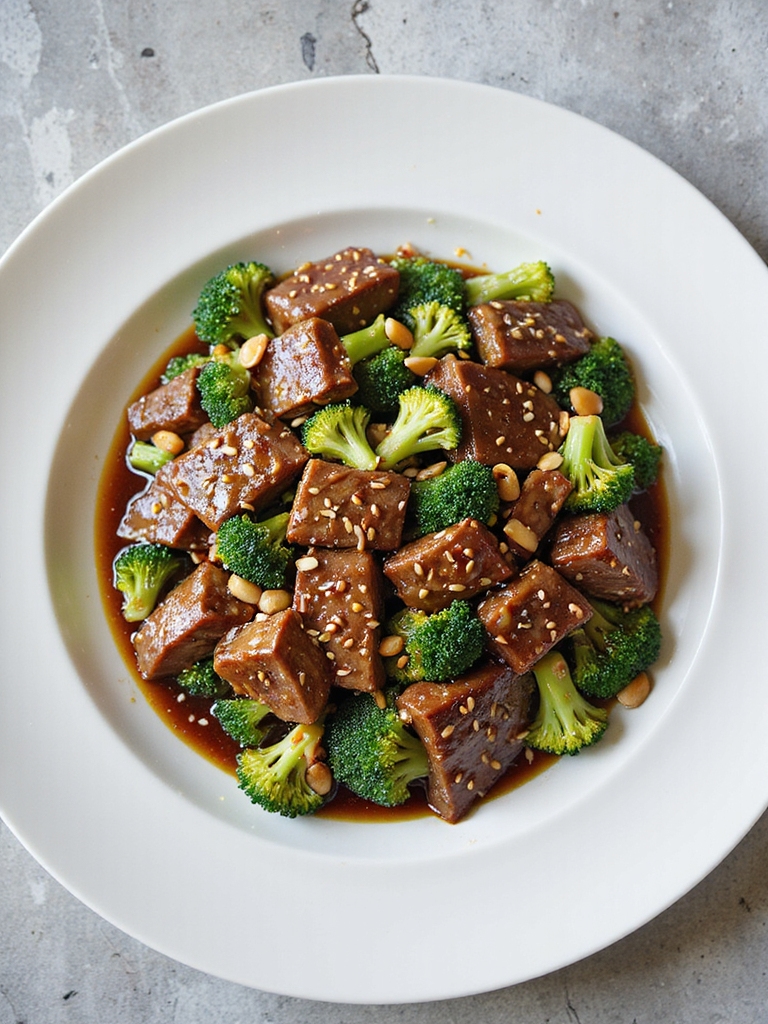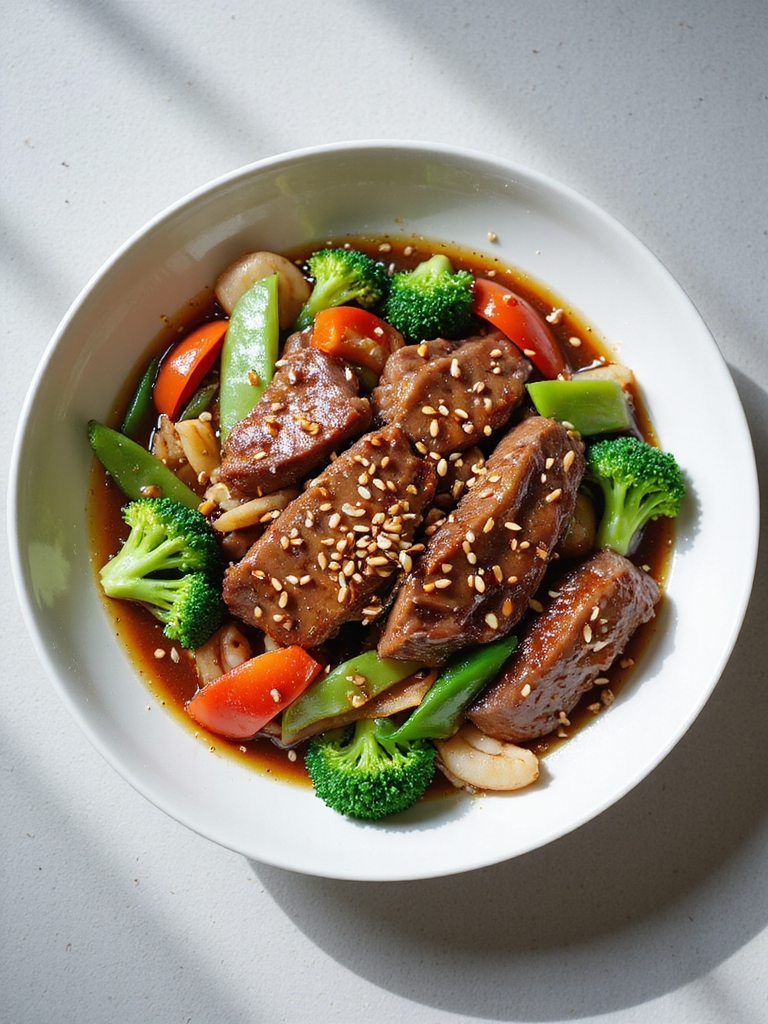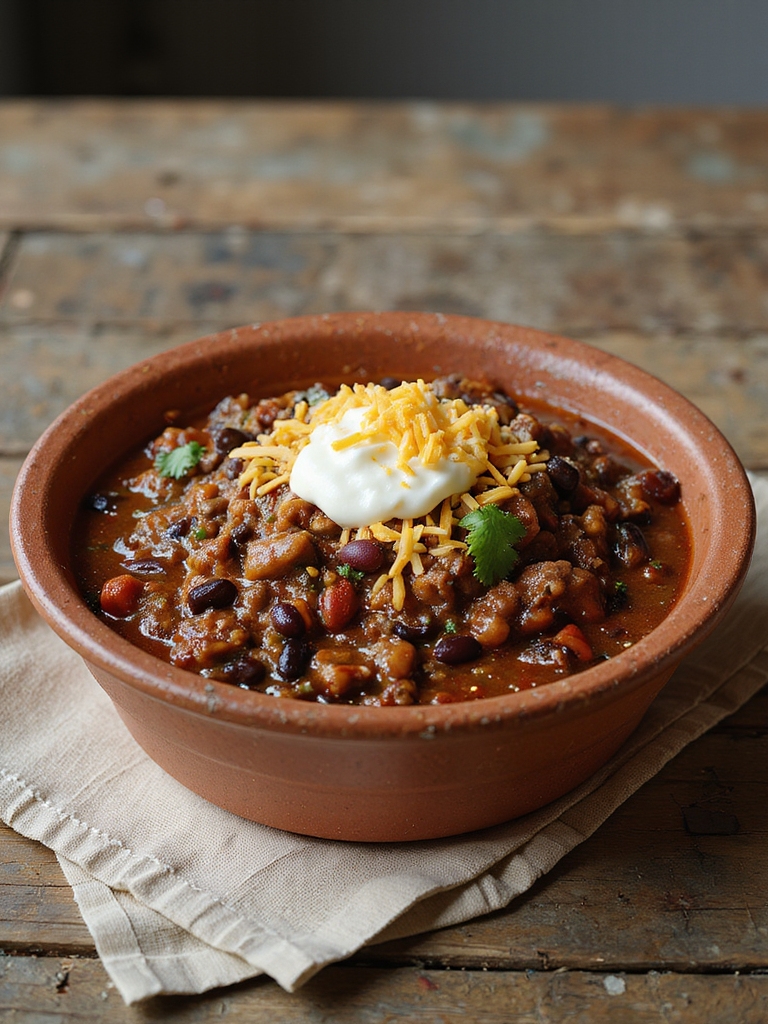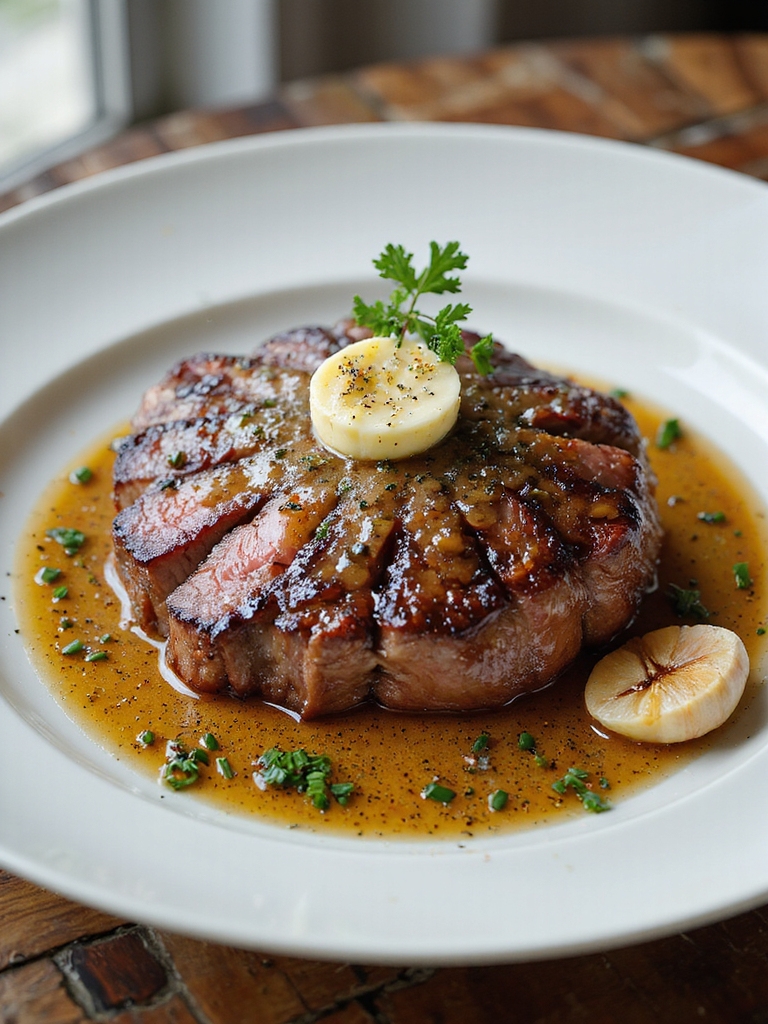
When I want fall-apart beef shank, I keep it simple: hard sear for fond, deglaze with something bold (red wine, stock, or soy-ginger), then braise low and slow with onions, garlic, and herbs or warm spices.
I finish with a splash of acid and a knob of butter for gloss. It’s weeknight-easy if you use a Dutch oven or slow cooker. Curious which version pairs best with polenta, noodles, or rice?
Ossobuco With Gremolata and Saffron Risotto
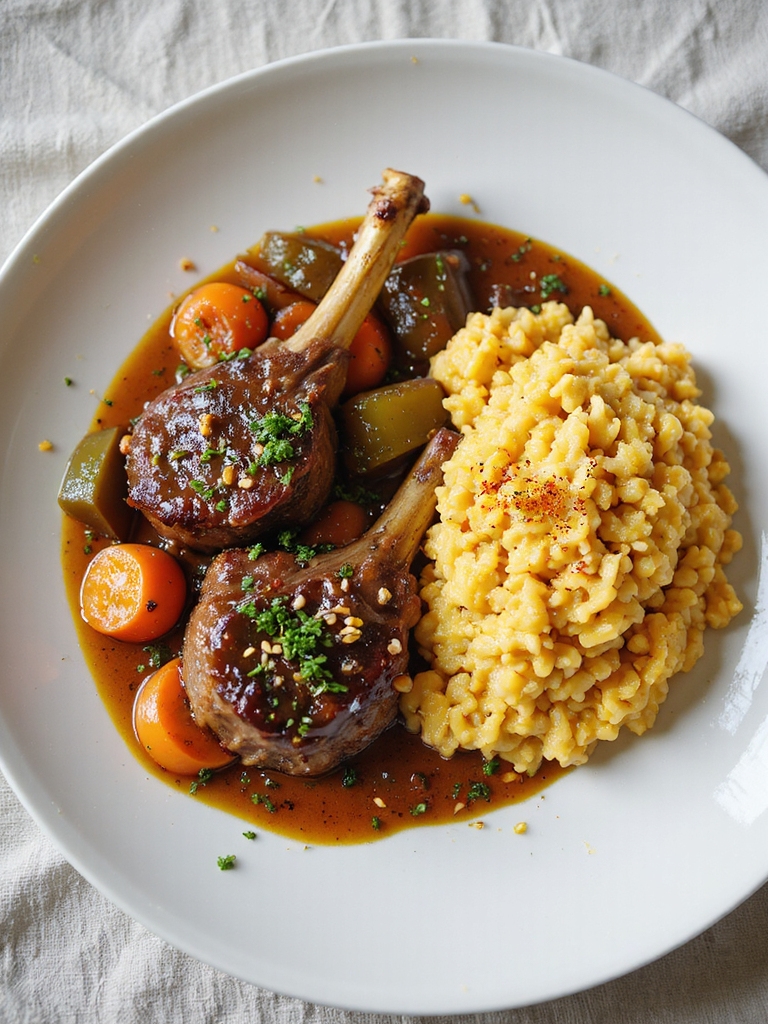
Ossobuco with gremolata and saffron risotto is a luxurious Milanese classic: tender braised veal shanks simmered with aromatics, wine, and tomatoes until spoon-soft, finished with a bright lemon-parsley-garlic gremolata and served alongside creamy, golden risotto alla Milanese scented with saffron.
- 4 cross-cut veal shanks (about 1.5–2 inches thick)
- Kosher salt
- Freshly ground black pepper
- 1/2 cup all-purpose flour
- 3 tablespoons olive oil
- 2 tablespoons unsalted butter
- 1 large onion, finely chopped
- 1 carrot, finely diced
- 1 celery rib, finely diced
- 3 cloves garlic, minced
- 2 tablespoons tomato paste
- 1 cup dry white wine
- 2 cups low-sodium beef or veal stock
- 1 bay leaf
- 2 sprigs thyme
- 1 can (14.5 oz) crushed tomatoes
- Zest of 1 lemon
- 1/4 cup flat-leaf parsley, finely chopped
- 1 small garlic clove, very finely minced (for gremolata)
- 1 1/2 cups Arborio or Carnaroli rice
- Pinch saffron threads
- 4 cups low-sodium chicken stock, warmed
- 1/2 cup finely grated Parmigiano-Reggiano
- 2 tablespoons unsalted butter (for risotto)
- Extra-virgin olive oil, for finishing
Pat shanks dry, season, dredge in flour, and brown in oil and butter in a Dutch oven; remove, then soften onion, carrot, celery with a pinch of salt, add garlic and tomato paste, cook until darkened, deglaze with wine, reduce by half, stir in crushed tomatoes, stock, bay, and thyme, return shanks, cover, and braise at 325°F until tender, 1.5–2 hours. Make gremolata by mixing lemon zest, parsley, and minced garlic; for risotto, bloom saffron in a ladle of warm stock, sauté rice in a little butter/oil until pearly, then add warm stock a ladle at a time, stirring and adding more as absorbed until al dente, 18–20 minutes, finishing with saffron infusion, butter, and Parmigiano. Adjust ossobuco seasoning, spoon sauce over shanks, sprinkle with gremolata, and serve beside the creamy saffron risotto with a drizzle of olive oil. For a contrasting option, serve this braised dish with a richly flavored oven-baked beef brisket recipe that showcases slow-cooked depth and savory oven-baked textures.
Red Wine and Herb Braised Shanks
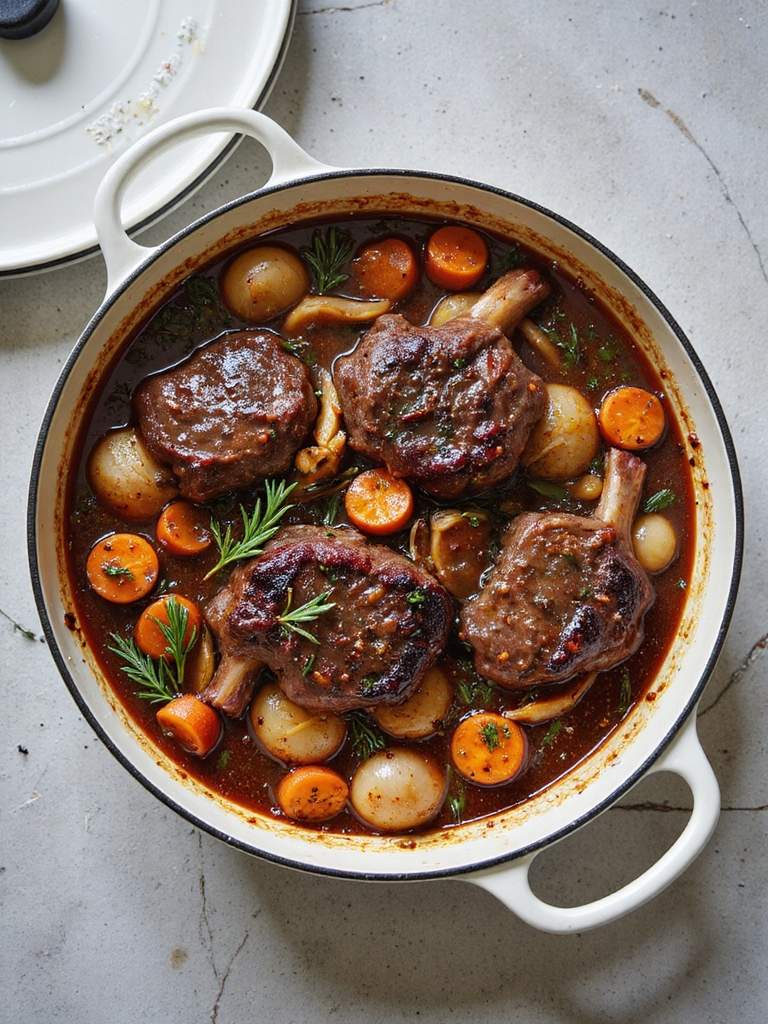
These red wine and herb braised shanks are a comforting, deeply savory centerpiece: beef shanks seared until crusty, then slowly simmered in a robust mix of red wine, beef stock, tomatoes, and a bouquet of rosemary, thyme, and bay until the meat turns silky and slips from the bone. The sauce reduces to a glossy, aromatic gravy enriched with onions, carrots, and garlic, perfect over creamy polenta or mashed potatoes. It’s a low-and-slow dinner that rewards patience with luxurious texture and layered flavor.
- 4 beef shanks (about 1.5–2 inches thick)
- Kosher salt
- Freshly ground black pepper
- 2 tablespoons all-purpose flour
- 3 tablespoons olive oil
- 1 large onion, sliced
- 2 carrots, cut into chunks
- 4 cloves garlic, smashed
- 2 tablespoons tomato paste
- 2 cups dry red wine
- 2 cups low-sodium beef stock
- 1 can (14.5 oz) crushed tomatoes
- 2 sprigs rosemary
- 4 sprigs thyme
- 2 bay leaves
- 1 tablespoon balsamic vinegar
- 1 teaspoon sugar (optional)
- Chopped parsley, for garnish
Pat shanks dry, season generously with salt and pepper, dust lightly with flour, and sear in hot olive oil in a heavy Dutch oven until well browned on both sides; remove to a plate. Add onion, carrots, and a pinch of salt to the pot and cook until lightly caramelized, then stir in garlic and tomato paste and cook until the paste darkens; pour in red wine, scraping up browned bits, and reduce by about half. Add beef stock, crushed tomatoes, rosemary, thyme, bay, balsamic, and optional sugar; return shanks (liquid should come 2/3 up), cover, and braise at 325°F until fork-tender, 2.5–3 hours, uncovering for the last 20 minutes to thicken; skim fat, adjust seasoning, garnish with parsley, and serve with polenta or mashed potatoes.
Ask the butcher to cross-cut shanks with marrow intact; if membranes are tight, score around the edges to prevent curling. This dish tastes even better the next day—chill, lift off fat, and reheat gently; if the sauce gets too thick, loosen with a splash of stock or water. For an even heartier meal, serve alongside a classic beef stew to soak up every rich drop.
Soy-Ginger Braised Beef Shank Noodles
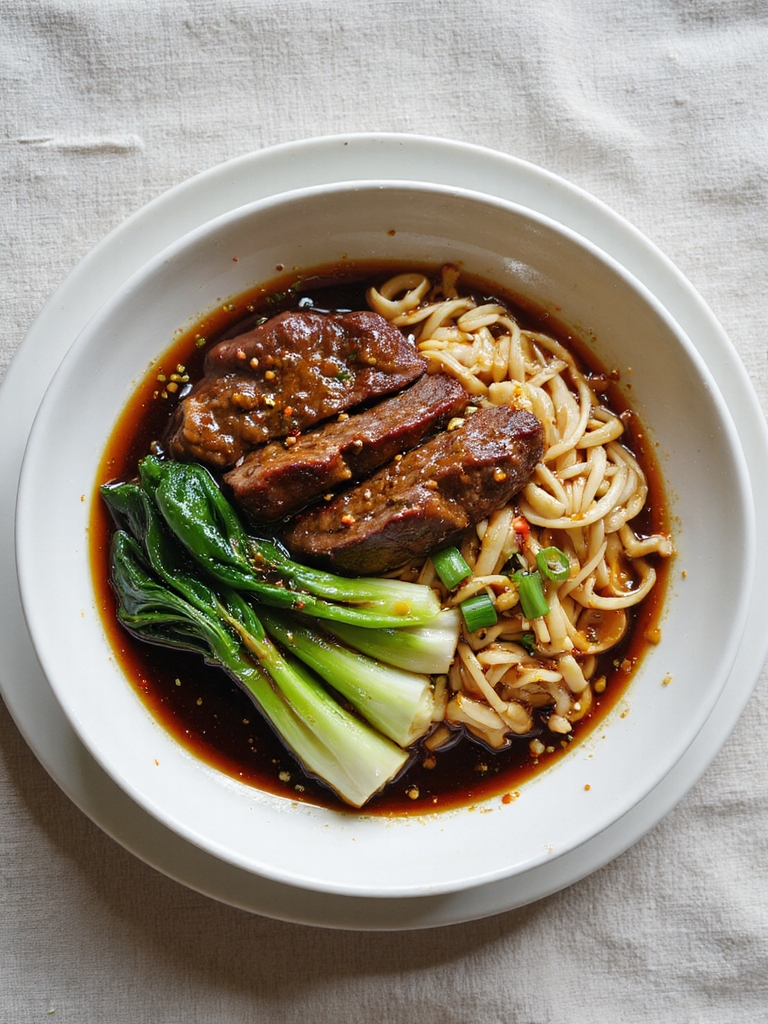
Fragrant, slurpable, and warming, these soy-ginger braised beef shank noodles layer tender, fall-apart shank with a broth infused by ginger, scallion, star anise, and Shaoxing wine; the meat braises low and slow until glossy and richly seasoned, then the cooking liquid is brightened and served over bouncy noodles with crisp bok choy and chili heat to taste.
- 2 beef shanks (about 1.5–2 inches thick)
- Kosher salt
- Freshly ground black pepper
- 2 tablespoons neutral oil
- 1 large onion, sliced
- 6 scallions, whites and greens separated, cut into 2-inch pieces
- 6 cloves garlic, smashed
- 2-inch knob ginger, sliced
- 2 tablespoons tomato paste
- 1/3 cup light soy sauce
- 2 tablespoons dark soy sauce
- 1/3 cup Shaoxing wine
- 1 tablespoon rice vinegar
- 2 tablespoons rock sugar or brown sugar
- 2 star anise
- 1 cinnamon stick
- 8 cups low-sodium beef or chicken stock
- 12–14 oz wheat noodles (fresh or dried)
- 4 baby bok choy, halved
- Chili oil, to serve
- Sesame oil, to finish
Pat shanks dry, season with salt and pepper, and sear in oil in a heavy pot until deeply browned; remove. Add onion, scallion whites, garlic, and ginger; cook until aromatic, then stir in tomato paste until darkened, deglaze with Shaoxing wine, and add light and dark soy, vinegar, sugar, star anise, cinnamon, and stock; return shanks, bring to a simmer, cover, and braise at a gentle bubble until fork-tender, 2.5–3 hours. Lift shanks to a board, strain broth, skim fat, and simmer to concentrate slightly; shred or slice beef off the bone and return to broth with scallion greens. Boil noodles per package and blanch bok choy in the same water; divide noodles in bowls, ladle over beef and broth, add bok choy, finish with a few drops of sesame oil and chili oil.
Ask your butcher for cross-cut shanks with marrow; the bone enriches the broth as it cooks and can be scooped into bowls. For meal prep, chill the braise overnight to easily remove fat and deepen flavor; adjust salt and soy after reducing, since flavors intensify. This recipe adapts well to pressure cooking for faster results with the same deeply developed flavors, try an Instant Pot for a quicker braise.
Tomato and Rosemary Slow-Braised Shanks
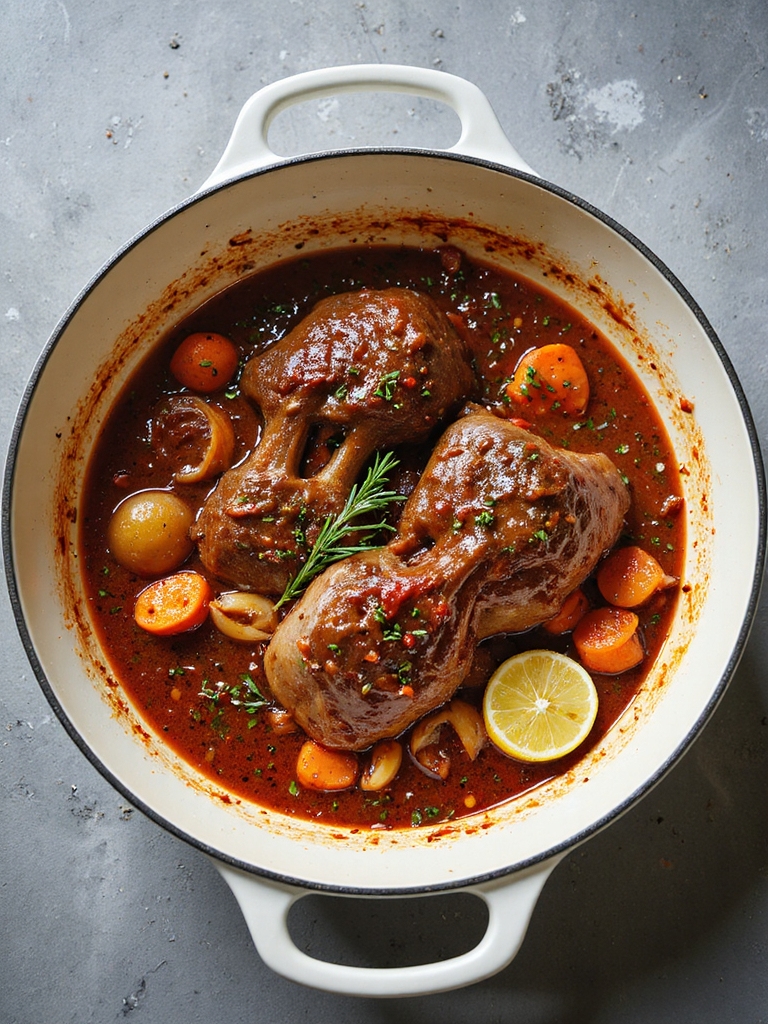
A cozy, Mediterranean-leaning braise that marries rich beef shanks with a savory tomato base, woody rosemary, and a splash of red wine, yielding spoon-tender meat and a glossy sauce perfect for polenta or crusty bread. Slow heat coaxes collagen into silk while anchovy (optional) and garlic deepen the umami, and a final swirl of olive oil brightens everything at the table.
- 2 beef shanks (about 1.5–2 inches thick)
- Kosher salt
- Freshly ground black pepper
- 2 tablespoons olive oil, plus more to finish
- 1 large yellow onion, diced
- 2 carrots, diced
- 4 cloves garlic, sliced
- 2 tablespoons tomato paste
- 1 cup dry red wine
- 1 (28-ounce) can crushed tomatoes
- 1 cup low-sodium beef stock
- 2 sprigs fresh rosemary
- 2 sprigs fresh thyme
- 1 bay leaf
- 2 anchovy fillets (optional)
- 1 teaspoon red pepper flakes (optional)
- Zest of 1 lemon
- Chopped parsley, for serving
Pat shanks dry and season generously with salt and pepper. Heat olive oil in a heavy Dutch oven over medium-high, sear shanks until deeply browned on both sides, then transfer to a plate; add onion and carrots to the pot with a pinch of salt and cook until softened, stir in garlic, tomato paste, anchovy, and red pepper flakes and cook until fragrant and paste darkens. Deglaze with red wine, scraping up fond; add crushed tomatoes, stock, rosemary, thyme, bay, and return shanks with any juices, bring to a simmer, cover, and braise in a 325°F oven until fork-tender, about 2.5–3 hours. Remove shanks, discard herbs, simmer sauce uncovered to thicken if needed, adjust seasoning, stir in lemon zest and a drizzle of olive oil, then serve shanks napped with sauce and sprinkled with parsley.
For deeper flavor and easier fat removal, chill the braise overnight, lift off solidified fat, and rewarm gently before serving. Serve with creamy polenta, buttered noodles, or mashed potatoes; keep sauce slightly loose so it coats rather than clumps. Slow cooking in a crock pot is a great option for hands-off convenience and yields fall-apart meat.
Guinness-Braised Shank With Root Vegetables
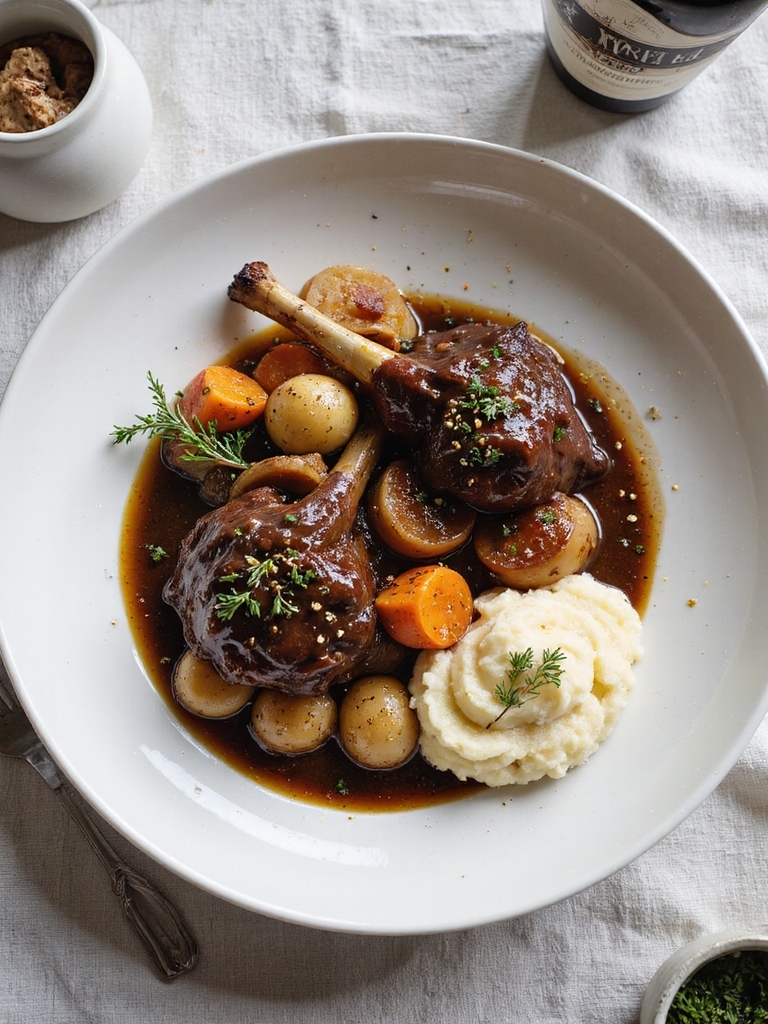
A stout-rich braise that leans malty and savory, this Guinness-braised shank nestles into a bed of caramelized onions and earthy root vegetables, letting the beer’s bittersweet notes round out the beef’s depth while thyme and bay add quiet backbone; the long, gentle cook melts collagen to silk, yielding fork-tender meat and a glossy gravy perfect for soaking into buttery mash or a hunk of crusty bread.
- 2 beef shanks (1.5–2 inches thick)
- Kosher salt
- Freshly ground black pepper
- 2 tablespoons neutral oil
- 2 tablespoons unsalted butter
- 2 large yellow onions, sliced
- 3 cloves garlic, smashed
- 2 tablespoons tomato paste
- 1 tablespoon Dijon mustard
- 1 tablespoon brown sugar
- 1 (14.9-ounce) can Guinness (or other dry stout)
- 2 cups low-sodium beef stock
- 3 carrots, cut into large chunks
- 2 parsnips, cut into large chunks
- 1 small rutabaga, peeled and cubed
- 2 sprigs fresh thyme
- 1 bay leaf
- 1 tablespoon apple cider vinegar
- Chopped parsley, for serving
Heat oven to 325°F; pat shanks dry, season well, and sear in oil and butter in a Dutch oven until deeply browned, then set aside; add onions with a pinch of salt and cook until golden, stir in garlic, tomato paste, Dijon, and brown sugar until caramelized. Deglaze with Guinness, scraping fond, then add stock, thyme, bay, and vinegar; return shanks with any juices, bring to a simmer, nestle in carrots, parsnips, and rutabaga, cover, and braise in the oven until shanks are fork-tender, 2.5–3 hours. Transfer shanks and vegetables to a platter, simmer sauce uncovered to thicken to a glossy gravy, adjust salt and pepper, then spoon over shanks and finish with parsley.
If the sauce tastes bitter, balance with a splash more stock or a knob of butter; if too rich, brighten with a bit more vinegar. For cleaner flavor and easier fat removal, chill overnight to lift the fat cap, then rewarm gently, keeping the sauce slightly loose so it coats rather than clings. A slow braise at low heat also maximizes collagen breakdown and yields fork-tender meat that pulls away from the bone.
Moroccan-Spiced Shanks With Apricots and Almonds
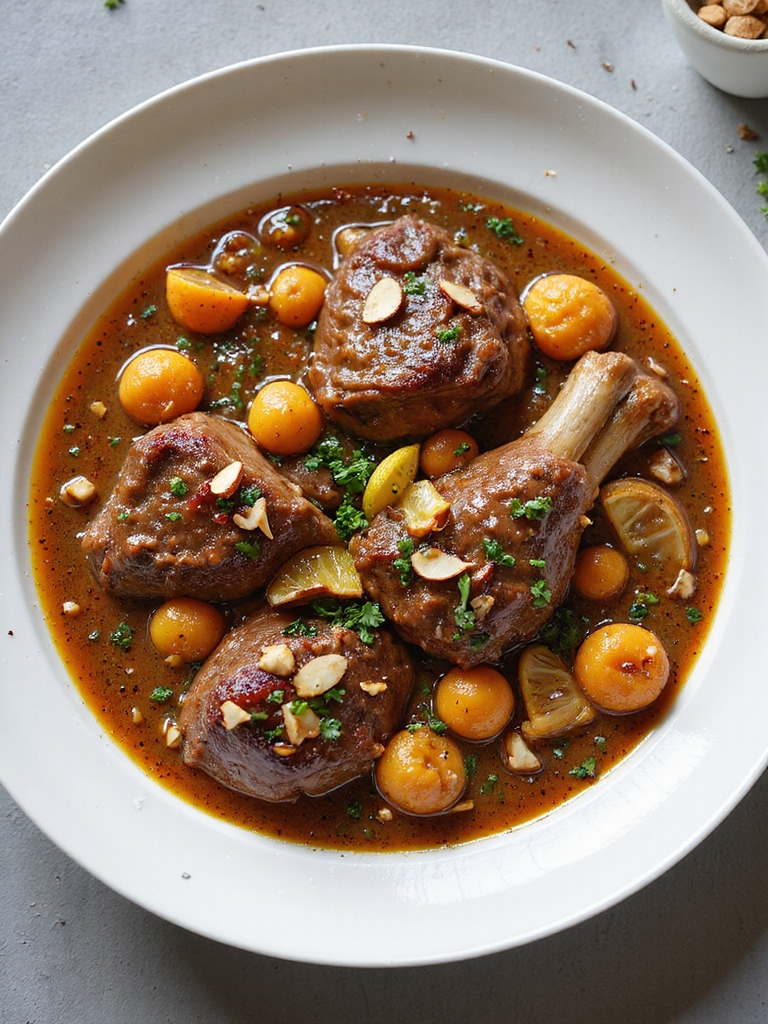
A warmly spiced braise that leans sweet-savory, these Moroccan-inspired beef shanks marry ras el hanout, cumin, and coriander with onions, garlic, and ginger, then simmer with tomatoes, saffron, and cinnamon until the meat yields to the fork; dried apricots plump into jewels in the sauce while toasted almonds add crunch, and a finish of lemon and herbs lifts the rich, aromatic gravy that begs for couscous or flatbread.
- 2 beef shanks (1.5–2 inches thick)
- Kosher salt
- Freshly ground black pepper
- 2 tablespoons olive oil
- 1 large yellow onion, thinly sliced
- 4 cloves garlic, minced
- 1 tablespoon fresh ginger, grated
- 1 tablespoon ras el hanout
- 1 teaspoon ground cumin
- 1 teaspoon ground coriander
- 1/2 teaspoon smoked paprika
- 1/4 teaspoon ground cinnamon
- Pinch saffron threads (optional)
- 2 tablespoons tomato paste
- 1 (14.5-ounce) can crushed tomatoes
- 2 cups low-sodium beef or chicken stock
- 3/4 cup dried apricots, halved
- 1 tablespoon honey
- 1 preserved lemon rind, finely chopped (or zest of 1 lemon)
- 1/3 cup blanched almonds, toasted
- 1 tablespoon lemon juice
- 2 tablespoons chopped cilantro
- 2 tablespoons chopped flat-leaf parsley
Heat oven to 325°F; pat shanks dry, season generously, and brown in olive oil in a heavy Dutch oven, then set aside and soften onion with a pinch of salt before stirring in garlic and ginger until fragrant, followed by ras el hanout, cumin, coriander, smoked paprika, cinnamon, and saffron to bloom. Add tomato paste and cook until brick red, deglaze with crushed tomatoes and stock, then stir in apricots and honey; return shanks and any juices, bring to a simmer, cover, and braise in the oven until fork-tender, 2.5–3 hours. Skim fat, reduce sauce on the stovetop to glossy, then stir in preserved lemon, lemon juice, and half the herbs; plate shanks, spoon over sauce, shower with toasted almonds and remaining herbs, and serve with couscous or flatbread.
If using very sweet apricots, hold back the honey until the end and add to taste; if sauce tastes flat, add a pinch of salt and a splash more lemon. For make-ahead ease, chill overnight to lift the fat cap and let spices meld, then rewarm gently with a splash of stock to keep the sauce loose and silky. This dish follows classic stewing beef techniques for long, gentle braising to achieve tender, pull-apart meat and deep flavor development in the sauce, which pairs perfectly with couscous recipes.
Chili-Lime Braised Shank Tacos
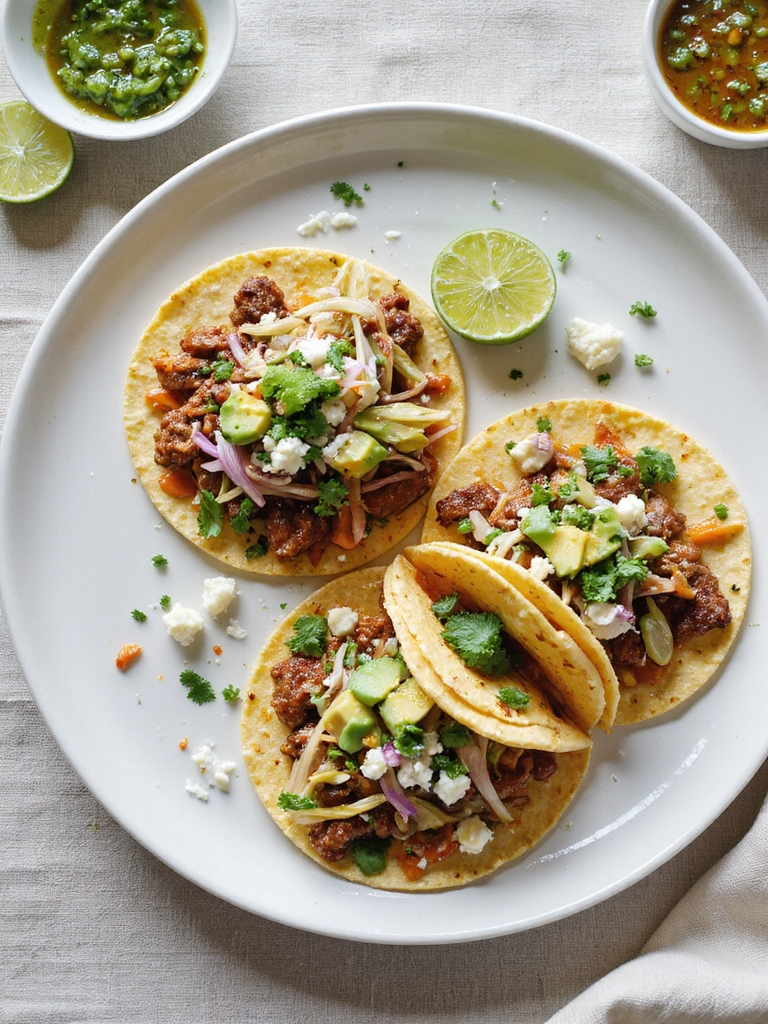
Bright, tangy, and smoky, these chili-lime braised shank tacos transform a budget cut into supple, shreddable meat cloaked in a chile-forward gravy that’s balanced with citrus and a hint of sweetness; tuck the beef into warm tortillas and finish with crunchy slaw, creamy avocado, and quick-pickled onions for a weeknight-friendly feast or crowd-pleasing spread.
- 2 beef shanks (1.5–2 inches thick)
- Kosher salt
- Freshly ground black pepper
- 2 tablespoons neutral oil
- 1 large yellow onion, sliced
- 4 cloves garlic, minced
- 1 tablespoon tomato paste
- 2 teaspoons ground ancho chili powder
- 1 teaspoon chipotle chili powder
- 1 teaspoon ground cumin
- 1/2 teaspoon smoked paprika
- 1/2 teaspoon dried oregano (Mexican preferred)
- 1 cup crushed tomatoes
- 2 cups low-sodium beef stock
- Zest of 1 lime
- 1/4 cup fresh lime juice (plus more to taste)
- 1 tablespoon apple cider vinegar
- 1 teaspoon honey or agave
- Warm corn or flour tortillas
- Sliced avocado, shredded cabbage, chopped cilantro, pickled red onions, and queso fresco (for serving)
Heat oven to 325°F. Pat shanks dry, season generously with salt and pepper, and brown in oil in a heavy Dutch oven; set aside, then soften onion with a pinch of salt, add garlic, stir in tomato paste, ancho, chipotle, cumin, smoked paprika, and oregano to bloom until fragrant. Add crushed tomatoes, stock, lime zest, lime juice, vinegar, and honey; return shanks and any juices, bring to a simmer, cover, and braise in the oven until fork-tender, 2.5–3 hours. Transfer shanks to a board, skim fat, reduce sauce to glossy, shred meat off the bone, toss with enough sauce to coat, adjust salt and lime, and serve in warm tortillas with avocado, cabbage, cilantro, pickled onions, and queso fresco.
For spicier tacos, add minced canned chipotles with adobo or finish with a drizzle of the adobo sauce; for milder, swap chipotle powder for more ancho. Make ahead: chill overnight to remove the fat cap easily and let flavors meld, then rewarm with a splash of stock and a squeeze of fresh lime to brighten. This dish pairs especially well with other savory beef soup recipes and braises that emphasize deep, slow-cooked flavor and tender fall-apart meat.
Garlic and Thyme Braised Shank Ragu
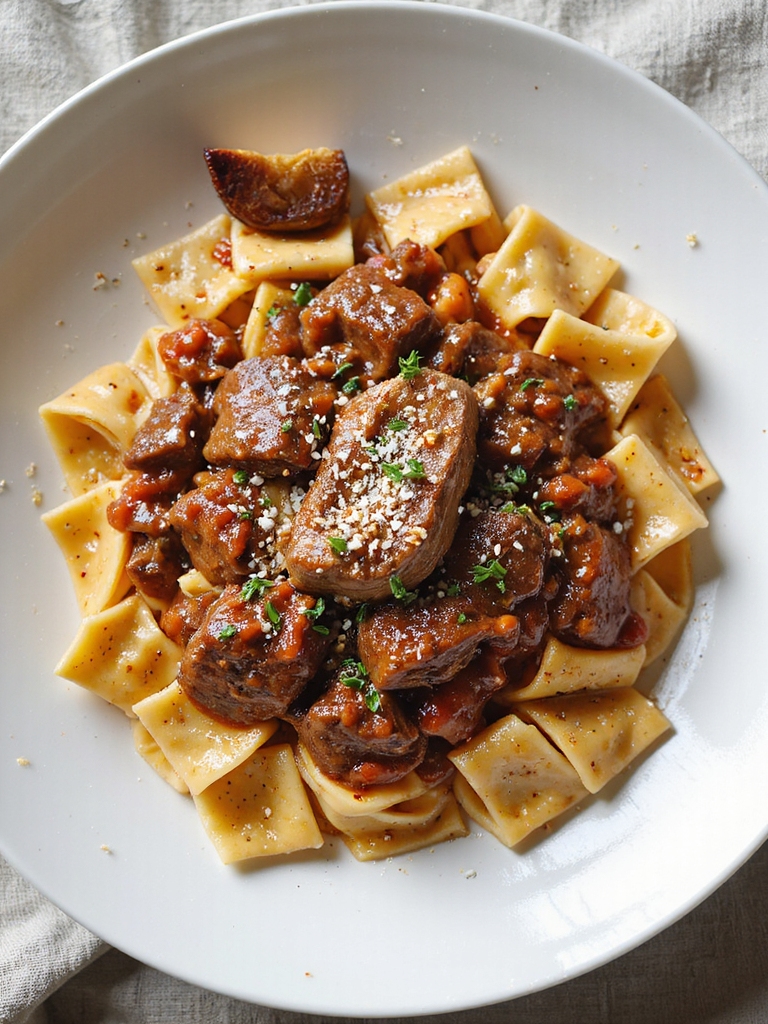
Deeply savory and comfortingly aromatic, this garlic and thyme braided shank ragu turns a tough cut into silky strands bathed in a glossy, herbed tomato-wine sauce that clings to pasta or polenta; slow braising coaxes marrow-rich depth while mellowed garlic and fresh thyme lend warmth and balance, making a luxurious meal from humble ingredients.
- 2 beef shanks (1.5–2 inches thick)
- Kosher salt
- Freshly ground black pepper
- 2 tablespoons olive oil
- 1 large yellow onion, finely chopped
- 8 cloves garlic, thinly sliced
- 2 tablespoons tomato paste
- 1/2 cup dry red wine
- 1 can (28 ounces) crushed tomatoes
- 1 cup low-sodium beef stock
- 2 bay leaves
- 6–8 fresh thyme sprigs (plus more leaves for finishing)
- 1 teaspoon crushed red pepper flakes (optional)
- 1 tablespoon balsamic vinegar
- 2 tablespoons unsalted butter
- Cooked pappardelle or creamy polenta, for serving
- Grated Parmigiano-Reggiano, for serving
Heat oven to 325°F. Pat shanks dry, season well with salt and pepper, and brown in olive oil in a heavy Dutch oven; remove shanks, then soften onion with a pinch of salt, add garlic to gently toast, and stir in tomato paste until brick red and caramelized. Deglaze with red wine, scraping fond, then add crushed tomatoes, stock, bay leaves, thyme sprigs, and red pepper flakes if using; return shanks and any juices, bring to a simmer, cover, and braise in the oven until fork-tender, 2.5–3 hours. Transfer shanks out, skim fat, reduce sauce on the stove until glossy, shred meat off the bone, stir in balsamic and butter, fold meat back in, adjust salt and pepper, and finish with thyme leaves; serve over pappardelle or polenta with Parmesan.
For richer flavor and easier defatting, chill overnight; rewarm gently with a splash of stock, then finish with an extra knob of butter for sheen and body. If the sauce tastes flat, add a squeeze of lemon or another splash of balsamic to brighten just before serving. Slow-braising tough cuts like shank is a classic technique that develops deep flavor and tenderizes connective tissue, making it ideal for beef stew meat preparations.
Sichuan Peppercorn Shank With Star Anise
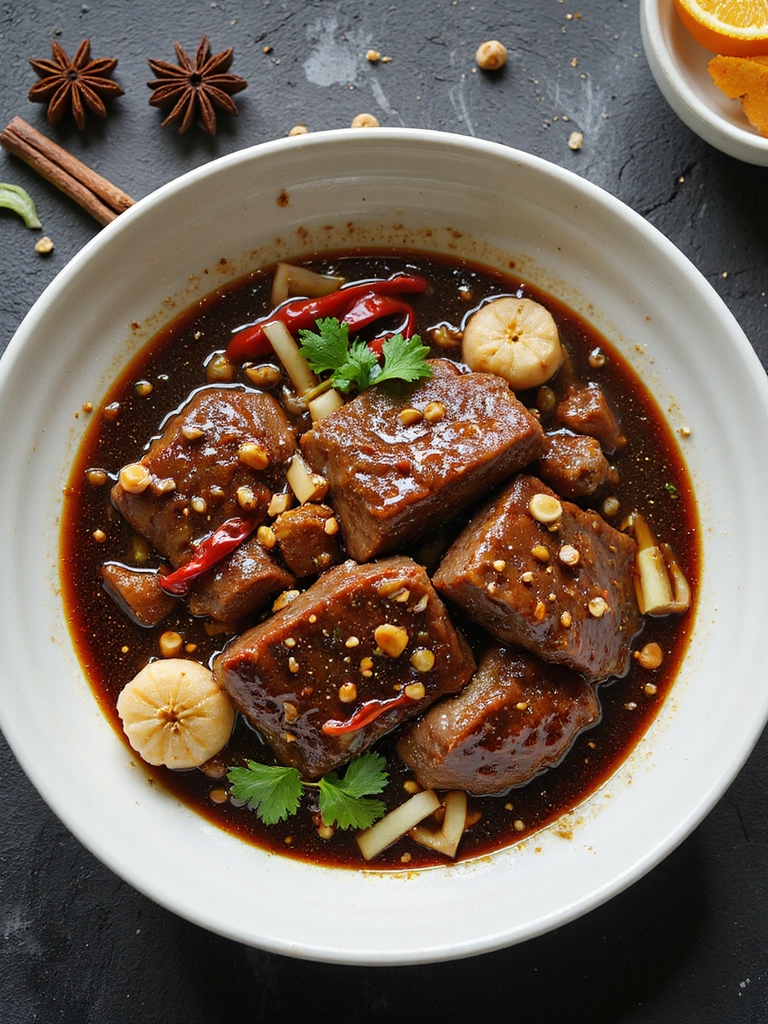
Bold, fragrant, and tingling with ma la heat, this Sichuan peppercorn shank with star anise slow-braises beef until spoon-tender in a soy-forward broth perfumed with ginger, garlic, dried chiles, and warm spices; the collagen-rich shanks melt into a glossy sauce that’s equal parts numbing, spicy, and gently sweet, perfect over steamed rice or hand-pulled noodles.
- 2 beef shanks (about 1.5–2 inches thick)
- Kosher salt
- Freshly ground black pepper
- 2 tablespoons neutral oil
- 1 large onion, sliced
- 6 cloves garlic, smashed
- 2-inch piece ginger, sliced
- 2 tablespoons Sichuan peppercorns, lightly crushed
- 4 whole star anise
- 2–3 dried red chiles (such as facing heaven), optional
- 2 tablespoons doubanjiang (spicy fermented broad bean paste)
- 1/4 cup light soy sauce
- 2 tablespoons dark soy sauce
- 2 tablespoons Shaoxing wine
- 1 tablespoon rock sugar or brown sugar
- 1 cinnamon stick
- 3 scallions, cut into 2-inch pieces
- 4 cups low-sodium beef stock or water
- 1 small orange peel strip (or 2 strips dried tangerine peel), optional
- Steamed rice or noodles, for serving
- Thinly sliced scallions and cilantro, for garnish
Pat shanks dry and season with salt and pepper; heat oil in a heavy pot and brown shanks deeply on both sides, then set aside and sauté onion, garlic, and ginger until fragrant, stirring in doubanjiang to toast until the oil reddens. Add Sichuan peppercorns, star anise, dried chiles, cinnamon, scallions, soy sauces, Shaoxing wine, sugar, stock, and orange peel, return shanks and bring to a simmer; cover and braise gently on the stovetop or in a 325°F oven until fork-tender, about 2.5–3 hours. Remove shanks, skim fat, reduce braising liquid to a glossy sauce, slice or shred meat, return to the pot to glaze, adjust seasoning, and serve over rice or noodles with scallions and cilantro.
Lightly crush peppercorns to release aroma but avoid pulverizing, which can make the sauce gritty; strain the sauce if you prefer a smoother finish. For deeper flavor and easy defatting, chill overnight; rewarm gently with a splash of stock and brighten with a drizzle of black vinegar or a squeeze of citrus before serving. This recipe is a great example of the kind of rich, savory dishes featured in many Asian beef recipe collections.
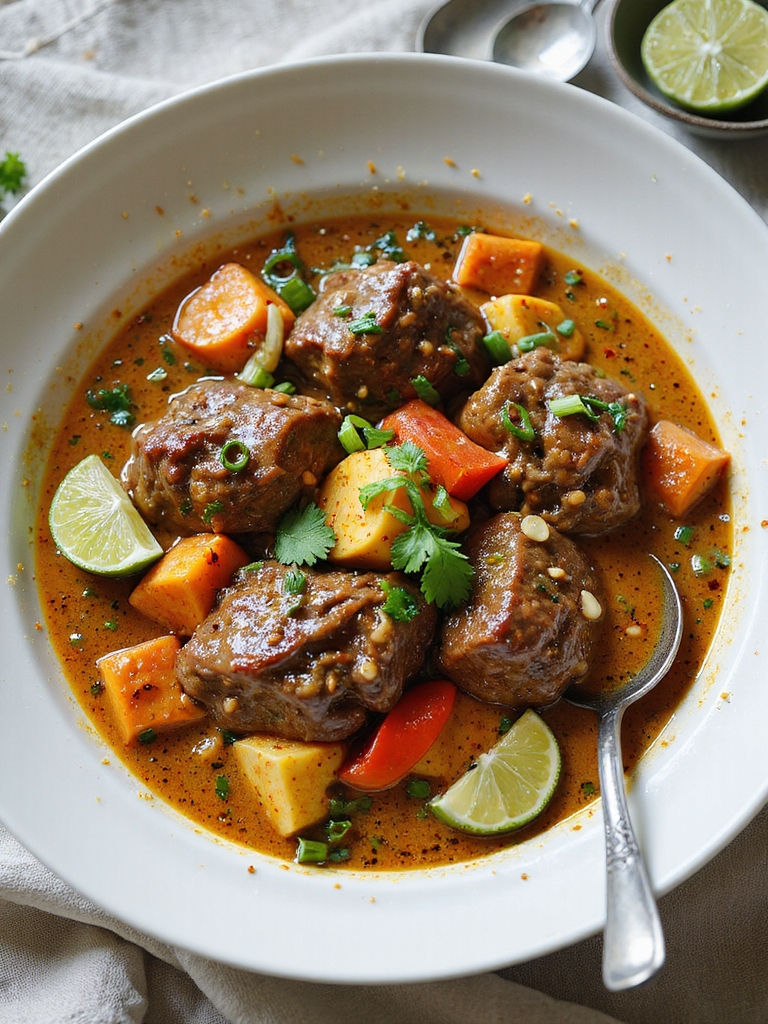
Coconut-Curry Braised Beef Shank Stew
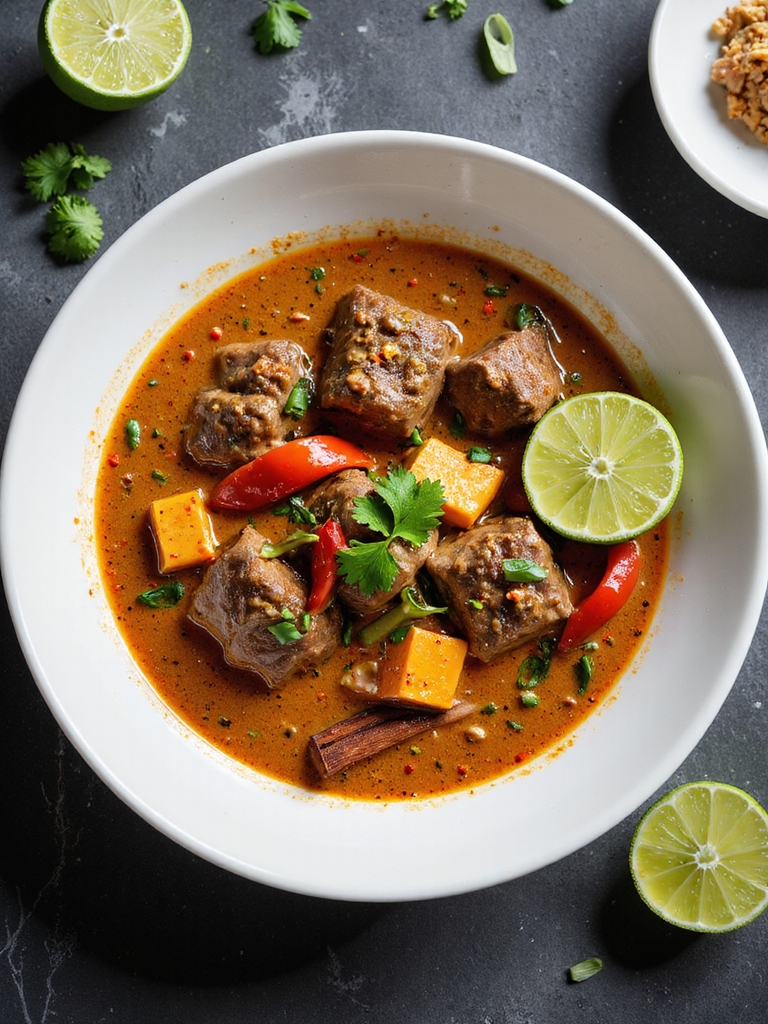
Fragrant, velvety, and comforting, this coconut-curry braised beef shank stew marries gentle heat with creamy richness: meaty cross-cut shanks simmer slowly in a broth of coconut milk, aromatic curry paste, warm spices, and lime until the collagen melts and the sauce turns silky and spoon-coating—perfect over jasmine rice or with warm flatbread to soak up every drop.
- 2 beef shanks (about 1.5–2 inches thick)
- Kosher salt
- Freshly ground black pepper
- 2 tablespoons neutral oil
- 1 large onion, thinly sliced
- 4 cloves garlic, minced
- 1 tablespoon grated fresh ginger
- 2–3 tablespoons red curry paste (or yellow for milder)
- 1 teaspoon ground turmeric
- 1 teaspoon ground coriander
- 1/2 teaspoon ground cumin
- 1 can (13.5–14 oz) full-fat coconut milk
- 2 cups low-sodium beef stock
- 1 tablespoon fish sauce
- 1 tablespoon brown sugar or palm sugar
- 2 medium carrots, cut into chunks
- 1 red bell pepper, sliced
- 1 small cinnamon stick
- 2 kaffir lime leaves or 1 strip lime peel
- Juice of 1/2 lime, plus wedges for serving
- Fresh cilantro and thinly sliced scallions, for garnish
- Cooked jasmine rice or warm flatbread, for serving
Pat shanks dry, season with salt and pepper, and sear in hot oil in a heavy pot until deeply browned on both sides; transfer out, then soften onion with a pinch of salt before stirring in garlic, ginger, curry paste, turmeric, coriander, and cumin until fragrant and the paste sizzles. Return shanks, add coconut milk, stock, fish sauce, sugar, cinnamon, and lime leaves, bring to a simmer, cover, and braise gently on the stovetop or in a 325°F oven until fork-tender, 2.5–3 hours, adding carrots for the last 45 minutes and bell pepper for the last 20. Remove shanks, skim fat, reduce the sauce to a glossy consistency, adjust salt, fish sauce, and lime juice, then slice or shred meat, return to coat, and serve with cilantro, scallions, and rice or flatbread.
Use full-fat coconut milk for body; if the curry breaks, whisk in a splash of cold stock or a knob of butter to bring it back together. For make-ahead ease and clearer flavors, chill overnight to lift the fat, then rewarm gently and balance with an extra squeeze of lime before serving. This recipe adapts well to a slow cooker for low-and-slow tenderness, similar to a Crock Pot Beef and Broccoli approach.