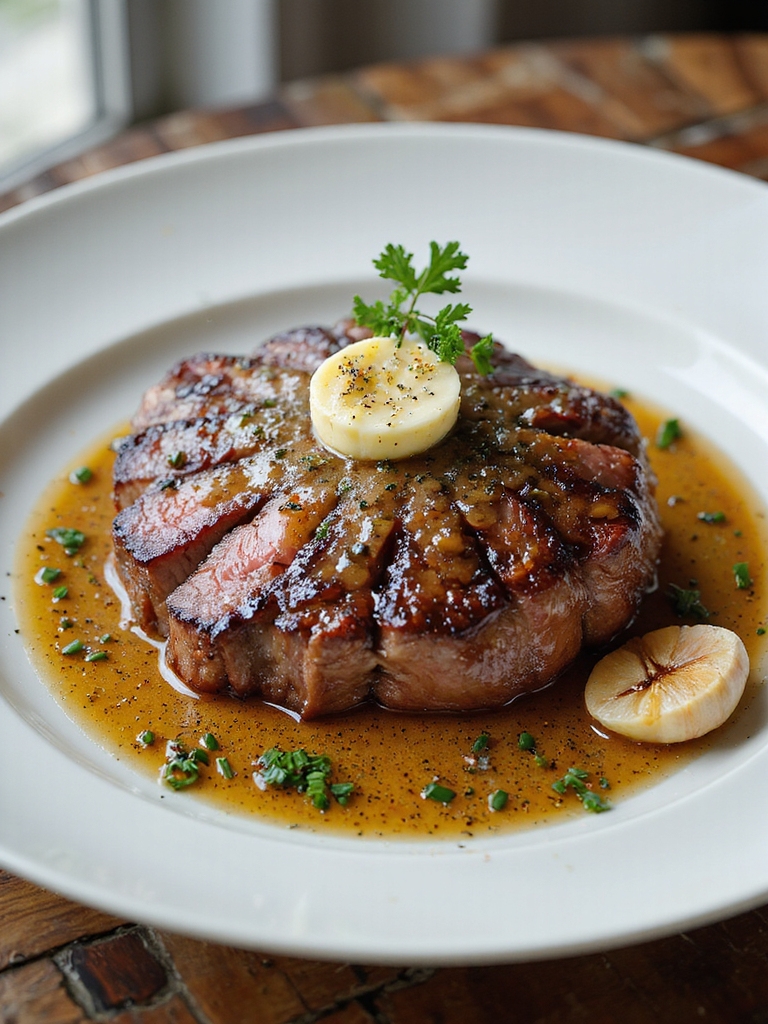
I love the ritual of a great steak — choosing a marbled cut, rinsing away the chill, and coaxing a crust that snaps with each bite. I’ll show you simple seasoning, hot-pan and grill techniques, and a few tricks pros use to hit medium-rare every time.
Stick with me and you’ll get that restaurant texture and flavor at home, plus the finishing touches that make people ask for seconds.
Choosing the Right Steak Cut for Flavor and Texture
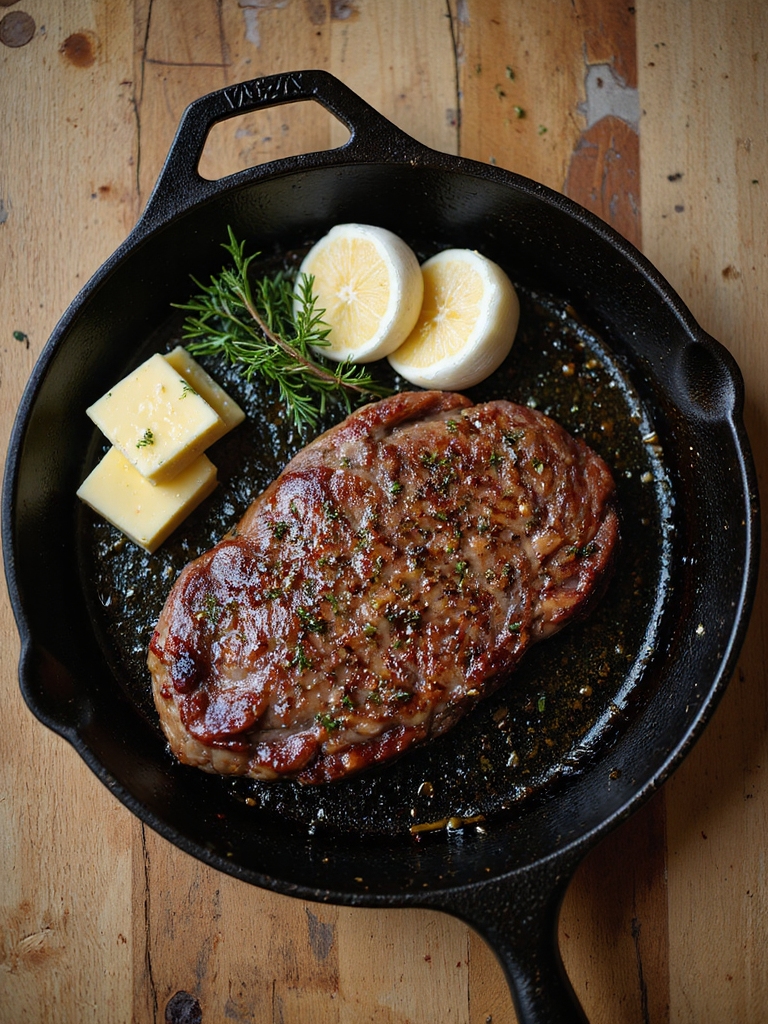
Choosing the Right Steak Cut for Flavor and Texture focuses on selecting a steak that matches your cooking method and desired mouthfeel — ribeye and strip for rich marbling and tenderness, filet mignon for butter-soft texture, flank or skirt for pronounced beefy flavor that benefits from marinades and high-heat quick cooking, and sirloin for a balance of flavor and affordability; this recipe uses a ribeye for its marbling and deep beef flavor, seared to develop a crust and finished to medium-rare for peak juiciness.
- 1 ribeye steak, 1 to 1 1/2 inches thick
- Kosher salt
- Freshly ground black pepper
- 1–2 tablespoons neutral oil (canola or grapeseed)
- 2 tablespoons unsalted butter
- 2 cloves garlic, smashed
- 2 sprigs fresh thyme or rosemary
Pat the steak dry and season generously with salt and pepper at least 40 minutes before cooking or just before searing; heat a heavy skillet over high heat until smoking, add oil and sear steak 2–3 minutes per side to form a deep brown crust, reduce heat slightly, add butter, garlic, and herbs, tilt pan and spoon butter over the steak while cooking to an internal temperature of 125–130°F for medium-rare (about 4–6 minutes total depending on thickness), then rest steak loosely tented for 5–10 minutes before slicing against the grain and serving.
For best results, bring the steak to room temperature before cooking, use an instant-read thermometer to avoid overcooking, and let it rest so juices redistribute; save pan juices for a quick sauce by deglazing with a splash of wine or stock and whisking in butter. A well-marbled cut like ribeye also benefits from high-heat searing to fully render fat and build flavor.
How to Season Like a Pro: Salt, Pepper, and Beyond
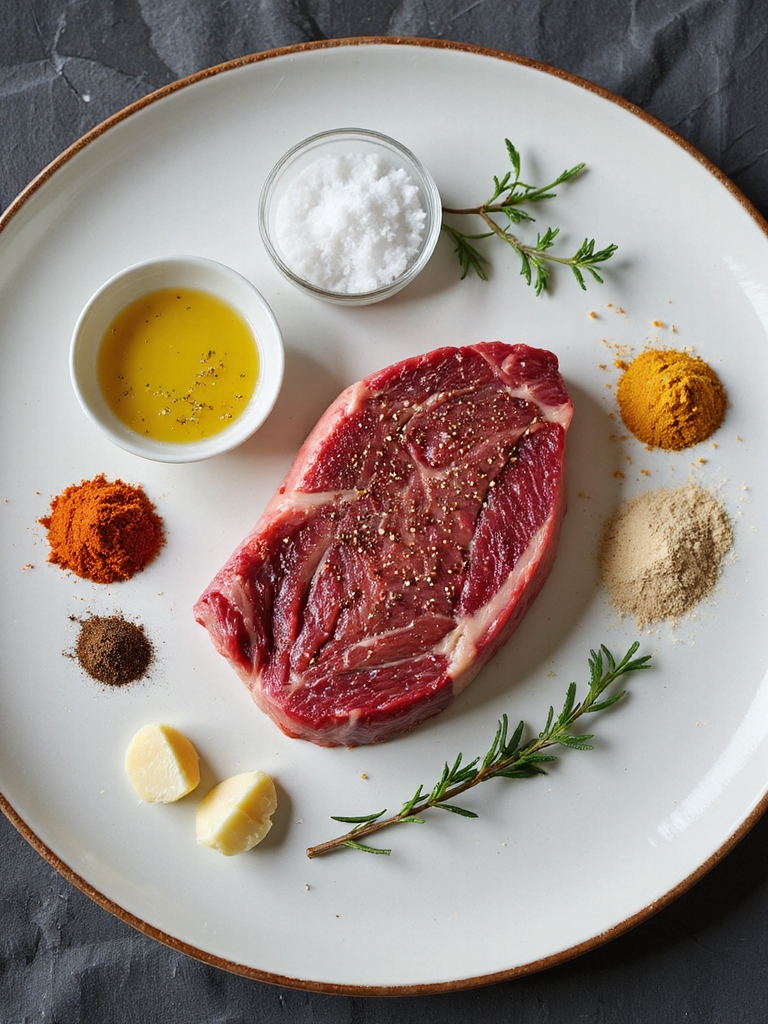
Seasoning a ribeye like a pro is about respecting the meat and layering flavors: start with kosher salt and freshly ground black pepper as your foundation, add optional aromatics like garlic powder, smoked paprika, or a touch of mustard powder for depth, and finish with a compound butter or finishing salt to elevate the crust and juiciness; timing matters—salt well ahead for dry brining or just before searing, and use coarse pepper for texture and char.
- 1 ribeye steak, 1 to 1 1/2 inches thick
- Kosher salt
- Freshly ground black pepper
- Garlic powder (optional)
- Smoked paprika (optional)
- Mustard powder (optional)
- Neutral oil (canola or grapeseed)
- Unsalted butter
- 2 cloves garlic, smashed
- 2 sprigs fresh thyme or rosemary
- Compound butter or finishing salt (optional)
Pat steak dry and either season generously with kosher salt and optional spices at least 40 minutes before cooking for a dry brine or just before searing for immediate crust.
Heat a heavy skillet over high until smoking, add oil and sear 2–3 minutes per side to form a deep brown crust, reduce heat, add butter, garlic and herbs, spoon butter over steak while cooking to 125–130°F for medium-rare, then rest 5–10 minutes before slicing against the grain.
Tip: Use an instant-read thermometer to hit target doneness, taste and adjust seasoning after resting, and finish with a small sprinkle of flaky finishing salt or a pat of compound butter for professional flavor and texture.
For more on choosing the best cuts and methods, consider learning about Beef Sirloin to match cooking technique with flavor and tenderness.
Searing Techniques for a Perfect Crust
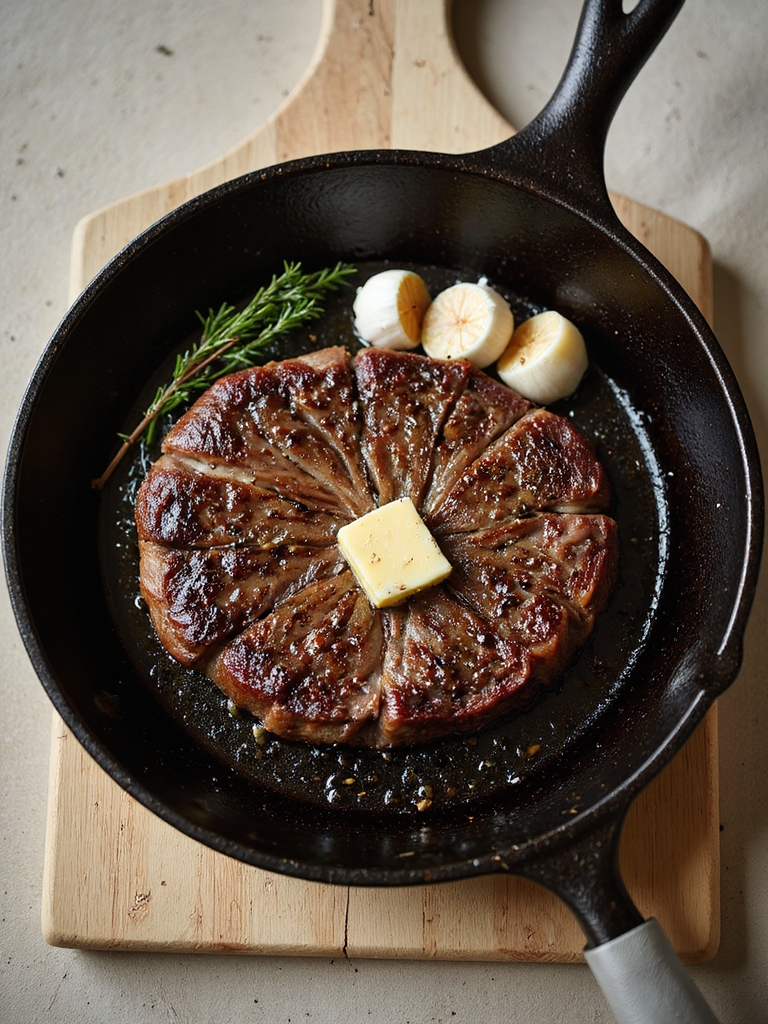
Searing a ribeye to build a perfect crust is all about high heat, dry surface, and minimal movement — pat the steak very dry, season simply, preheat a heavy skillet until it smokes, and use a hot, high-smoke-point oil to achieve a deeply browned, flavorful exterior while finishing with butter and aromatics for basting.
- 1 ribeye steak, 1 to 1 1/2 inches thick
- Kosher salt
- Freshly ground black pepper
- Neutral oil (canola or grapeseed)
- Unsalted butter
- 2 cloves garlic, smashed
- 2 sprigs fresh thyme or rosemary
Heat a heavy skillet (cast-iron preferred) over high heat until just smoking, add a thin film of neutral oil, place the well-seasoned, very dry steak in the pan and resist moving it for 2–3 minutes to form a deep crust, flip and sear the other side 2 minutes, reduce heat slightly, add butter, garlic and herbs and tilt the pan to baste until an instant-read thermometer reads 125–130°F for medium-rare, then transfer to a cutting board and rest 5–10 minutes before slicing against the grain.
Tip: Use a very hot pan, dry the steak thoroughly, and rely on an instant-read thermometer rather than timing alone to make certain both a perfect crust and your desired doneness.
This technique pairs especially well with beef tenderloin recipes that emphasize tender, evenly cooked cuts.
Oven-Finishing and Reverse Sear Method
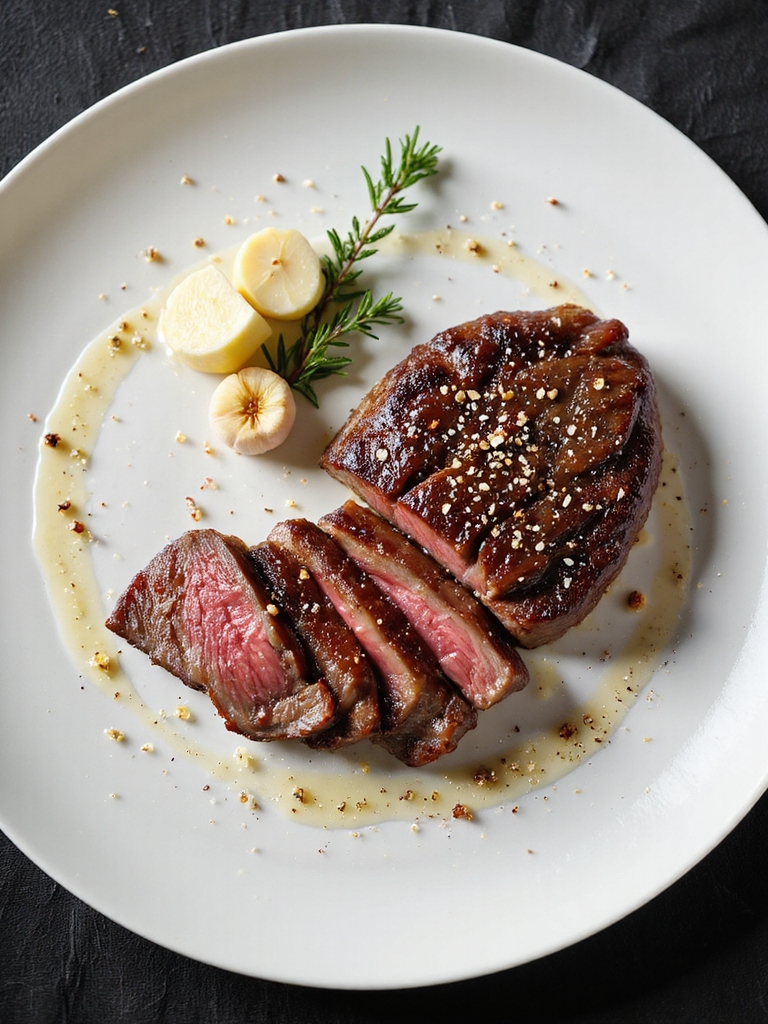
Oven-finishing and the reverse sear are two complementary methods to get evenly cooked, edge-to-edge medium-rare with a pristine crust: cook the steak gently in a low oven (or on an indirect grill) until it’s a few degrees below target, then blast it in a hot pan or under a broiler to develop color and flavor; this approach minimizes overcooking, gives predictable doneness, and is forgiving for thick cuts like ribeye or strip.
- 1 ribeye steak, 1 to 2 inches thick
- Kosher salt
- Freshly ground black pepper
- Neutral oil (canola or grapeseed)
- Unsalted butter
- 2 cloves garlic, smashed
- 2 sprigs fresh thyme or rosemary
- Instant-read thermometer
- Wire rack and baking sheet
Preheat the oven to 225°F (107°C), season the steak generously on both sides with salt and pepper and let it sit at room temperature 30–45 minutes while you place it on a wire rack set over a baking sheet; roast until the internal temperature is 10–15°F below your target (about 95–105°F for 125–130°F final medium-rare).
Then heat a heavy skillet over high heat with a thin film of oil until smoking, sear the steak 60–90 seconds per side to form a deep crust while adding butter, garlic and herbs to baste, and monitor with an instant-read thermometer until it reaches your final desired temperature before resting 5–10 minutes.
Tip: Use the low-and-slow oven to control the internal temp precisely, then sear very briefly at extreme heat for crust—always rest before slicing to lock in juices. A simple steak on its own can be elevated into a full meal with easy beef recipes that pair well with roasted vegetables or a salad.
Grilling Tips for Even Doneness and Grill Marks
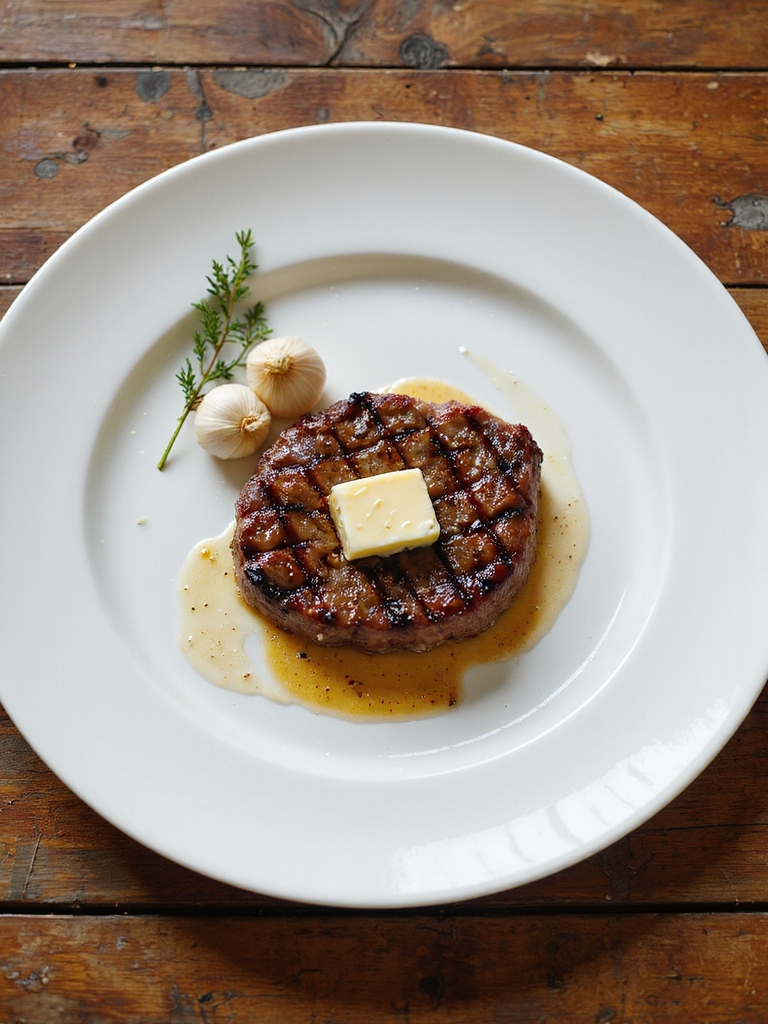
Grilling ribeye to even doneness with attractive crosshatch marks uses a two-zone fire (hot direct heat and cooler indirect heat) so you can sear for color then move the steak to finish cooking slowly; this method works well for 1–2 inch steaks and produces a crust without burning while allowing you to control internal temperature.
- 1 ribeye steak, 1 to 2 inches thick
- Kosher salt
- Freshly ground black pepper
- Neutral oil (canola or grapeseed)
- Unsalted butter (optional)
- 2 cloves garlic, smashed (optional)
- 2 sprigs fresh thyme or rosemary (optional)
- Instant-read thermometer
Preheat a gas or charcoal grill to create a hot zone (high heat) and a cooler zone (indirect); pat the steak dry, season generously with salt and pepper and oil lightly, sear over the hot zone 1–2 minutes per side to develop grill marks, rotate 45° midway on each side for crosshatch, then move to the cooler zone to finish until the internal temperature is about 10–15°F below your target, return briefly to the hot zone if needed for additional crust, baste with butter and herbs in the final minute and rest 5–10 minutes before slicing.
Tip: Use a clean, very hot grate for the best sear, resist flipping more than twice, and monitor doneness with an instant-read thermometer to avoid overcooking.
Beef brisket techniques can inform handling of larger cuts and resting times for optimal juiciness, especially when applying low-and-slow finishing methods learned from brisket preparations.
Quick Marinades and Dry Rubs for Bold Flavor
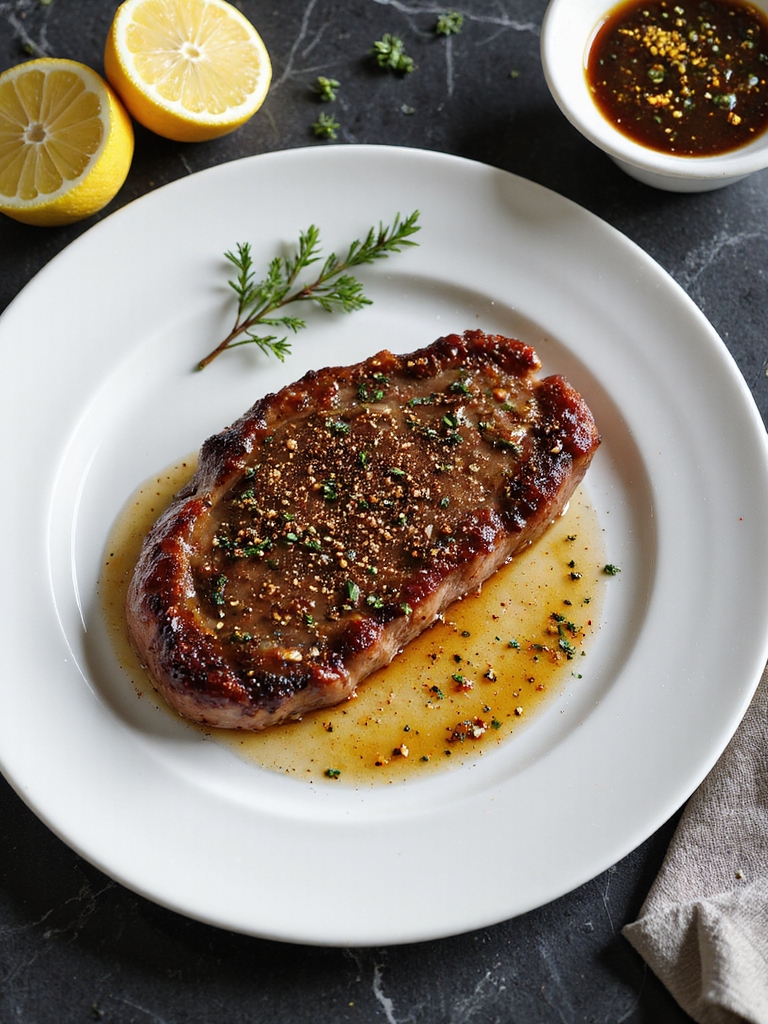
A quick marinade or bold dry rub can transform a simple ribeye into a punchy, flavorful steak in under an hour; choose a bright acidic marinade for tenderizing and zing (soy, citrus, garlic) or a coarse dry rub for an immediate crusty exterior (smoked paprika, brown sugar, cumin, garlic powder, salt, pepper), apply generously, let sit briefly for dry rub (15–30 minutes) or marinate 30 minutes to 2 hours in the refrigerator for a quick marinade, then cook using the two-zone grilling method described earlier to get even doneness and attractive crosshatch marks.
- 1 ribeye steak, 1 to 2 inches thick
- Kosher salt
- Freshly ground black pepper
- Neutral oil (canola or grapeseed)
- 1 tbsp smoked paprika
- 1 tbsp brown sugar (optional)
- 1 tsp cumin
- 1 tsp garlic powder
- 2 tbsp soy sauce (for marinade option)
- 1 tbsp lemon or lime juice (for marinade option)
- 2 cloves garlic, minced (for marinade option)
- 1 tsp red pepper flakes (optional)
Pat the steak dry, if using the dry rub combine smoked paprika, brown sugar, cumin, garlic powder, salt and pepper and press onto both sides and rest 15–30 minutes at room temperature, or if marinating whisk soy, citrus, minced garlic, oil and red pepper flakes and refrigerate the steak 30–120 minutes.
Heat grill with a hot direct zone and cooler indirect zone, sear 1–2 minutes per side over high heat rotating 45° for crosshatch, then move to the cooler zone to finish to about 10–15°F below target and return briefly to the hot zone for extra crust before resting 5–10 minutes.
Tip: Always season generously, monitor internal temp with an instant-read thermometer, and let the steak rest covered loosely with foil so juices redistribute before slicing.
For a complementary quick side, consider serving with beef and broccoli stir-fry featuring tender sliced beef and crisp broccoli in a savory sauce and a touch of sesame oil for aroma, which pairs especially well with grilled steaks and steaks prepared with Beef and Broccoli.
Checking Doneness: Temps and Visual Cues
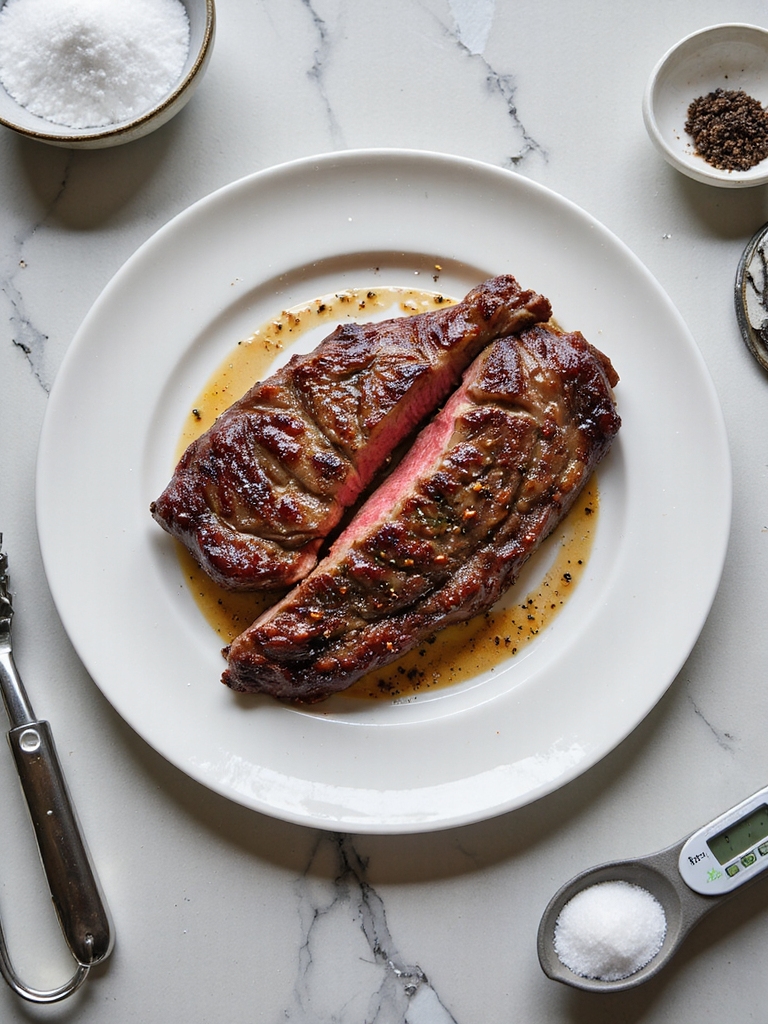
Checking doneness is a mix of reliable internal temperatures, feel and visual cues: use an instant-read thermometer for accuracy (rare 120–125°F, medium-rare 130–135°F, medium 140–145°F, medium-well 150–155°F), watch how juices collect (clear = more done, pink = less), observe crust color and bounce the steak with a finger to compare firmness to the base of your thumb (soft = rare, springy = medium, firm = well), and always pull the steak 5–10°F below target to carryover while it rests.
- Ribeye steak, 1–2 inches thick
- Kosher salt
- Freshly ground black pepper
- Neutral oil (canola or grapeseed)
- Instant-read thermometer
- Tongs
- Cutting board with juice groove
- Aluminum foil
Sear the seasoned steak over high direct heat 1–2 minutes per side (rotate 45° for crosshatch), then move to indirect heat and probe the thickest part with an instant-read thermometer until it reads 10–15°F below your target doneness (120–125°F for rare target, 130–135°F for medium-rare, 140–145°F for medium); remove and tent loosely with foil for 5–10 minutes to finish carryover and let juices redistribute before slicing across the grain against the muscle fibers.
Tip: Always let the steak rest tented 5–10 minutes and slice against the grain so juices stay in the slices and the texture feels tender.
For versatile home cooking, try pairing ground beef in quick weeknight dinners like tacos or skillet dishes to complement your steak meals and expand meal options with Easy Ground Beef Recipes.
Resting, Slicing, and Serving for Maximum Juiciness
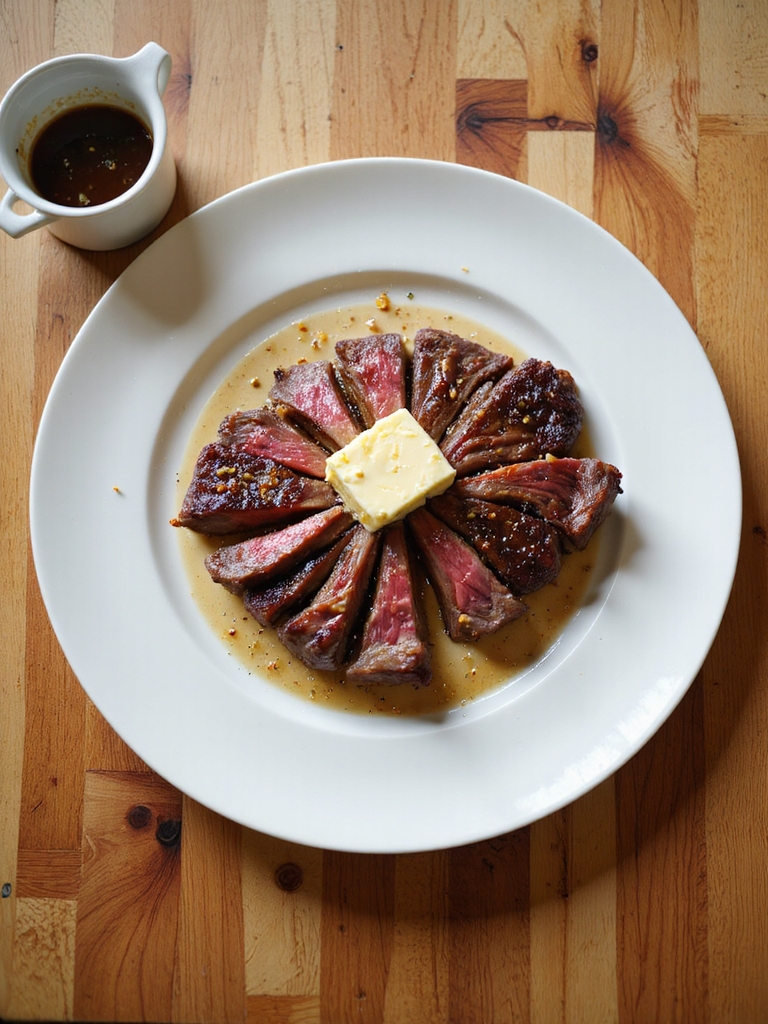
Resting, slicing, and serving are the final and essential steps that turn a well-cooked steak into a restaurant-quality bite: after removing the steak from heat at the appropriate pull temperature, tent it loosely with foil to allow carryover cooking and juices to redistribute, then slice against the grain into even slices and serve immediately with a small pat of butter or a spoonful of pan juices to maximize juiciness and flavor.
- Cooked ribeye steak (pulled 5–10°F below final target)
- Kosher salt
- Freshly ground black pepper
- Unsalted butter or compound butter
- Pan juices, steak sauce, or chimichurri (optional)
- Sharp chef’s knife
- Cutting board with juice groove
- Aluminum foil
After pulling the steak from heat, transfer to a cutting board, tent loosely with foil and rest undisturbed for 5–10 minutes (longer for thicker cuts) to allow carryover cooking and internal juices to redistribute so they won’t drain out when sliced; while resting, spoon pan juices into a small bowl or add a pat of butter on top so it melts into the meat when served.
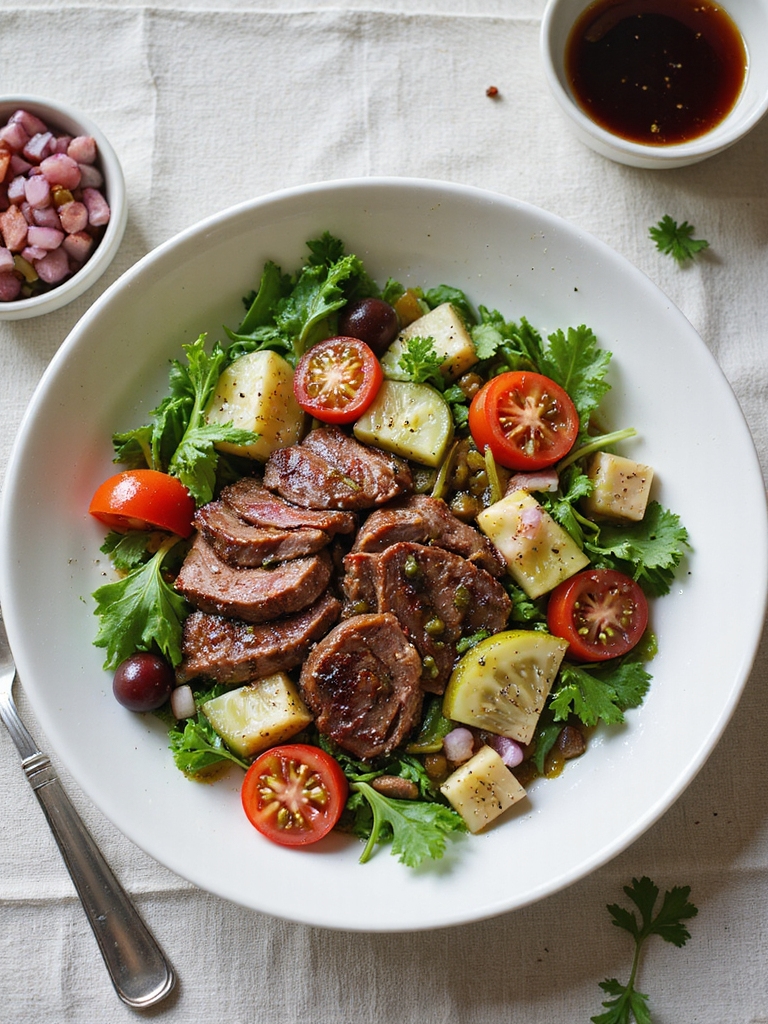
Slice the steak across the grain into even 1/4–1/2-inch slices, wipe the board between passes if needed to keep slices clean, arrange on a warmed plate, finish with a sprinkle of flaky salt and freshly ground pepper and serve immediately with reserved pan juices or your sauce of choice.
Tip: Resting time scales with thickness—1 inch ≈5 minutes, 1.5–2 inches ≈7–10 minutes—and always slice against the grain to maximize tenderness.
A perfectly cooked ribeye benefits from proper seasoning and fat distribution while cooking to enhance flavor and mouthfeel, especially when starting with a well-marbled cut like ribeye steak.
Simple Steakhouse Sides to Pair With Your Steak
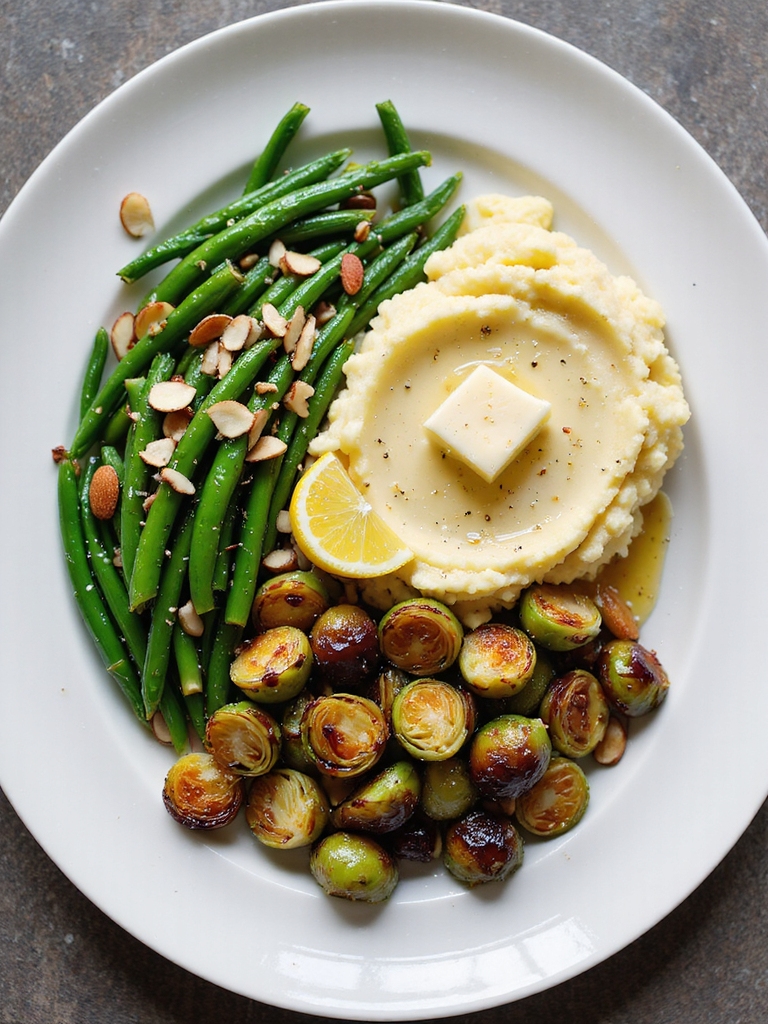
A trio of simple steakhouse sides—garlic mashed potatoes, sautéed green beans with lemon and almonds, and roasted Brussels sprouts—rounds out any steak dinner with complementary textures and flavors while staying quick and mostly hands-off so the steak remains the star.
- Yukon Gold potatoes
- Whole milk or cream
- Unsalted butter
- Garlic cloves
- Salt
- Freshly ground black pepper
- Fresh green beans
- Olive oil
- Lemon
- Sliced almonds
- Brussels sprouts
- Olive oil spray or extra virgin olive oil
- Balsamic vinegar (optional)
Peel and cube the potatoes and simmer in salted water until tender, drain and mash with warm milk, butter and minced roasted garlic, toss trimmed green beans in a hot skillet with olive oil, a squeeze of lemon and toasted almonds until bright and crisp-tender, and halve Brussels sprouts, toss with oil, salt and pepper and roast at 425°F (220°C) until caramelized and finish with a splash of balsamic if desired; keep cooked sides warm in a low oven while you rest and slice the steak.
Tip: Start the potatoes and sprouts first since they take longer, use a shallow pan for the green beans to get quick browning, and taste for salt and acidity before serving so everything balances with the steak.
These sides pair especially well with a classic roast beef for a satisfying, restaurant-style meal.
Sauces and Compound Butters to Elevate Every Bite
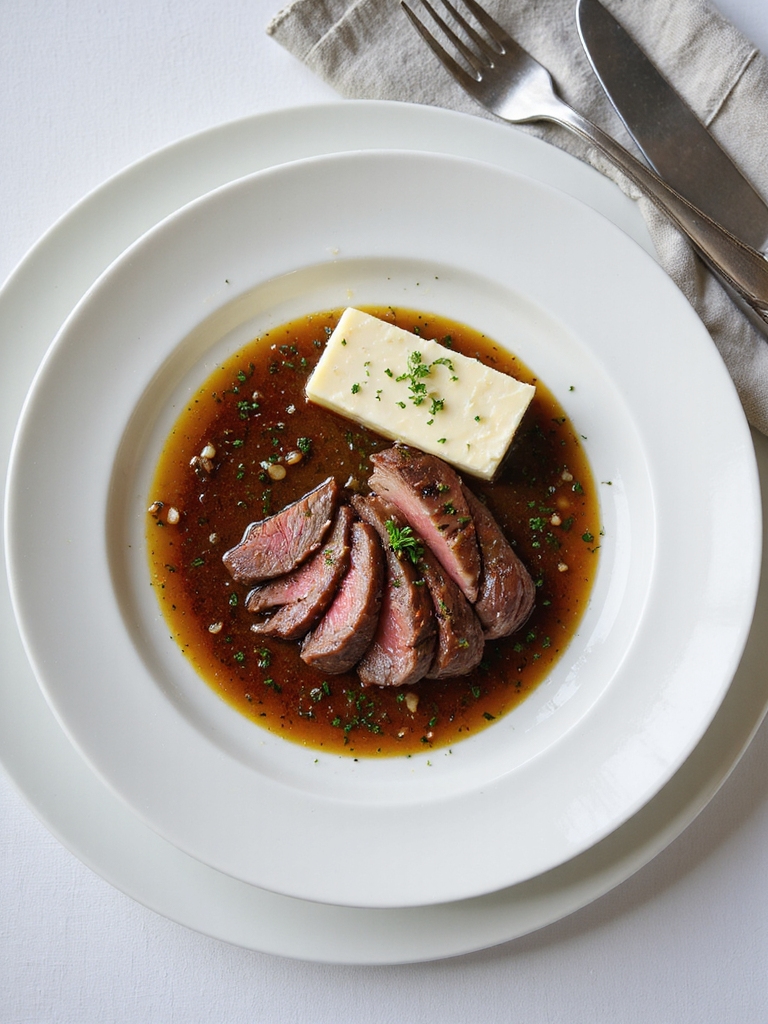
A compound butter and a classic pan sauce are quick ways to boost flavor and finish steak like a pro; the compound butter melts into rich, seasoned streaks while a simple pan sauce deglazes the fond and ties the meal together—prepare both ahead and gently finish steaks with either one for maximum impact.
- Unsalted butter, room temperature (8 tbsp)
- Fresh parsley, finely chopped (2 tbsp)
- Chives, finely sliced (1 tbsp)
- Garlic, minced (1 clove)
- Lemon zest (1 tsp)
- Dijon mustard (1 tsp)
- Worcestershire sauce (½ tsp)
- Salt (¾ tsp) and black pepper (½ tsp)
- Beef or chicken stock (½ cup)
- Dry red wine or fortified sherry (¼ cup) or extra stock
- Shallot, finely minced (1 small)
- Olive oil (1 tbsp)
Mix softened butter with parsley, chives, garlic, lemon zest, Dijon, Worcestershire, salt and pepper until homogeneous, shape into a log on plastic wrap and chill.
After cooking steak, heat oil in the same pan over medium, add shallot and cook until soft, pour in wine to deglaze scraping up brown bits, reduce by half, add stock and simmer until slightly thickened, whisk in a pat of compound butter off heat to finish the sauce and spoon over sliced steak.
Tip: Make certain butter is soft but not melted for easy mixing, strain the pan sauce if desired for a glossy finish, and bring the compound butter slightly below refrigerator firmness before slicing so it melts evenly on hot steak.
You can also use the pan drippings to make a savory homemade beef gravy that complements grilled or roasted beef perfectly.