
I love making Beef Wellington for special meals because it looks grand but is surprisingly doable when you break it down. I’ll walk you through the key steps—searing the beef, a savory mushroom duxelles, a hint of mustard, and the pastry—so you avoid soggy centers and burned crusts.
Stick with me and I’ll share shortcuts, vegetarian swaps, and plating tips that make it worth the effort…
Classic Beef Wellington: Timeless Technique and Ingredients
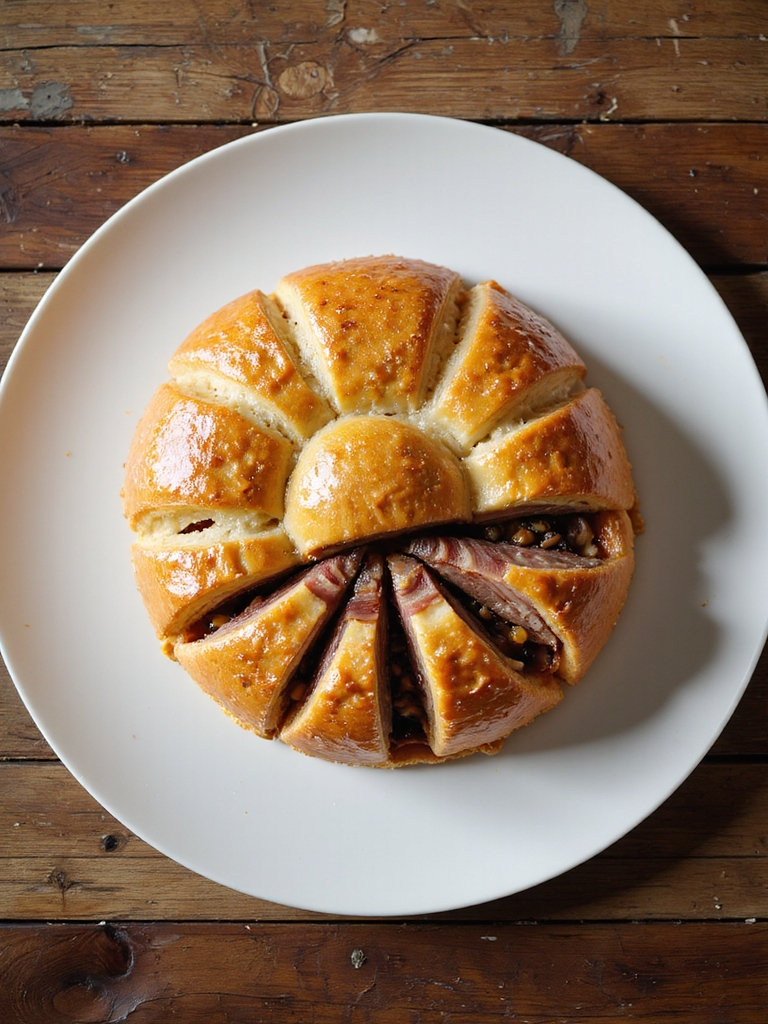
Classic Beef Wellington is a refined centerpiece featuring a tender beef fillet coated in flavorful mushroom duxelles and prosciutto, wrapped in flaky puff pastry and baked to a perfect medium-rare; this recipe emphasizes timing, seasoning, and resting so the beef stays juicy while the pastry turns golden and crisp.
- 1 (about 2–2.5 lb) center-cut beef tenderloin (trimmed)
- Kosher salt and freshly ground black pepper
- 2 tbsp vegetable oil
- 2 tbsp unsalted butter
- 1 lb cremini or button mushrooms, finely chopped
- 2 shallots, minced
- 2 cloves garlic, minced
- 2 tbsp dry white wine or dry sherry
- 8–10 thin slices prosciutto
- 2 tbsp Dijon mustard
- 1 sheet puff pastry (thawed if frozen), about 10×12 inches
- 1 egg, beaten (for egg wash)
- Flour for dusting
Sear the seasoned beef in hot oil and butter until browned on all sides (about 2–3 minutes per side), cool slightly and brush all over with Dijon mustard; in the same pan cook shallots and garlic, add chopped mushrooms and cook until moisture evaporates, deglaze with wine and cool to room temperature.
Lay prosciutto over plastic wrap, spread cooled mushroom duxelles atop, place beef on the prosciutto, roll tightly and chill 15–20 minutes, then wrap in puff pastry on a floured surface, seal edges, brush with egg wash and chill briefly before baking at 400°F (200°C) for 25–35 minutes until pastry is golden and an instant-read thermometer reads 120–125°F for medium-rare, rest 10–15 minutes before slicing.
Let the rolled Wellington chill between steps to keep a tight shape and prevent soggy pastry, use a very hot pan to sear quickly without overcooking the center, and consider a loose tent of foil while resting if the crust needs to soften slightly.
This recipe pairs beautifully with classic sides like roasted vegetables and a red wine reduction to complement the rich flavors of the beef and mushroom duxelles.
Prosciutto-Wrapped Wellington for Extra Savory Depth
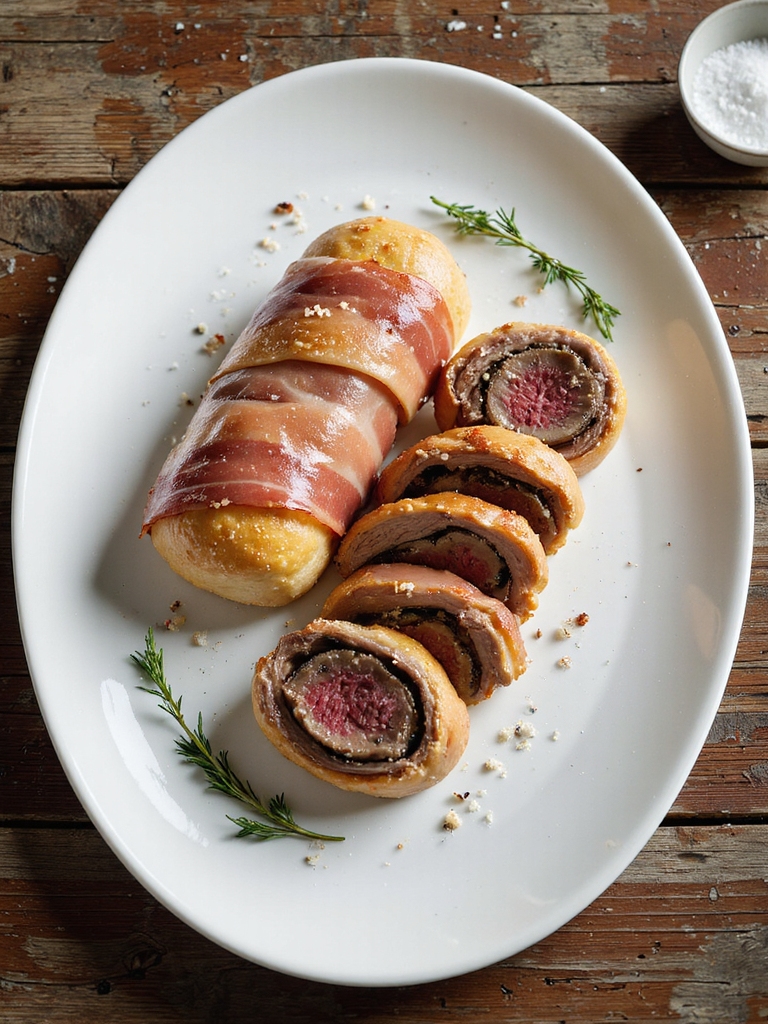
Prosciutto-Wrapped Wellington amplifies the savory profile of classic Beef Wellington by replacing or layering the traditional prosciutto layer as the star—thin, salty slices encase the seared tenderloin and duxelles to add concentrated umami and a crisp, slightly translucent shell inside the pastry, yielding a deeply flavored, elegant centerpiece ideal for special dinners.
- 1 (about 2–2.5 lb) center-cut beef tenderloin (trimmed)
- Kosher salt and freshly ground black pepper
- 2 tbsp vegetable oil
- 2 tbsp unsalted butter
- 1 lb cremini or shiitake mushrooms, finely chopped
- 2 shallots, minced
- 2 cloves garlic, minced
- 2 tbsp dry white wine or dry sherry
- 10–12 thin slices prosciutto (enough to fully wrap the beef)
- 2 tbsp Dijon mustard
- 1 sheet puff pastry (thawed if frozen), about 10×12 inches
- 1 egg, beaten (for egg wash)
- Flour for dusting
- Plastic wrap for rolling
Season the tenderloin generously with salt and pepper, sear in a hot pan with oil and butter until evenly browned (about 2–3 minutes per side), brush all over with Dijon mustard and let cool; meanwhile cook shallots and garlic in the pan, add finely chopped mushrooms and cook over medium-high heat until all moisture evaporates, deglaze with wine, cool; on plastic wrap lay overlapping prosciutto slices into a rectangle, spread cooled duxelles over the prosciutto, place the beef on top, roll tightly using the plastic to form a neat log and chill 15–20 minutes; roll out puff pastry on a floured surface, unwrap and place the prosciutto-wrapped beef on the pastry, trim and seal edges, brush with egg wash, chill 10 minutes, bake at 400°F (200°C) for 25–35 minutes until pastry is golden and an instant-read thermometer reads 120–125°F for medium-rare, rest 10–15 minutes before slicing and serving.
Tip: Keep all components cool between assembly steps to prevent steam and soggy pastry, use very thin prosciutto slices overlapping tightly for a cohesive layer, and rest the Wellington long enough before slicing to retain juices. A warming, comforting table setting with hearty beef stew can complement the richness of the Wellington when serving for a large group.
Shortcut Beef Wellington Using Puff Pastry Sheets
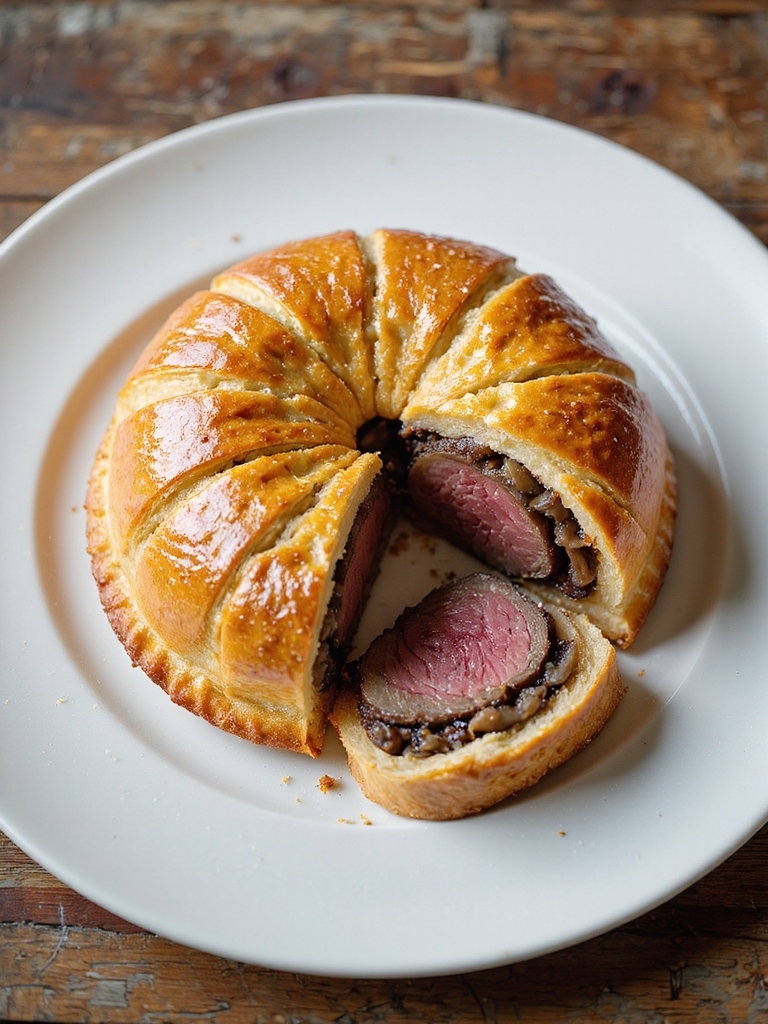
Shortcut Beef Wellington is a simplified take on the classic that uses store-bought puff pastry sheets and quicker components—perfect for weeknight special dinners or when you want impressive results with minimal prep; this version uses a seasoned beef tenderloin or large steak medallions, a fast mushroom duxelles cooked down quickly, and optional prosciutto or ham for flavor, assembled and baked from frozen or thawed pastry for a crisp golden crust.
- 1 (about 1.5–2 lb) center-cut beef tenderloin or three 6–8 oz steak medallions
- Kosher salt and freshly ground black pepper
- 2 tbsp vegetable oil
- 1 tbsp unsalted butter
- 10 oz cremini or button mushrooms, finely chopped
- 1 small shallot, minced
- 1 clove garlic, minced
- 1 tbsp dry white wine or 1 tsp white wine vinegar (optional)
- 6–8 thin slices prosciutto or deli ham (optional)
- 1 tbsp Dijon mustard
- 1 sheet puff pastry or 2 sheets depending on size (thawed if frozen)
- 1 egg, beaten (for egg wash)
- Flour for dusting
Season the beef generously with salt and pepper and sear quickly in a hot pan with oil and butter until browned on all sides (about 1–2 minutes per side for medallions, 3–4 minutes for a tenderloin) then brush with Dijon and let cool slightly.
In the same pan sauté shallot and garlic, add mushrooms and cook over medium-high heat until all moisture has evaporated, deglaze with wine/vinegar, cool.
Lay prosciutto on plastic wrap if using, spread cooled duxelles over prosciutto, place beef on top and wrap tightly, chill briefly.
Roll pastry on a floured surface, cut to fit, place wrapped beef on pastry, seal edges with egg wash, brush top, chill 10 minutes then bake at 400°F (200°C) for 20–30 minutes until pastry is golden and internal temp reaches 120–125°F for medium-rare, rest 10 minutes before slicing.
Tip: Keep components cool during assembly to prevent soggy pastry, use thin prosciutto or ham for a quick savory layer, and check internal temperature to avoid overcooking.
Ground beef can also be used in numerous healthy recipes to make weeknight meals easier and more nutritious.
Individual Mini Wellingtons for Elegant Portions
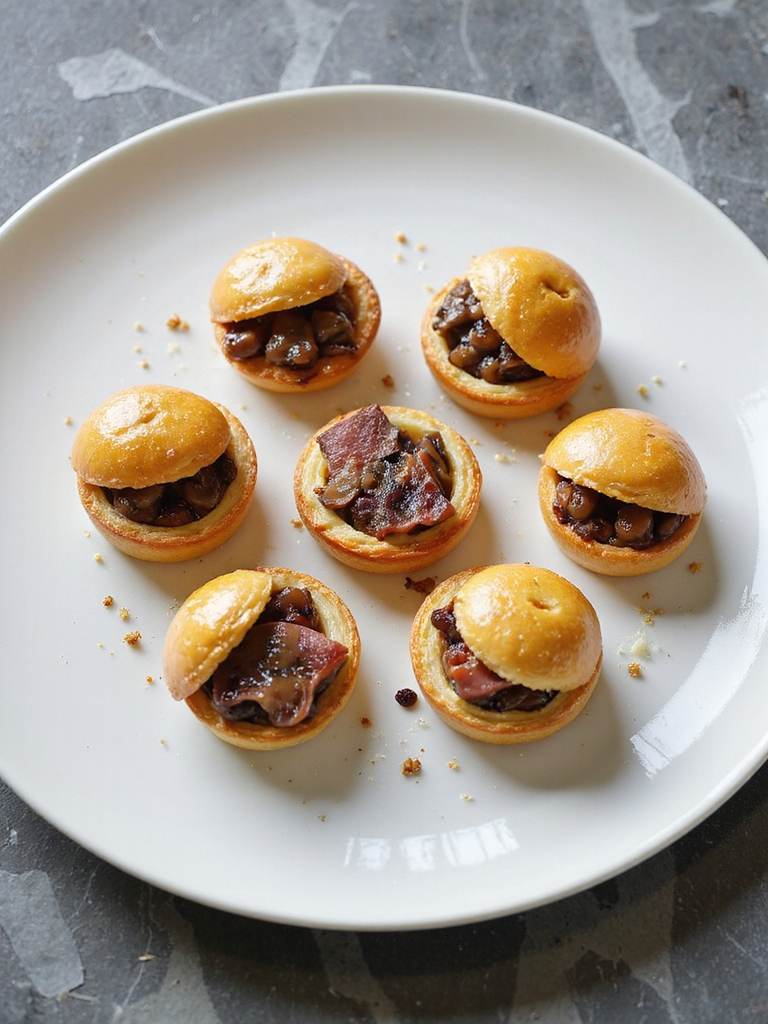
Individual Mini Wellingtons are elegant single-serve versions of the classic, perfect for dinner parties or plated starters; they use small beef medallions or whole mushrooms for a vegetarian option, a concentrated mushroom duxelles, optional prosciutto or pâté, and puff pastry cut into small rounds that bake quickly to a golden crisp while keeping the centers tender and juicy.
- 6 beef medallions (about 3–4 oz each) or 6 large whole mushrooms for vegetarian
- Kosher salt and freshly ground black pepper
- 2 tbsp vegetable oil
- 1 tbsp butter
- 8 oz cremini mushrooms, very finely chopped
- 1 small shallot, minced
- 1 clove garlic, minced
- 1 tbsp dry white wine or 1 tsp white wine vinegar (optional)
- 6 thin slices prosciutto or 6 small rounds of pâté (optional; omit for vegetarian)
- 1 sheet puff pastry (thawed), cut into six 4–5 inch rounds
- 1 tbsp Dijon mustard
- 1 egg, beaten (for egg wash)
- Flour for dusting
Sear seasoned medallions in hot oil and butter 1–2 minutes per side for rare, brush with mustard and let cool slightly while you sauté shallot and garlic, add mushrooms and cook over medium-high heat until moisture evaporates, deglaze with wine and cool.
Assemble by laying prosciutto (or skip) and a spoonful of duxelles on each pastry round, place medallion on top, fold pastry around to seal or place a second round on top and crimp edges, brush with egg wash, chill briefly, and bake at 400°F (200°C) for 12–18 minutes until pastry is golden and internal temp reaches 120–125°F for medium-rare, rest 5–7 minutes before serving.
Tip: Keep all components chilled while assembling, work quickly to prevent soggy pastry, and use an instant-read thermometer to avoid overcooking.
For an easy weeknight shortcut, you can also adapt the filling to slow-cook style braised beef similar to crockpot roast beef and then portion into pastry rounds for individual servings.
Mushroom Duxelles Variations: From Porcini to Cremini
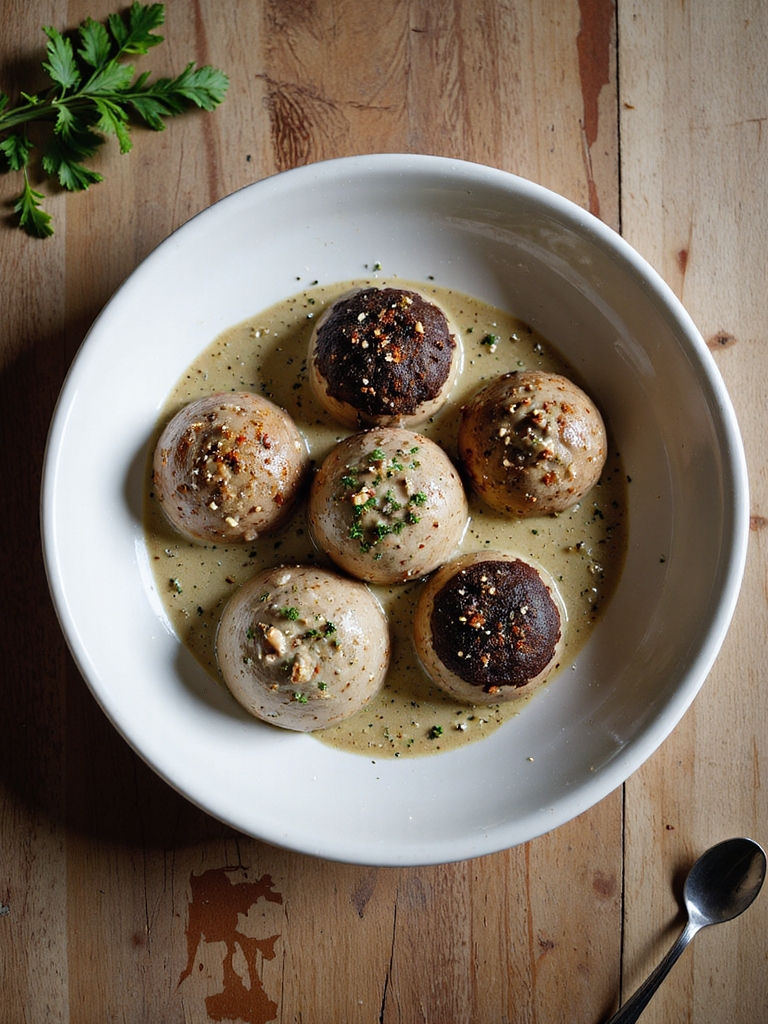
Mushroom duxelles is a concentrated, savory mixture of finely chopped mushrooms, aromatics, and reduced liquid that adds intense umami to Beef Wellington, tarts, crostini, or as a stuffing; this recipe shows five variations — basic cremini, shiitake-porcini, mixed wild mushroom, chestnut mushroom with shallots and thyme, and a vegetarian-forward cremini with miso and sherry — and explains how to prepare each to a dry, paste-like consistency suitable for wrapping in pastry or using as a flavorful spread.
- 8 oz cremini mushrooms, very finely chopped (basic duxelles)
- 4 oz porcini (dried) rehydrated, finely chopped (porcini boost)
- 4 oz shiitake, finely chopped (shiitake-porcini mix)
- 8 oz mixed wild mushrooms, finely chopped (wild blend)
- 8 oz chestnut mushrooms, finely chopped + 1 small shallot, minced + 1 tsp fresh thyme leaves (shallot-thyme)
- 8 oz cremini, finely chopped + 1 tsp white miso + 1 tbsp dry sherry (miso-sherry)
- 2 tbsp unsalted butter (or olive oil for vegetarian)
- 1 tbsp olive oil
- 1 small shallot, finely minced (for base)
- 1 clove garlic, minced
- Salt and freshly ground black pepper
- 1–2 tbsp dry white wine or dry sherry (optional, per variation)
- 1 tbsp chopped fresh parsley (optional)
- 1 tsp lemon juice (optional, brightener)
Heat butter and oil in a wide skillet over medium-high heat until shimmering, add the minced shallot and garlic and cook 1–2 minutes until fragrant, then add the chosen mushrooms (and any rehydrated porcini or shiitake) and season lightly with salt to draw out moisture; cook, stirring frequently and breaking up with a spatula, until all liquid has evaporated and the mixture becomes a paste-like, concentrated duxelles — finish with wine or sherry to deglaze if using, stir in miso for the miso-sherry variation or thyme for the shallot-thyme version, taste for seasoning, cool completely before using.
Tip: Work in a wide pan and don’t overcrowd the mushrooms so they can evaporate quickly; cool thoroughly before wrapping in pastry to prevent soggy dough and adjust salt last, especially when using miso or prosciutto.
This method also works very well when adapting duxelles for use with cubed beef to make rich, savory pies or stews.
Wine and Mustard Pairings to Elevate Flavor
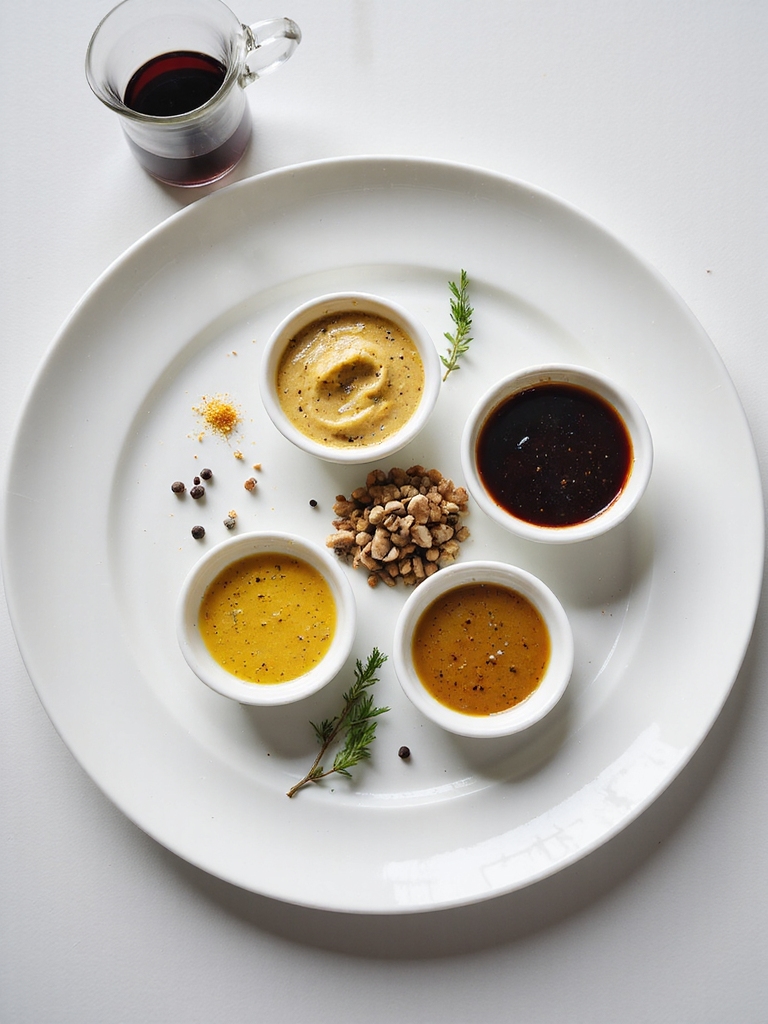
Pairing the right wine and mustard with your Beef Wellington components — particularly the mushroom duxelles and the seared beef — can sharpen flavors, balance richness, and introduce complementary acidity or spice; this recipe-style guide walks you through selecting and combining wines and mustards to elevate a Beef Wellington, offering concrete pairings for classic, porcini-forward, and miso-sherry duxelles variations and a simple mustard sauce to brush on the pastry or serve alongside.
- 1/2 cup dry red wine (Bordeaux-style or Pinot Noir for classic duxelles)
- 1/2 cup dry white wine (Chablis or dry sherry for mushroom-forward or miso duxelles)
- 2 tbsp Dijon mustard (smooth)
- 1 tbsp whole-grain mustard (for texture)
- 1 tsp whole black peppercorns, crushed
- 1 tsp honey or aged balsamic (optional, to soften heat)
- 1 tsp fresh thyme leaves (or 1/2 tsp dried)
- 2 tbsp unsalted butter (for finishing the mustard sauce)
- Salt to taste
- 2 tbsp heavy cream or crème fraîche (optional, for a creamier sauce)
To make pairings and a mustard sauce: choose a wine that echoes the duxelles—Pinot Noir or medium-bodied Bordeaux for cremini and beef-forward versions, lighter gamay or mature Rioja for porcini accents, and a dry white like Chablis or fino sherry to lift miso-sherry duxelles—then combine Dijon and whole-grain mustard with crushed peppercorns, a splash (1–2 tbsp) of the chosen wine, honey or balsamic if desired, and whisk over low heat with butter and cream until glossy and just warmed through, taste and adjust salt and thyme.
Brush a thin layer of mustard on the rested beef before wrapping and serve extra sauce on the side, offering the same wine with the plated Wellington.
Tip: Match the wine to the dominant umami (earthy porcini = lighter red or aged Rioja, miso = dry white) and apply mustard sparingly so it brightens without overpowering the pastry and consider a taste test with a spoonful of duxelles plus mustard and a sip of your wine to confirm harmony.
Korean Beef offers a contrasting savory profile that can inspire spicing or glazing ideas when you want to give a modern twist to your Wellington.
Make-Ahead Strategies and Reheating Tips
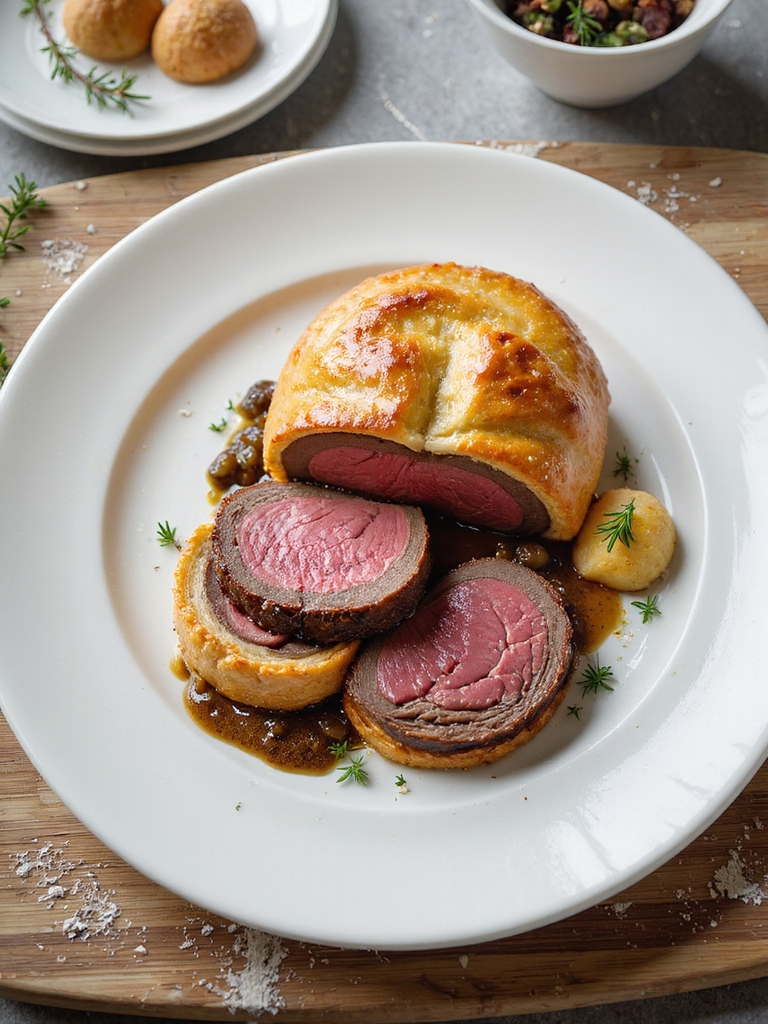
Make-Ahead Strategies and Reheating Tips for Beef Wellington: Prepare the Wellington components ahead to save time and preserve quality—cook and cool the duxelles and any pâté or prosciutto layer up to 3 days in advance, sear the beef and chill wrapped for up to 24 hours, or assemble the full Wellington and freeze unbaked for up to 1 month; when ready to serve, thaw in the refrigerator overnight and reheat carefully to maintain a crisp pastry and medium-rare center.
- 1 beef tenderloin (about 2–2.5 lb), trimmed and tied
- 8 oz mushrooms (mixed cremini/porcini), finely chopped
- 2 tbsp butter
- 2 tbsp olive oil
- 6–8 thin prosciutto slices (optional)
- 2 tbsp Dijon mustard
- 1 sheet puff pastry, thawed
- 1 egg, beaten (egg wash)
- Salt and freshly ground black pepper
- 1/4 cup dry white or red wine (for deglazing duxelles)
- Plastic wrap and foil for storing
- Baking sheet and wire rack
To make ahead and reheat: cook duxelles until dry, cool and refrigerate up to 3 days or freeze; sear beef 1–2 minutes per side, cool, brush with mustard, then chill wrapped for up to 24 hours or assemble whole Wellington and freeze unbaked for up to 1 month; when ready, thaw overnight in fridge, brush with egg wash and bake at 400°F (200°C) until pastry is golden and internal temp reaches 120–125°F for medium-rare (rest 10–15 minutes) and reheat slices gently in a 300°F oven on a rack for 8–12 minutes to warm through without overcooking.
Tips: Always cool components before wrapping to prevent soggy pastry, use a probe thermometer when reheating to avoid overcooking, and for frozen assembled Wellingtons freeze on a tray until firm then wrap tightly so you can bake from mostly frozen after an extra 10–15 minutes added to baking time. A perfectly rested roast will yield more even slices and better texture, so allow the beef to rest after searing before wrapping or chilling.
Vegetarian Wellington Alternatives With Root Vegetables
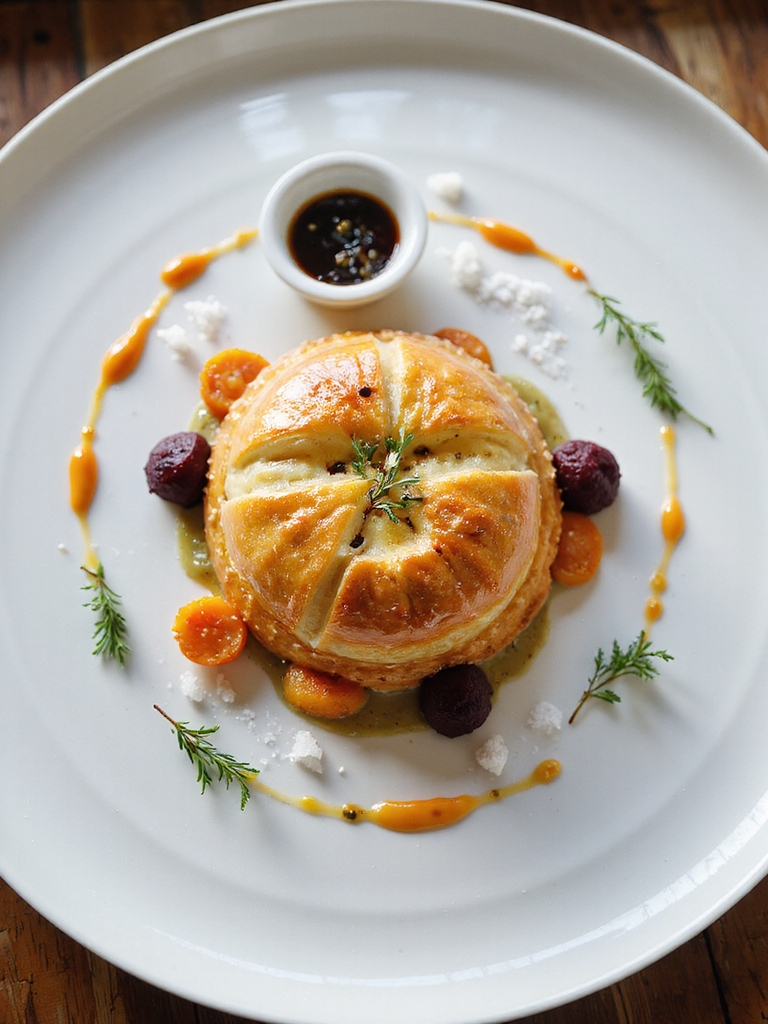
A hearty Vegetarian Root Vegetable Wellington swaps beef for a savory, spiced mixture of roasted root vegetables and lentils wrapped in prosciutto-like layers of mushroom duxelles and flaky puff pastry — perfect for a festive centerpiece that still delivers rich, earthy flavors and a crisp golden crust. This version balances sweet carrots, parsnips and beets with caramelized shallots, thyme, and a binder of lentils and breadcrumbs so slices hold together while staying moist; make the components a day ahead to chill and firm up for easier assembly and cleaner slices when serving.
- 1 lb mixed root vegetables (carrots, parsnips, beets), peeled and cut into 1/2-inch dice
- 1 cup cooked brown or green lentils
- 8 oz mushrooms, finely chopped
- 2 tbsp olive oil
- 2 tbsp butter
- 2 shallots, finely chopped
- 2 cloves garlic, minced
- 1 tsp fresh thyme leaves
- 1/2 cup breadcrumbs (preferably panko)
- 2 tbsp soy sauce or tamari
- 1 tbsp balsamic vinegar
- Salt and freshly ground black pepper
- 1 sheet puff pastry, thawed
- 1 egg, beaten (egg wash)
- 2 tbsp chopped parsley (optional)
- Plastic wrap and baking sheet
Preheat oven to 400°F (200°C); toss diced root vegetables with 1 tbsp olive oil, salt and pepper, roast on a baking sheet until tender and caramelized, about 25–30 minutes, while sautéing mushrooms, shallots and garlic in butter and remaining oil until moisture evaporates to make a duxelles, then stir in cooked lentils, breadcrumbs, soy sauce, balsamic and thyme, adjust seasoning and cool; roll out puff pastry, spread a thin layer of duxelles, mound the cooled vegetable-lentil mixture into a log down the center, fold pastry to enclose, trim seams, brush with egg wash, score the top lightly, chill 15–30 minutes, then bake on a lined sheet until pastry is deep golden, about 30–40 minutes, rest 10 minutes before slicing and garnish with parsley.
Allow roasted vegetables and duxelles to cool thoroughly before assembling to prevent soggy pastry, chill the assembled Wellington briefly to firm the filling for neater slices, and use a sharp serrated knife while cutting to preserve the crisp crust.
Plating and Garnish Ideas for a Showstopping Presentation
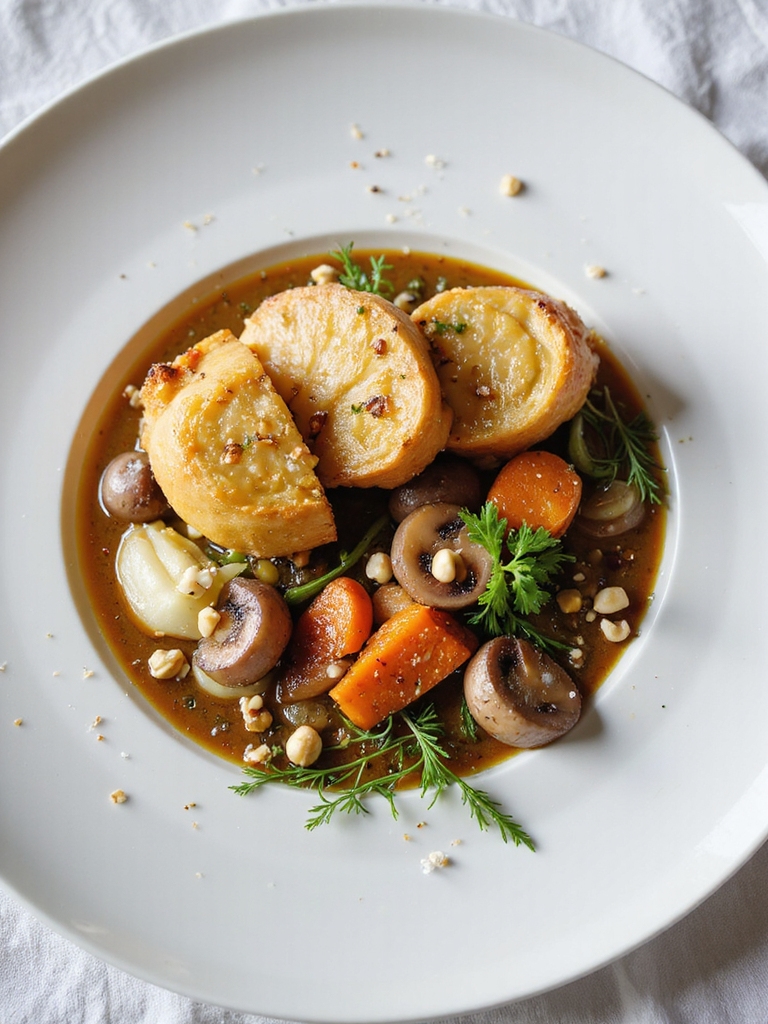
A beautifully plated Vegetarian Root Vegetable Wellington deserves attention to color, height and complementary sauces: present slices fanned slightly to show the golden pastry and colorful filling, add a glossy smear of balsamic reduction or mushroom jus beneath, scatter microgreens or frisée for brightness, and tuck roasted baby carrots or glazed shallots alongside for texture contrast; finish with a dusting of flaky sea salt and a few crushed toasted hazelnuts or walnuts for crunch, and serve on warm plates so crust stays crisp.
- 1 prepared Vegetarian Root Vegetable Wellington (cooled 10 minutes after baking)
- 1/2 cup balsamic reduction or mushroom jus
- 8–10 baby carrots, roasted and glazed
- 6–8 pearl shallots, caramelized
- 1 cup mixed microgreens or frisée
- 2 tbsp toasted chopped hazelnuts or walnuts
- Flaky sea salt and freshly ground black pepper
- Fresh thyme sprigs for garnish
- 1 lemon wedge (optional, for brightness)
Slice the Wellington into 1–1.5 inch thick pieces with a very sharp serrated knife, wipe the blade between cuts for clean edges, place three slices slightly overlapping on a warm plate, spoon a crescent of warm balsamic reduction or jus beside the slices and lay roasted carrots and shallots artfully along the sauce, finish with a scattering of microgreens, toasted nuts, a few thyme sprigs and a light sprinkle of flaky salt to elevate color and texture.
Serve immediately while pastry is crisp and filling is warm, warm the plates for best results, prepare the sauce and roasted accents in advance and reheat gently, and avoid over-slicing—use a fresh, sharp serrated knife and rest the Wellington briefly after baking to keep neat slices and prevent moisture from sogging the crust.
The same attention to balance and presentation can elevate related small-plate ideas like savory roast beef sliders and other bite-sized hors d’oeuvres, so consider pairing with savory roast beef for variety.
Troubleshooting Common Wellington Problems
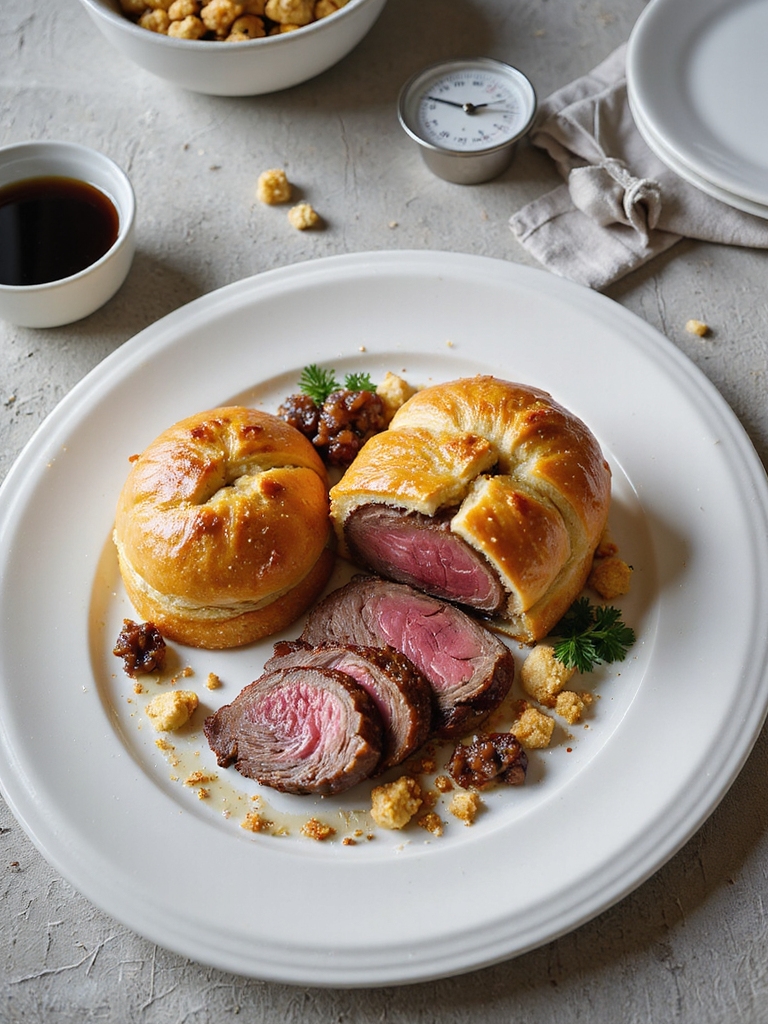
Troubleshooting a Wellington requires attention to pastry temperature, moisture control, and even cooking so you end up with a crisp golden crust and a perfectly cooked filling; this recipe walks through diagnosing and fixing common issues—soggy bottom, splitting pastry, under- or overcooked center—while preparing a standard Beef Wellington (or substitute vegetarian filling) and includes preventive measures and quick fixes so you can recover a near-perfect result before serving.
- 1 (about 2–2.5 lb) center-cut beef tenderloin (or large root vegetable roast for veg version)
- Salt and freshly ground black pepper
- 2 tbsp olive oil
- 2 tbsp unsalted butter
- 8 oz mushrooms, finely chopped (duxelles) or alternative mushroom paste
- 2 tbsp Dijon mustard
- 6–8 slices prosciutto (omit for vegetarian; use thin pastry barrier)
- 1 sheet puff pastry, thawed (or double for larger roast)
- 1 egg, beaten for egg wash (or plant-based wash)
- 1 tbsp cornstarch mixed with 1 tbsp cold water (for sealing)
- 1/2 cup dry white wine or sherry (optional, for deglazing)
- Baking parchment and baking tray
- Thermometer (instant-read)
Sear the seasoned tenderloin in hot oil/butter until deeply browned on all sides, cool briefly, brush with mustard and wrap in prosciciutto spread with duxelles then chill to firm up; roll out pastry, encase the chilled log sealing edges with cornstarch slurry, chill 15–20 minutes to prevent shrinkage, egg wash and bake at 400°F (200°C) until internal temp reads 125–130°F for medium-rare, tent and rest 10–15 minutes before slicing, and if pastry is soggy beneath, return to a hot oven on a wire rack briefly to re-crisp while keeping interior warm.
Tip: Always dry the duxelles thoroughly, chill the wrapped Wellington before baking, use an instant-read thermometer to avoid overcooking, and if pastry cracks brush with egg wash to seal small tears or patch with extra pastry before baking.
This straightforward method pairs well with a classic Easy Beef Stroganoff side or sauce to complement the rich flavors.