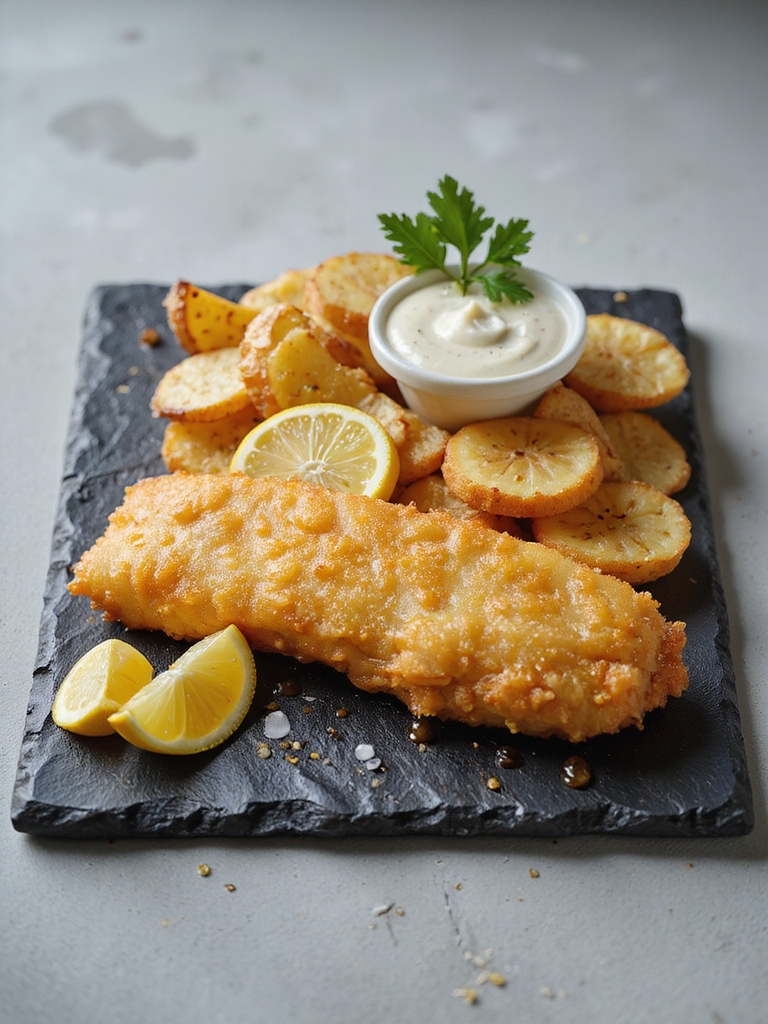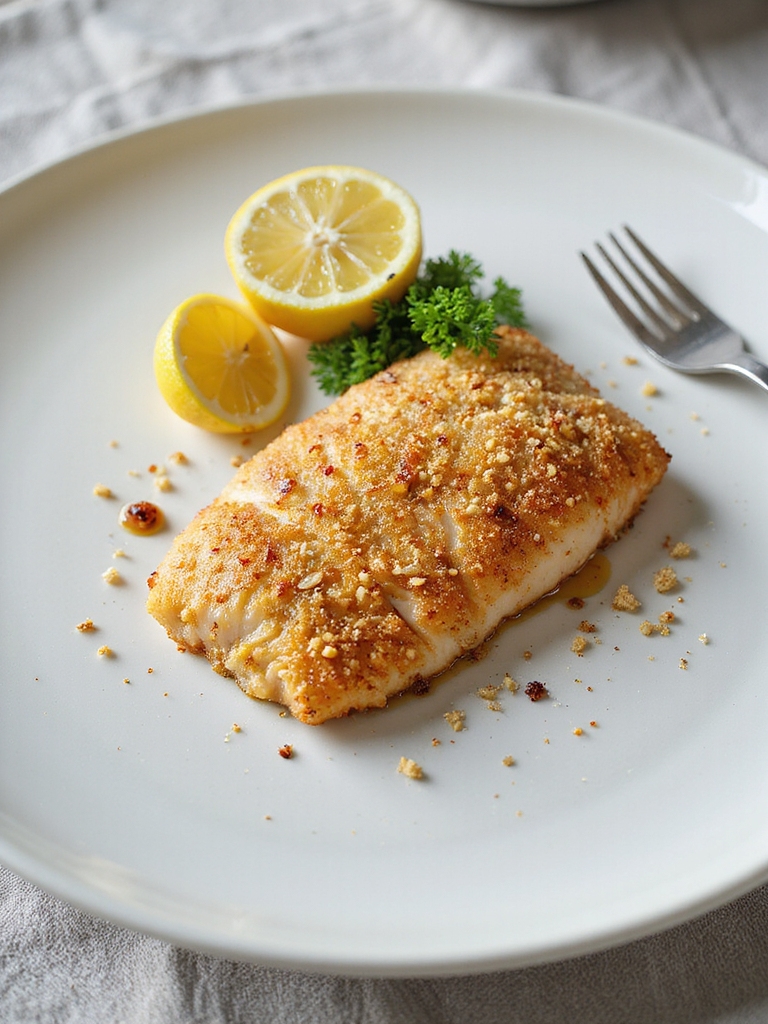
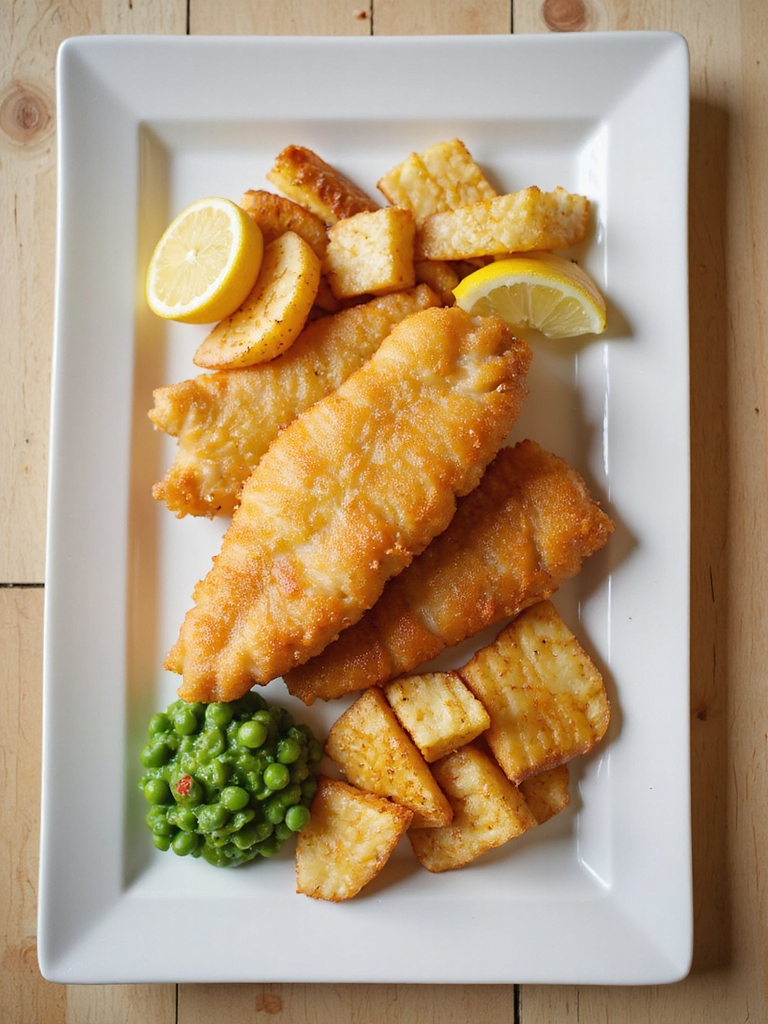
I’ve discovered how you can recreate that iconic takeout taste of fish and chips right in your own kitchen. Choosing the right fish and mastering a crispy batter can make all the difference.
Once you try these simple techniques, you’ll find your family coming back for more. There’s more to share on making golden chips and pairing delicious sides that’ll transport you straight to your favorite takeaway joint.
Choosing the Perfect Fish for Frying
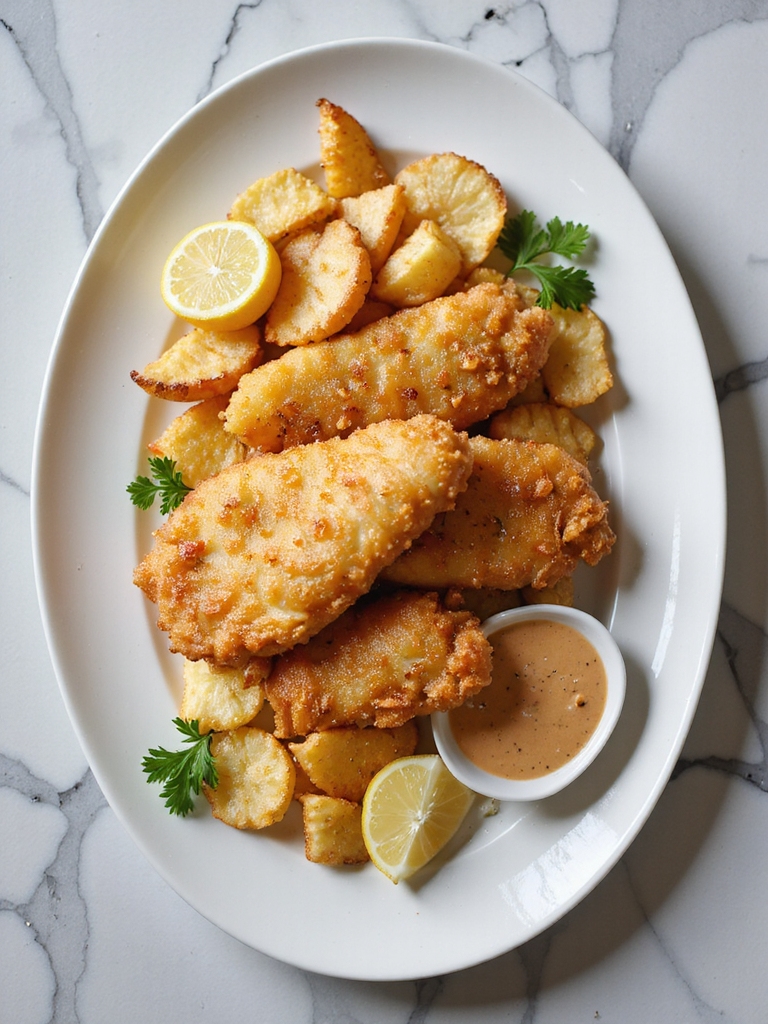
When making a classic fish and chips dish, selecting the right fish is essential for achieving that perfect balance of crispy batter and flaky interior. Opt for firm, white-fleshed fish such as cod, haddock, pollock, or catfish. These varieties are sturdy enough to withstand frying without falling apart and have a mild flavor that complements the crispy coating beautifully. Verify that your fish is fresh, and consider cutting it into fillets of roughly the same size for even cooking. Additionally, many of these white fish recipes are not only delightful but can also be prepared in healthier ways.
- White fish fillets (cod, haddock, pollock, or catfish)
- All-purpose flour
- Beer or sparkling water
- Baking powder
- Salt
- Pepper
- Vegetable oil for frying
- Potatoes for chips
To prepare, whisk the flour with baking powder, salt, and pepper, then slowly add beer or sparkling water until smooth. Dip the fish fillets into the batter, allowing excess to drip off. Heat oil to 350°F and fry the fillets until golden brown, about 4-5 minutes per side. For the chips, slice potatoes, fry in the same oil until golden and crispy, and season with salt.
For the best results, make certain to pat your fish fillets dry before dipping them into the batter to help it adhere better. Use a thermometer to maintain oil temperature to prevent greasy food; too low and the batter absorbs oil, too high and it burns.
Essential Ingredients for Authentic Taste
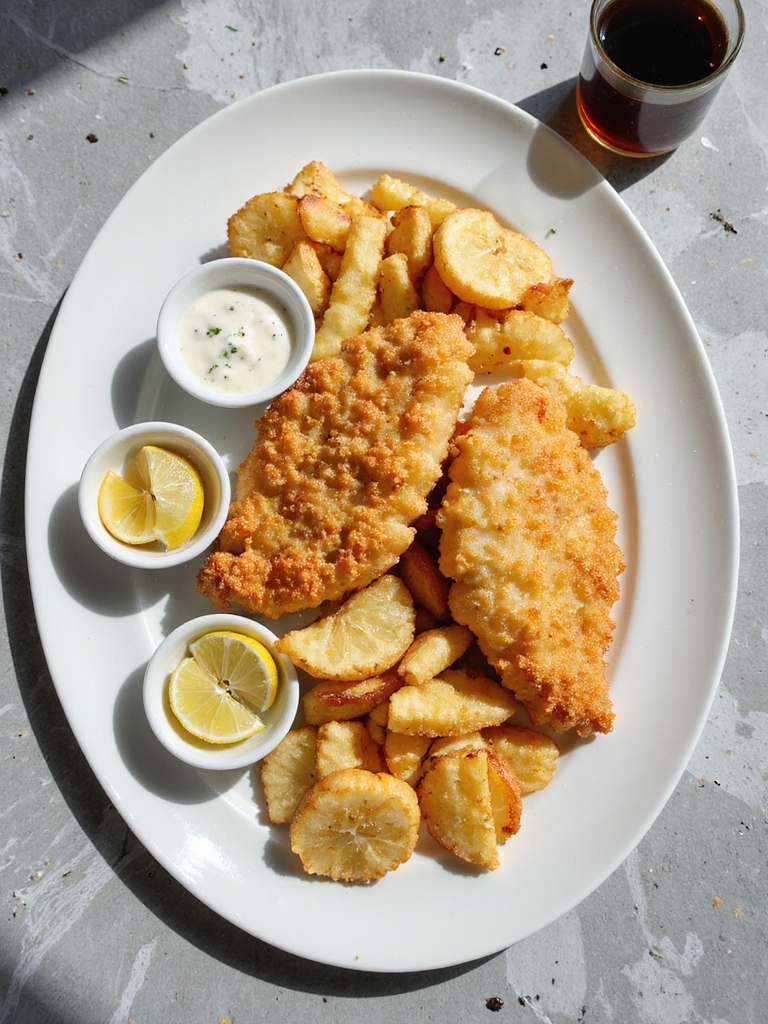
Achieving an authentic taste in a traditional fish and chips dish requires specific ingredients that enhance and balance the flavors and textures. High-quality white fish forms the foundation, while a well-crafted batter and freshly fried chips provide the perfect accompaniment. Fresh lemons for squeezing, malt vinegar for tang, and tartar sauce for extra zest round out the dish. It’s the combination of these elements, rather than just the fish and chips, that distinguishes an exceptional experience from a merely good one.
- White fish fillets (cod, haddock, pollock, or catfish)
- All-purpose flour
- Baking powder
- Salt
- Pepper
- Beer or sparkling water
- Vegetable oil for frying
- Potatoes for chips
- Malt vinegar
- Lemon wedges
- Tartar sauce
Prepare the batter by mixing flour, baking powder, and salt, then add beer gradually until you create a smooth consistency. Pat fish fillets dry, dip in batter, and fry at 350°F until golden. Fry sliced potatoes in the same oil, and season with salt immediately after frying for crispy chips all while preparing sides like tartar sauce and lemon.
For extra crispiness, consider double frying the chips, removing them briefly after the first fry, and returning them to the oil for an additional fry. Verify all prep work, including slicing potatoes and preparing dips, is complete before frying to allow you to focus fully on achieving perfect textures. Pairing your fish fry with the perfect accompaniments can elevate the entire dining experience.
Crafting the Ultimate Batter
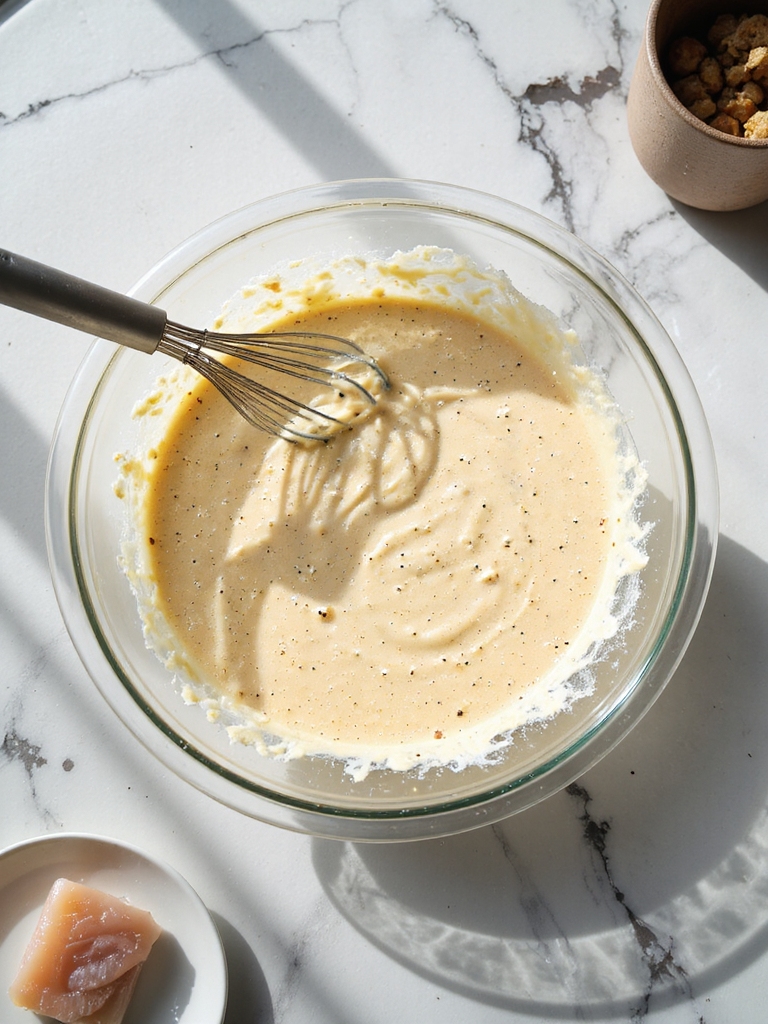
Achieving the perfect batter is vital for the ultimate fish and chips experience, providing that golden, crispy coating that encases the tender white fish. To craft this masterpiece, you need the right blend of ingredients combined with the precise technique to guarantee a batter that is light, airy, and adheres perfectly to the fish. By balancing the dry ingredients with beer or sparkling water, you create a batter that will fry beautifully, offering that unmistakable crunch in every bite. Here’s a guide to creating a batter that elevates your fish and chips to a whole new level of deliciousness.
- All-purpose flour
- Baking powder
- Salt
- Beer or sparkling water
To create the batter, whisk together 1 cup of flour, 1 teaspoon of baking powder, and a pinch of salt in a bowl. Gradually add cold beer or sparkling water while stirring continuously until the mixture reaches a smooth and thick consistency, akin to heavy cream. Pat the white fish fillets dry, coat them fully in the batter making sure there is an even layer, then fry in preheated oil at 350°F until the batter is golden and crispy.
To achieve the best results, verify the beer or sparkling water is ice-cold, as this shock of cold liquid in your batter will help create bubbles and lead to a crisper fry. Furthermore, fry the battered fish immediately after coating to prevent the batter from becoming soggy. Additionally, the use of a beer batter technique not only adds flavor but also contributes to the perfect texture of the coating.
Frying Techniques for Crispy Perfection
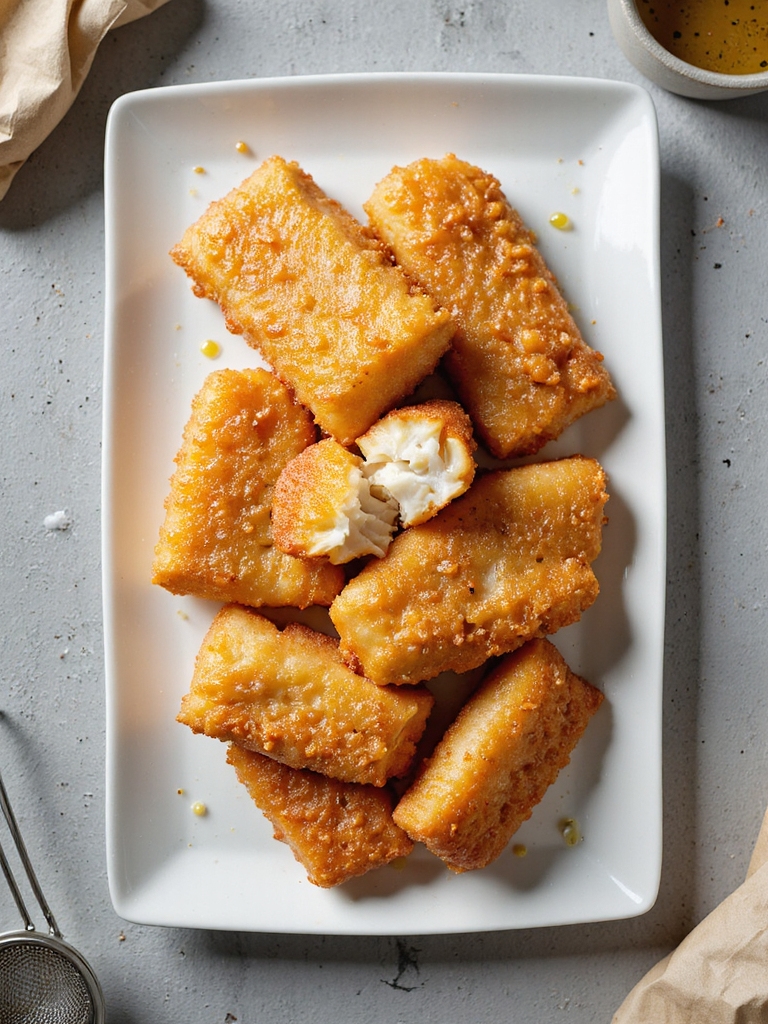
Achieving crispy perfection when frying fish for fish and chips requires careful attention to temperature and timing. The right frying technique guarantees that the batter turns a delectable golden hue while remaining light and crisp, and the fish inside retains its moisture and succulence. Start by preparing your fish fillets with the batter, guaranteeing an even coating before frying. Use a high smoke-point oil and maintain the temperature at a steady 350°F throughout the process.
- White fish fillets
- Prepared batter
- Vegetable oil for frying
Preheat the oil to 350°F in a deep fryer or a large, heavy-duty pot. Carefully submerge the battered fish fillets into the hot oil, making sure they don’t touch each other, and fry them until the batter is golden brown and crispy, approximately 4-5 minutes. Use a slotted spoon to remove the fish, allowing the excess oil to drain before transferring onto a wire rack or paper towel-lined tray.
For extra crispy results, verify the oil maintains its temperature by frying in small batches if necessary. This avoids the oil cooling down, which can lead to soggy, unevenly cooked batter and ruin the texture of your fish. Additionally, using a high smoke-point oil offers better frying results as it allows for a higher frying temperature without burning.
Secrets to Getting Perfectly Golden Chips
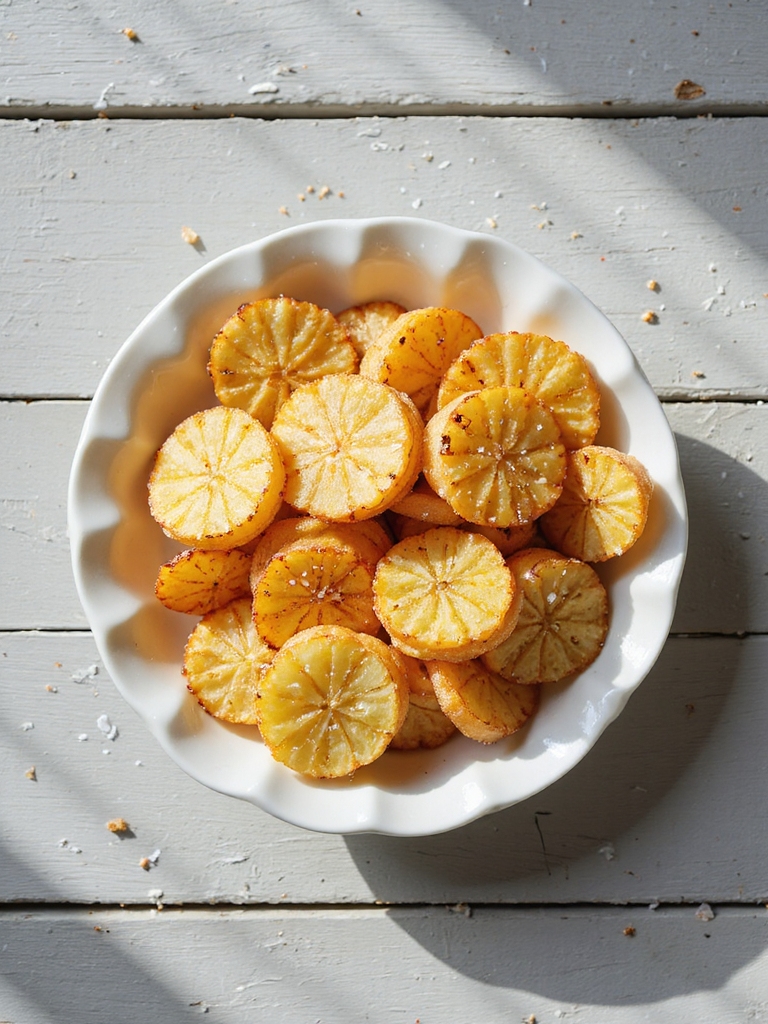
Perfectly golden chips are an essential element of a classic fish and chips meal. Achieving this ideal hue involves selecting the right kind of potato, preparing them to the correct thickness, and frying them twice to create the best texture. Begin by cutting potatoes into uniform strips to guarantee even cooking, then blanch them to soften the inside without browning. The final fry creates that desired contrast between a fluffy interior and a crispy exterior that is golden and delectable.
- Potatoes
- Vegetable oil for frying
- Salt
Start by peeling and cutting the potatoes into ½-inch thick strips. Preheat oil to 325°F in a fryer or heavy pot, then blanch the potato strips until tender, about 3-4 minutes. Remove and drain them, increasing the oil temperature to 375°F, then fry the chips in batches until crisp and golden, roughly 2-3 minutes.
For extra crispiness, guarantee the chips are not crowded during the second fry, allowing them enough room to cook evenly. Season with salt immediately after frying to make sure it adheres well to the hot, crispy surface.
Classic Accompaniments for Your Fish and Chips
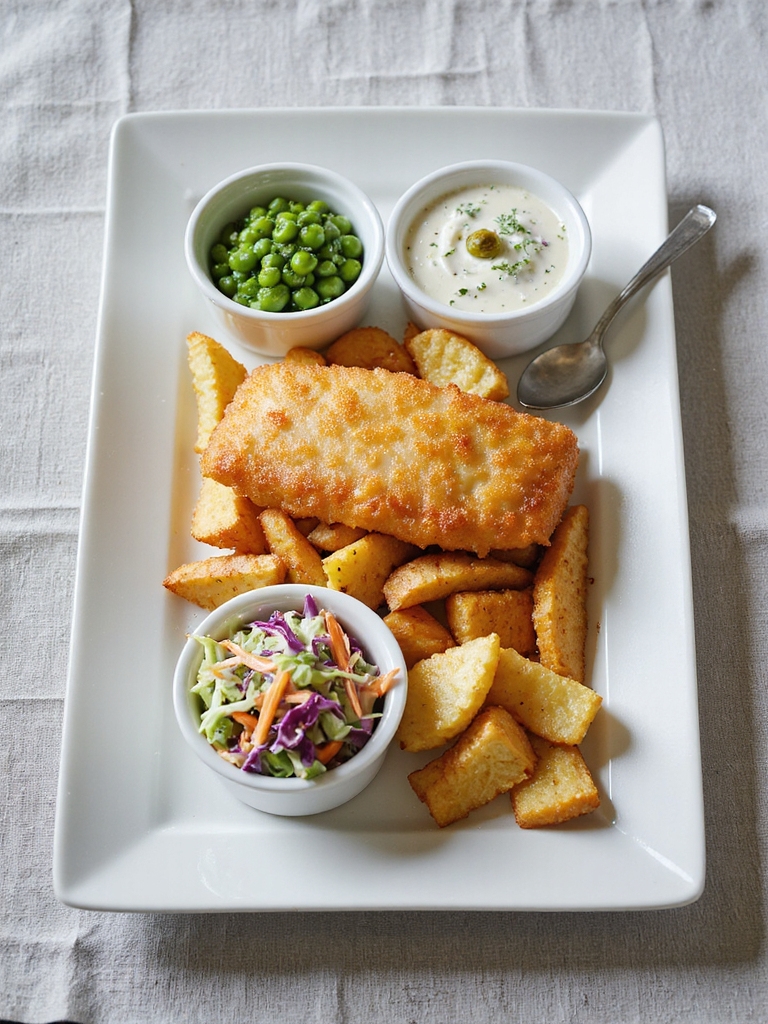
Enhance your fish and chips meal with classic accompaniments that add flavor and balance to this iconic dish. Traditional sides like mushy peas, tangy tartar sauce, and creamy coleslaw provide a perfect blend of textures and tastes that complement the main components. Mushy peas, with their gentle sweetness and hearty texture, pair beautifully with the crispy, savory fish. Meanwhile, a rich tartar sauce adds a zesty kick, while the crunch of coleslaw offers a revitalizing contrast. Additionally, serving a variety of delicious sides can elevate your overall dining experience.
- Frozen peas
- Butter
- Mint leaves (optional)
- Salt
- Pepper
- Mayonnaise
- Capers
- Lemon juice
- Dill pickles
- Cabbage
- Carrots
- Vinegar
- Sugar
To prepare mushy peas, boil frozen peas until soft, then mash with butter, mint, salt, and pepper. For tartar sauce, mix mayonnaise with finely chopped capers, lemon juice, and diced dill pickles. Coleslaw requires thinly shredded cabbage and carrots, tossed with a dressing made of vinegar, sugar, salt, and a touch of mayonnaise.
Ensure peas are not overcooked for a vibrant color and retain minty essence by adding leaves just before serving. Use fresh, crunchy cabbage for the coleslaw to achieve the best texture and allow dressing to meld flavors by chilling before serving.
Tips for Using the Right Cooking Oil
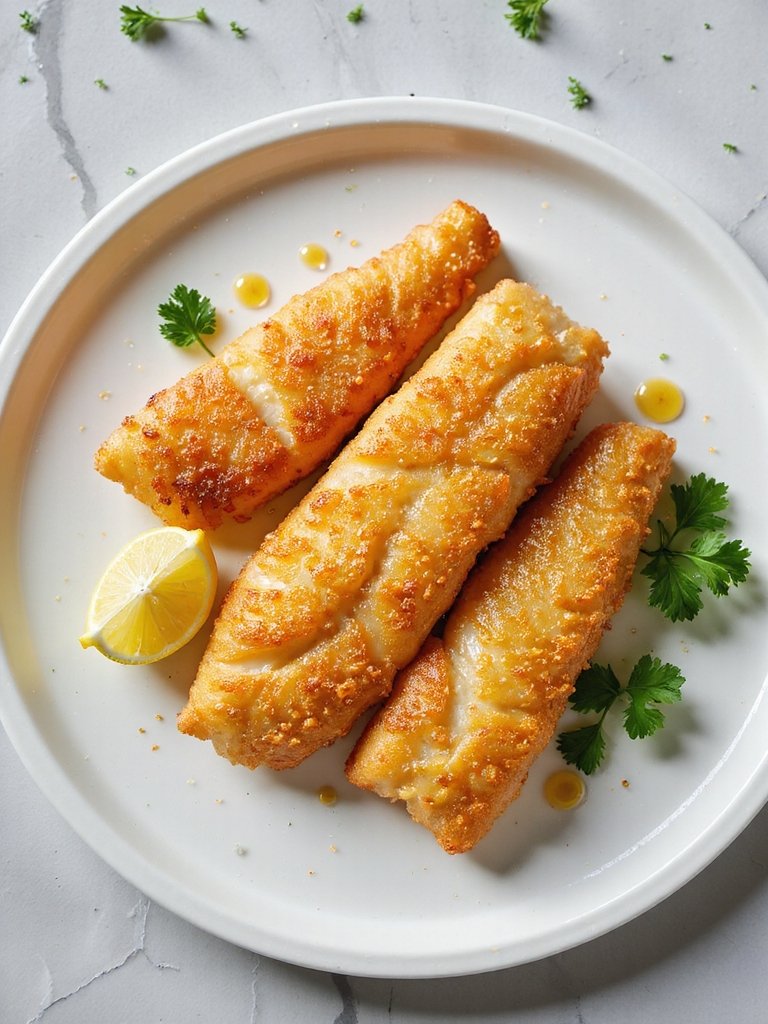
To achieve perfectly cooked fish and chips, choosing the right cooking oil is vital. Opt for oils with high smoke points, such as peanut, canola, or sunflower oil, to guarantee that your fish fries evenly without burning. Not only do these oils withstand the high temperatures required for deep-frying, but they also impart a neutral flavor, allowing the fish’s natural taste to shine. By selecting the appropriate oil, you’ll achieve a golden, crispy coating that is essential for delicious fish and chips. Additionally, using beer batter for the coating can enhance the crunchiness and flavor of the fish.
- Peanut oil
- Canola oil
- Sunflower oil
Begin by heating your chosen oil in a deep fryer or a heavy-bottomed pan until it reaches 350°F (175°C). Carefully lower the fish pieces into the hot oil and fry for about 5-7 minutes, or until golden brown and fully cooked. Remove the fish from the oil, placing it on a paper towel-lined plate to drain excess oil before serving.
Make sure you maintain the oil’s temperature between batches, as frying multiple pieces at once can lower the temperature, affecting the quality of your fish. Changing the oil when it becomes dark or develops an off-flavor will enhance the overall taste of your dish.
Seasoning Your Fish Like a Pro
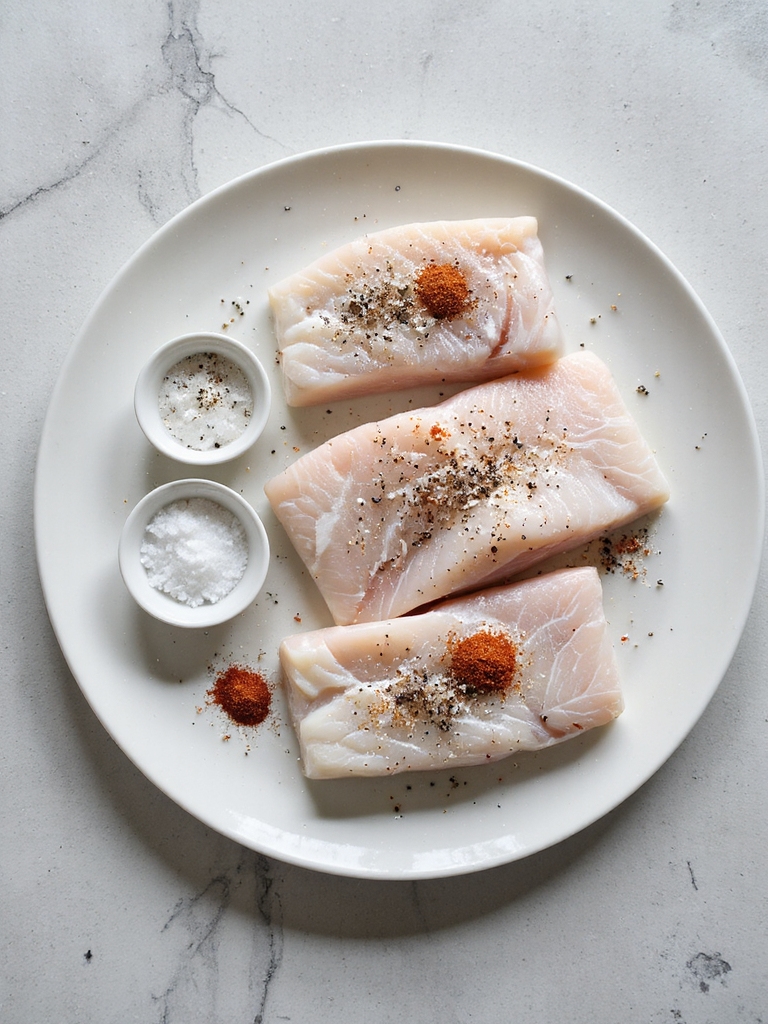
To season your fish like a pro when making fish and chips, it’s important to start by choosing fresh fish fillets, such as cod or haddock, known for their mild flavor and flaky texture. Begin by patting the fish dry with paper towels to remove excess moisture, ensuring the seasoning adheres well. A simple yet effective seasoning mix consists of salt, black pepper, and a pinch of cayenne or paprika for a hint of heat. This combination will enhance the fish’s natural flavors while offering a subtle kick that complements the crispy, golden coating. Additionally, consider using a light brush of olive oil on the fish to help the seasonings adhere better and add extra flavor to the dish.
- Fresh cod or haddock fillets
- Salt
- Black pepper
- Cayenne or paprika (optional)
- Flour (for dredging)
Dredge the fish fillets in flour seasoned with salt, pepper, and cayenne or paprika until evenly coated. Heat your chosen oil in a deep fryer or heavy-bottomed pan to 350°F (175°C) and carefully place the seasoned fish in the hot oil. Fry each piece for 5-7 minutes until golden and crispy, then let them rest on a paper-towel-lined plate before serving.
Apply a light dusting of flour to prevent the batter from becoming greasy. Adjust the amount of cayenne or paprika to match your spice preference, adding a pinch more for a spicier kick or omitting it entirely for a milder taste.
How to Keep Your Fish Moist and Flavorful
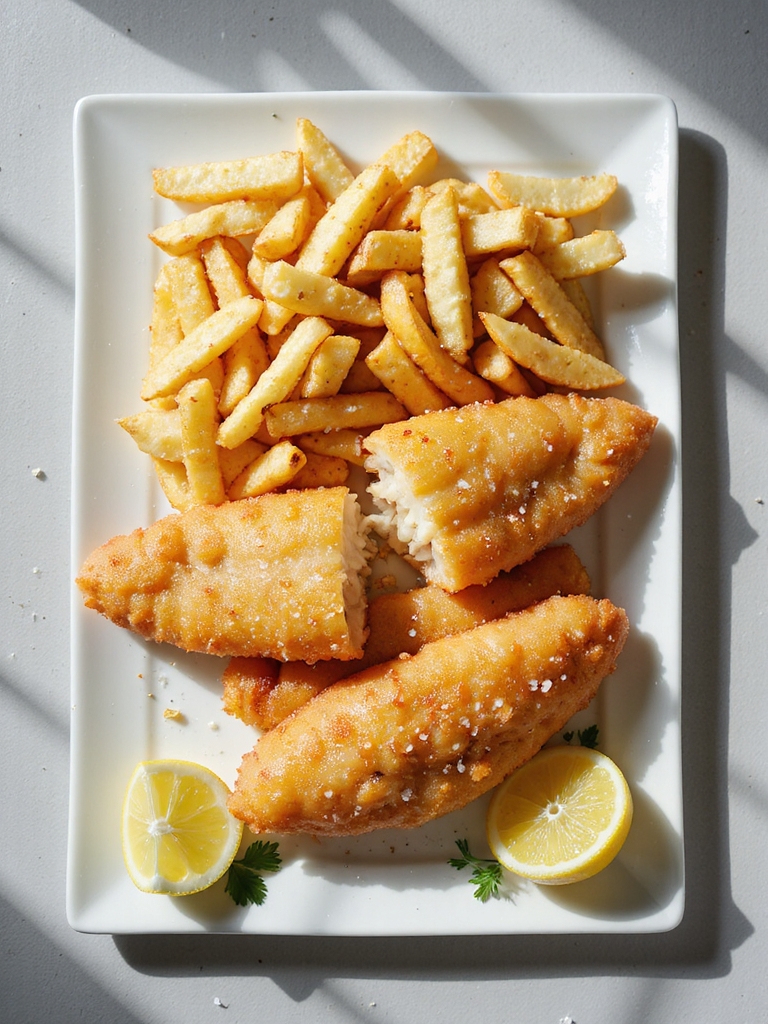
When preparing fish for fish and chips, it’s important to maintain its moisture and flavor, guaranteeing a tender and delightful bite. Begin by preparing a simple marinade using lemon juice and olive oil, which not only adds flavor but also helps keep the fish moist during cooking. Marinate the fish for at least 15 minutes before dredging it in a seasoned flour mix, making sure every piece is well-coated before frying. This method enhances the overall taste and texture, creating a perfectly juicy fish encased in a crispy shell. Baja fish tacos are another great way to enjoy flavorful and moist fish.
- Fresh cod or haddock fillets
- Lemon juice
- Olive oil
- Salt
- Black pepper
- Cayenne or paprika (optional)
- Flour (for dredging)
Combine lemon juice and olive oil to create a marinade, then coat the fish fillets evenly and let them sit for 15 minutes. Dredge the marinated fish in flour seasoned with salt, black pepper, and optional cayenne or paprika. Heat oil to 350°F (175°C) and fry the fish for 5-7 minutes until golden brown, resting them on paper towels before serving.
For best results, verify the oil temperature remains constant to prevent soggy fish and keep the batter crisp. Squeeze fresh lemon over the cooked fish before serving to enhance flavor and add brightness to each bite.
Alternative Fish Options to Try

When it comes to fish and chips, cod and haddock are popular choices, but there’s a world of alternative fish options to explore. Consider experimenting with tilapia, pollock, or even salmon for a different take on this classic dish. Each type of fish brings a unique flavor and texture, so don’t hesitate to customize the flour seasoning and marinade accordingly to complement the chosen fish. These alternatives can offer a new dimension to your fish and chips experience while still delivering that beloved crispy finish. Additionally, using the perfect fish sandwich option can elevate the dish, making it a great choice for any occasion.
- Tilapia, pollock, or salmon fillets
- Lemon juice
- Olive oil
- Salt
- Black pepper
- Dill or thyme (optional)
- Flour (for dredging)
Create a marinade with lemon juice, olive oil, and any herbs of choice, then marinate the fish fillets for 15 minutes. Dredge the marinated fish in flour seasoned with salt, black pepper, and optional dill or thyme. Heat oil to 350°F (175°C) and fry for 5-7 minutes until golden brown and crispy, allowing excess oil to drain on paper towels before serving.
When using alternative fish types, adjust frying times based on the thickness of the fillets to guarantee even cooking. Furthermore, pair with some homemade tartar sauce or a fresh green salad to enhance the overall meal experience.
Batch Cooking for a Crowd
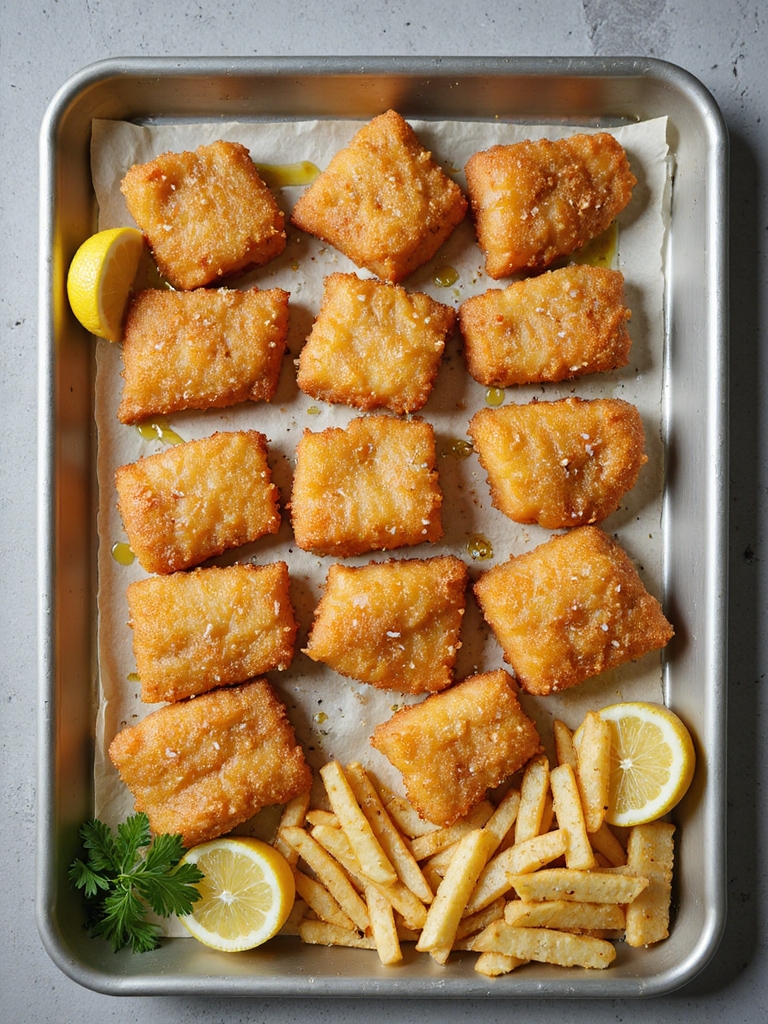
When preparing fish and chips for a crowd, the key is efficiency without compromising flavor. Start by planning your cooking space and gathering all the necessary ingredients ahead of time to streamline the process. Focus on cooking in batches to maintain a consistent temperature for perfect crispiness, and consider pre-measuring your ingredients and marinating all fish fillets while preparing your batter and oil. Batch cooking guarantees that each guest receives a piping hot, crispy serving that tastes fresh. Keep fried fillets warm in a low oven if needed while completing additional batches.
- Cod or haddock fillets
- All-purpose flour
- Baking powder
- Salt
- Cold sparkling water
- Vegetable oil (for frying)
Mix flour, baking powder, and salt, then gradually whisk in sparkling water until a smooth batter forms. Dip fillets into the batter, shaking off excess, and gently lower into 350°F (175°C) heated oil. Fry in batches for 5-7 minutes or until golden and crispy, draining on paper towels and keeping warm until all batches are complete.
Guarantee consistent oil temperature by not overcrowding the fryer and using a thermometer. Preheat serving plates to keep fish and chips warm, and serve promptly to maintain optimum crispiness for all guests. Additionally, using high-quality fish ensures a fresh flavor profile that elevates your dish and impresses your guests.
Variations on Traditional Fish and Chips
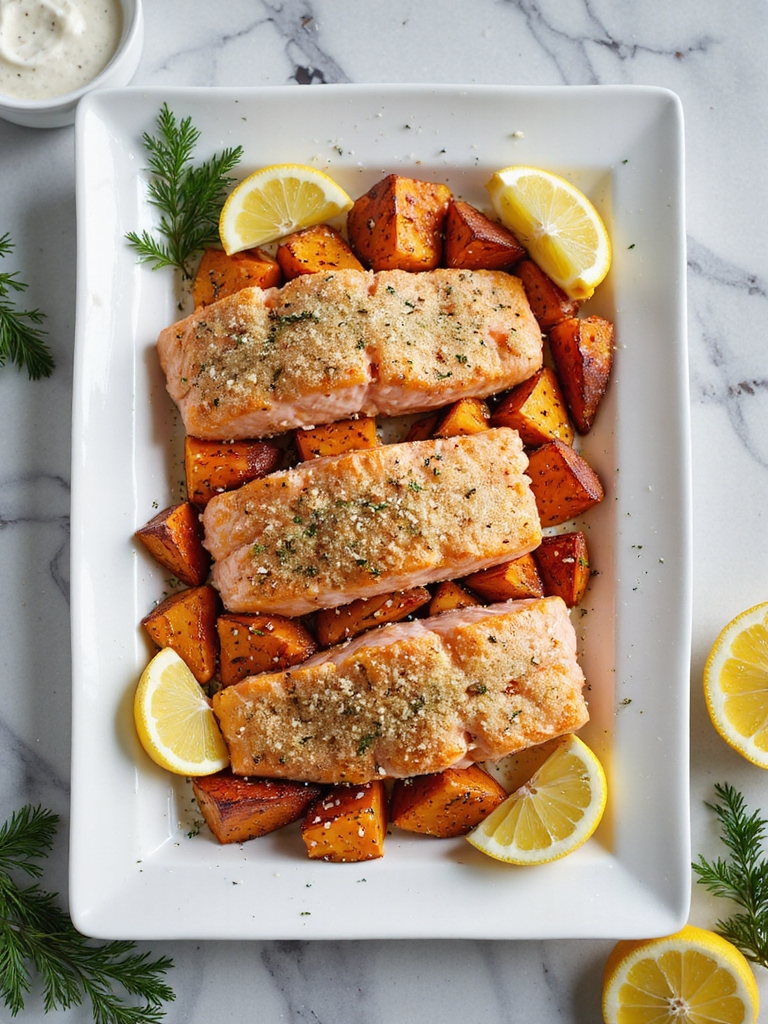
When it comes to variations on traditional fish and chips, creativity and bold flavors are key. Try infusing the batter with unique spices like smoked paprika or cayenne for an added kick. Experiment with different types of fish such as salmon or pollock for a new taste. Consider incorporating herbs like dill or parsley into the batter or crust to elevate the flavor profile. For a healthier twist, opt to bake the fish using panko breadcrumbs for a crunchy alternative, and pair with sweet potato chips instead of traditional potatoes for a modern update to this classic dish.
- Fish fillets (cod, haddock, salmon, or pollock)
- All-purpose flour
- Baking powder
- Salt
- Smoked paprika or cayenne pepper
- Cold sparkling water
- Vegetable oil (for frying) or panko breadcrumbs (for baking)
- Dill or parsley (optional)
- Sweet potatoes (for chips)
Mix flour, baking powder, salt, and spices like smoked paprika or cayenne, then slowly whisk in sparkling water until batter is smooth. Coat fish fillets with batter or panko, and either fry in 350°F (175°C) oil for 5-7 minutes or bake at 400°F (200°C) for 15-20 minutes. Cut sweet potatoes into chips and roast them with olive oil and seasoning until crisp, and serve together while hot.
To elevate the flavor of baked versions, marinate fish in lemon juice for 15 minutes beforehand. Always taste-test seasonings in the batter or crust and adjust accordingly to ascertain a flavorful dish.
Easy Homemade Tartar Sauce Recipe
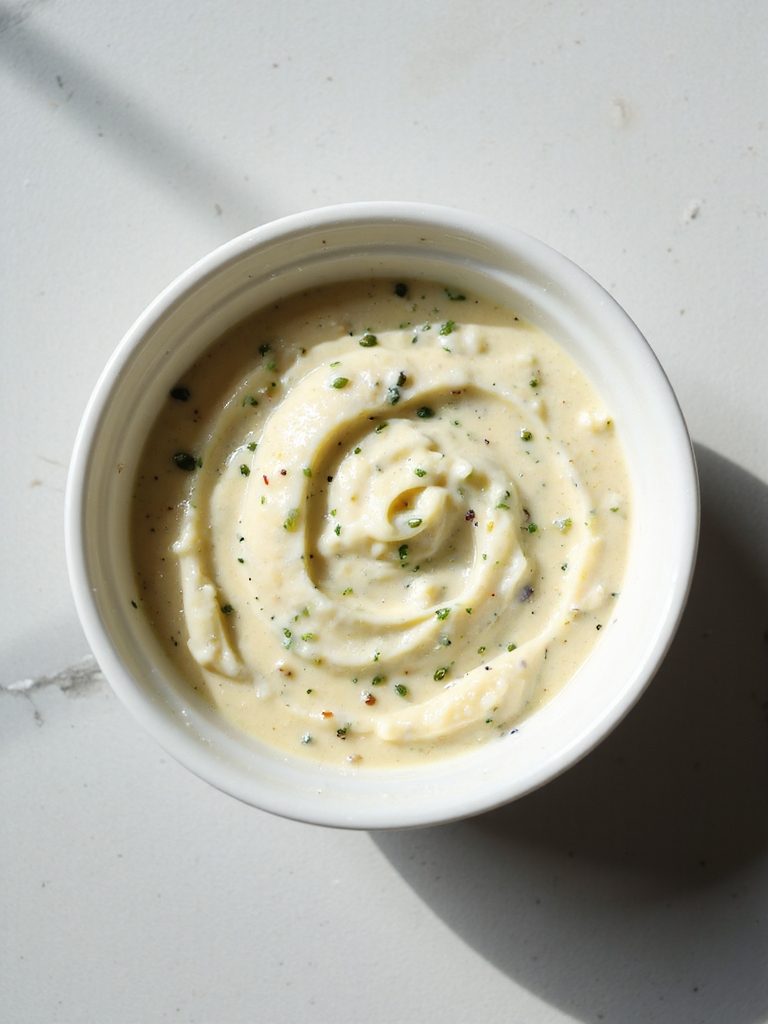
For a simple and delicious homemade tartar sauce to accompany your fish and chips, combine a few key ingredients to create a tangy and creamy condiment that will enhance the flavors of the dish. Begin by mixing together mayonnaise, finely chopped pickles, capers, lemon juice, and fresh dill for a rejuvenating and zesty finish. This versatile sauce can also be adjusted to taste with salt and pepper or a touch of hot sauce for more kick.
- Mayonnaise
- Finely chopped pickles
- Capers
- Lemon juice
- Fresh dill
- Salt and pepper (optional)
- Hot sauce (optional)
In a bowl, combine mayonnaise with chopped pickles, capers, and lemon juice. Add the fresh dill and stir until evenly mixed, seasoning with salt, pepper or hot sauce as preferred. Let it chill in the refrigerator for at least 30 minutes before serving with your fish and chips.
For the best result, use high-quality mayonnaise to guarantee the sauce is rich and creamy. If capers are unavailable, substitute with a splash of pickle juice to maintain that distinctive tart flavor.
Creative Side Dishes to Pair With Fish and Chips
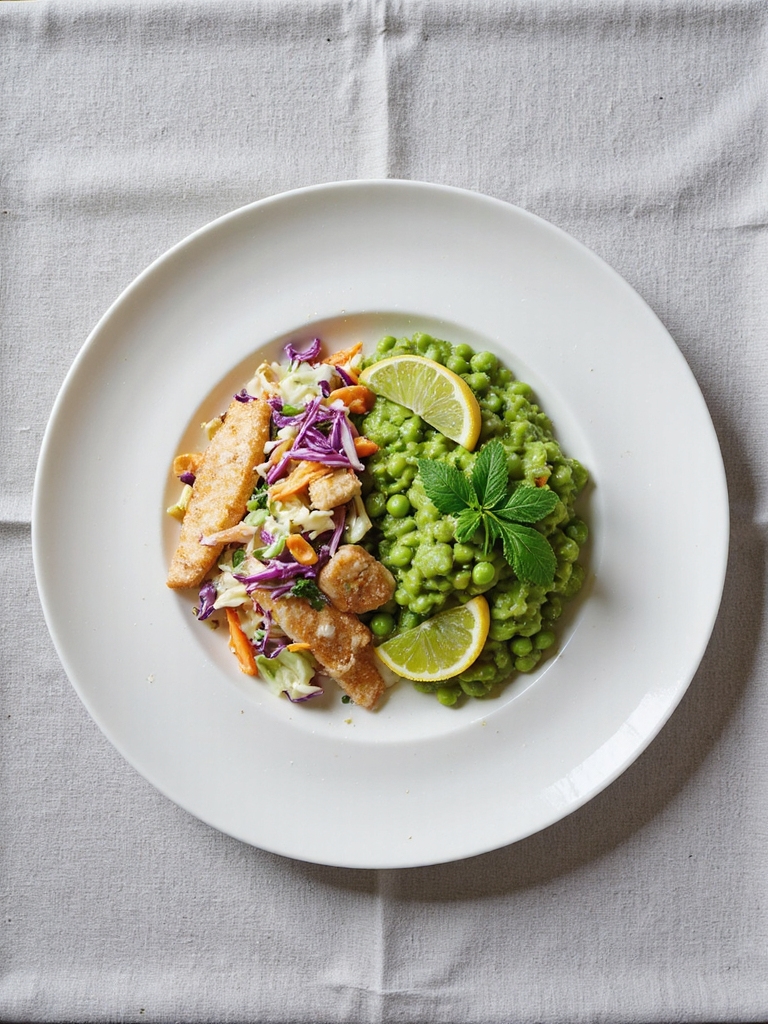
When pairing creative side dishes with fish and chips, consider a light and invigorating coleslaw or a zesty mushy pea salad for an exciting twist. These sides balance the fried fish and chips with a touch of freshness, ensuring that your meal is well-rounded and flavorful. The coleslaw provides a crunchy texture and tanginess, whereas the mushy pea salad adds a pop of color and creaminess to the plate.
- Cabbage
- Carrots
- Mayonnaise
- Vinegar
- Salt and pepper
- Fresh peas
- Mint
- Lemon juice
For coleslaw, shred cabbage and carrots, mix them with mayonnaise, vinegar, salt, and pepper. For the mushy pea salad, cook fresh peas until tender, then mash them slightly with chopped mint and lemon juice, adding salt to taste. Serve both sides chilled alongside your fish and chips.
Ensure the cabbage is finely shredded for a consistent texture in the coleslaw, and for the peas, avoid overcooking to maintain their vibrant color. Adjust the lemon juice and vinegar to your preferred level of tanginess for an extra burst of flavor.
Common Mistakes and How to Avoid Them
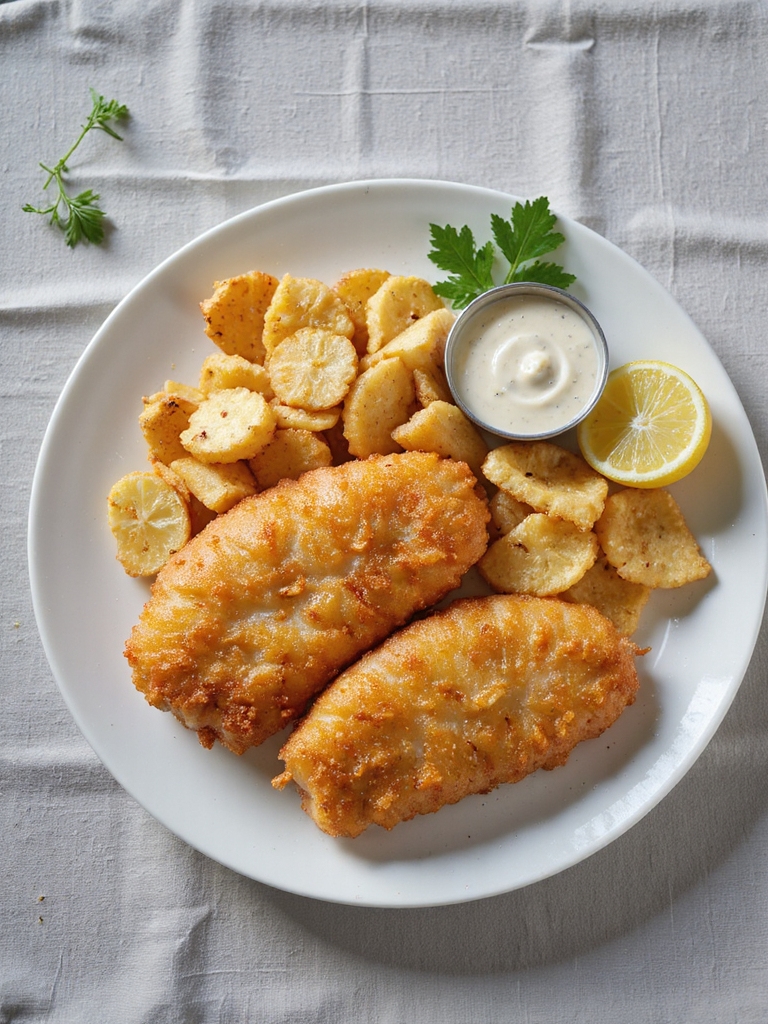
Fish and chips is a classic dish that can sometimes be tricky to perfect, but understanding common mistakes and how to avoid them can lead to a successful and delicious outcome. The key is to guarantee that both the fish and chips are cooked to crispy perfection without being oily or soggy. Moreover, selecting the right type of fish and oil, maintaining the correct oil temperature, and utilizing appropriate batter and frying techniques are essential for a flawless result.
- Cod or haddock fillets
- Potatoes
- Flour
- Baking powder
- Beer (or sparkling water)
- Salt
- Vegetable oil
- Pepper
Begin by slicing potatoes into thick chips, soaking them in water to remove excess starch. Coat fish fillets with flour, then in a batter made of flour, baking powder, and beer. Fry chips until golden, then the fish, making sure the oil is hot but not smoking. Serve hot, seasoned with salt and pepper.
For maximum crispiness, verify the oil is at a steady 350°F and that the batter is cold before frying. Do not overcrowd the fryer to maintain temperature and avoid steaming the food, which leads to sogginess.