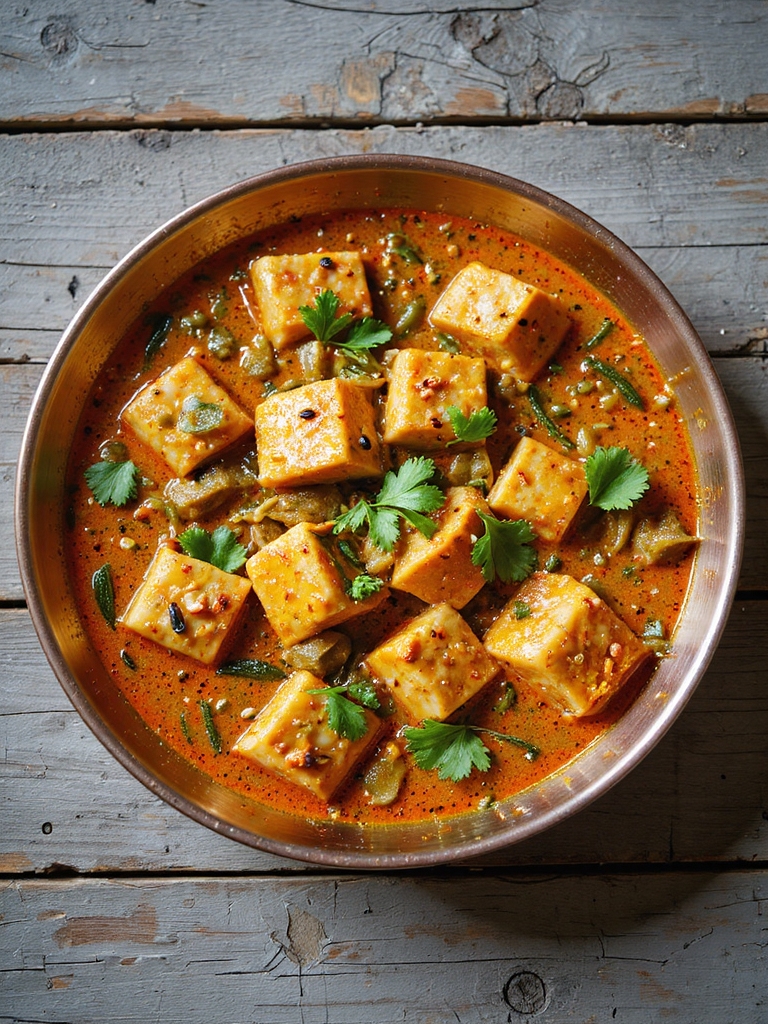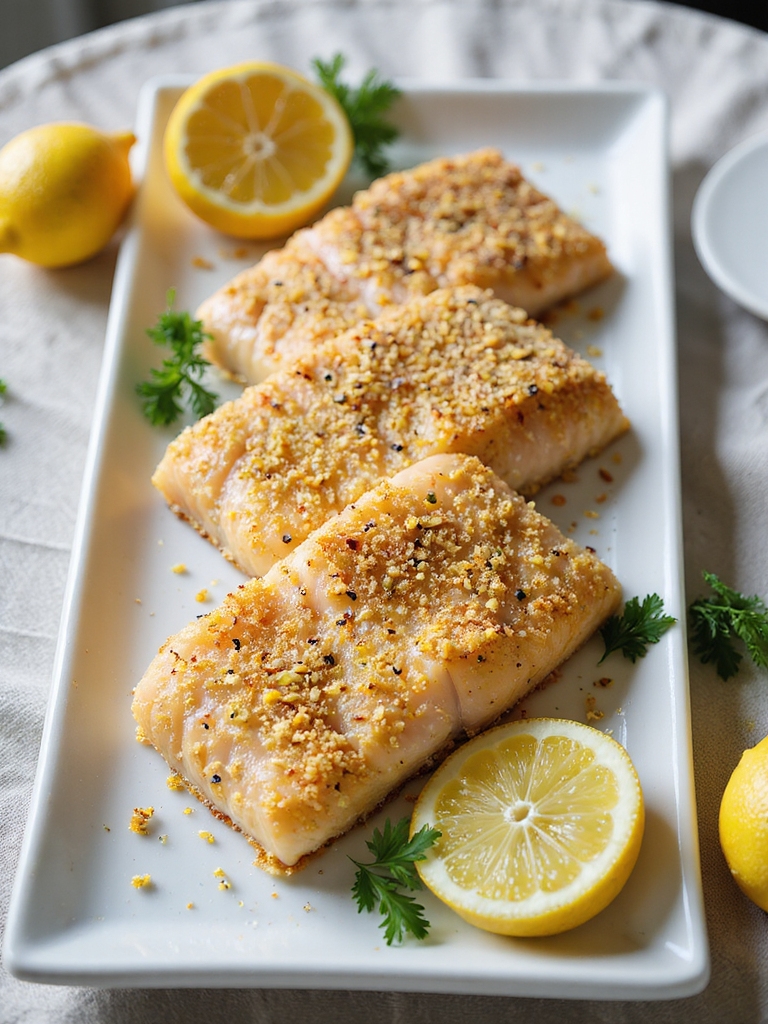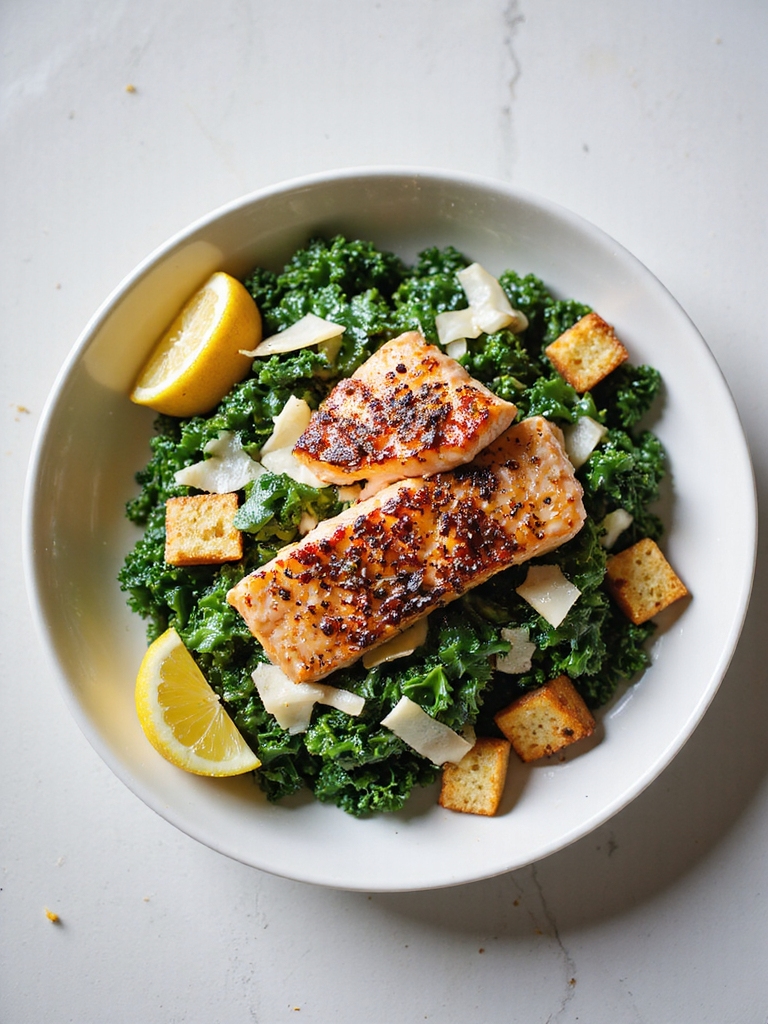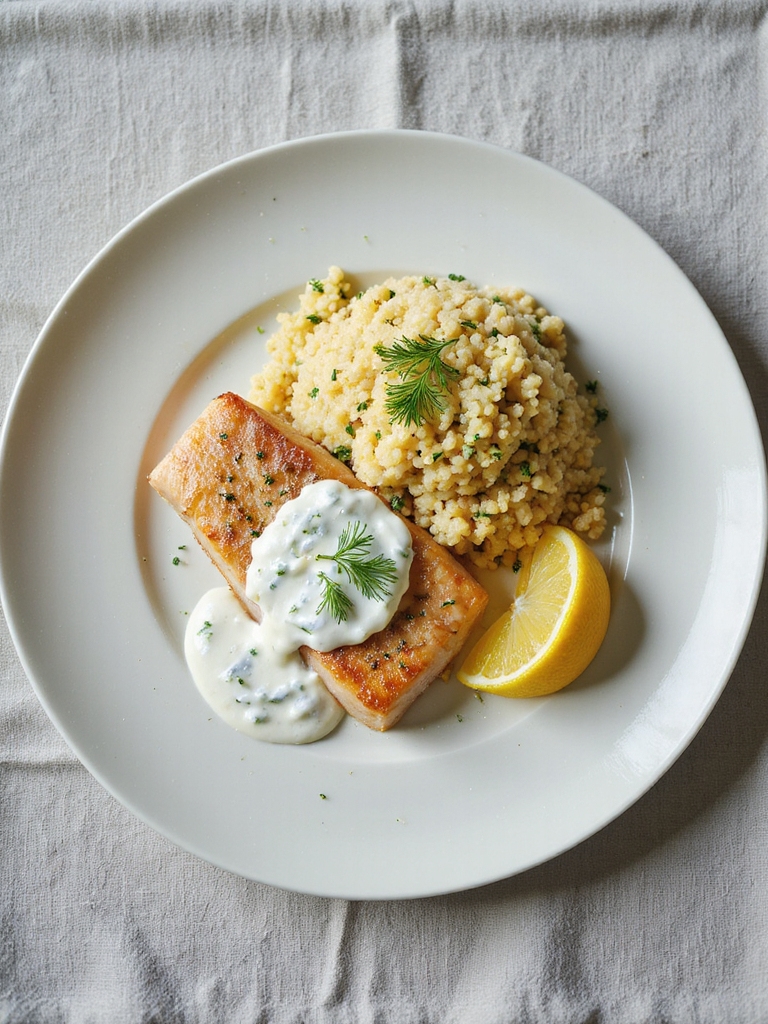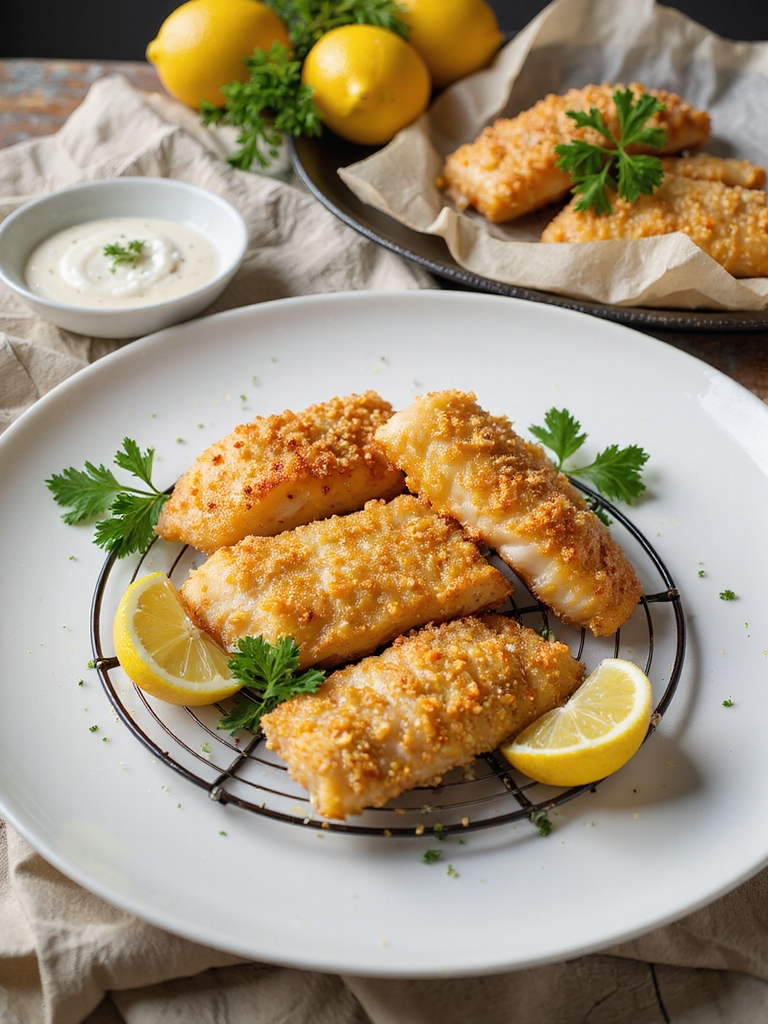
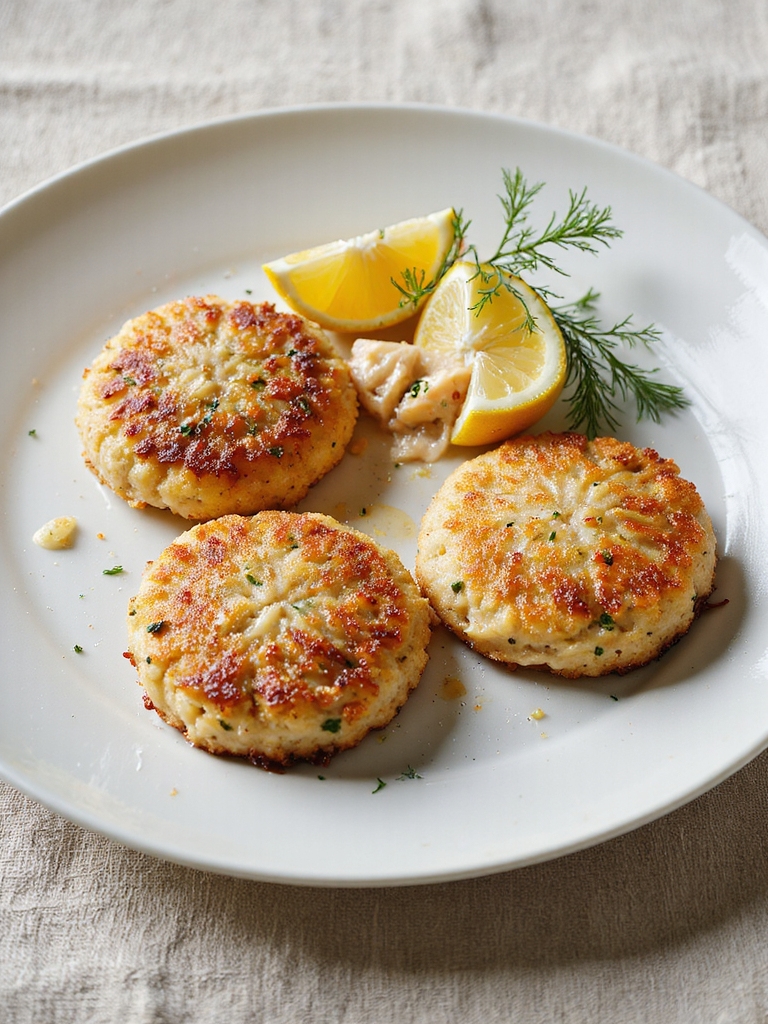
I’ve always had a soft spot for fish cakes that strike the perfect balance between a crispy exterior and a soft, flaky interior. There’s something so satisfying about that crunch when you first bite in, followed by the tender texture inside.
It’s like a little culinary magic trick, isn’t it? And believe me, getting that right isn’t as tricky as it might seem. Curious about how to achieve this delightful contrast?
Choosing the Right Fish for Cakes
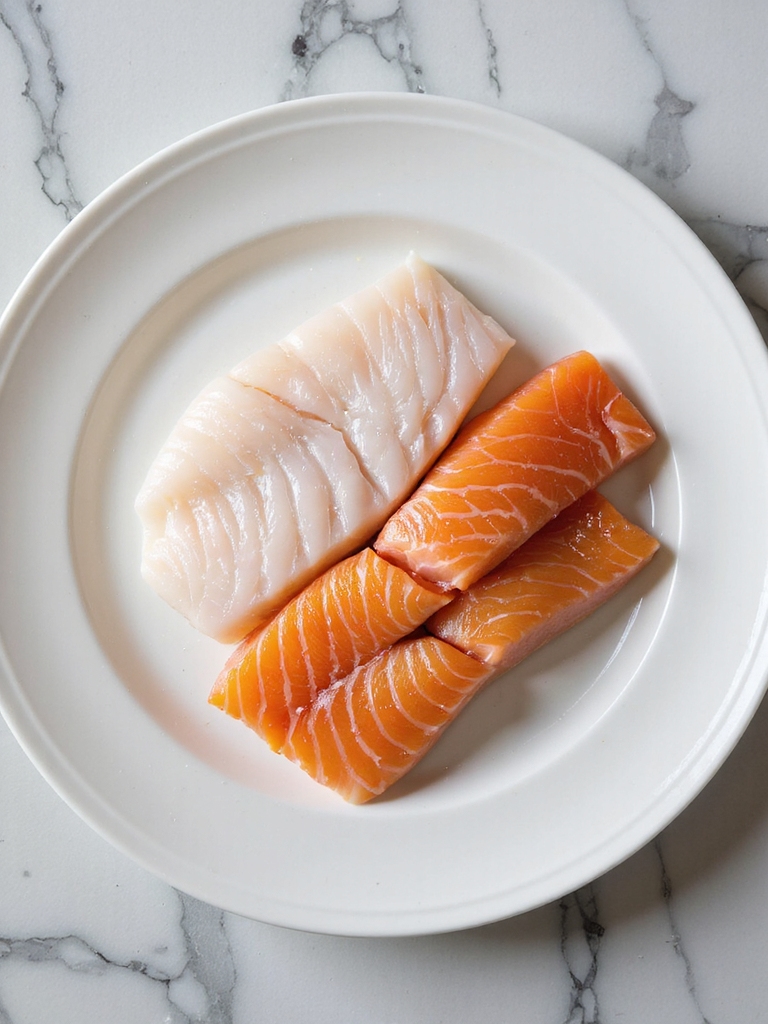
For a classic and delicious fish cake, the right choice of fish is essential. Opt for a mild, flaky white fish like cod or haddock. These types blend well with other ingredients, providing a delicate flavor and texture that will hold together beautifully when cooked. Both fresh and frozen options work, but always confirm they’re firm and have a fresh aroma. If you prefer a more robust taste, salmon can also be a great addition either by itself or mixed with white fish. Additionally, using fresh or frozen options ensures the best results in your fish cakes.
Ingredients:
- 1 pound of fresh cod or haddock fillets
- 2 large potatoes
- 1 small onion
- 1 tablespoon fresh parsley, chopped
- 1 egg
- Salt and pepper to taste
- 1 cup breadcrumbs
- Vegetable oil for frying
Peel and boil the potatoes until tender, then mash and set aside to cool. Cook the fish fillets until they are just done; flake them apart removing any bones and let cool. Combine the mashed potatoes, flaked fish, chopped onion, parsley, egg, and season with salt and pepper. Form the mixture into cakes, coat them with breadcrumbs, and fry in hot oil until they are golden brown on both sides.
For best results, chill the uncooked fish cakes for about 30 minutes before frying to help them hold their shape. If you want to elevate the flavor, add a splash of lemon juice or a pinch of cayenne pepper to the mixture before forming the cakes.
Key Ingredients for Optimal Flavor
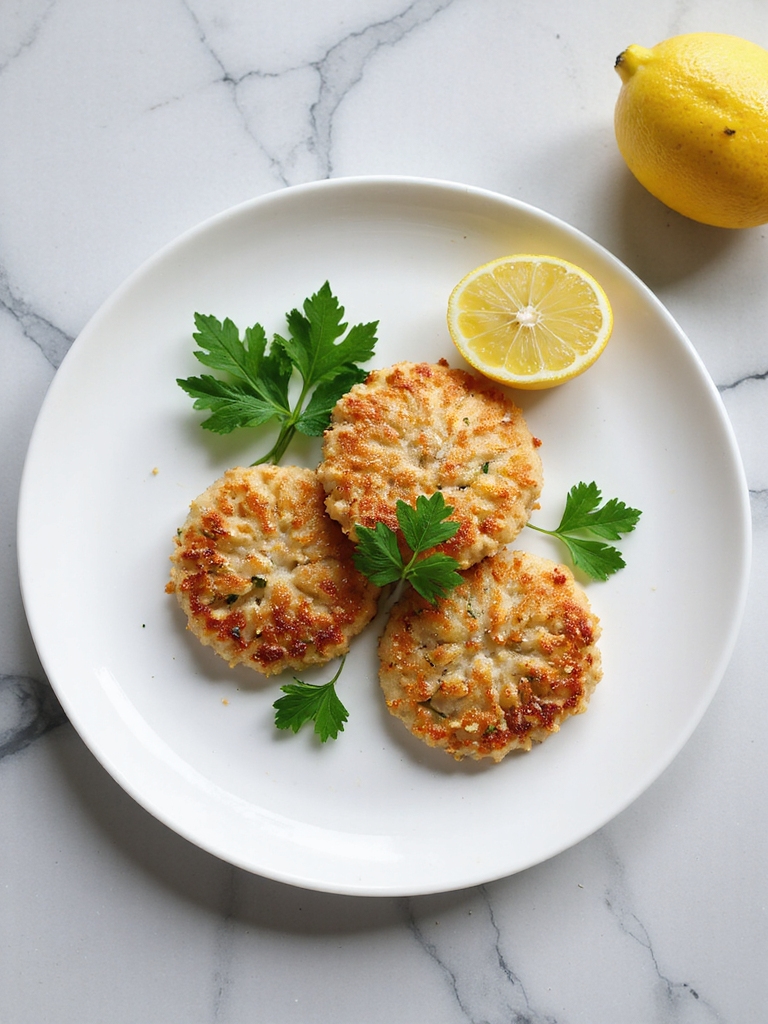
For a superior flavor in your fish cakes, it’s important to use fresh, quality ingredients that will enhance the taste of the fish. Key ingredients like fresh parsley and a hint of lemon juice add a vibrant layer, while the egg guarantees the mixture remains cohesive. Breadcrumbs provide a crispy, golden exterior and onions impart a subtle sweetness, perfectly balancing the fish and potatoes. The right seasoning with salt and pepper will bring out the natural flavors of the fish without overwhelming it. Additionally, using fresh fish fillets ensures that your cakes have the perfect texture and taste.
Ingredients:
- Fresh cod or haddock fillets
- Potatoes
- Small onion
- Fresh parsley
- Egg
- Salt
- Pepper
- Breadcrumbs
- Lemon juice (optional)
- Vegetable oil
First, peel and boil the potatoes until soft, then mash and let them cool. Cook the fish fillets and flake them, removing any bones. Mix the cooled mashed potatoes, flaked fish, chopped onion, parsley, egg, salt, and pepper. Form the mixture into cakes, coat them with breadcrumbs, and fry in hot oil until they achieve a golden brown color on both sides.
For additional flavor, consider adding lemon juice to the potato mixture. Let the uncooked fish cakes chill before frying to enhance their texture.
Prepping the Fish Step-by-Step
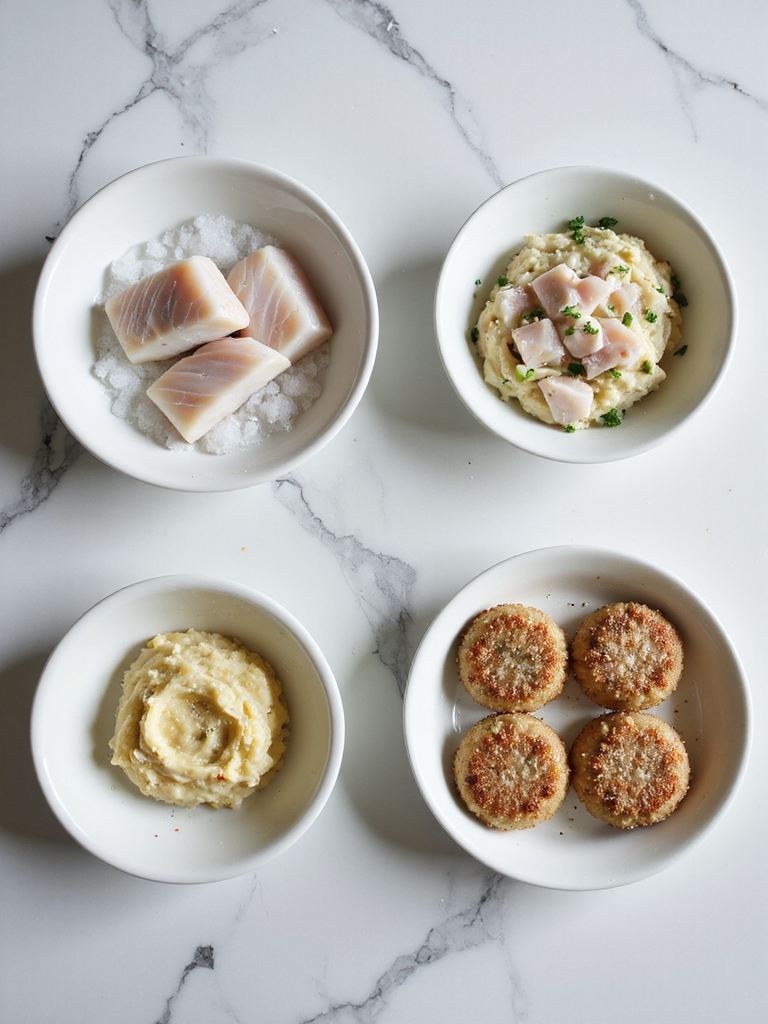
To prepare delicious fish cakes, begin by selecting fresh cod or haddock fillets as these provide a tender, flavorful base. Peel and cook your potatoes until soft, then mash them and allow to cool. Meanwhile, cook the fish separately until it’s opaque and flaky, taking care to remove any bones. This guarantees that your fish is at its best before integrating it into the cake mixture, which includes chopped onions and fresh parsley for added zest and color. With a cohesive blend of egg, salt, and pepper to taste, and a coating of breadcrumbs for a crispy finish, your fish cakes are well on their way to perfection. Additionally, using white fish species is essential for achieving a healthy and nutritious meal.
Ingredients:
- Fresh cod or haddock fillets
- Potatoes
- Small onion
- Fresh parsley
- Egg
- Salt
- Pepper
- Breadcrumbs
- Lemon juice (optional)
- Vegetable oil
Mix the mashed potatoes with flaked fish and the other ingredients, shaping them into cakes. Coat each with breadcrumbs guaranteeing a crispy exterior. Preheat oil in a frying pan and fry the fish cakes until golden brown on each side, roughly 3-4 minutes per side, making sure they are heated through.
For best results, guarantee the potato mixture is completely cooled before forming the cakes, as this helps maintain their shape during frying. Chilling the formed cakes before frying can also enhance their texture, providing a firmer structure and better browning.
Essential Tools and Equipment
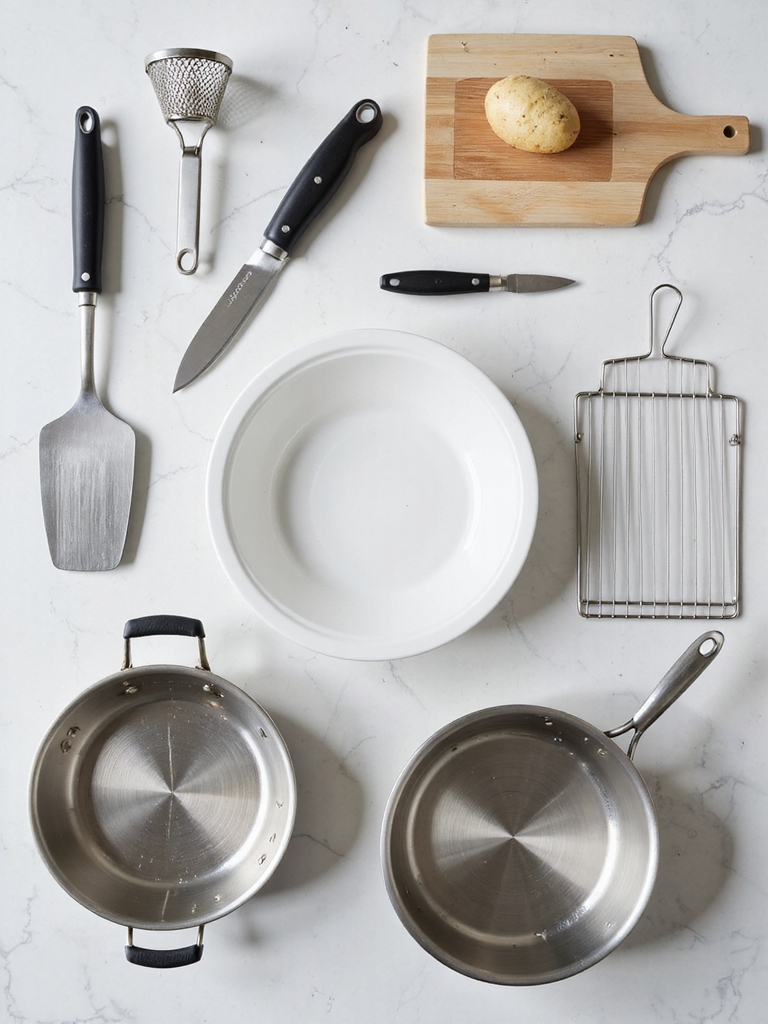
To create delicious fish cakes, you’ll need to gather a few essential tools and equipment. These include a chopping board and sharp knife for dicing onions and parsley, a pot for boiling potatoes, a skillet or frying pan for cooking both the fish and the fish cakes themselves, and a spatula to turn them for even browning. A large mixing bowl is necessary for combining ingredients, and a masher for smooth potatoes is vital. Don’t forget the cooling rack for post-cooking, which allows your cakes to set and drain excess oil for a less greasy finish. Additionally, having the right cooking temperature is crucial for achieving that perfect golden-brown crust.
Ingredients:
- Cod or haddock fillets
- Potatoes
- Onion
- Fresh parsley
- Egg
- Salt
- Pepper
- Breadcrumbs
- Lemon juice (optional)
- Vegetable oil
Begin by boiling the potatoes until tender; cool and mash them. Cook the fish in a skillet until flaky, then combine it with mashed potatoes, onion, parsley, egg, salt, and pepper. Shape the mixture into cakes, coat them with breadcrumbs, and fry in preheated oil for 3-4 minutes per side until golden brown.
Cooling the mashed potatoes thoroughly before combining with other ingredients prevents the cakes from falling apart while frying. For an extra firm texture, consider chilling the formed cakes in the refrigerator for 30 minutes before cooking.
Binding Agents for Perfect Texture
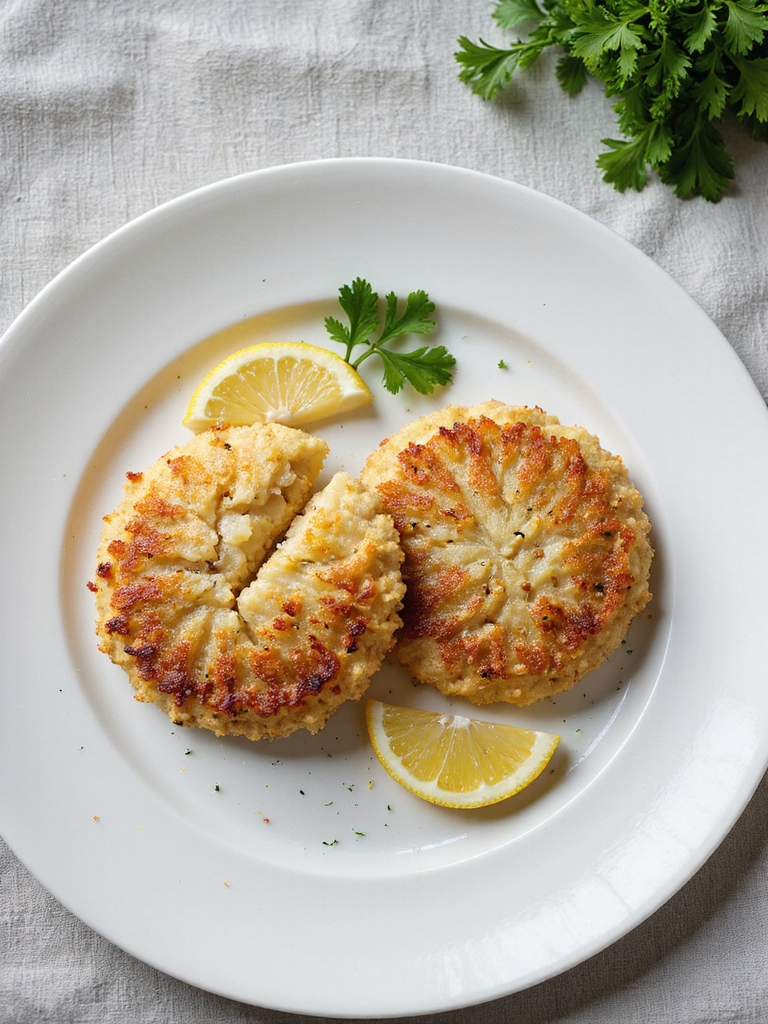
To achieve the ideal texture in your fish cakes, selecting the right binding agents is essential. Specifically, eggs play a significant role in holding the mixture together while breadcrumbs on the outer layer provide the desired crunch. Moreover, cooked and mashed potatoes not only add to the flavor but are also key contributors to the firm structure of the fish cakes. When combined thoughtfully, these ingredients guarantee your fish cakes remain intact and beautifully golden throughout the cooking process. Additionally, using a variety of fish can enhance the flavor profile and texture of your cakes, making them more appealing to a wider audience.
Ingredients:
- Cod or haddock fillets
- Potatoes
- Onion
- Fresh parsley
- Egg
- Salt
- Pepper
- Breadcrumbs
- Lemon juice (optional)
- Vegetable oil
Boil potatoes until tender, let cool, and mash. Cook fish in a skillet until it flakes easily, then combine it with mashed potatoes, onion, parsley, egg, salt, and pepper. Shape the mixture into cakes, coat with breadcrumbs, and fry in preheated oil until golden brown, roughly 3-4 minutes per side.
For best results, make sure your mashed potatoes are thoroughly cooled before mixing, as warm potatoes can cause cakes to crumble. Additionally, chilling formed cakes in the refrigerator for 30 minutes can further enhance their stability during frying.
Secret Seasonings to Enhance Taste
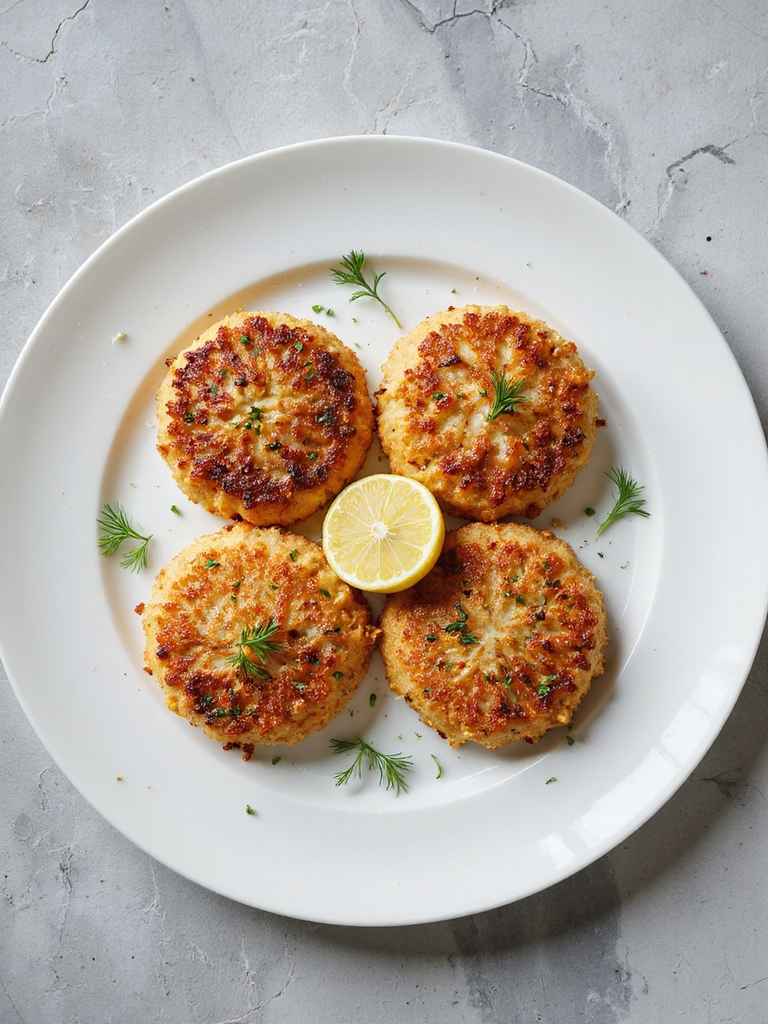
To elevate the flavor of your fish cakes, experimenting with a variety of secret seasonings can make a world of difference. Fresh herbs like dill or chives can impart a distinct aroma, while spices such as smoked paprika or cayenne pepper can add a subtle heat. Mustard powder provides a tangy edge, and a touch of lemon zest can brighten the overall taste. Balancing these seasonings with the natural flavor of your fish and the other ingredients will guarantee your fish cakes stand out in both taste and aroma. Additionally, cooking techniques such as frying can enhance the texture and flavor of the cakes.
- Cod or haddock fillets
- Potatoes
- Onion
- Fresh parsley
- Egg
- Salt
- Pepper
- Breadcrumbs
- Lemon juice (optional)
- Vegetable oil
- Dill or chives
- Smoked paprika
- Cayenne pepper
- Mustard powder
- Lemon zest
Combine cooked, flaked fish with mashed potatoes, onion, parsley, egg, salt, and pepper. Add dill, smoked paprika, cayenne pepper, mustard powder, and lemon zest, and shape into cakes. Coat with breadcrumbs, then fry in preheated oil until golden brown, allowing 3-4 minutes per side to cook thoroughly.
For ideal depth of flavor, let the seasoned mixture rest for 10-15 minutes before shaping to allow the spices to meld. Confirm the oil is adequately hot before adding the cakes to achieve a crisp golden crust.
Mixing Techniques for Best Results
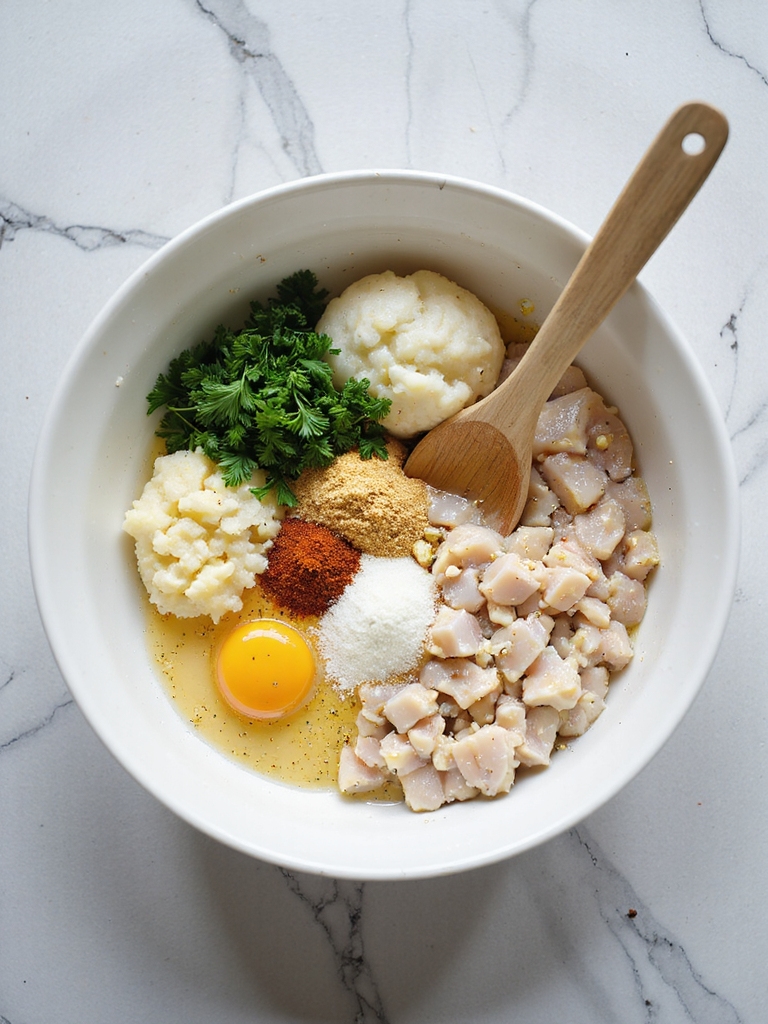
Creating fish cakes with excellent consistency and taste requires precise mixing techniques. Start by ensuring your cooked fish fillets are thoroughly flaked, and your potatoes are well-mashed without lumps. Incorporate the onion, parsley, egg, salt, and pepper in one bowl and use a gentle folding technique to avoid over-mixing and crushing the ingredients, which can result in a dense texture. Gradually add the dill, smoked paprika, cayenne pepper, mustard powder, and lemon zest, ensuring that the seasoning is evenly distributed throughout the mixture for a harmonious flavor profile.
It’s important to choose the right fish, such as cod or haddock, as they have a delicate flavor and good texture for fish cakes.
- Cod or haddock fillets
- Potatoes
- Onion
- Fresh parsley
- Egg
- Salt
- Pepper
- Dill
- Smoked paprika
- Cayenne pepper
- Mustard powder
- Lemon zest
- Breadcrumbs
- Vegetable oil
Heat your vegetable oil over medium heat until it shimmers while letting your fish cake mixture rest for better flavor infusion. Shape the mixture into evenly-sized cakes, coat each with breadcrumbs, and fry for 3-4 minutes on each side until they’re golden brown and fully cooked, ensuring not to overcrowd the pan.
For best results, always check the oil temperature with a small breadcrumb; it should sizzle gently. Allow the cakes to briefly sit on a paper towel post-frying to soak up excess oil without sacrificing crispness.
Shaping Fish Cakes Like a Pro
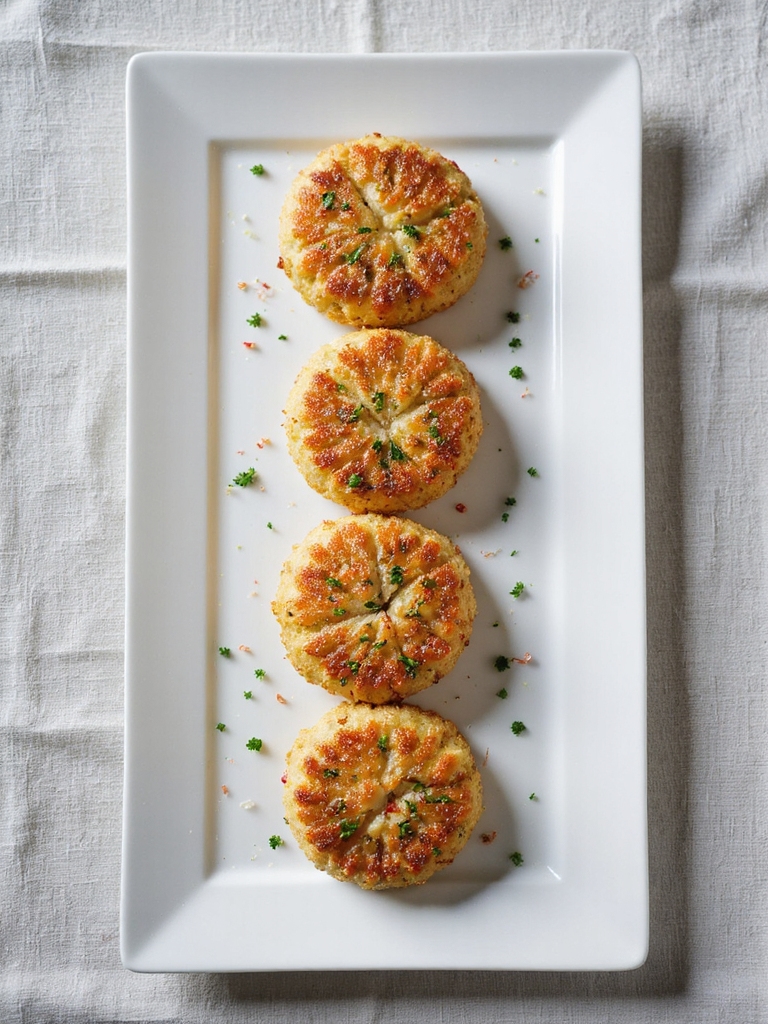
Perfectly shaped fish cakes not only look appealing but also guarantee even cooking and consistent texture. Begin by dividing your fish cake mixture into equal portions, using either a large spoon or ice cream scoop for uniformity. Lightly wet your hands to prevent sticking and gently mold each portion into a round, flat shape, maintaining about a 1-inch thickness. This size is ideal for frying and helps achieve a moist interior with a crispy exterior.
Ingredients:
- Cod or haddock fillets
- Potatoes
- Onion
- Fresh parsley
- Egg
- Salt
- Pepper
- Dill
- Smoked paprika
- Cayenne pepper
- Mustard powder
- Lemon zest
- Breadcrumbs
- Vegetable oil
Place the fish cakes onto a parchment-lined tray or plate, cover lightly, and refrigerate for at least 20 minutes to help them maintain their shape during frying. Heat the vegetable oil in a pan until a breadcrumb added gently sizzles, then fry each cake for 3-4 minutes per side until golden brown. Remember to use a spatula for flipping to avoid breaking the cakes.
For best results, guarantee your hands are damp while shaping to prevent the mixture from sticking and apply gentle pressure to shape the cakes, ensuring a uniform thickness throughout.
Coating Options for Crispy Finish
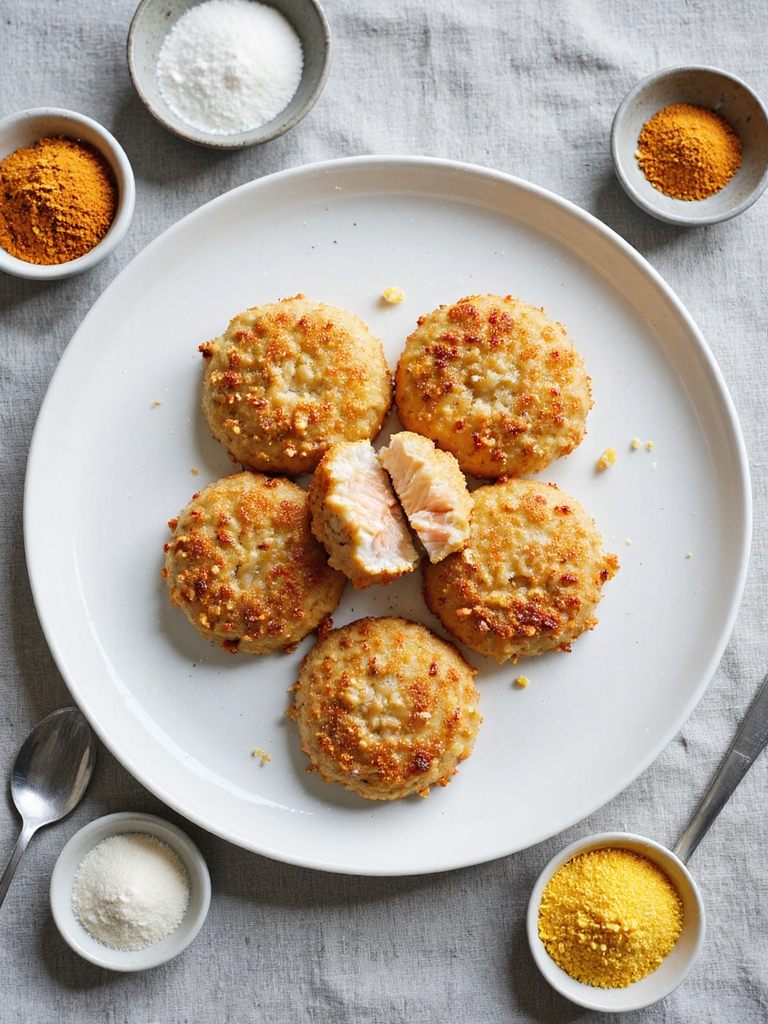
For an irresistible crispy finish on your fish cakes, consider experimenting with different coating options to enhance both texture and flavor. A classic choice is traditional breadcrumbs, but panko breadcrumbs offer a lighter, airier crunch. For a nutty twist, try using crushed almonds or peanuts, which add a unique flavor profile. Another option is cornmeal, contributing a delightful crunch and a hint of sweetness. Additionally, using a classic choice of sauces can elevate your fish dishes even further.
Ingredients:
- Fish cake mixture
- Panko breadcrumbs or desired coating
- Egg
- Flour
- Salt
- Pepper
To prepare your fish cakes, first set up a breading station: place flour seasoned with salt and pepper in one dish, beaten egg in another, and your choice of coating in a third. Dredge the shaped fish cakes in flour, then dip them in egg, and finally coat them generously in the panko breadcrumbs or chosen coating. Fry in preheated oil for 3-4 minutes per side until golden brown.
For added indulgence, try mixing finely grated Parmesan cheese with your chosen coating for an extra layer of flavor. Always make sure your oil is hot enough for frying; it should sizzle gently when a small piece of bread is added.
Frying vs. Baking: Which Is Best?
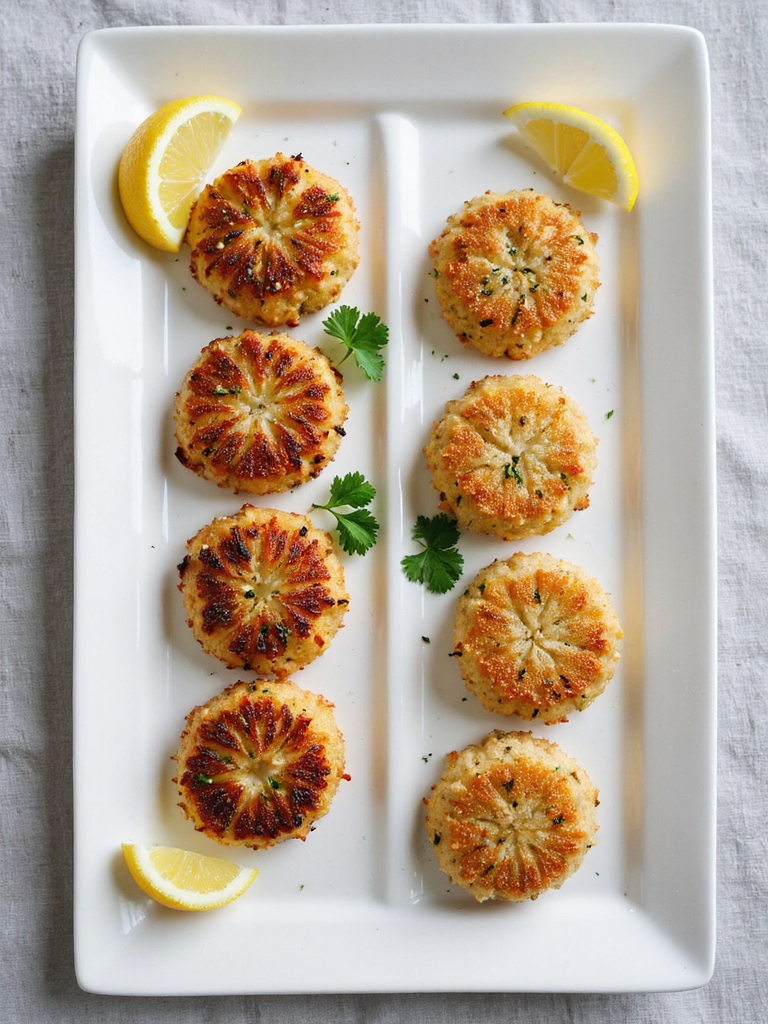
For those who love versatility in cooking, deciding between frying and baking your fish cakes depends on your preference for texture and health considerations. Frying offers a succulent, crispy outer layer that pairs perfectly with the tender interior. On the other hand, baking allows you to achieve a slightly healthier fish cake, with fewer calories and less oil, while still providing a satisfying crust if done correctly. Baking the fish cakes on a parchment-lined baking sheet at 400°F for 20 minutes, flipping halfway through, lets you enjoy them guilt-free. Moreover, deliciously simple baked fish recipes can inspire your variation on traditional fish cakes.
Ingredients:
- Fish cake mixture
- Choice of coating (panko, nuts, or cornmeal)
- Egg
- Flour
- Salt
- Pepper
- Oil for frying (if choosing to fry)
Heat oil in a skillet over medium-high heat or preheat the oven to 400°F for baking. Prepare the fish cakes by setting up your breading station and coat each cake thoroughly. If frying, brown each side in the oil for about 3-4 minutes; if baking, place them on a parchment-lined tray and bake for 20 minutes, flipping halfway through for even browning.
For perfect results, confirm your oil reaches 350°F if frying, and use a thermometer to make certain the internal temperature of your fish cakes reaches 145°F once cooked. For added crispiness when baking, brush the fish cakes lightly with oil before placing them in the oven.
Achieving Even Cooking Every Time
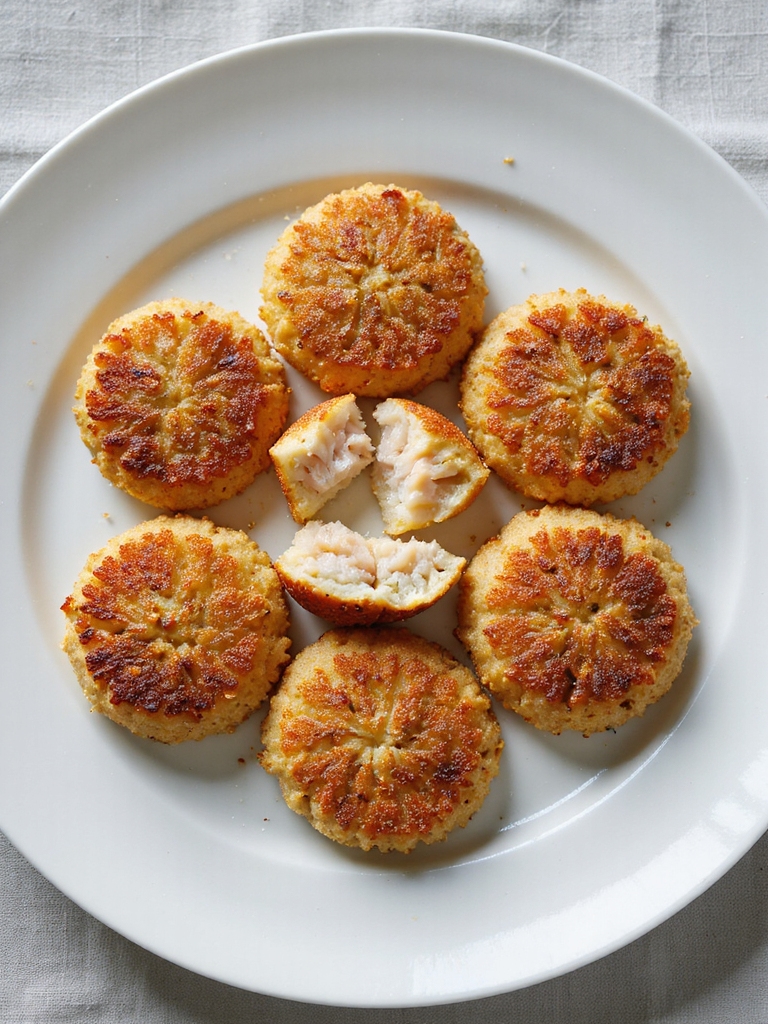
To achieve even cooking every time with your fish cakes, attention to detail is key. Start by confirming your fish cake mixture is uniformly mixed, so flavors are consistent throughout. When shaping the cakes, aim for uniformity in size and thickness to promote even cooking. Choose if you will fry or bake, but remember that the secret to even cooking lies in maintaining consistent temperatures, whether it’s the oil in the skillet or the heat in the oven. This approach guarantees that your fish cakes will be evenly browned on the outside while remaining tender on the inside. Additionally, using a consistent cooking method helps ensure that the texture and flavor of your fish cakes shine through at every bite.
Ingredients:
- Fish cake mixture
- Panko or other coating
- Eggs
- Flour
- Salt
- Pepper
- Oil (for frying or brushing)
Arrange the breading station with separate bowls for flour, beaten egg, and panko. Coat each fish cake in flour, dip in the egg, and cover with panko. If frying, heat oil to 350°F and cook cakes for 3-4 minutes per side. If baking, preheat oven to 400°F, brush cakes with oil, and bake for 20 minutes, flipping halfway.
To guarantee even cooking, give each fish cake enough space in the pan or on the baking sheet, preventing crowding which can affect heat distribution. Use a thermometer to verify the internal temperature reaches 145°F.
Pairing Sauces and Dips
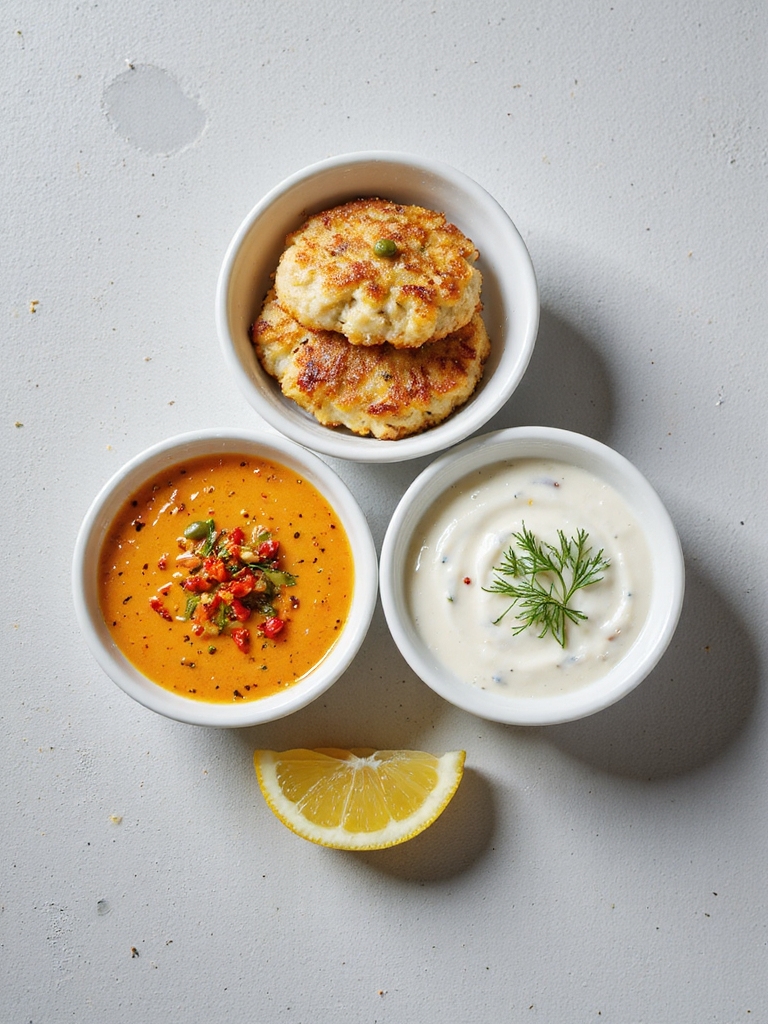
Fish cakes are a versatile dish that can be complemented by a variety of sauces and dips, enhancing their flavor and creating a satisfying culinary experience. From creamy tartar sauce to spicy aioli or a tangy yogurt dill sauce, the choice of accompaniment can transform your fish cakes into a gourmet delight. Consider the flavors in your fish cake mixture when selecting a sauce or dip, aiming to balance and accentuate the dish for a harmonious bite each time.
- Fish cakes
- Tartar sauce
- Spicy aioli
- Yogurt dill sauce
- Lemon wedges
To serve, guarantee the fish cakes are warm and pair them with a selection of sauces like tartar sauce, spicy aioli, or yogurt dill sauce. Arrange the sauces in small ramekins on a platter alongside fresh lemon wedges to add a touch of citrus. Encourage guests to experiment with different flavor combinations to find their perfect pairing.
When preparing sauces, aim for freshness and quality ingredients to elevate the flavors of your fish cakes. Keep sauces chilled until ready to serve for the best consistency and to complement the warm cakes delightfully.
Sides to Complement Fish Cakes
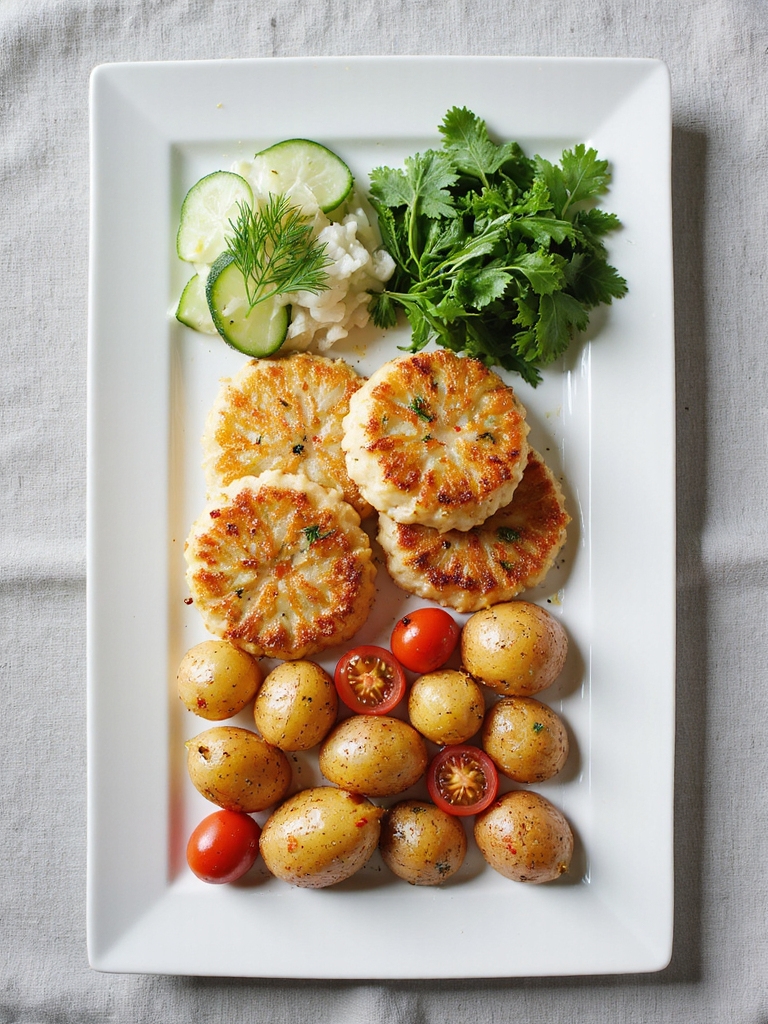
Fish cakes can be beautifully complemented with a variety of side dishes, adding texture and flavor to your meal and creating a complete dining experience. Consider balancing the crispy exterior and soft interior of the fish cakes with light and rejuvenating sides such as a zesty cucumber salad, a vibrant arugula and cherry tomato salad, or roasted baby potatoes with herbs. These sides not only bring color to your plate but also enhance the flavors of the fish cakes while offering a healthy addition to your meal.
- Fish cakes
- Cucumber
- Dill
- Arugula
- Cherry tomatoes
- Baby potatoes
- Olive oil
- Salt and pepper
- Fresh lemon juice
To serve these sides, thinly slice cucumber and toss with fresh dill and lemon juice for the salad. Mix arugula and cherry tomatoes, drizzling with olive oil and a sprinkle of pepper. Roast baby potatoes in the oven with olive oil, salt, and herbs until golden brown and tender, ready to be paired with the freshly cooked fish cakes for a complete meal.
When preparing these sides, verify the vegetables are fresh and potatoes are roasted until just crispy. Adjust seasoning to taste, keeping the emphasis on freshness and simplicity to allow the fish cakes to remain the centerpiece.
Troubleshooting Common Mistakes
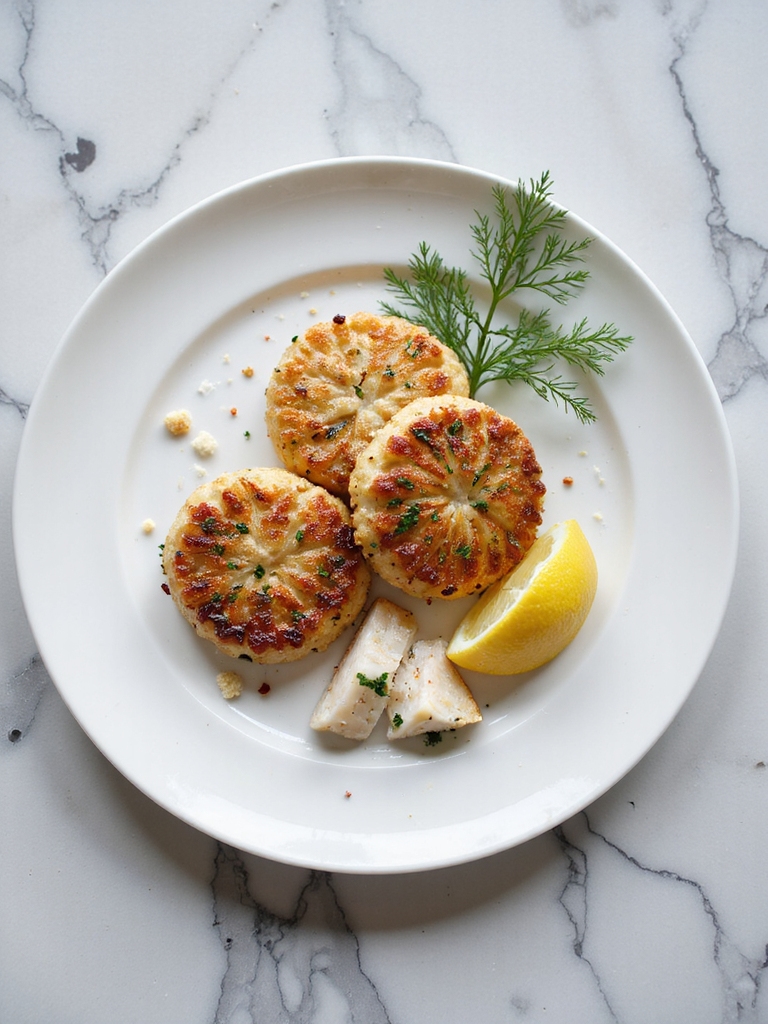
Fish cakes are a delightful dish but can sometimes be tricky to get just right. Common mistakes include fish cakes falling apart during cooking or lacking in flavor. To avoid these issues, make sure that your fish cakes are properly bound with ingredients such as breadcrumbs and eggs, and adjust the seasoning to taste. Furthermore, when shaping the cakes, handle them gently but firmly to make sure they stay intact while cooking.
- Fish fillets
- Breadcrumbs
- Eggs
- Fresh herbs
- Salt and pepper
- Lemon zest
- Olive oil
To make the fish cakes, start by finely chopping the fish fillets and mixing them with breadcrumbs, beaten eggs, chopped herbs, salt, pepper, and lemon zest until well combined. Shape the mixture into cakes, then heat olive oil in a skillet over medium heat and cook the cakes for a few minutes on each side until golden brown and cooked through. Make sure not to overcrowd the pan to maintain the heat and achieve even browning.
Extra tip: If the mixture appears too wet, add more breadcrumbs to help bind the ingredients. For a burst of flavor, mix in different herbs or spices according to your preference.
Storing and Reheating Leftovers
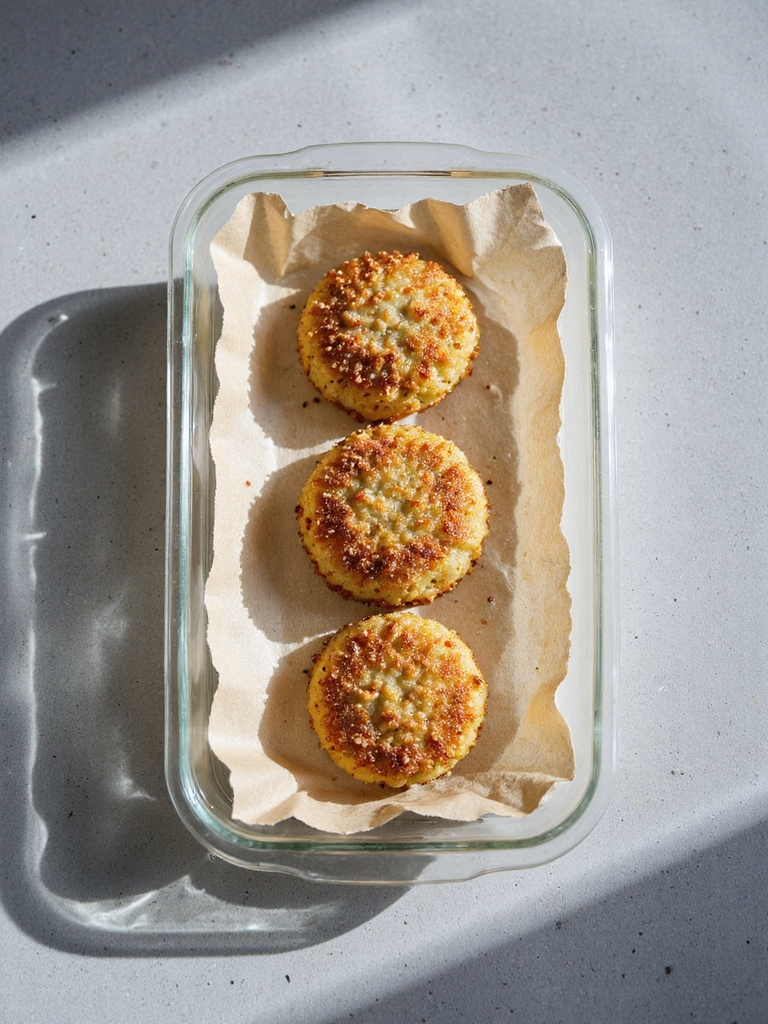
To store and reheat leftover fish cakes, first allow them to cool completely before transferring them to an airtight container. Place the container in the refrigerator for up to three days. For longer storage, you can freeze the fish cakes by placing them on a baking sheet in a single layer, freeze until solid, then transfer to a freezer-safe bag or container, ensuring all air is removed.
- Cooked fish cakes
- Airtight container
- Baking sheet (for freezing)
- Freezer-safe bag or container
To reheat refrigerated fish cakes, preheat the oven to 350°F (175°C) and arrange the cakes on a baking sheet. Warm them for about 10-15 minutes until heated through, or on the stovetop using a skillet over medium heat, flipping occasionally. If frozen, thaw in the fridge overnight and follow the same reheating instructions.
Extra tip: To keep fish cakes from drying out during reheating, you can lightly brush them with olive oil. For added moisture, serve reheated cakes with a creamy sauce or yogurt dressing.