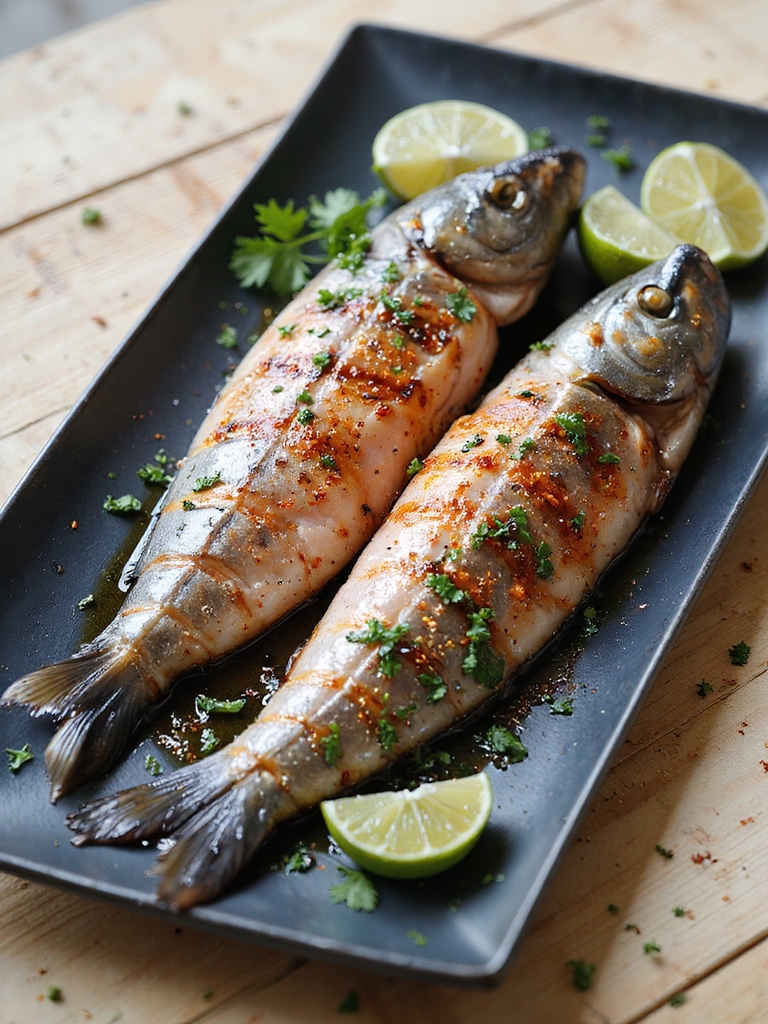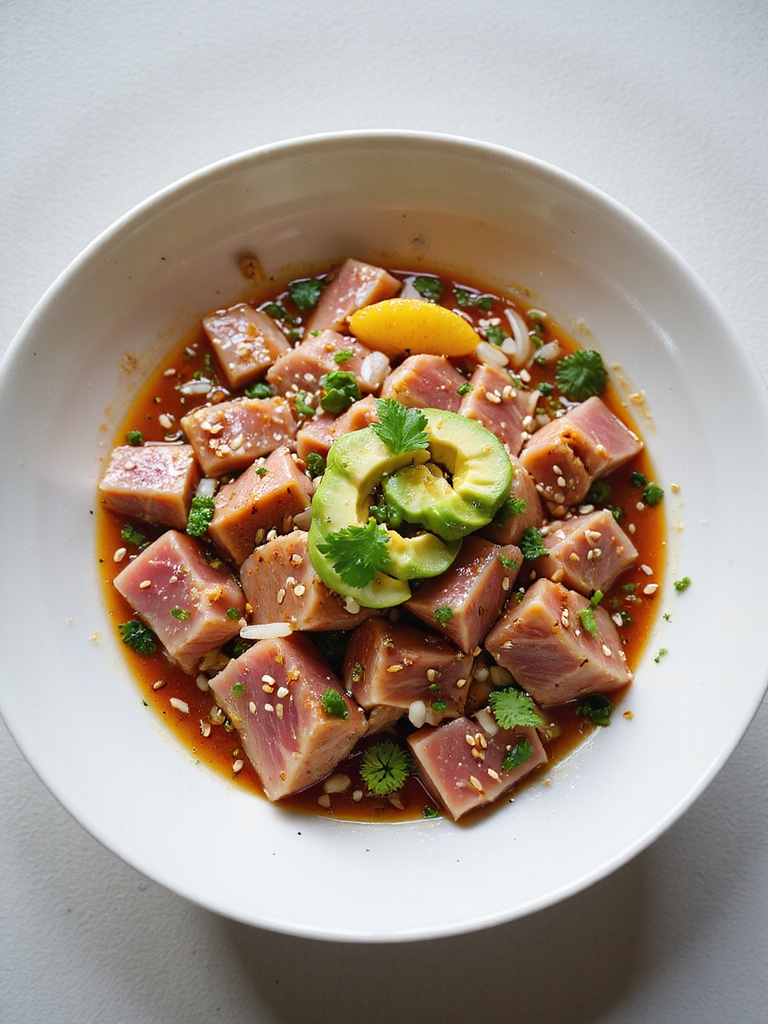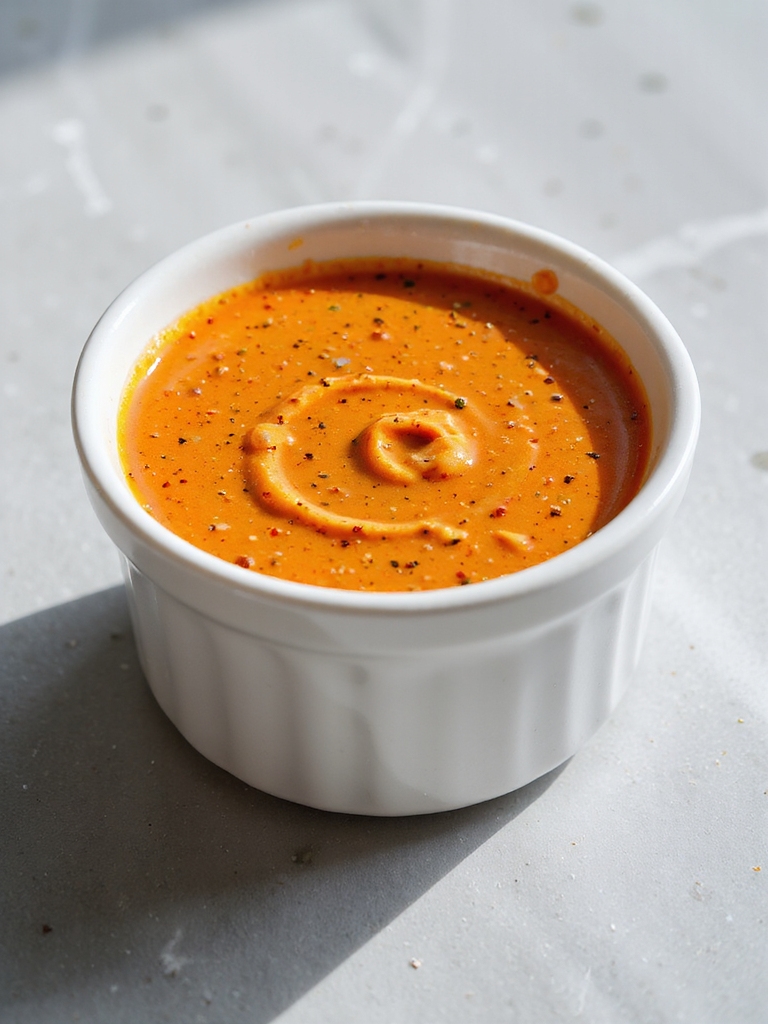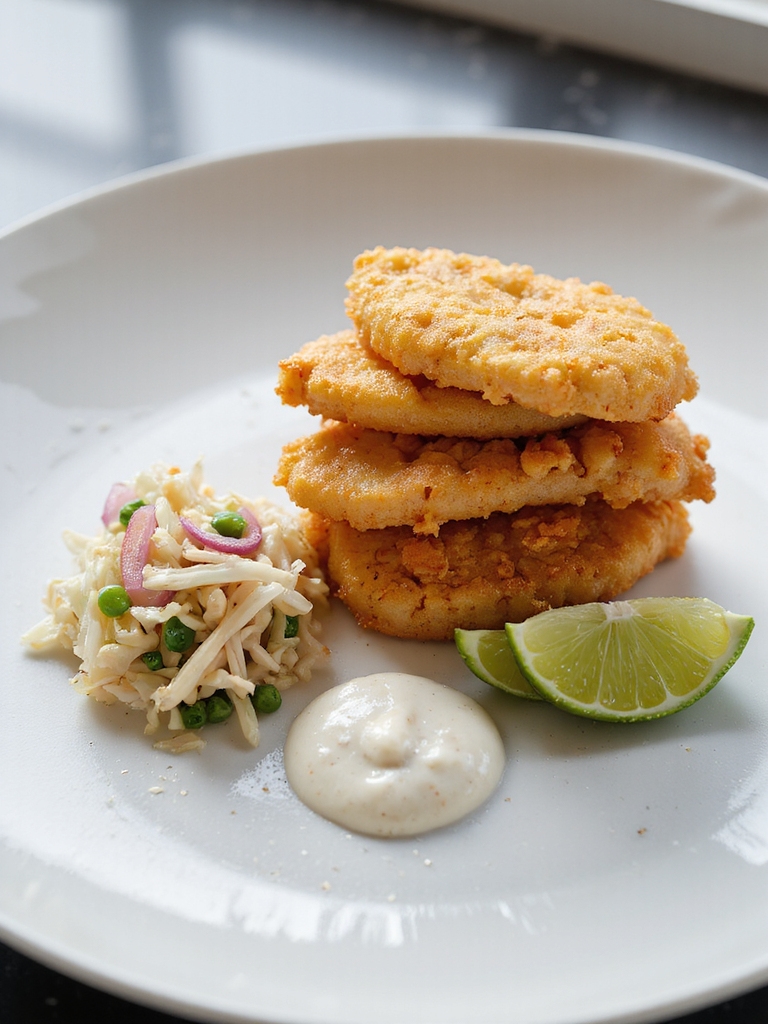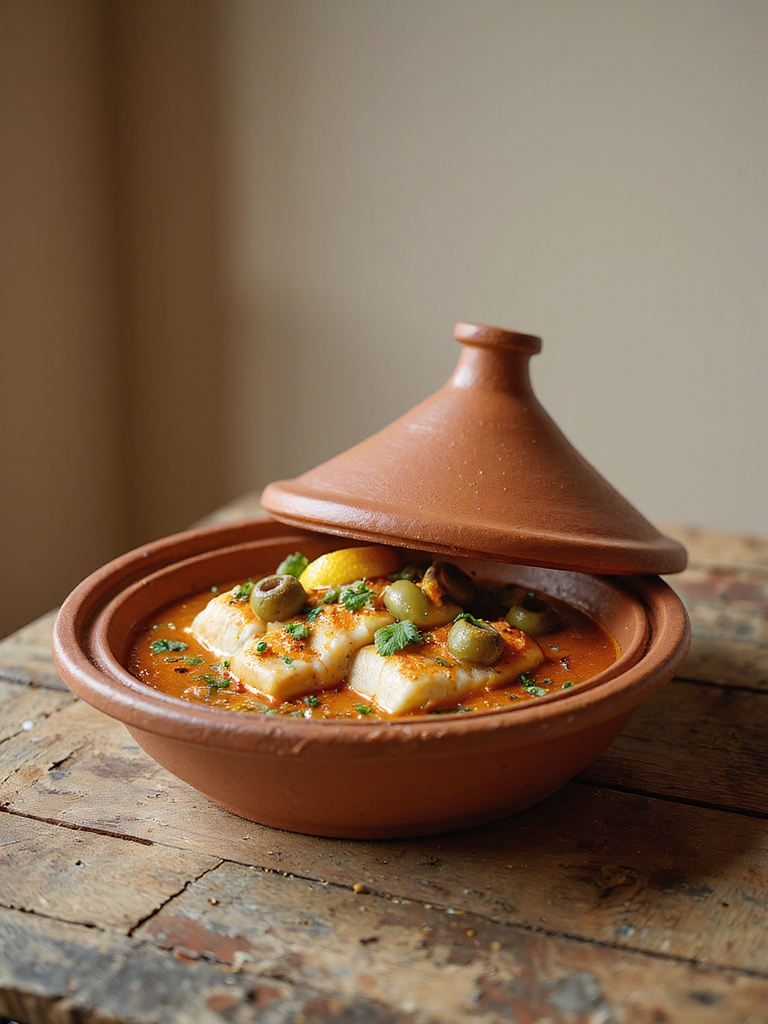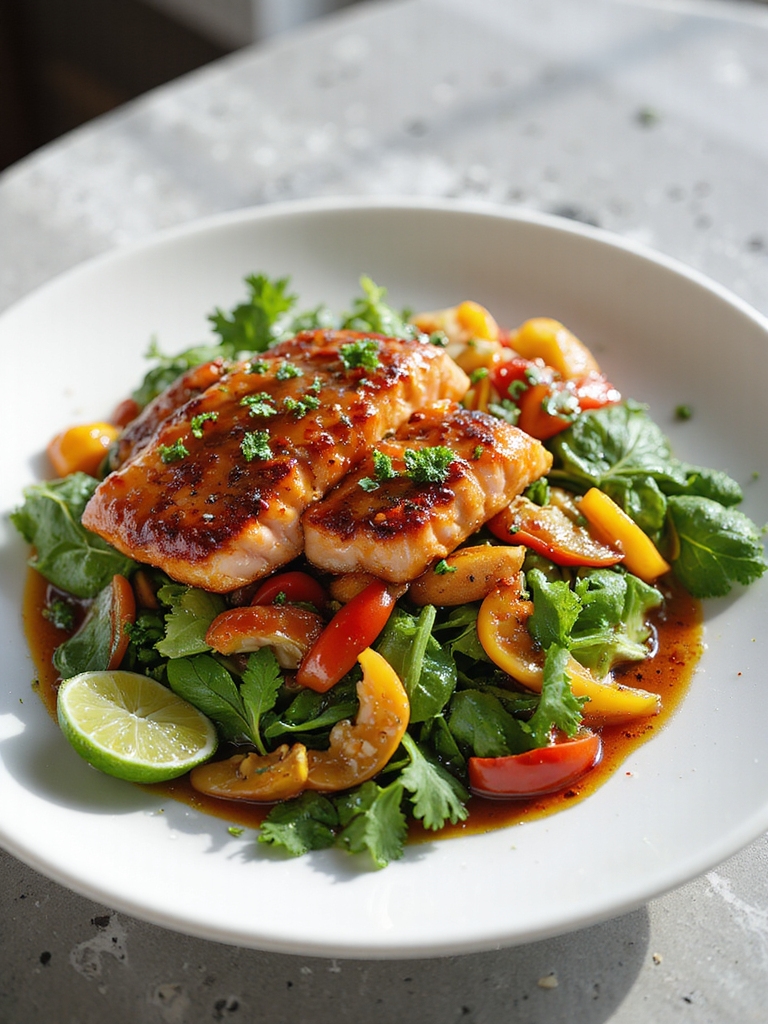
When I first started exploring the world of culinary presentation, I quickly realized there’s an art to plating fish dishes that captivates both the palate and the eyes. Imagine setting a gleaming salmon fillet on a plate, with a vibrant array of vegetables around it.
It’s like creating a masterpiece! Each element enhances the next. Curious about how to elevate your own dishes? Let’s commence on this delicious journey together.
Understanding the Basics of Fish Plating
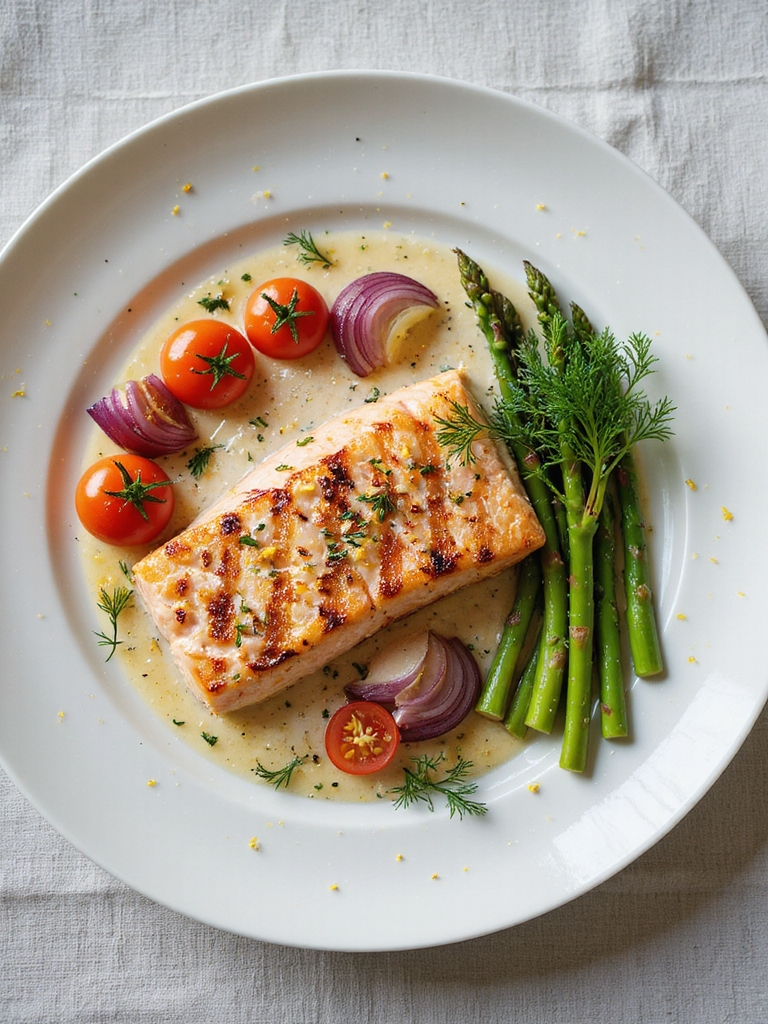
Create an impressive fish dish with this elegant recipe showcasing how to plate fish with style while maintaining its delicious flavor and texture. This guide provides a flavorful way to prepare salmon with an exquisite lemon-herb sauce paired with vibrant vegetables for color contrast on your plate. Focus on balance, presentation, and harmonious flavors to guarantee your dish looks as impressive as it tastes, with each component having its rightful place. Additionally, incorporating Delicious Salmon Dinners into your repertoire can elevate your culinary skills and impress your guests.
Ingredients:
- 2 salmon fillets
- 1 lemon, juiced and zested
- 2 tbsp olive oil
- 1 tbsp chopped dill
- 1 tbsp chopped parsley
- Salt and pepper to taste
- 1 cup of asparagus tips
- 1 cup cherry tomatoes
- 1 small red onion, thinly sliced
Season the salmon fillets with salt, pepper, and half of the lemon juice, then grill them over medium heat for about 4 minutes on each side. Meanwhile, sauté the asparagus, cherry tomatoes, and onion in olive oil until the vegetables are tender yet vibrant. For plating, place the salmon slightly off-center on each plate, surrounding them with the vegetables, drizzle with the remaining lemon juice, sprinkle with herbs and zest for a final touch.
To enhance the flavors, ensure the fish is not overcooked—keeping it juicy and flaky. When plating, remember to balance colors, heights, and shapes for a visually appealing dish; adding microgreens can provide a refined touch.
Choosing the Right Fish for Your Plate
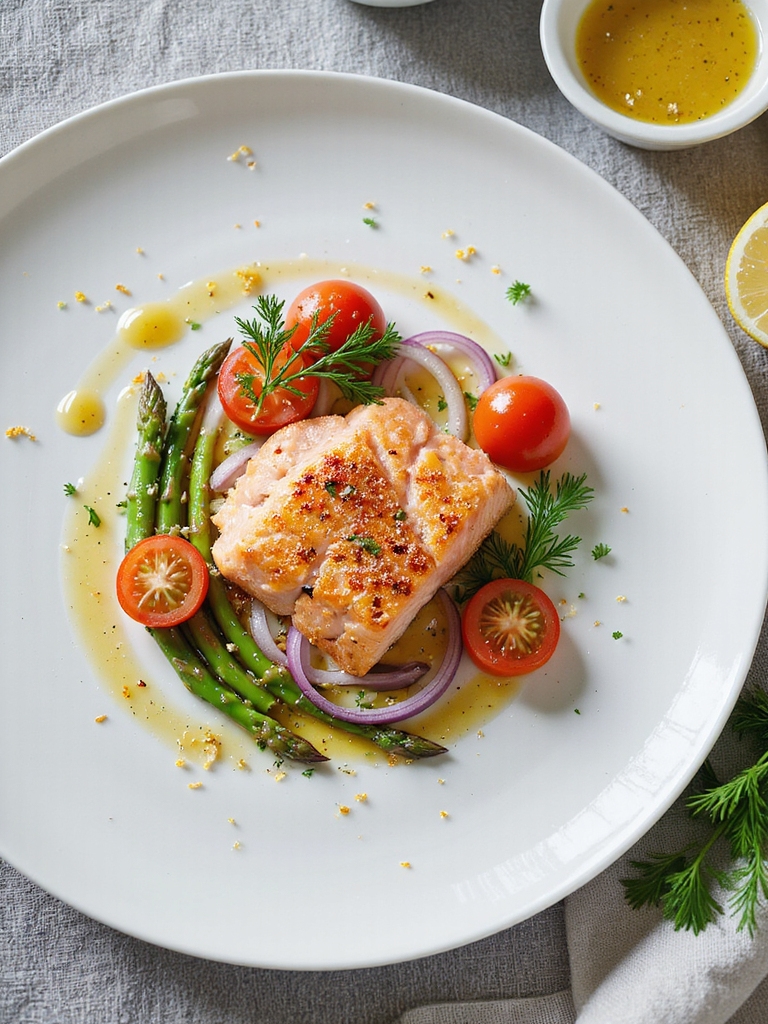
For an exquisite fish dish, selecting the perfect fish is key to enhancing both flavor and presentation. Opt for salmon due to its rich taste and visually appealing color, balancing well with a lemon-herb sauce and vibrant vegetables. Confirm your fish is fresh to maintain the quality and taste of the dish, creating a stunning appearance on the plate. Additionally, explore different baked salmon recipes to fully appreciate its versatility.
Ingredients:
- 2 salmon fillets
- 1 lemon, juiced and zested
- 2 tbsp olive oil
- 1 tbsp chopped dill
- 1 tbsp chopped parsley
- Salt and pepper
- 1 cup asparagus tips
- 1 cup cherry tomatoes
- 1 small red onion
For perfectly cooked salmon, season with salt, pepper, and lemon juice before grilling for approximately 4 minutes per side. Simultaneously, sauté asparagus, cherry tomatoes, and red onion in olive oil until they’re tender but retain their bright color. Artfully arrange the salmon on the plate, encircle with vegetables, and finish with a drizzle of lemon juice and a sprinkle of herbs and zest for elegance.
To achieve prime flavor and presentation, confirm the salmon remains juicy without overcooking while arranging the components thoughtfully. Add microgreens sparingly for an added gourmet touch to the dish.
Mastering the Art of Color Contrast
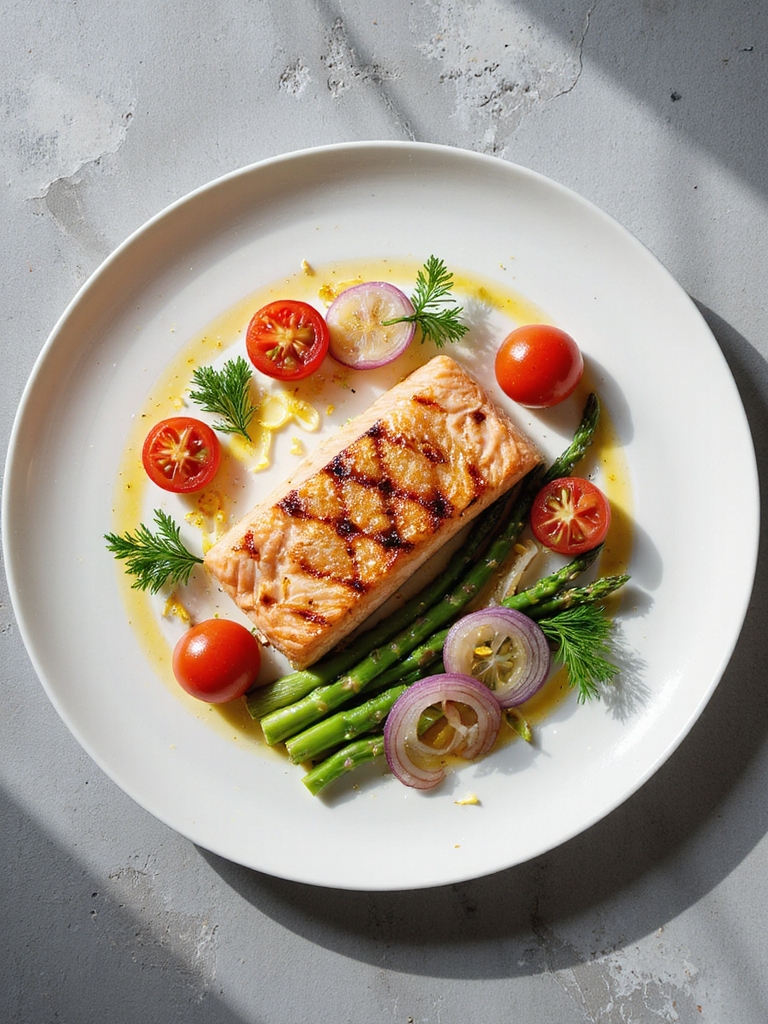
Mastering the art of color contrast can elevate your fish dish from ordinary to extraordinary. By thoughtfully pairing vibrant vegetables with the naturally rich hue of salmon, you can create a visually striking plate. Begin with a base of grilled salmon, known for its deep pink color, and complement it with bright green asparagus and red cherry tomatoes for a harmonious yet eye-catching display. A touch of lemon zest and fresh herbs not only adds a pop of color but also enhances the dish’s freshness and flavor, making it as pleasing to the eyes as it is to the palate. Additionally, incorporating savory Asian flavors can introduce an exciting twist that enhances the overall taste profile.
Ingredients:
- 2 salmon fillets
- 1 lemon (zest and juice)
- 2 tbsp olive oil
- 1 tbsp chopped dill
- 1 tbsp chopped parsley
- Salt and pepper
- 1 cup asparagus tips
- 1 cup cherry tomatoes
- 1 small red onion
Season the salmon with salt, pepper, and lemon juice, then grill for 4 minutes on each side. Sauté asparagus, cherry tomatoes, and onion in olive oil until tender but vibrant. Place the salmon in the center of the plate, surround it with the colorful vegetables, and garnish with lemon zest and herbs for a dramatic presentation.
To perfect your dish, make certain your vegetables stay crisp and colorful, providing a beautiful contrast against the salmon. Plating is vital; arrange elements with an artistic eye to balance color and form for an appealing composition.
Techniques for Texture and Layering
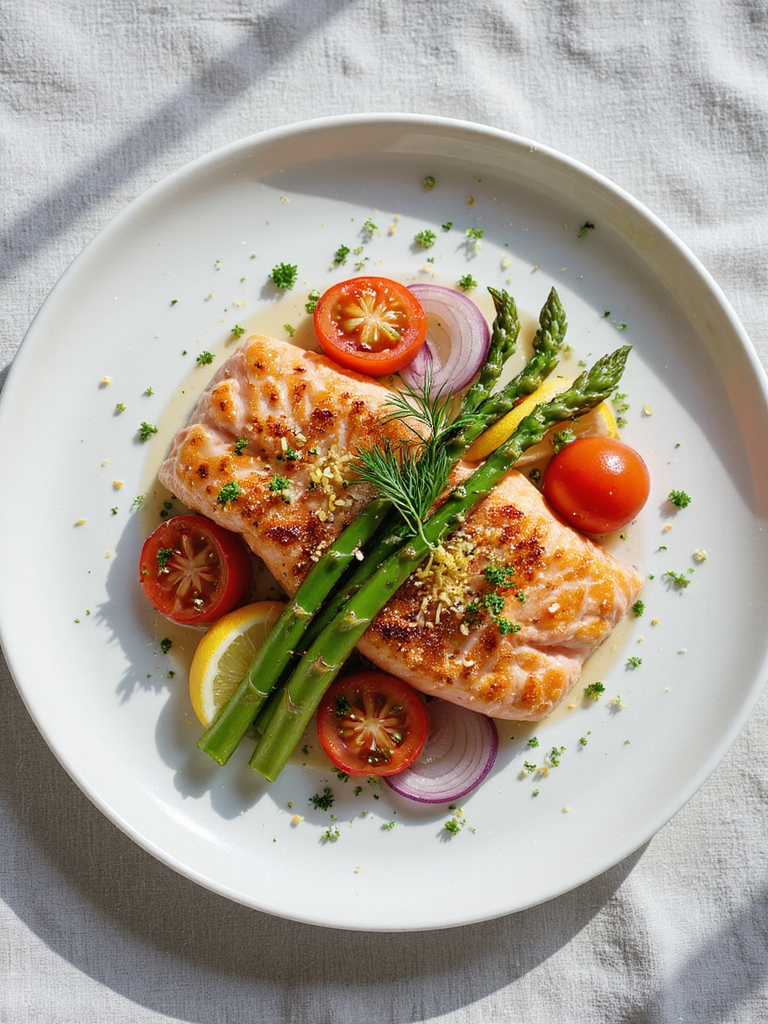
Creating a fish dish with attention to texture and layering can transform it into a culinary masterpiece. Start with a grilled salmon fillet for a firm base and add layers of tender asparagus tips, sautéed cherry tomatoes, and red onions to provide a mix of smooth and crunchy textures. To enhance the dish’s flavor and presentation, consider incorporating delicious salmon recipes that highlight complementary ingredients. Finish with a topping of lemon zest and freshly chopped herbs to enhance the multilayered experience and flavor profile of the dish.
Ingredients:
- 2 salmon fillets
- 1 lemon (zest)
- 2 tbsp olive oil
- 1 tbsp chopped dill
- 1 tbsp chopped parsley
- Salt and pepper
- 1 cup asparagus tips
- 1 cup cherry tomatoes
- 1 small red onion
Season the salmon with salt, pepper, and lemon zest, then grill for 4 minutes per side until golden. Sauté asparagus, cherry tomatoes, and onion in olive oil until they reach tender-crisp perfection. Arrange the grilled salmon on a plate, layer the sautéed vegetables artistically atop and around the salmon, and sprinkle with chopped dill and parsley for added texture and flavor.
For best results, make certain the salmon is grilled just until firm, preventing it from drying out, while maintaining the vegetables’ natural crunch. This technique will add depth to the dish, balancing the soft, juicy salmon with crisp vegetables for a satisfying mouthfeel.
Selecting the Perfect Plate Shape and Size
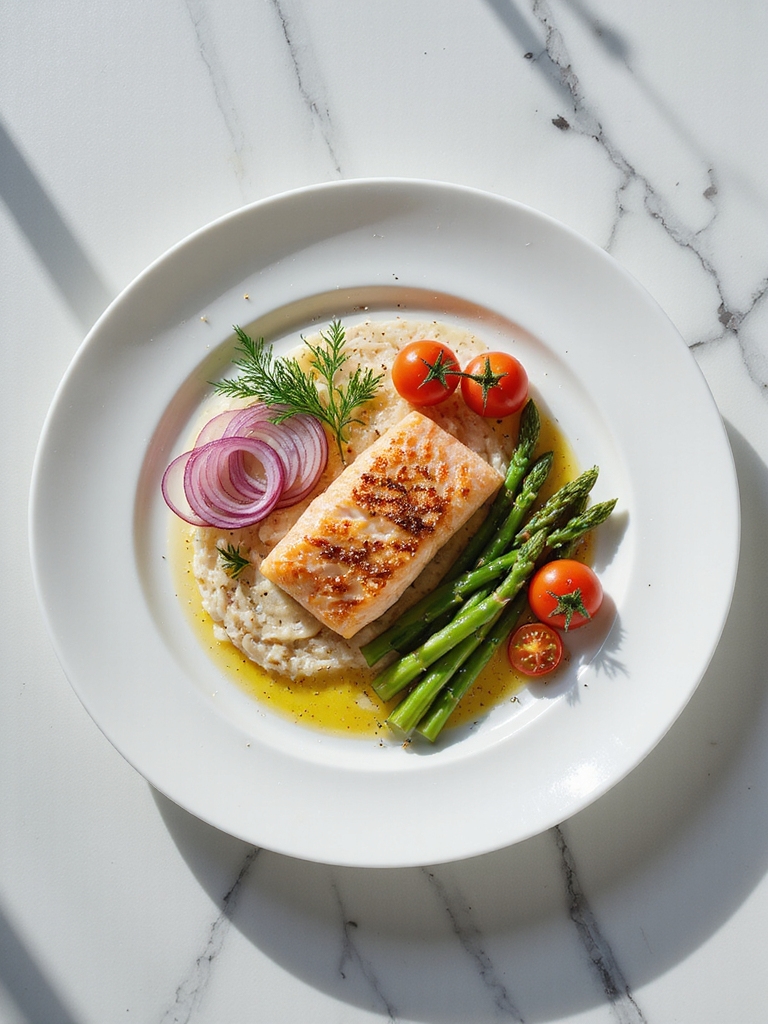
Selecting the perfect plate shape and size enhances the visual appeal and presentation of your fish dish. Opt for a plate that complements the colors of the meal; a round white plate highlights the vibrant colors of salmon and vegetables. Guarantee the plate is not too large since the focus should remain on the dish and not the empty space around it. The plate’s edge should be a framing border, allowing the meticulously layered textures and colors to become the centerpiece, creating an inviting and modern presentation. Additionally, the use of contrasting colors can elevate the presentation further by creating a striking visual effect that draws the eye towards the dish’s components, especially with healthy white fish dishes which often feature vibrant accompaniments.
Ingredients:
- 2 salmon fillets
- 1 lemon (zest)
- 2 tbsp olive oil
- 1 tbsp chopped dill
- 1 tbsp chopped parsley
- Salt and pepper
- 1 cup asparagus tips
- 1 cup cherry tomatoes
- 1 small red onion
Season salmon with salt, pepper, and lemon zest. Grill on medium heat for 4 minutes each side to guarantee a golden crust. Meanwhile, sauté asparagus, tomatoes, and onion in olive oil until tender-crisp. Arrange salmon on a round white plate, artistically layer vegetables, and sprinkle with dill and parsley for a visually appealing dish.
To guarantee the perfect presentation, avoid overcrowding the plate and maintain a balance between the fish and vegetables. Choose a plate with a subtle design that won’t distract from the dish and remember to wipe any sauce drips for a clean finish.
Creating Visual Balance With Sauce Placement
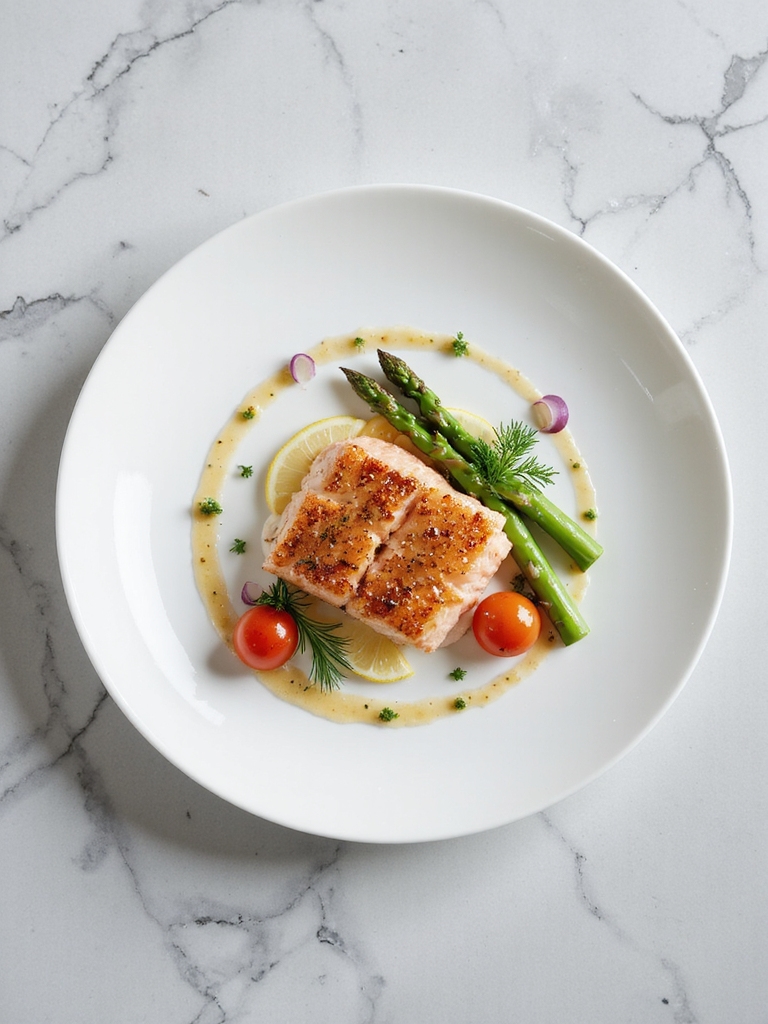
To create an elegant fish dish with a striking visual balance, consider integrating sauce placement strategically. A light drizzle or circular pattern of sauce around the fish or on one side of the plate can frame the fish, drawing attention to the centerpiece without overwhelming it. This approach balances the dish’s flavors and enhances its aesthetic appeal by creating contrast and movement. Remember to keep the sauce garnishes simple and use complementary colors that harmonize with the fish and vegetables to maintain an uncluttered and sophisticated look. Additionally, using a glazed salmon recipe can enhance the overall taste and visual effect of your fish dish.
Ingredients:
- 2 salmon fillets
- 1 lemon (zest)
- 2 tbsp olive oil
- 1 tbsp chopped dill
- 1 tbsp chopped parsley
- Salt and pepper
- 1 cup asparagus tips
- 1 cup cherry tomatoes
- 1 small red onion
- 3 tbsp lemon-dill sauce
Sauté asparagus, tomatoes, and diced onion in a pan with olive oil until vegetables are tender, seasoning with salt and pepper as desired. Meanwhile, season salmon fillets with salt, pepper, and lemon zest before grilling each side for 4 minutes to achieve a golden crust. Plate the salmon, artistically arrange the sautéed vegetables, and carefully drizzle lemon-dill sauce around the components to add visual and flavor depth.
For an even coat of sauce, use a squeeze bottle or spoon to achieve precision and prevent spillage. Allow the fish to rest for a minute before serving, as it helps seal in juices and flavors for the perfect bite.
Incorporating Edible Flowers and Herbs
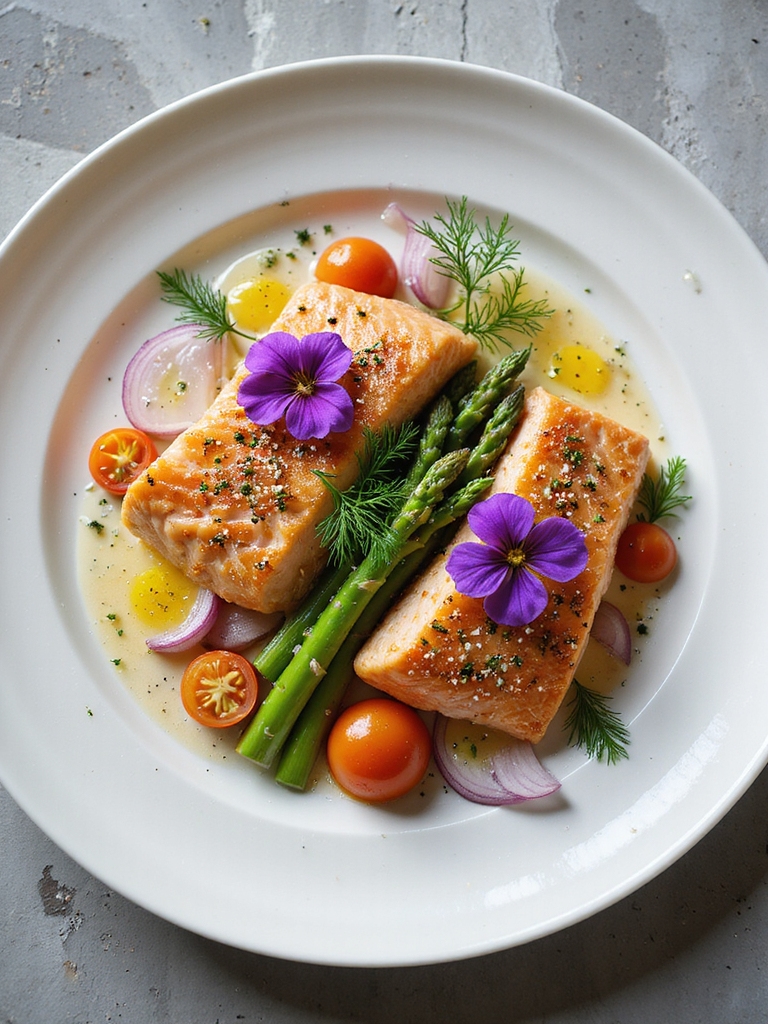
To elevate the presentation and flavor profile of your fish dish, incorporate edible flowers and herbs thoughtfully. Edible flowers like nasturtiums add vibrant color and a peppery taste, while herbs such as fresh dill and parsley enhance the dish’s aroma and complexity. These ingredients not only complement the fish and vegetables but also make the dish visually appealing, perfect for impressing guests or adding elegance to everyday meals. Experimenting with irresistible seafood dishes can further enhance your culinary creativity and presentation skills.
Ingredients:
- 2 salmon fillets
- Zest of 1 lemon
- 2 tbsp olive oil
- 1 tbsp chopped dill
- 1 tbsp chopped parsley
- Salt and pepper to taste
- 1 cup asparagus tips
- 1 cup cherry tomatoes
- 1 small red onion, diced
- 3 tbsp lemon-dill sauce
- Edible flowers (e.g., nasturtiums)
Season salmon fillets with salt, pepper, and lemon zest; cook in a pan with olive oil until golden brown on both sides. Sauté asparagus, tomatoes, and onion until tender, adding salt and pepper to taste. Plate the salmon, arrange the vegetables, drizzle sauce artistically, and garnish with edible flowers and herbs.
To maintain the freshness of edible flowers, add them just before serving to avoid wilting. Choose flowers that complement the dish’s flavor profile and pair well with the herbs to enhance the overall dining experience.
Using Vegetables for Artistic Accents
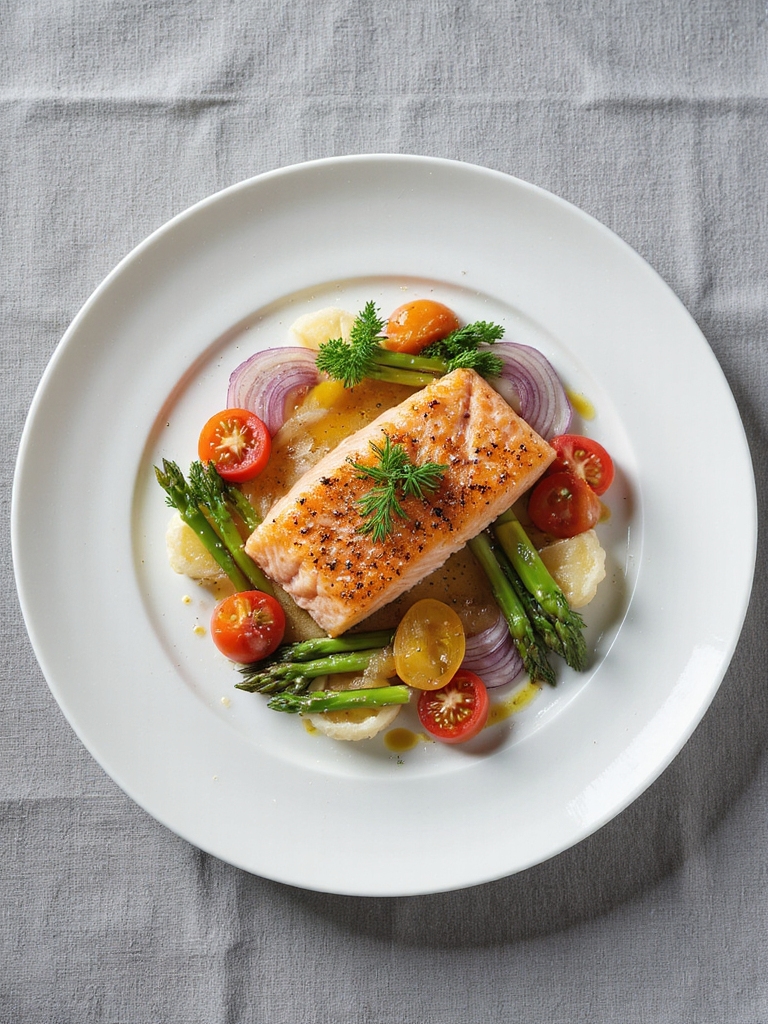
Incorporating vegetables as artistic accents on your fish dish not only enhances the visual appeal but also introduces a delightful range of flavors and textures. By using vegetables thoughtfully, you can create a stunning and balanced meal that captivates both the eyes and palate. For this salmon dish, we’ll create delicate vegetable artworks using asparagus tips, cherry tomatoes, and red onion to form an exquisite garnish that complements the succulent fish and zesty herbs.
Ingredients:
- 2 salmon fillets
- Zest of 1 lemon
- 2 tbsp olive oil
- 1 tbsp chopped dill
- 1 tbsp chopped parsley
- Salt and pepper to taste
- 1 cup asparagus tips
- 1 cup cherry tomatoes
- 1 small red onion, diced
In a large skillet, season salmon fillets with lemon zest, salt, and pepper; cook in olive oil until crispy on each side. Sauté the asparagus, tomatoes, and onion until they are tender yet vibrant, seasoning to taste. Artfully plate the salmon and arrange the vegetables in a design that draws attention, enhancing the presentation. Adding elements such as oven-baked salmon recipes elevates the overall meal experience, giving you a well-rounded dish.
Ensure your vegetables are evenly sliced for even cooking and a sleek presentation. Consider using a variety of colors to enhance the contrast and visual interest of the plate.
Enhancing With Complementary Side Dishes
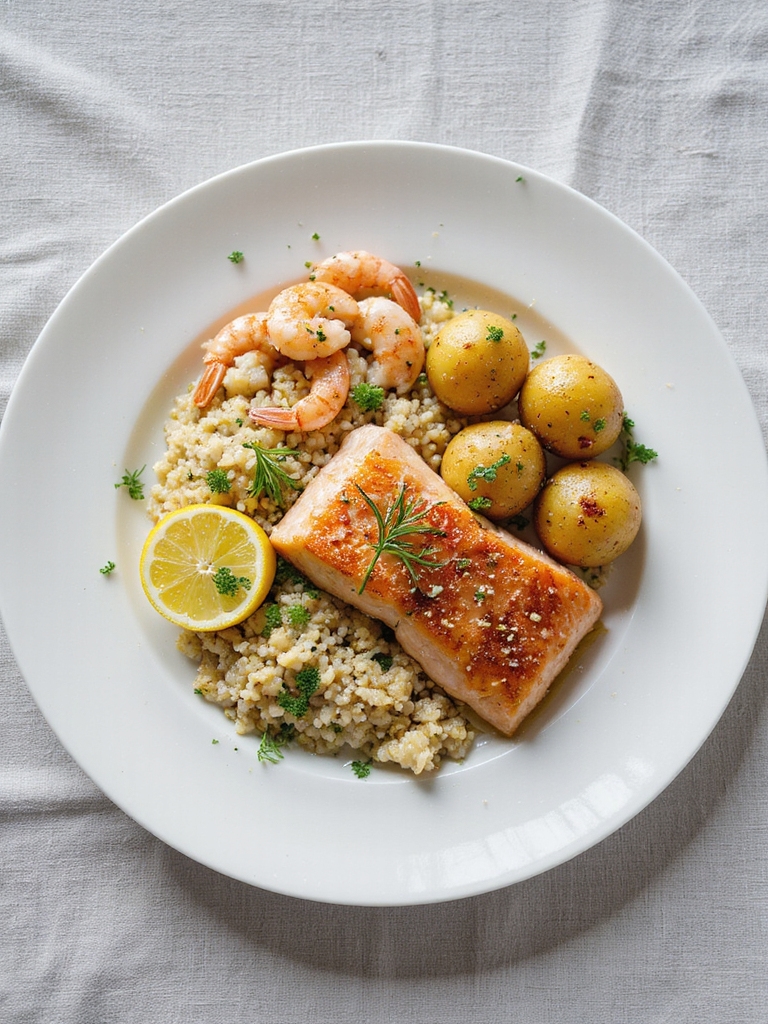
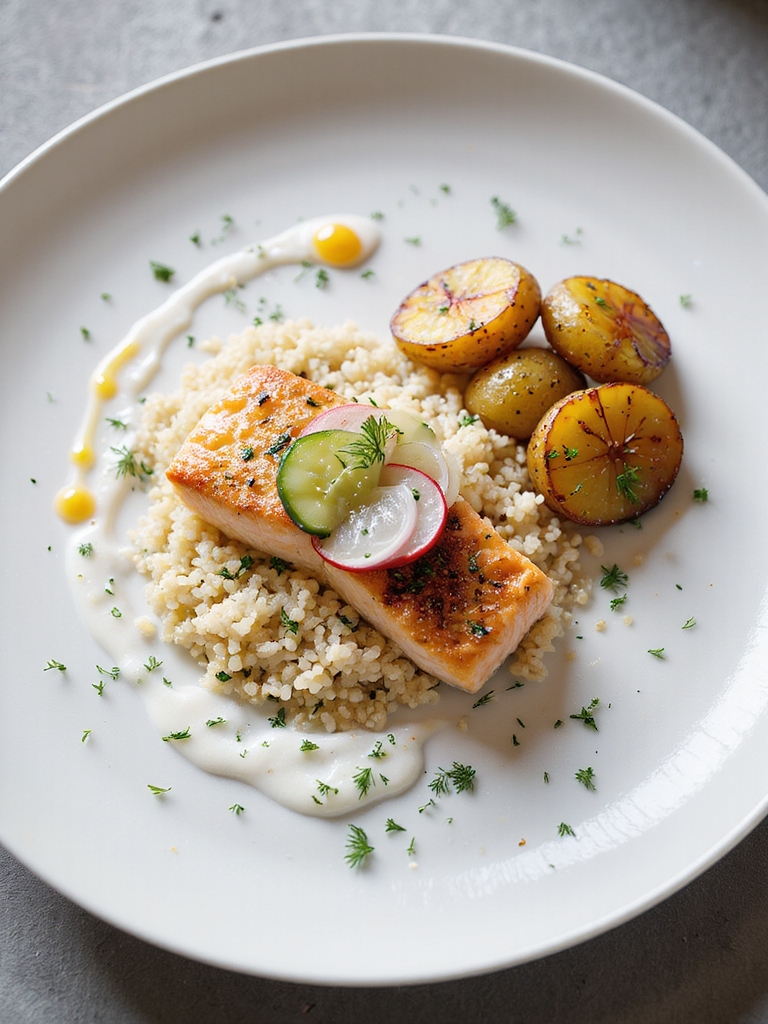
For a vibrant and balanced meal, supplement your beautifully plated salmon with equally appealing side dishes that harmonize in flavor, texture, and color. Consider pairing the fish with a lemon-herb quinoa, which will enhance the citrus notes of the main dish, while roasted baby potatoes can add a comforting, earthy complement. Both side dishes will provide additional nutrition and filling satisfaction to the meal, guaranteeing a complete dining experience. Additionally, incorporating shrimp into your presentation can provide a delightful seafood contrast that elevates the overall dish.
Ingredients:
- 1 cup quinoa
- 2 cups vegetable broth
- 1 tbsp lemon juice
- 1 tbsp olive oil
- 1 tbsp chopped parsley
- 1 cup baby potatoes, halved
- Salt and pepper to taste
Start by cooking quinoa in vegetable broth until fluffy; stir in lemon juice, olive oil, and parsley for added zest and freshness. Roast baby potatoes in olive oil, seasoning with salt and pepper until golden and tender. Arrange the quinoa and potatoes thoughtfully on the plate around the salmon and vegetable garnish to create a stunning presentation that invites a feast for both taste and sight.
Remember to taste and adjust the seasoning for both quinoa and potatoes to achieve the desired flavor, balancing the lemony brightness with savory notes. Always make sure the quinoa is thoroughly cooked to maintain the desired fluffy texture, complementing the crispy salmon.
Tools of the Trade: Plating Essentials
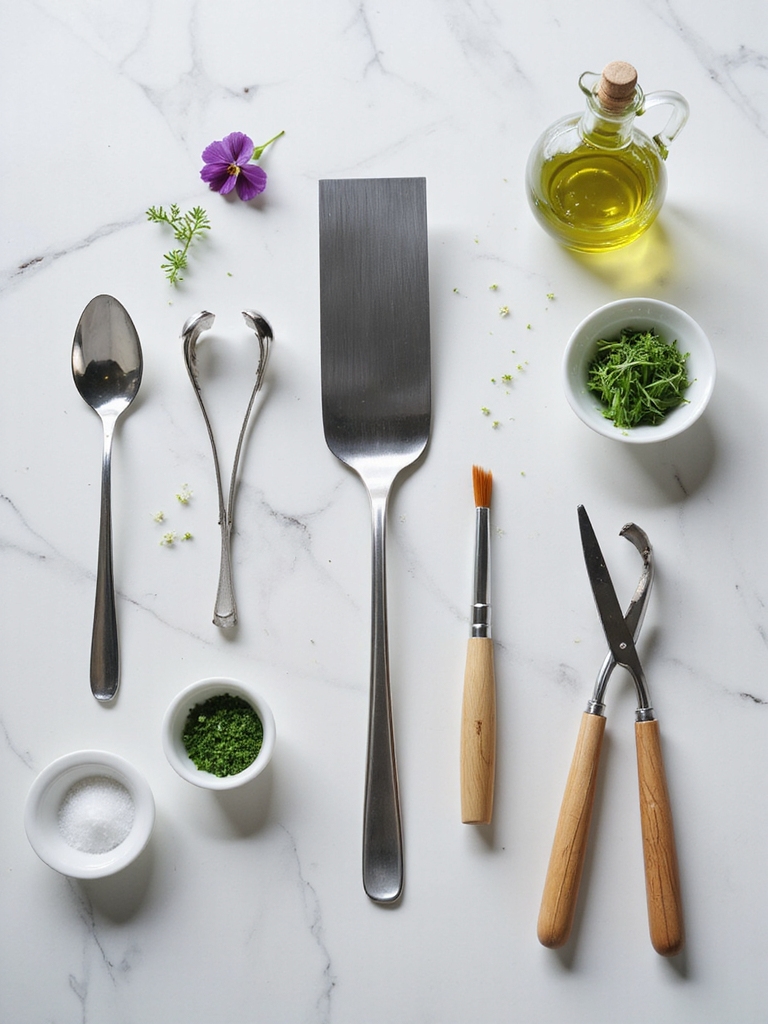
For an unforgettable culinary experience, mastering the art of plating is essential. With the right tools, you can transform your fish dish into a masterpiece that excites the eyes and whets the appetite. Important plating tools include offset spatulas for precise positioning, tweezers for delicate garnishes, and a squeeze bottle for drizzling sauces. By investing in these tools, you’ll enhance your presentation skills and elevate every meal. Additionally, utilizing color contrast can make your fish dishes more visually appealing and more enticing to diners.
Step-by-step Guide to Creating a Signature Fish Dish
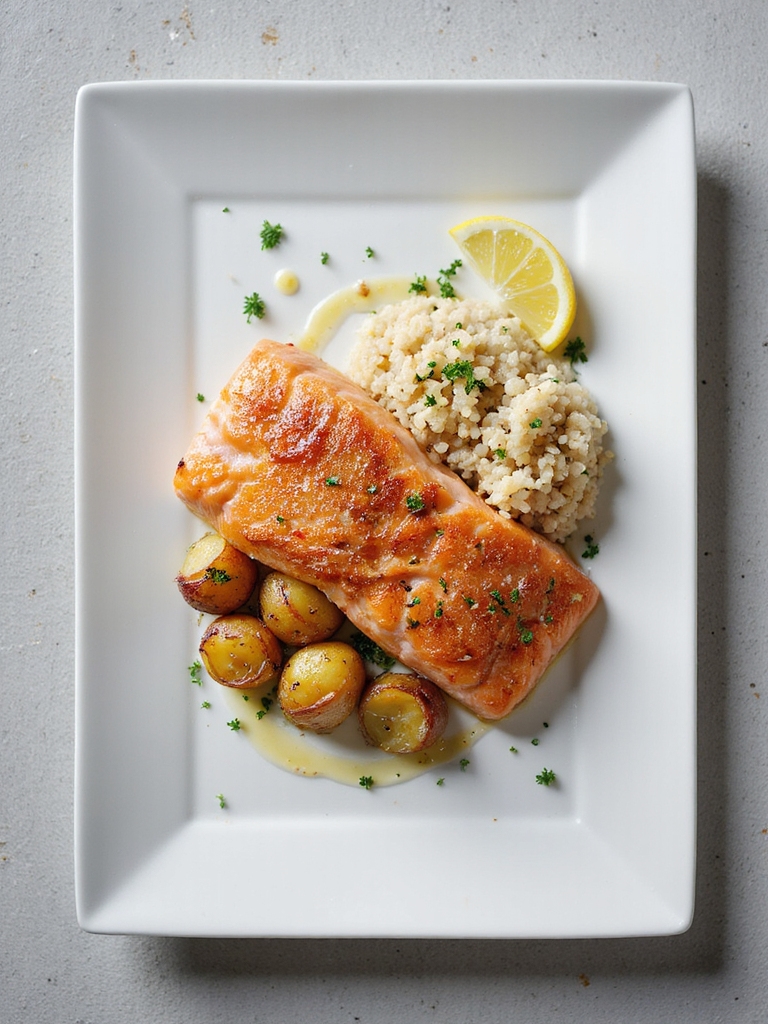
Creating a signature fish dish requires not only fresh, quality ingredients but also a thoughtful approach to cooking and presentation. Start by verifying your fish fillets, such as salmon, are at room temperature to guarantee even cooking. Pair them with simple yet flavorful sides like fluffy quinoa and roasted baby potatoes; their neutral taste complements the richness of the fish while adding hearty texture.
- Salmon fillets
- 1 cup quinoa
- 2 cups vegetable broth
- 1 tbsp lemon juice
- 2 tbsp olive oil
- 1 tbsp chopped parsley
- 1 cup baby potatoes, halved
- Salt and pepper to taste
Cook the quinoa in vegetable broth until light and fluffy, then mix in lemon juice, one tablespoon of olive oil, and parsley. Toss halved baby potatoes with the remaining olive oil, salt, and pepper before roasting them until crisp. Pan-sear the salmon fillets season them with salt and pepper, guaranteeing they are cooked to your preferred doneness—medium for moist texture.
When cooking fish, it’s vital not to overcrowd the pan, which can result in uneven cooking. Rest the salmon briefly before serving, as this allows the juices to redistribute, enhancing flavor and tenderness.
Tips for Creative Sauce and Garnish Applications
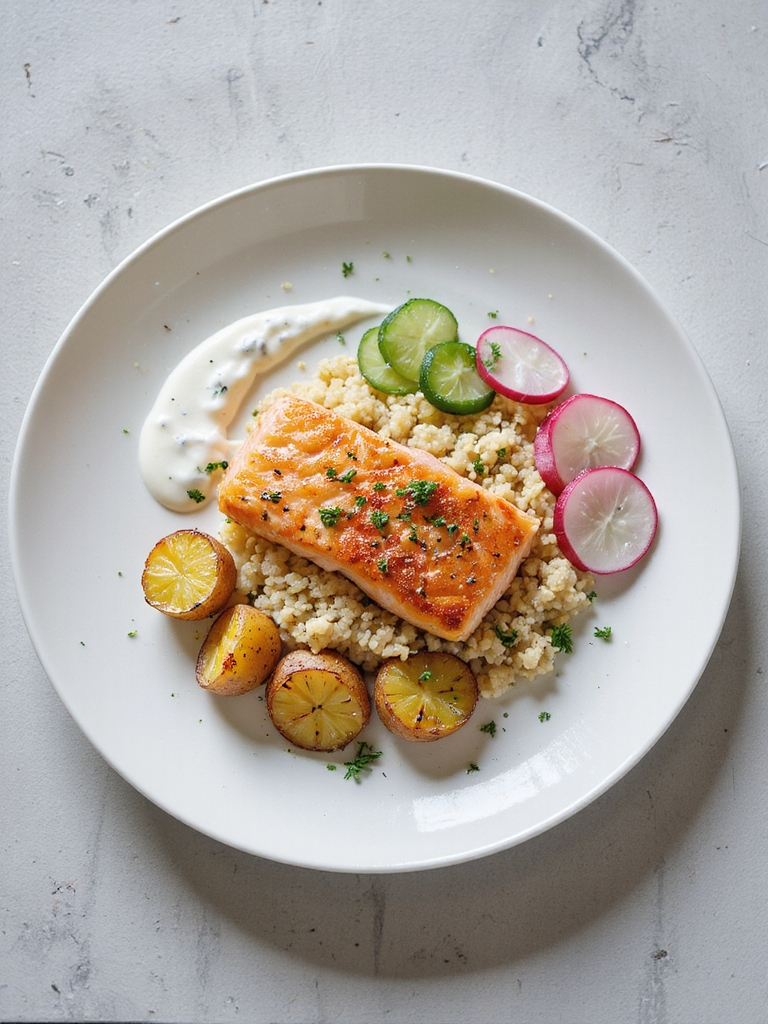
Incorporating creative sauces and garnishes can elevate your fish dish to new culinary heights. For a revitalizing and vibrant touch, consider a dill yogurt sauce and a cucumber radish salad to garnish your pan-seared salmon. These additions will provide a balance of creamy, tangy, and crunchy elements, offering a delightful contrast to the rich and tender salmon. The dill yogurt sauce can be easily made by mixing Greek yogurt with fresh dill, lemon juice, and a pinch of salt, while the cucumber radish salad adds a bright crunch with thinly sliced vegetables tossed in olive oil and lemon.
Ingredients:
- Salmon fillets
- 1 cup quinoa
- 2 cups vegetable broth
- 1 tbsp lemon juice
- 3 tbsp olive oil
- 1 tbsp chopped parsley
- 1 cup baby potatoes, halved
- ½ cup Greek yogurt
- 1 tbsp fresh dill, chopped
- 1 cucumber, thinly sliced
- 4 radishes, thinly sliced
- Salt and pepper to taste
Cook the quinoa in vegetable broth, adding lemon juice, olive oil, and parsley thereafter. Roast the baby potatoes with olive oil, salt, and pepper, while pan-searing seasoned salmon fillets until cooked to your liking. Serve salmon atop quinoa and potatoes, drizzling dill yogurt sauce over and garnishing with cucumber radish salad.
For best results, verify the yogurt sauce is chilled before drizzling over the salmon to maintain its tangy revitalization. Slicing the cucumbers and radishes thinly will maximize their crunch and blend seamlessly with the dish’s textures.