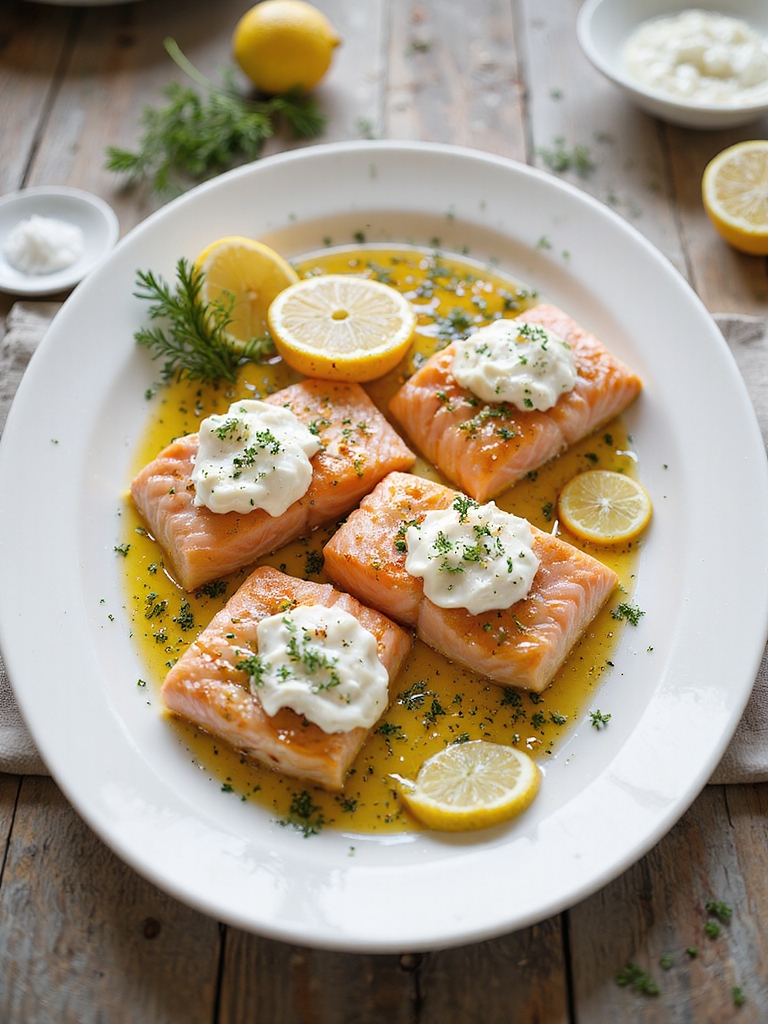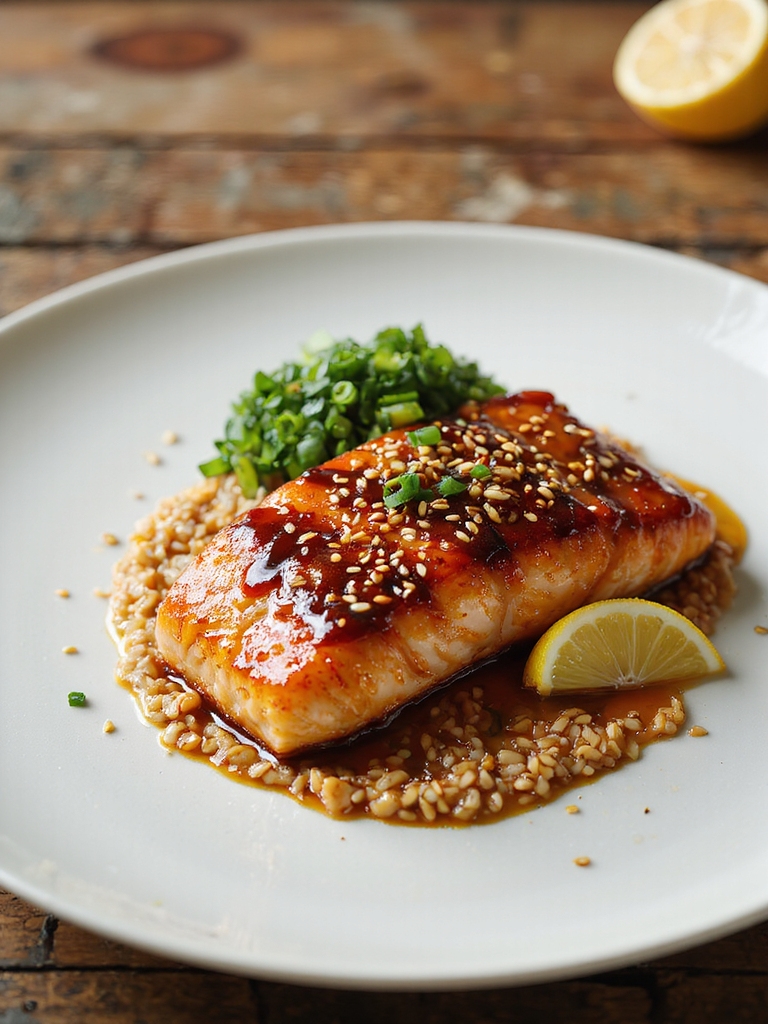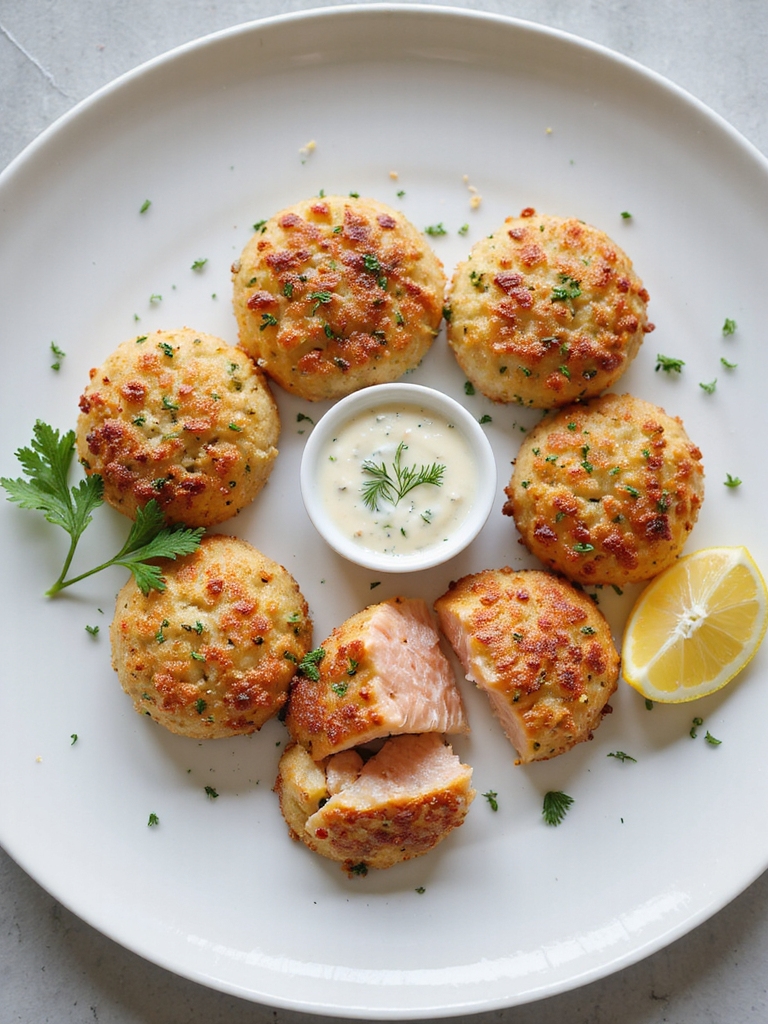
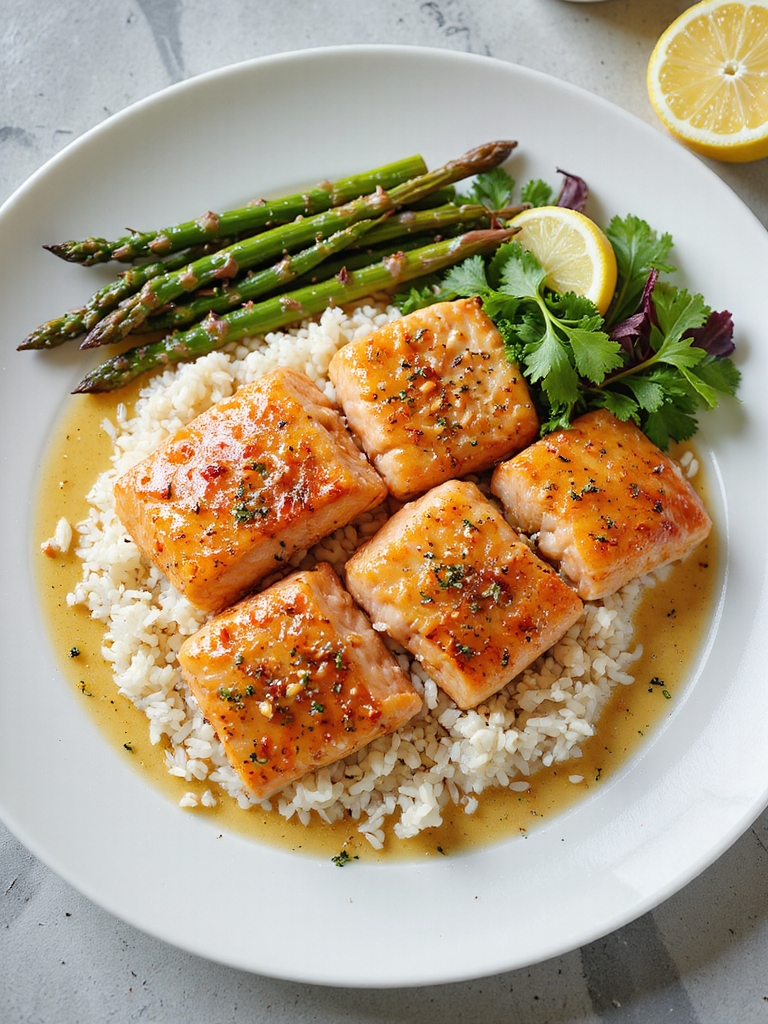
I love how garlic butter turns ordinary salmon into something almost criminally good — golden crust, silky flesh, and that garlicky, lemon-bright sauce that begs for bread.
I’ll show you how small tricks—browned butter, quick sear or high-heat roast, gentle basting—make the fish stay tender and flavorful every time. Stick around and I’ll share the exact steps and clever swaps that keep dinner effortless and unforgettable.
Why Garlic Butter Salmon Works Every Time
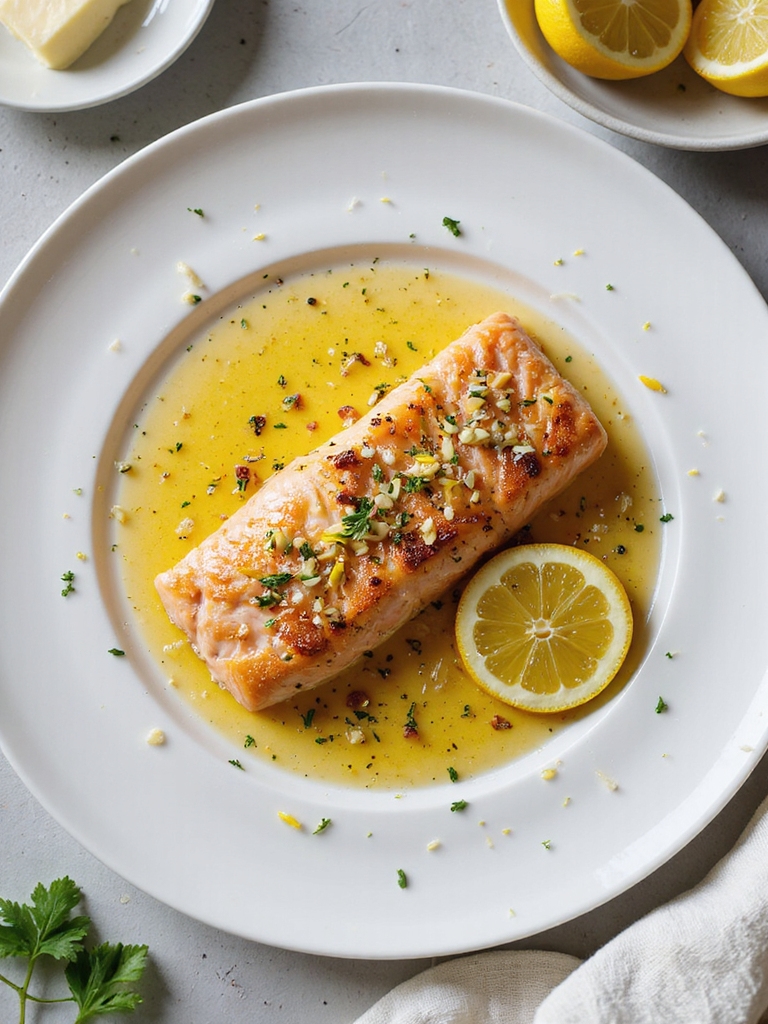
Garlic butter salmon works every time because the rich butter melds with bright garlic and lemon to both flavor and baste the fish, while quick, high-heat cooking seals in moisture and creates a flavorful crust; this method is forgiving — use thick fillets, room-temperature fish, and a hot pan or oven to achieve flaky, tender salmon with a silky garlic butter sauce.
- 4 salmon fillets (6 oz each), skin on or off as preferred
- 3 tbsp unsalted butter
- 3 garlic cloves, minced
- 1 tbsp olive oil
- 1 tbsp fresh lemon juice
- 1 tsp lemon zest
- 1 tbsp chopped fresh parsley
- 1/2 tsp smoked paprika (optional)
- Salt and freshly ground black pepper to taste
Pat salmon dry and season both sides with salt, pepper, and paprika; heat oil in a large skillet over medium-high heat until shimmering, add salmon skin-side down (if using) and cook 3–4 minutes until golden, flip and add butter, garlic, and lemon zest, spooning the butter over the fillets as it melts until the salmon reaches 120–125°F for medium-rare (about 2–4 more minutes depending on thickness) then remove from pan, stir in lemon juice and parsley into the butter sauce and spoon over the fish before serving.
Let salmon come to room temperature for 15–20 minutes before cooking and make sure the pan is hot so the skin crisps quickly; use unsalted butter to control salt level, don’t overcook (pull at 120–125°F), and finish with fresh lemon and herbs for brightness. A hot pan or oven also helps create a crisp exterior while keeping the inside moist, which is why preheating is important for high-heat cooking.
Choosing the Best Salmon Cut for This Recipe
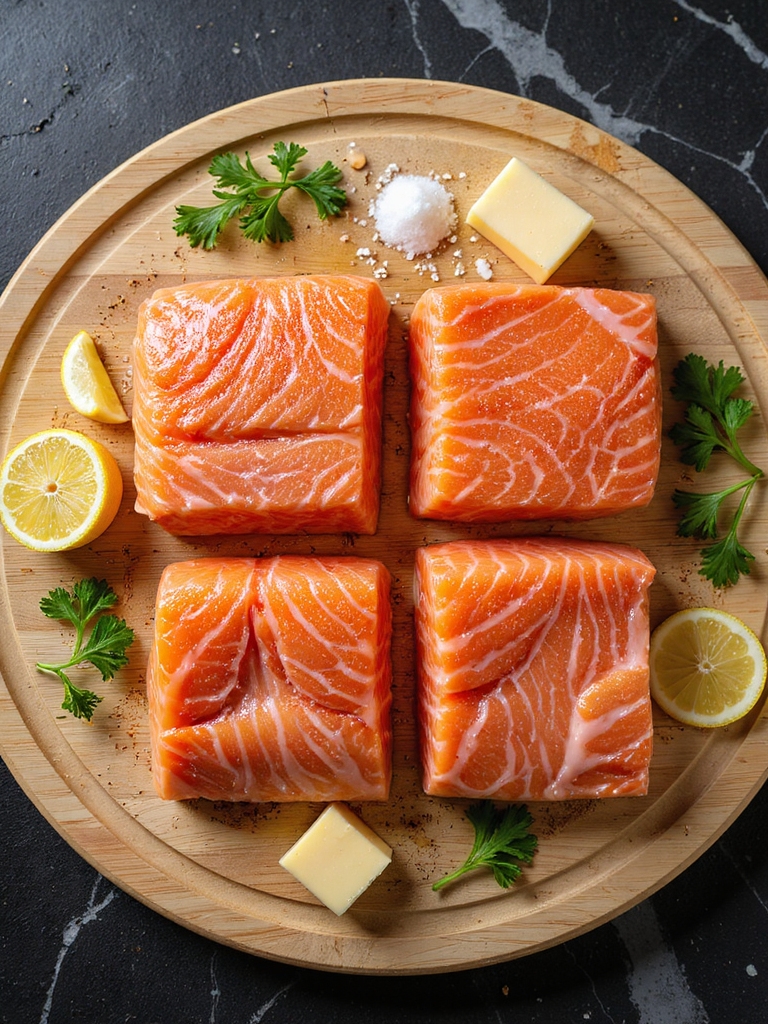
Choosing the best salmon cut for garlic butter salmon makes a big difference: thick center-cut fillets or steaks give a moist, tender interior with a chance for a golden crust; skin-on fillets help hold the fish together and crisp beautifully, while center-cut portions of Atlantic or King salmon provide the richest flavor and most forgiving cooking times for this high-heat, quick butter-basting method.
- 4 center-cut salmon fillets (6–8 oz each), skin-on or skinless as preferred
- 1 tbsp olive oil
- 3 tbsp unsalted butter
- 3 garlic cloves, minced
- 1 tbsp fresh lemon juice
- 1 tsp lemon zest
- 1 tbsp chopped fresh parsley
- 1/2 tsp smoked paprika (optional)
- Salt and freshly ground black pepper
Pat fillets dry and let sit at room temperature 15–20 minutes, season both sides with salt, pepper and paprika; heat oil in a large skillet over medium-high until shimmering, add salmon skin-side down and press gently to make even contact, cook 3–5 minutes until skin is crisp and edges opaque, flip, add butter and garlic, spoon butter over fillets as it melts and cook until internal temp is 120–125°F for medium-rare (about 2–4 more minutes depending on thickness), remove from pan, stir lemon juice and parsley into pan butter and spoon over salmon before serving.
Choose center-cut, thicker fillets for even cooking and better crust formation; keep salmon slightly underdone for best texture, use skin-on if you want crisp skin and hold the fish together, and always pat dry and preheat the pan to make certain a good sear. For best results, start with center-cut fillets that are roughly equal in thickness so they cook evenly.
Essential Ingredients and Flavor Helpers
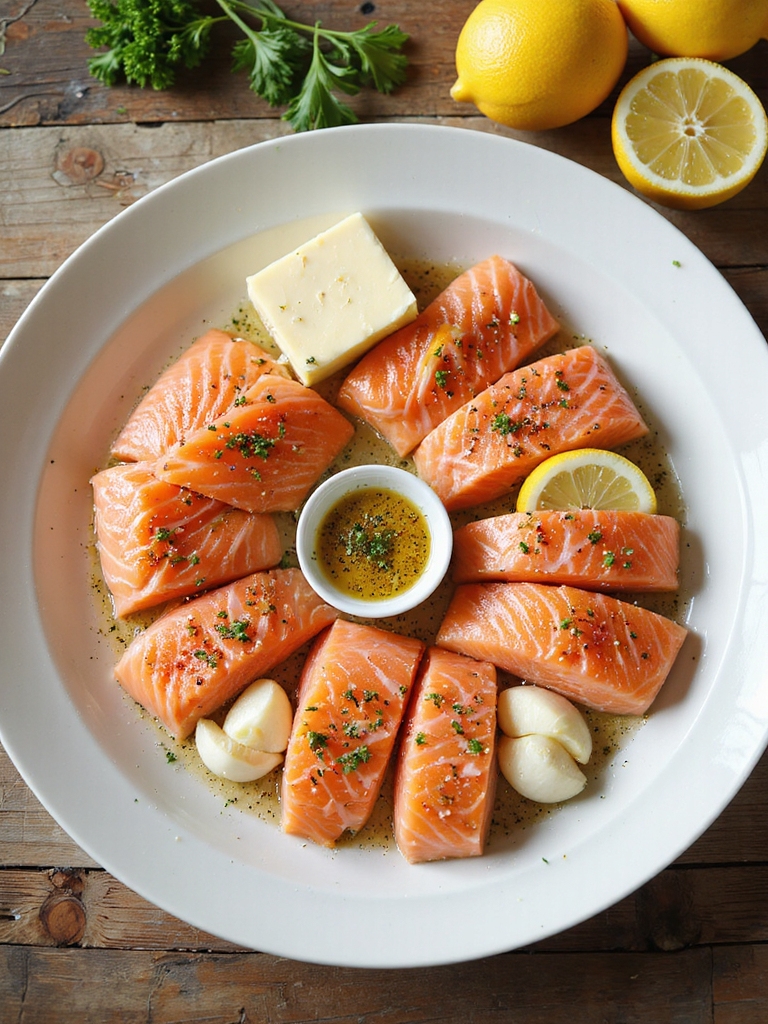
Garlic butter salmon is a quick, flavorful weeknight dish that balances a crisp sear with a rich, garlicky butter sauce; using a few essential ingredients — quality salmon, unsalted butter, fresh garlic and lemon — plus simple flavor helpers like parsley, smoked paprika and a splash of white wine or Dijon mustard will amplify the dish while letting the salmon shine.
- 4 center-cut salmon fillets (6–8 oz), skin-on or skinless
- Salt and freshly ground black pepper
- 1 tbsp olive oil
- 3 tbsp unsalted butter
- 3 garlic cloves, minced
- 1 tbsp fresh lemon juice
- 1 tsp lemon zest
- 1 tbsp chopped fresh parsley
- 1/2 tsp smoked paprika (optional)
- 1 tsp Dijon mustard or 2 tbsp dry white wine (optional)
Pat salmon dry and let sit 15–20 minutes at room temperature, season with salt, pepper and paprika; heat oil in a large skillet over medium-high until shimmering, add salmon skin-side down and press for even contact, cook 3–5 minutes until skin is crisp and edges opaque then flip, add butter and garlic and spoon melted butter over fillets while cooking to an internal temp of 120–125°F (about 2–4 more minutes depending on thickness).
Remove from pan and stir lemon juice, zest, parsley and optional mustard or wine into pan butter and spoon over salmon before serving.
Tip: Always pat salmon dry and preheat your pan for a good sear, keep butter basting hot but not burnt, and remove salmon a few degrees below target temp as it will carryover cook.
A hot, well-seasoned skillet is key to achieving a superior crisp sear on the salmon.
Pan-Seared Garlic Butter Salmon Step‑by‑Step
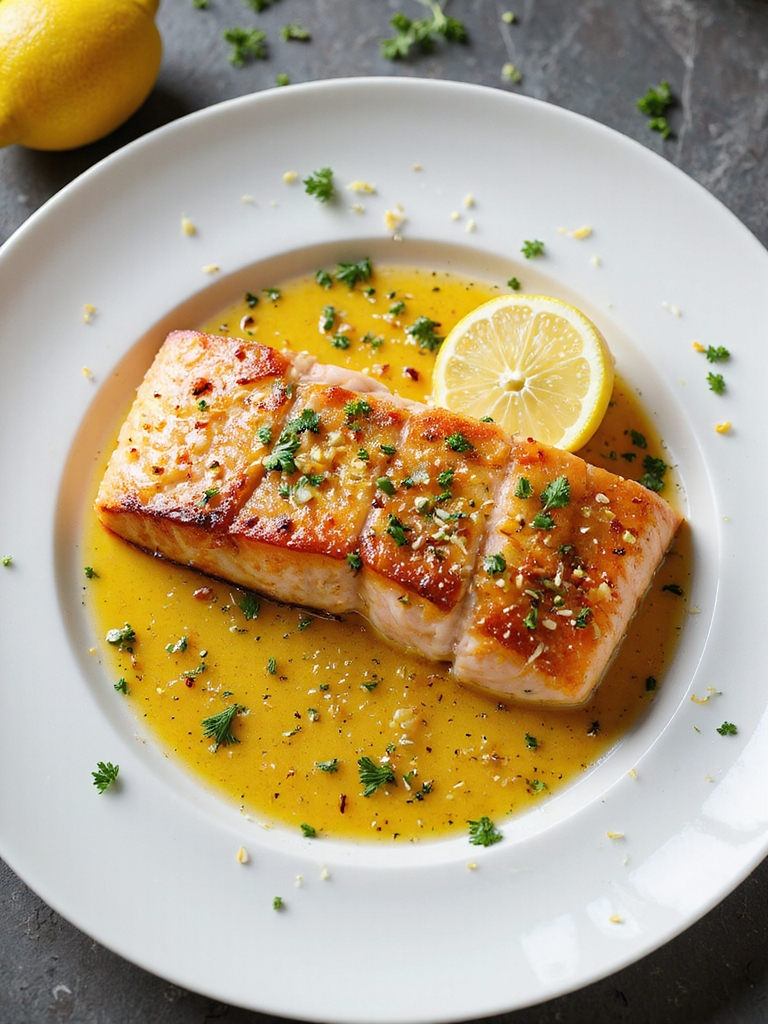
Pan-seared garlic butter salmon delivers a crisp, golden exterior and a silky, garlicky sauce in under 20 minutes, making it perfect for a fast weeknight meal; this method focuses on a hot pan, well-seasoned fillets, and continuous butter-basting so the salmon stays moist and finishes with a glossy, flavorful coating.
- 4 center-cut salmon fillets (6–8 oz), skin-on or skinless
- Salt and freshly ground black pepper
- 1 tbsp olive oil
- 3 tbsp unsalted butter
- 3 garlic cloves, minced
- 1 tbsp fresh lemon juice
- 1 tsp lemon zest
- 1 tbsp chopped fresh parsley
- 1/2 tsp smoked paprika (optional)
- 1 tsp Dijon mustard or 2 tbsp dry white wine (optional)
Pat salmon dry and let sit 15–20 minutes at room temperature, season both sides with salt, pepper and smoked paprika; heat oil in a large heavy skillet over medium-high until shimmering, add salmon skin-side down and press gently for even contact, cook 3–5 minutes until skin is crisp and edges turn opaque then flip.
Reduce heat to medium, add butter and garlic and continuously spoon melted butter over the tops while cooking to an internal temperature of 120–125°F (about 2–4 more minutes depending on thickness), remove from pan and stir lemon juice, zest, parsley and optional mustard or wine into the pan butter and spoon over fillets before serving.
Tip: Always pat salmon dry and preheat your pan for a good sear; keep butter basting hot but not burnt and remove salmon a few degrees below target temperature to allow for carryover cooking.
This method is inspired by simple, reliable oven-baked salmon techniques that emphasize even cooking and moisture retention, such as those used for Oven Salmon.
Oven-Baked Garlic Butter Salmon Method
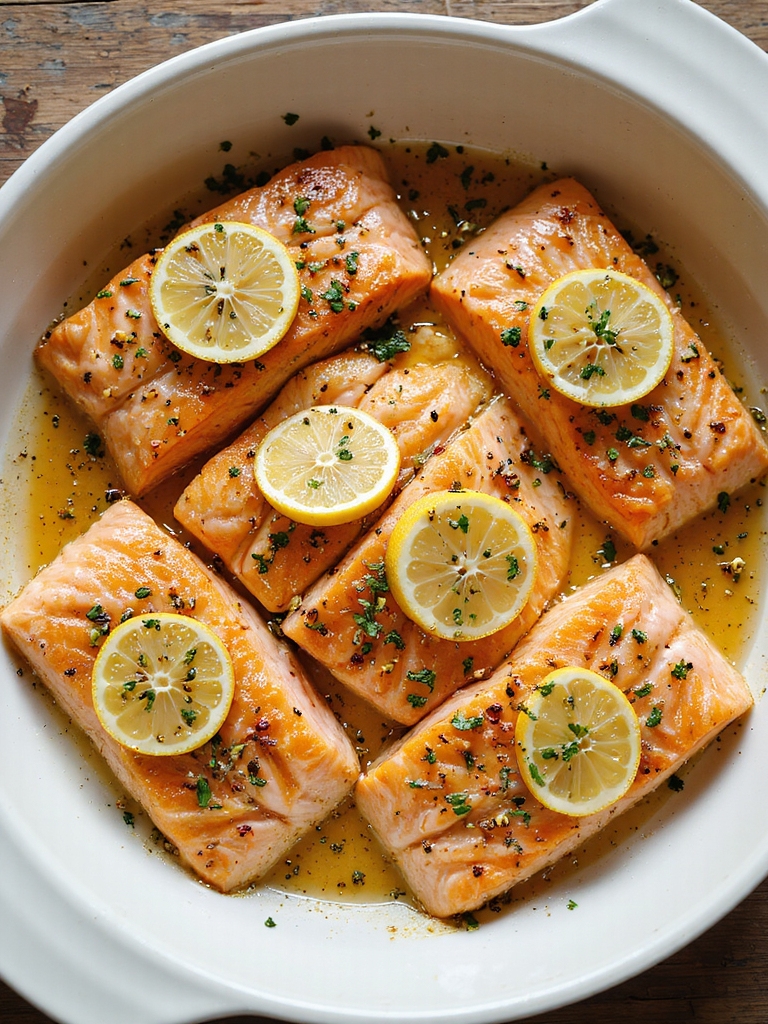
Oven-baked garlic butter salmon is an easy, hands-off method that yields tender, flaky fillets with a glossy garlic-butter finish; this version roasts the salmon at a high-ish temperature for a short time so the exterior develops gentle browning while the butter and aromatics infuse the fish, and it’s ideal when you want consistent results with minimal attention.
- 4 salmon fillets (6–8 oz), skin-on or skinless
- Salt and freshly ground black pepper
- 4 tbsp unsalted butter, melted
- 3 garlic cloves, finely minced
- 1 tbsp fresh lemon juice
- 1 tsp lemon zest
- 1 tbsp chopped fresh parsley
- 1/2 tsp smoked paprika (optional)
- 1 tsp Dijon mustard or 1 tbsp honey (optional)
- Lemon slices for topping
Preheat oven to 425°F (220°C) and line a baking sheet with foil or parchment; place a wire rack on the sheet if you want crisper skin and arrange seasoned salmon fillets skin-side down (or presentation side down if skinless) about 1 inch apart.
Whisk melted butter with garlic, lemon juice, zest, parsley and optional mustard or honey and brush generously over each fillet.
Then roast on the middle rack for 8–12 minutes (depending on thickness) until the flesh flakes and reaches 120–125°F for medium-rare to medium.
Broil 1–2 minutes at the end for a golden top if desired.
Remove and let rest 3–5 minutes before spooning any buttery pan juices over the salmon.
Tip: Pat salmon very dry, bring to room temperature 15–20 minutes, avoid overbaking by using an instant-read thermometer and finish with a brief broil only if you want a browned top.
For a consistently even bake, consider using a wire rack so hot air circulates around the fillets.
One‑Pan Garlic Butter Salmon With Vegetables
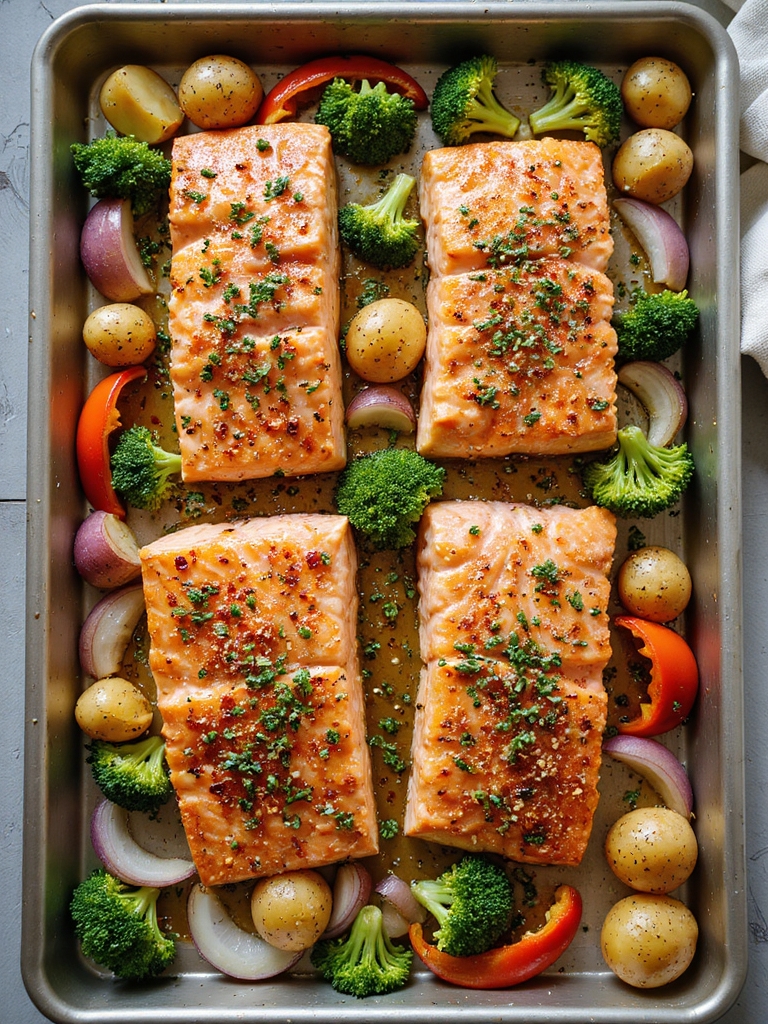
This one-pan garlic butter salmon with vegetables is a simple, weeknight-friendly meal that roasts salmon and mixed vegetables together in a single sheet pan so the butter and garlic flavors mingle with the veggies, creating a tender, flavorful plate with minimal cleanup; it’s great for busy evenings and can be customized with your favorite vegetables or a splash of lemon at the end.
- 4 salmon fillets (6–8 oz), skin-on or skinless
- 3 tbsp unsalted butter, melted
- 3 garlic cloves, minced
- 1 tbsp lemon juice
- 1 tsp lemon zest
- 1 tbsp Dijon mustard or 1 tsp honey (optional)
- 1 tsp smoked paprika or paprika
- Salt and freshly ground black pepper
- 1 lb baby potatoes, halved (or fingerlings)
- 2 cups broccoli florets (or asparagus, trimmed)
- 1 red bell pepper, sliced
- 1 small red onion, cut into wedges
- 2 tbsp olive oil
- 1 tbsp chopped fresh parsley for finishing
- Lemon wedges for serving
Toss potatoes with 1 tbsp olive oil, half the garlic, salt, and pepper and roast on a rimmed sheet pan at 425°F (220°C) for 15 minutes, remove and add broccoli, bell pepper, and onion tossed with remaining olive oil, then push vegetables to the sides and place seasoned salmon fillets in the center, whisk melted butter with remaining garlic, lemon juice, zest, mustard or honey and paprika and brush over salmon and vegetables, return to oven and roast 8–12 minutes more until salmon reaches 120–125°F for medium-rare to medium and vegetables are tender-crisp, broil 1–2 minutes at the end if you want more browning, then rest salmon 3–5 minutes before sprinkling parsley and serving with lemon wedges.
Tip: Cut vegetables into uniform sizes for even roasting and start starchy veggies (like potatoes) first so everything finishes together—use an instant-read thermometer to avoid overcooking the salmon.
This sheet pan method is ideal for busy weeknights and helps ensure even cooking and easy cleanup with the sheet pan salmon technique.
Lemon, Herb, and Wine Variations to Try
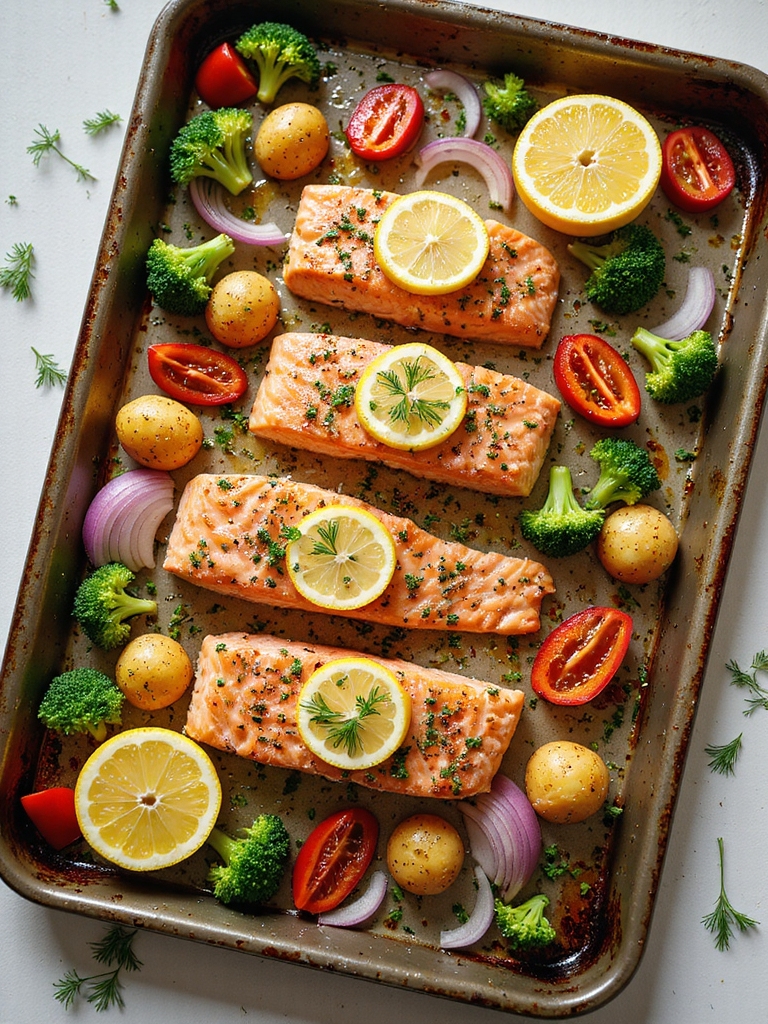
Bright, brightening, and just a touch elegant, this lemon, herb, and white‑wine variation layers bright citrus, fresh herbs, and a splash of dry white wine into the garlic butter base used for the one‑pan salmon and vegetables, giving the dish a lightly aromatic, slightly acidic lift that pairs beautifully with the richness of salmon and roasted veg.
- 4 salmon fillets (6–8 oz)
- 3 tbsp unsalted butter, melted
- 3 garlic cloves, minced
- 2 tbsp fresh lemon juice
- 1 tsp lemon zest
- 2 tbsp dry white wine (Sauvignon Blanc or Pinot Grigio)
- 2 tbsp chopped fresh parsley
- 1 tbsp chopped fresh dill or tarragon
- 1 tsp Dijon mustard (optional)
- 1 tsp lemon pepper or ½ tsp coarse black pepper plus pinch of salt
- 1 lb baby potatoes, halved
- 2 cups broccoli florets (or asparagus)
- 1 red bell pepper, sliced
- 1 small red onion, cut into wedges
- 2 tbsp olive oil
- Lemon wedges for serving
Preheat oven to 425°F (220°C) and toss potatoes with 1 tbsp olive oil, salt and pepper, roast on a rimmed sheet pan 15 minutes, then toss broccoli, bell pepper and onion with remaining oil and add to pan.
Whisk melted butter with garlic, lemon juice, lemon zest, white wine, mustard, parsley and dill, place salmon fillets in center of pan skin‑side down (if using skin), brush generously with the lemon‑herb butter and return to oven 8–12 minutes until salmon reaches 120–125°F for medium‑rare to medium and vegetables are tender, broil 1–2 minutes if you want more browning, rest salmon 3–5 minutes and finish with extra chopped herbs and lemon wedges.
Tip: Use a dry white wine you’d drink, add herbs at the end of cooking for freshness, and always rest the salmon a few minutes so juices redistribute. A simple sheet‑pan approach keeps everything tidy and helps the salmon and veggies finish at the same time, making it ideal for a busy weeknight one‑pan meal.
Make‑Ahead, Storage, and Reheating Tips
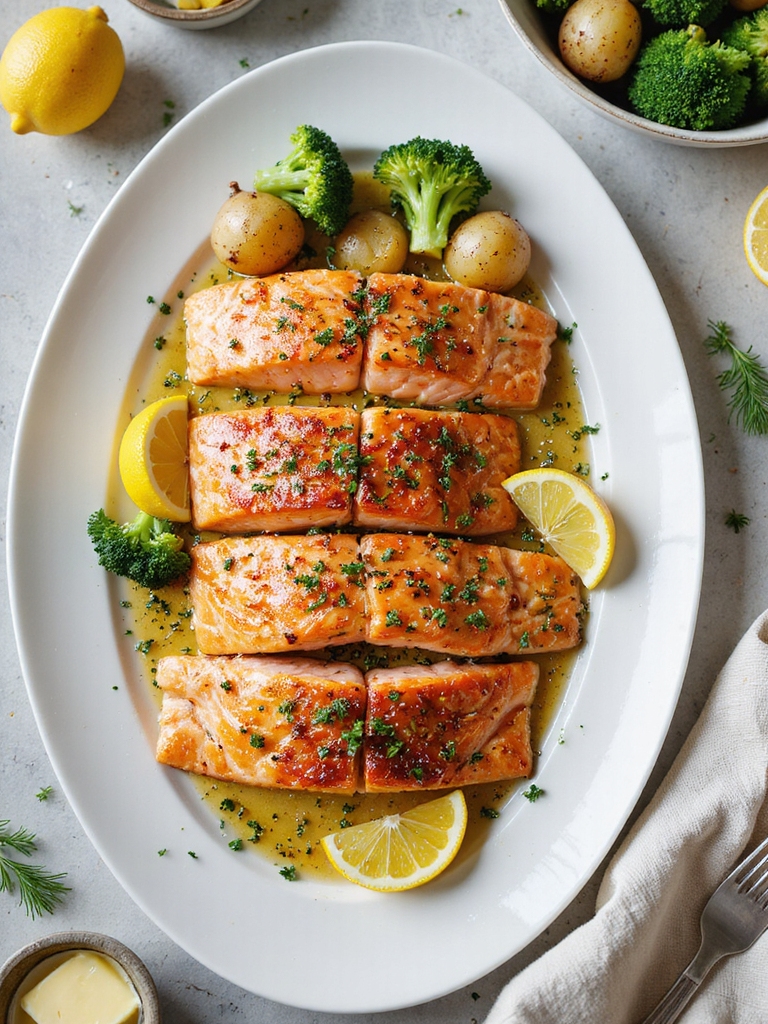
Make‑ahead, storage, and reheating for the lemon, herb, and white‑wine garlic butter salmon help you save time while keeping flavor and texture; prepare components ahead, store them properly, and reheat gently to avoid drying the fish so you still get bright citrus and herb notes with silky salmon and tender roasted vegetables.
- 4 cooked salmon fillets (6–8 oz), cooled to room temperature
- Lemon‑herb garlic butter (made from 3 tbsp unsalted butter, 3 garlic cloves minced, 2 tbsp lemon juice, 1 tsp lemon zest, 2 tbsp dry white wine, 1 tsp Dijon mustard, 2 tbsp chopped parsley, 1 tbsp dill/tarragon)
- Roasted vegetables (1 lb baby potatoes halved, 2 cups broccoli florets or asparagus, 1 red bell pepper sliced, 1 small red onion wedges)
- 2 tbsp olive oil
- Salt and pepper to taste
- Lemon wedges for serving
Store salmon and vegetables separately in airtight containers in the refrigerator for up to 3 days (or freeze salmon tightly wrapped for up to 1 month).
To reheat, thaw overnight if frozen then warm gently in a 275–300°F (135–150°C) oven on a baking sheet with a splash of water or extra lemon‑herb butter to help steam and prevent drying, about 10–15 minutes depending on thickness, or reheat portions in a covered skillet over low heat with a tablespoon of butter until warmed through, finish with fresh herbs and a squeeze of lemon just before serving.
Tip: Cool components quickly, keep fish and sauce separate when storing, and always reheat low and slow with a bit of moisture to preserve texture and flavor. Also, cooking directly from frozen can be safe and convenient when done properly; see Frozen Salmon Basics for best practices.
Side Dishes That Pair Perfectly With Garlic Butter Salmon
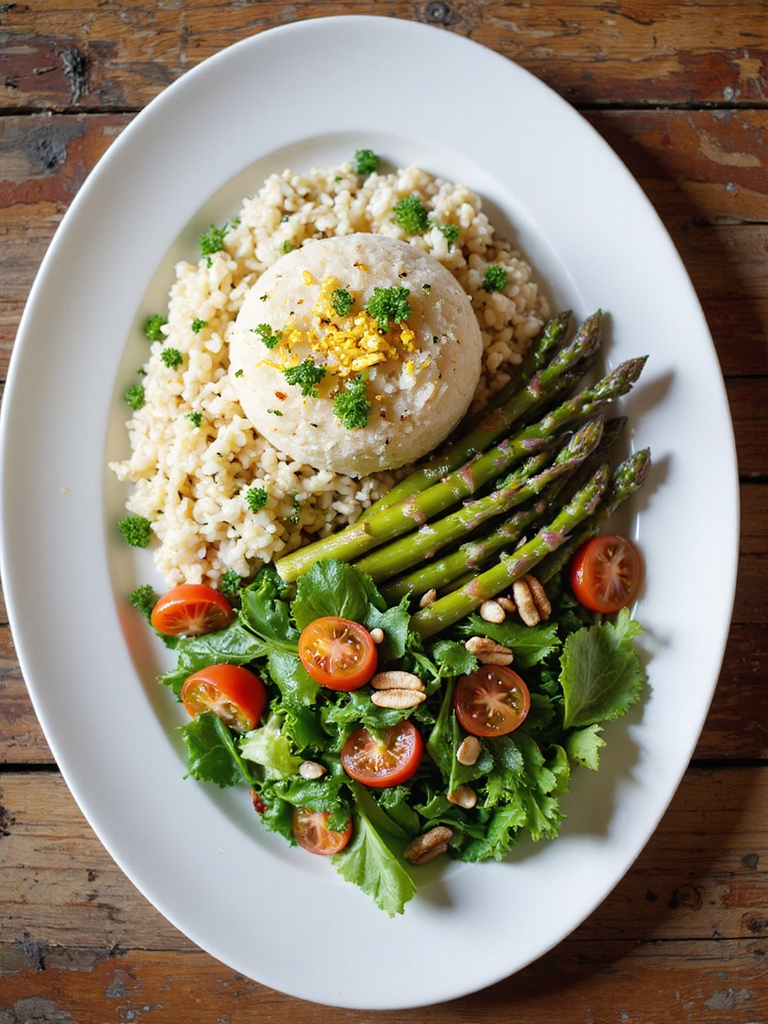
Garlic butter salmon is beautifully complemented by a mix of bright, simple side dishes that balance its richness — think lemon-herb rice or quinoa, roasted garlic Parmesan asparagus, and a crisp green salad with a zippy vinaigrette; this recipe gives you three complementary sides that are easy to prepare alongside the salmon so everything finishes hot and balanced.
- 1 cup long-grain rice or quinoa (or 1/2 cup each for mixed)
- 2 cups low-sodium chicken or vegetable broth
- 1 lemon (zest + 2 tbsp juice)
- 2 tbsp chopped parsley
- 1 tbsp chopped dill or tarragon (optional)
- 1 lb asparagus or broccolini, trimmed
- 2 tbsp olive oil
- 2 tbsp grated Parmesan
- 2 garlic cloves, minced
- 1 small head romaine or mixed salad greens (4 cups)
- 1/4 cup cherry tomatoes halved
- 2 tbsp red wine vinegar
- 1/3 cup extra-virgin olive oil
- Salt and freshly ground black pepper
- Optional: toasted almonds or pine nuts for salad
Start the rice/quinoa: rinse grain, bring broth to a boil in a saucepan, add grain, reduce to a simmer, cover and cook 15–18 minutes (quinoa less), fluff with fork and stir in lemon zest, 1 tbsp juice and half the parsley;
roast the asparagus: toss with olive oil, minced garlic, salt and pepper on a sheet pan, roast at 425°F (220°C) for 10–12 minutes until tender, then sprinkle with Parmesan and the remaining parsley and lemon juice;
make the salad: whisk red wine vinegar with olive oil, salt and pepper, toss with greens, cherry tomatoes and nuts just before serving.
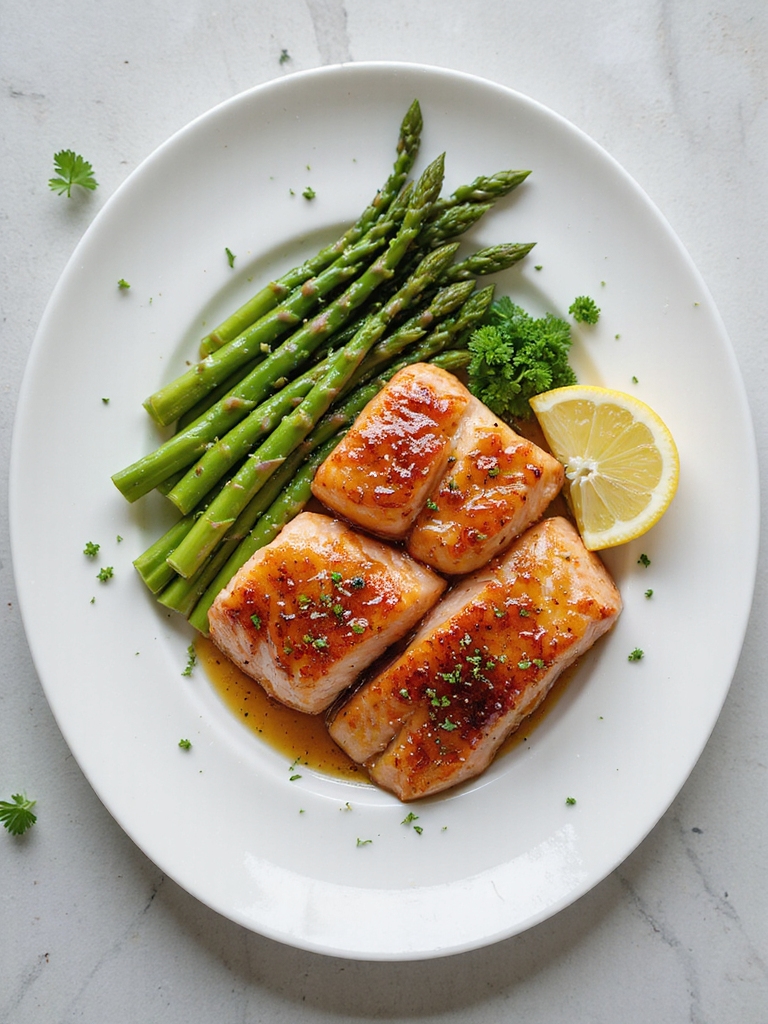
Tip: Cook the grain first since it keeps warm covered, roast vegetables on a hot sheet pan so they caramelize quickly, and dress the salad last-minute to keep it crisp while using lemon and fresh herbs to echo the salmon’s flavors. Salmon and asparagus are a classic pairing that highlights the fish’s richness and the veg’s bright, savory notes, often served together as a celebrated Salmon And Asparagus combination.
Troubleshooting Common Cooking Mistakes
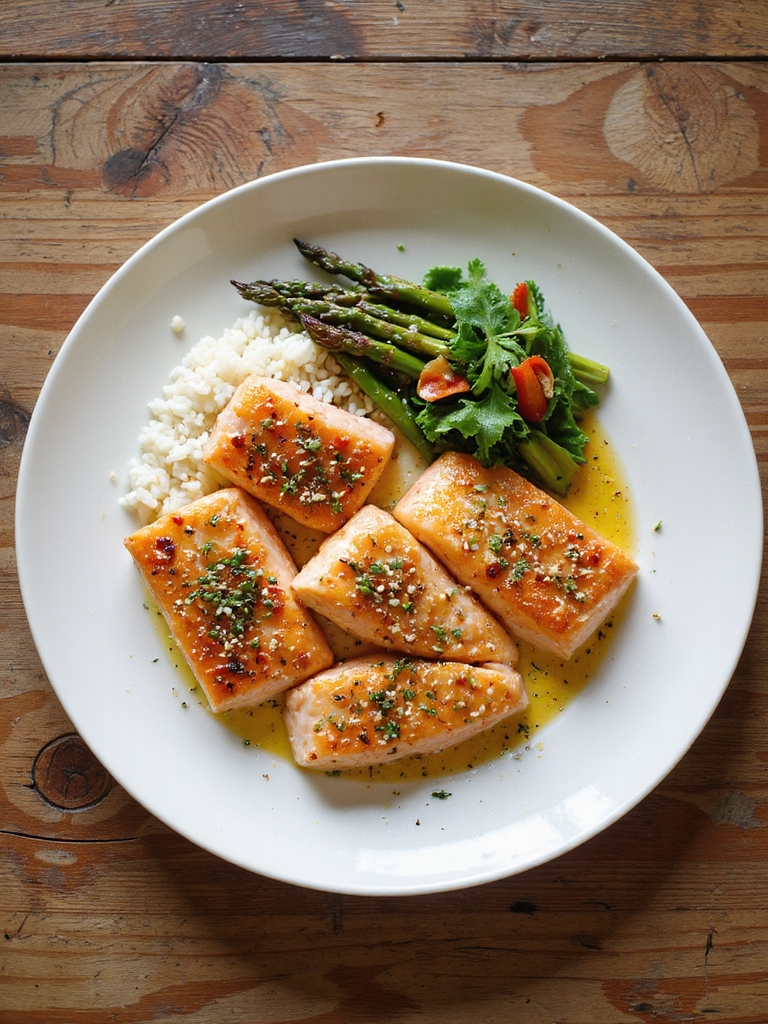
Even the simplest garlic butter salmon dinner can go wrong — overcooked, underseasoned, soggy sides, or a sauce that breaks — so this troubleshooting recipe walks you through common mistakes and fixes while giving a reliable plan to finish the meal confidently and deliciously. Follow the ingredient checklist and step-by-step recovery actions below to rescue texture, seasoning, and timing so your salmon stays flaky, buttery, and perfectly paired with the sides.
- 4 salmon fillets (6 oz each), skin-on
- 4 tbsp unsalted butter
- 3 garlic cloves, minced
- 1 lemon (zest + 2 tbsp juice)
- 1 tsp kosher salt
- 1/2 tsp freshly ground black pepper
- 1 cup long-grain rice or quinoa
- 2 cups low-sodium broth
- 1 lb asparagus or broccolini
- 2 tbsp olive oil
- 2 tbsp grated Parmesan
- 1 small head salad greens (4 cups)
- 2 tbsp red wine vinegar
- 1/3 cup extra-virgin olive oil
- Optional: chopped parsley, toasted nuts
Preheat oven to 425°F (220°C); start the grain in a saucepan with broth and a pinch of salt, cover and simmer (rice 15–18 min, quinoa 12–15) while you prepare salmon and veggies; for underseasoned fish, sprinkle extra salt and a squeeze of lemon just before plating; if salmon is drying, finish in a hot butter pan skin-side down 2–3 minutes and baste with garlic butter (melt butter, add garlic and lemon juice, spoon over fillets); if the sauce separates, remove from heat and whisk in a small splash of warm water or an extra knob of butter to emulsify; roast asparagus tossed with olive oil, garlic, salt and pepper for 10–12 minutes then finish with Parmesan and lemon to revive caramelization, and dress salad last-minute to keep it crisp while the fish rests.
Tip: Use a digital thermometer (120–125°F for rare, 130–135°F for medium) to avoid overcooking, rest the salmon 3–5 minutes under tented foil so juices redistribute, and keep sauces warm but off direct heat to prevent breaking. A quick alternative is to cook frozen salmon in the air fryer for a fast, hands-off option that still delivers crispy skin.