I love how honey and mustard team up to dress salmon—sweet, tangy, and dangerously simple to make. I’ll show you which mustard brings brightness, how to coax a glossy caramel without drying the fish, and a few tricks for crisp skin or a quick sheet-pan dinner.
Stick around and I’ll walk you through riffs for low‑sugar, stove‑top, and oven‑finished methods so your weeknight can feel a little more restaurant-worthy.
Why Honey Mustard Works so Well With Salmon
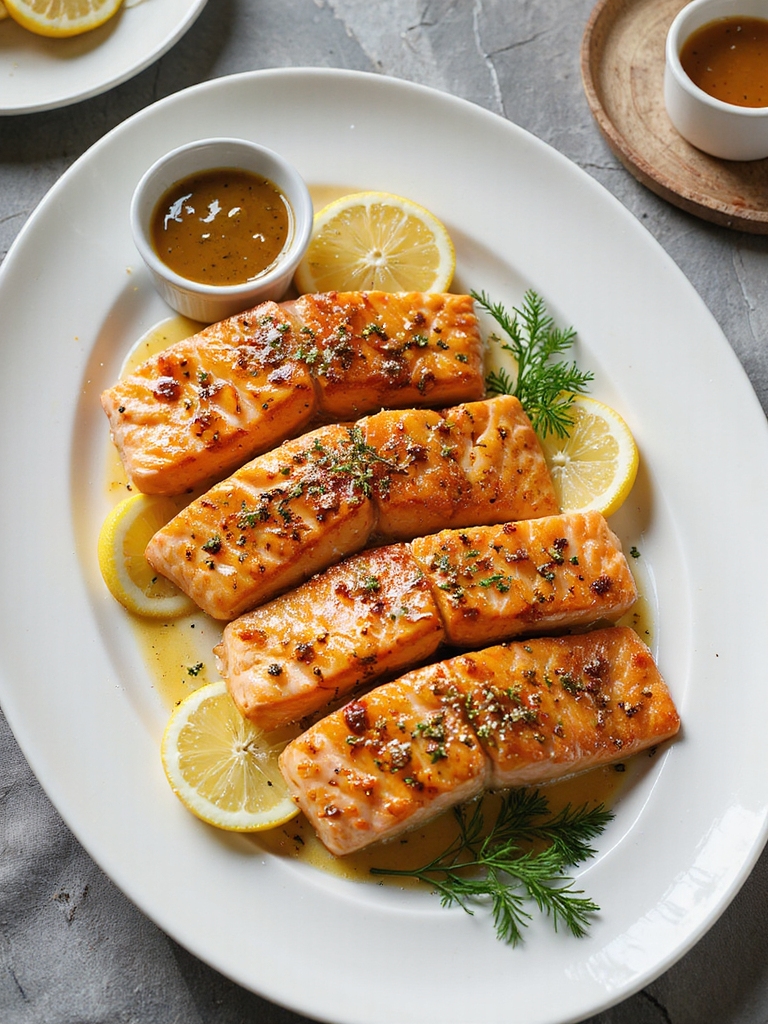
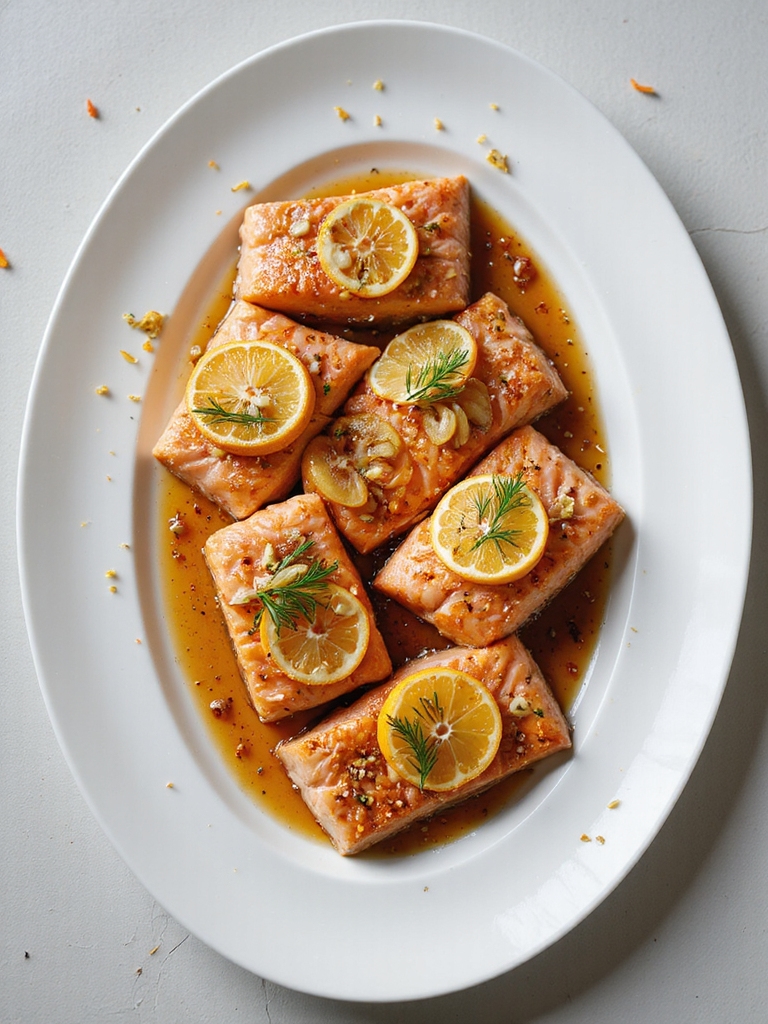
Honey mustard pairs so well with salmon because the sweet honey balances the fish’s natural richness while the tangy mustard cuts through the fattiness, creating a glossy glaze that caramelizes at the edges and enhances the salmon’s umami without overpowering it.
- 4 salmon fillets (6 oz each), skin-on or off
- 3 tbsp Dijon mustard
- 2 tbsp whole-grain mustard
- 2 tbsp honey
- 1 tbsp olive oil
- 1 tbsp lemon juice
- 1 tsp minced garlic
- 1/2 tsp smoked paprika
- Salt and black pepper to taste
- Fresh dill or parsley for garnish
Preheat the oven to 425°F (220°C); whisk Dijon, whole-grain mustard, honey, olive oil, lemon juice, garlic, smoked paprika, salt and pepper until smooth and brush generously over salmon placed on a lined baking sheet, then bake skin-side down for 10–12 minutes for medium (internal temp 125–130°F/52–54°C) or until desired doneness, broil 1–2 minutes at the end to caramelize the glaze if desired; rest 3–5 minutes before serving and garnish with dill or parsley.
Let the salmon rest briefly after cooking so the juices redistribute and the glaze sets; adjust honey and mustard amounts to taste and avoid overcooking to keep the fish moist. Garlic butter also makes a delicious finishing touch when brushed over the salmon before serving, adding a rich, savory accent and butter flavor.
Choosing the Right Mustard and Sweetener
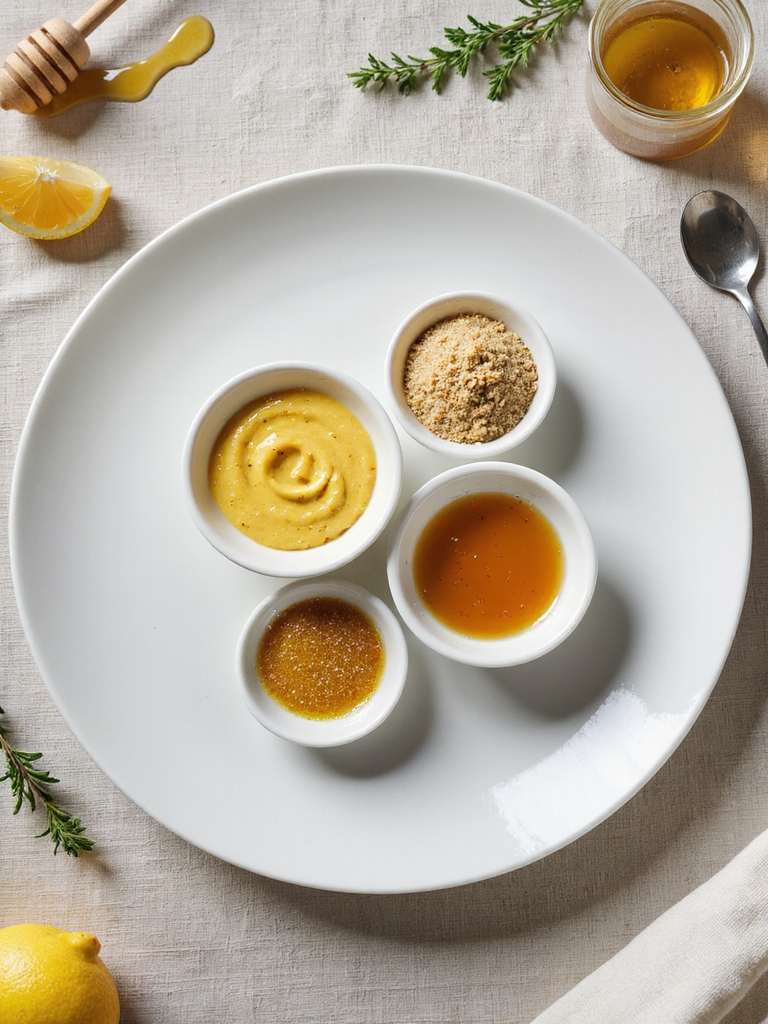
Choosing the Right Mustard and Sweetener for honey mustard salmon is about balancing heat, texture, and sweetness: use Dijon for silky tang, whole-grain for crunchy seeds and visual appeal, or a mild yellow mustard if you prefer less bite; for sweeteners, honey is classic for its floral caramelization, maple syrup adds depth, and agave or brown sugar can be used for a less pronounced honey flavor—adjust proportions to taste and consider a touch of apple cider vinegar or lemon for brightness.
- 4 salmon fillets (6 oz each)
- 2 tbsp Dijon mustard
- 1 tbsp whole-grain mustard
- 2 tbsp honey (or 1½ tbsp maple syrup)
- 1 tsp olive oil
- 1 tbsp lemon juice or apple cider vinegar
- 1 tsp minced garlic
- 1/4 tsp smoked paprika
- Salt and black pepper to taste
- Fresh herbs for garnish
Preheat oven to 425°F (220°C); whisk mustards, honey, oil, lemon juice, garlic, paprika, salt and pepper until smooth, place salmon skin-side down on a lined baking sheet, brush generously with the sauce, bake 10–12 minutes until internal temp reaches 125–130°F (52–54°C) for medium, then broil 1–2 minutes to caramelize the glaze if desired, rest 3–5 minutes before serving.
Tip: Taste the sauce before brushing—if it’s too sharp add more sweetener, if too sweet add a splash of vinegar or lemon, and avoid overcooking the salmon to keep it moist and glossy.
For added flavor and a nice finish, try glazing again midway through cooking to build up a glossy, caramelized surface with floral caramelization.
Classic Oven-Baked Honey Mustard Salmon
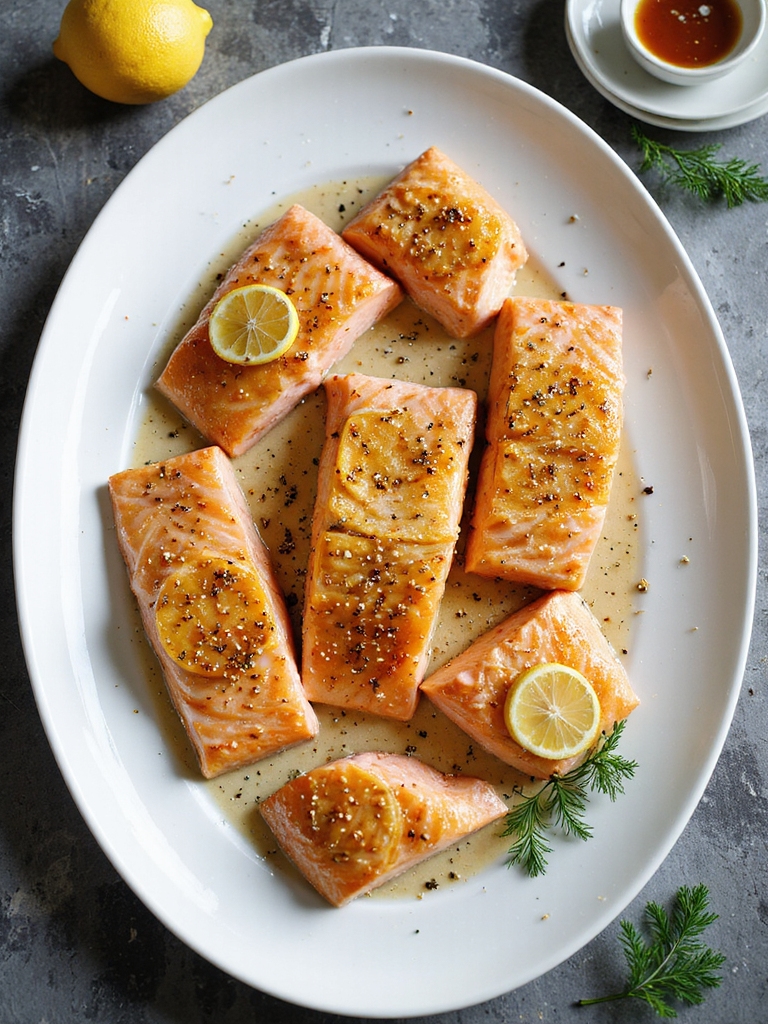
This classic oven-baked honey mustard salmon is an easy, flavorful weeknight dish that yields tender, moist fillets with a glossy, slightly caramelized glaze; whisk together Dijon and whole-grain mustards with honey (or maple), a splash of lemon or apple cider vinegar, olive oil, garlic, smoked paprika, salt and pepper, brush onto skin-side-down salmon fillets on a lined baking sheet, roast at high heat until just cooked through and finish briefly under the broiler if you like extra caramelization.
- 4 salmon fillets (6 oz each)
- 2 tbsp Dijon mustard
- 1 tbsp whole-grain mustard
- 2 tbsp honey (or 1½ tbsp maple syrup)
- 1 tsp olive oil
- 1 tbsp lemon juice or apple cider vinegar
- 1 tsp minced garlic
- 1/4 tsp smoked paprika
- Salt and black pepper to taste
- Fresh herbs for garnish
Preheat oven to 425°F (220°C); whisk mustards, honey, oil, lemon juice, garlic, paprika, salt and pepper until smooth, place salmon skin-side down on a lined baking sheet and brush a generous layer of sauce over each fillet, bake for 10–12 minutes until the thickest part reaches 125–130°F (52–54°C) for medium doneness then broil 1–2 minutes if you want a caramelized top, remove and rest 3–5 minutes before serving.
Tip: Taste the sauce before brushing—if too sharp add more sweetener, if too sweet add a splash of vinegar or lemon, and avoid overcooking the salmon to keep it moist and glossy.
For best results, follow oven-baked salmon temperature guidelines and check doneness with an instant-read thermometer to ensure proper internal temperature.
Sheet-Pan Honey Mustard Salmon With Veggies
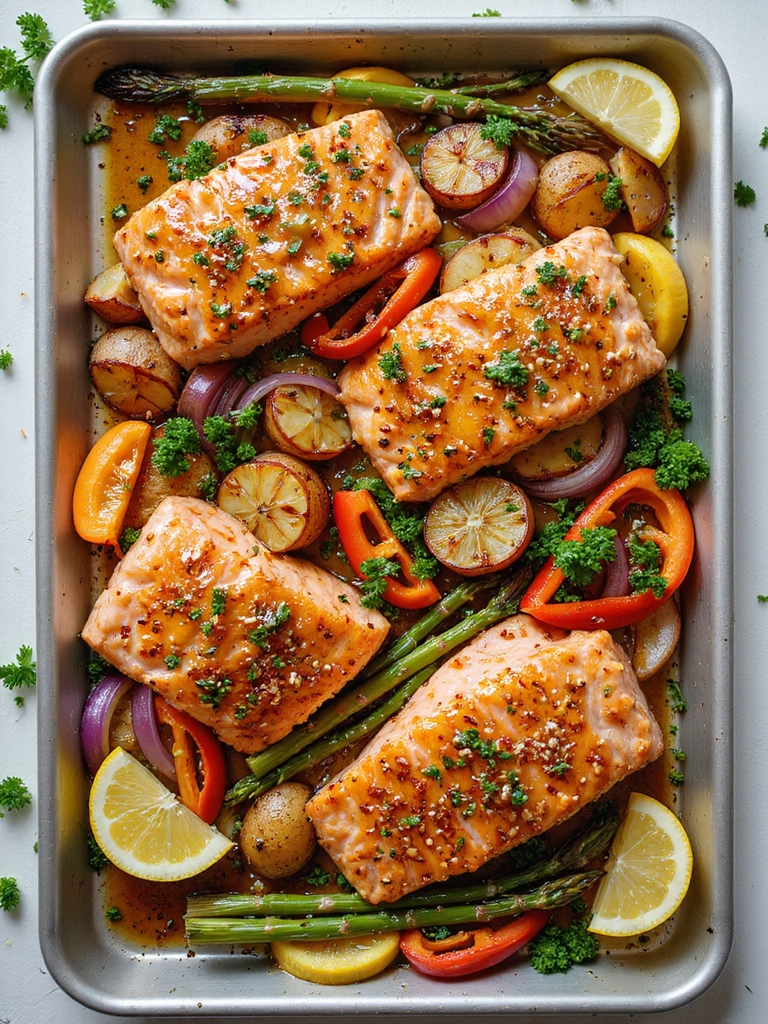
This sheet-pan honey mustard salmon with veggies is an easy all-in-one meal that roasts salmon fillets atop a colorful mix of tender-crisp vegetables coated in the same tangy-sweet mustard glaze, giving you minimal cleanup and balanced flavors; assemble everything on a single sheet, roast at high heat so vegetables caramelize and the salmon stays moist, and finish under the broiler briefly if you like extra color.
- 4 salmon fillets (6 oz each)
- 2 tbsp Dijon mustard
- 1 tbsp whole-grain mustard
- 2 tbsp honey (or 1½ tbsp maple syrup)
- 1 tbsp olive oil
- 1 tbsp lemon juice or apple cider vinegar
- 1 tsp minced garlic
- 1/2 tsp smoked paprika
- Salt and black pepper to taste
- 1 lb baby potatoes, halved
- 1 red bell pepper, sliced
- 1 small red onion, cut into wedges
- 8 oz asparagus, trimmed
- 1–2 tbsp olive oil for vegetables
- Fresh parsley or dill for garnish
Preheat oven to 425°F (220°C) and toss potatoes with 1 tbsp olive oil, salt, pepper and a little smoked paprika and roast on a lined sheet pan for 10 minutes;
whisk mustards, honey, 1 tbsp olive oil, lemon juice, garlic, salt and pepper until smooth and toss bell pepper and onion with a drizzle of oil and spread with potatoes, roast 8 minutes more then push vegetables to the sides and place salmon skin-side down in the center, brush salmon generously with half the sauce, scatter asparagus around, roast another 8–10 minutes until salmon reaches 125–130°F (52–54°C) and vegetables are tender,
then brush salmon with remaining sauce and broil 1–2 minutes for caramelization if desired before resting 3–5 minutes.
Tip: Par-cook denser vegetables like potatoes first and use high heat so vegetables caramelize while the salmon cooks; taste the sauce and adjust sweetness or acidity, and avoid overcooking the salmon for moist results.
You can adapt vegetables and seasonings easily to suit your taste or what’s in season, and using a single sheet pan makes cleanup quick.
Stovetop Seared Honey Mustard Salmon
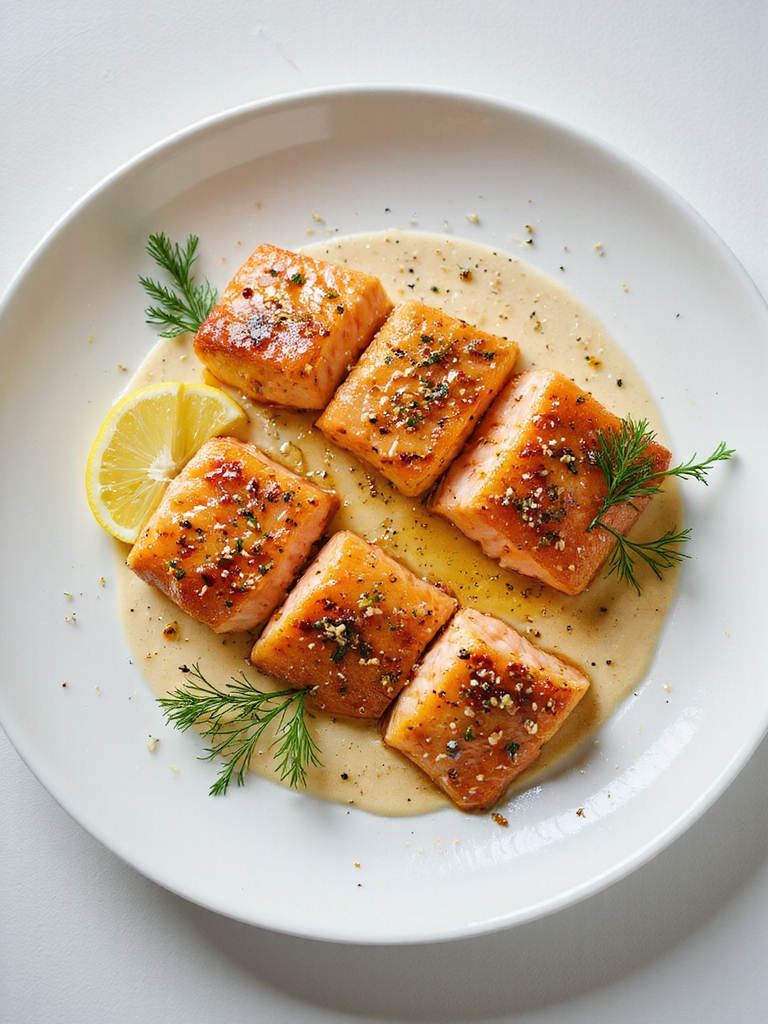
Stovetop seared honey mustard salmon is a quick, flavorful weeknight option that gives a crisp, caramelized exterior and a tender, slightly pink center; a tangy-sweet honey mustard glaze both seasons and finishes the fillets while a hot skillet and brief basting build a glossy coating.
- 4 salmon fillets (6 oz each), skin on or off per preference
- 2 tbsp Dijon mustard
- 1 tbsp whole-grain mustard
- 2 tbsp honey (or 1½ tbsp maple syrup)
- 1 tbsp olive oil plus 1 tbsp butter or additional oil for searing
- 1 tbsp lemon juice or apple cider vinegar
- 1 tsp minced garlic
- 1/4 tsp smoked paprika
- Salt and black pepper to taste
- Optional: chopped parsley or dill for garnish
Pat salmon dry and season with salt, pepper, and smoked paprika; whisk mustards, honey, lemon juice, garlic and 1 tbsp olive oil until smooth and keep 1–2 tbsp reserved for finishing.
Heat a large nonstick or cast-iron skillet over medium-high heat, add oil, and when shimmering place salmon skin-side up (or presentation-side down) and sear 3–4 minutes without moving until a golden crust forms, flip and immediately spoon or brush half the sauce over the tops.
Reduce heat to medium and cook another 2–4 minutes for medium (internal 125–130°F/52–54°C) while basting frequently with skillet juices and remaining sauce; remove from pan, rest 2–3 minutes, spoon any pan glaze over the fillets and garnish.
Tip: Use a very hot pan and dry fish for the best crust, avoid overcooking by relying on time and an instant-read thermometer, and if using skin-on fillets sear skin-side down longer to crisp it and finish flesh-side briefly to desired doneness.
Searing salmon in a cast-iron skillet helps develop a superior crust and even cooking, especially when starting with a hot, well-seasoned pan.
Honey Mustard Glazed Salmon Bowls
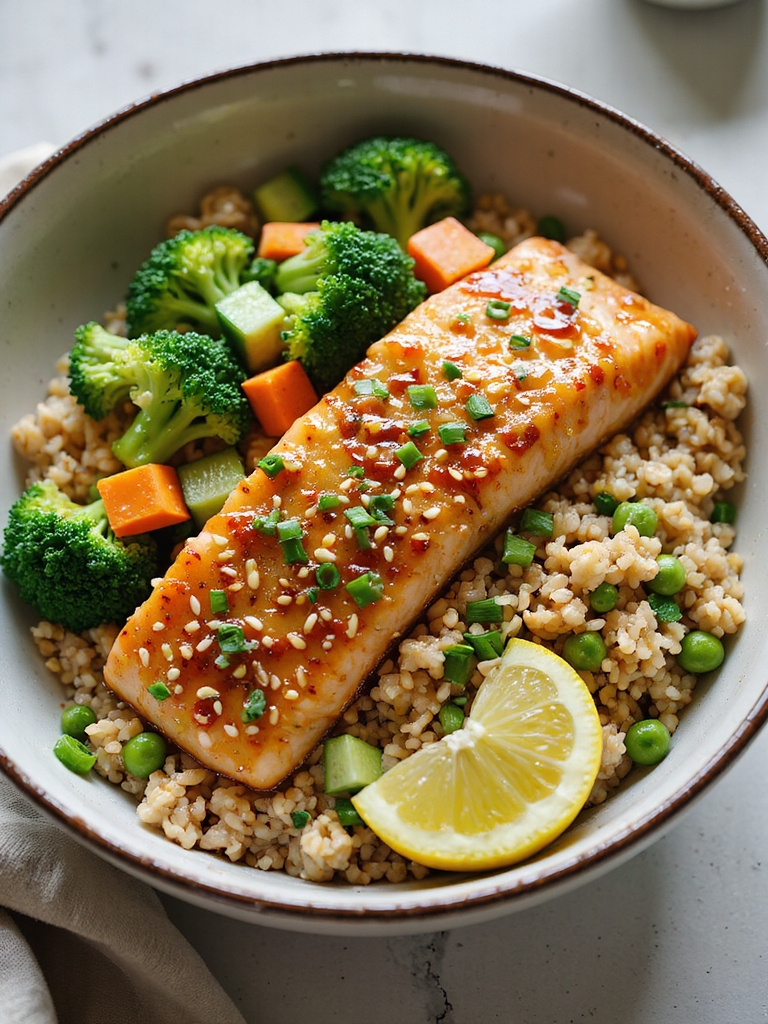
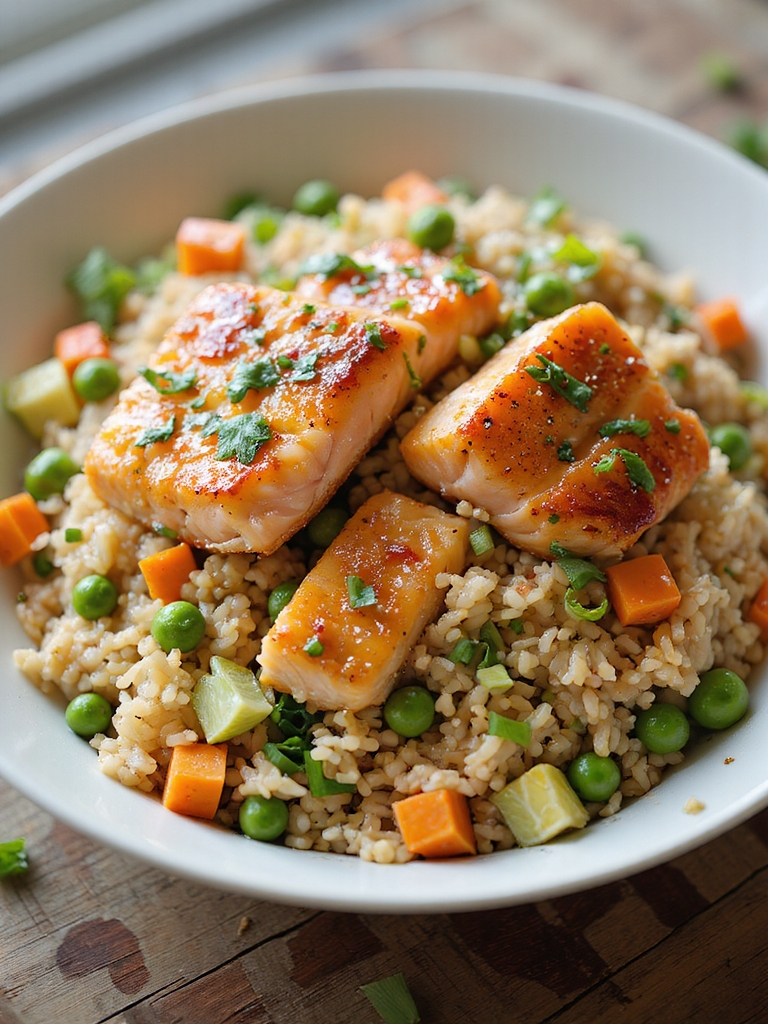
Honey mustard glazed salmon bowls are a balanced, quick-to-assemble meal that layers a tender, tangy-sweet glazed salmon over a bed of grain or greens with crunchy vegetables and a bright dressing; the glaze caramelizes slightly on the fish for flavor while the bowl components provide texture and freshness so you can customize for meal prep or a weeknight dinner.
- 4 salmon fillets (5–6 oz each)
- 2 tbsp Dijon mustard
- 1 tbsp whole-grain mustard
- 2 tbsp honey (or maple syrup)
- 1 tbsp rice vinegar or lemon juice
- 1 tbsp soy sauce or tamari
- 1 clove garlic, minced
- 1 tbsp olive oil
- 2 cups cooked brown rice, quinoa, or mixed greens
- 1 cup shredded carrots
- 1 cup cucumber, diced
- 1 cup steamed broccoli florets or edamame
- 2 tbsp chopped scallions
- 1 tbsp sesame seeds (optional)
- Salt and black pepper to taste
Preheat oven to 425°F (220°C) and whisk Dijon, whole-grain mustard, honey, rice vinegar, soy sauce, garlic and olive oil in a small bowl; season salmon with salt and pepper, place on a parchment-lined baking sheet, brush half the glaze over fillets and roast 8–12 minutes depending on thickness until internal temp reaches 125–130°F (52–54°C) for medium, then broil 1–2 minutes to caramelize the top while watching closely and brush with remaining glaze once out of the oven; assemble bowls with rice or greens, arrange vegetables, top each with a glazed salmon fillet, sprinkle scallions and sesame seeds and finish with any extra dressing or lemon wedges.
Tip: Pat salmon dry before glazing to help caramelize, use an instant-read thermometer to avoid overcooking, and keep extra glaze warm to spoon over bowls just before serving.
Salmon wraps can be a convenient alternative when you want the same flavors handheld, especially using leftover glazed salmon and warm tortillas.
Honey Mustard Salmon With Crispy Skin
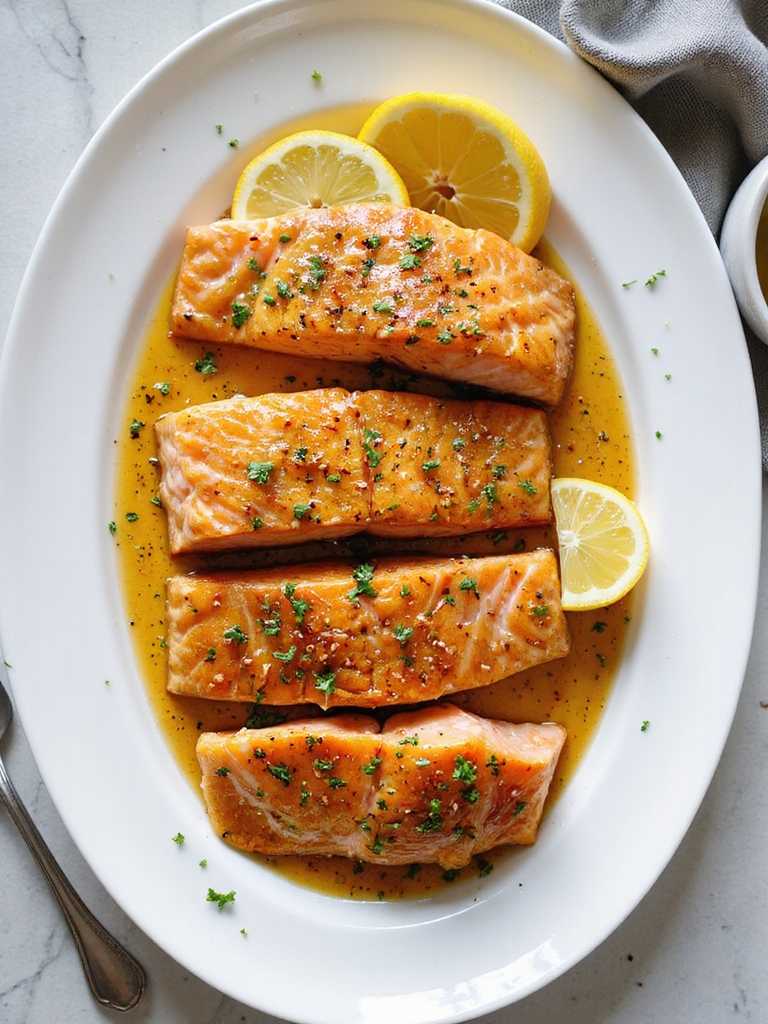
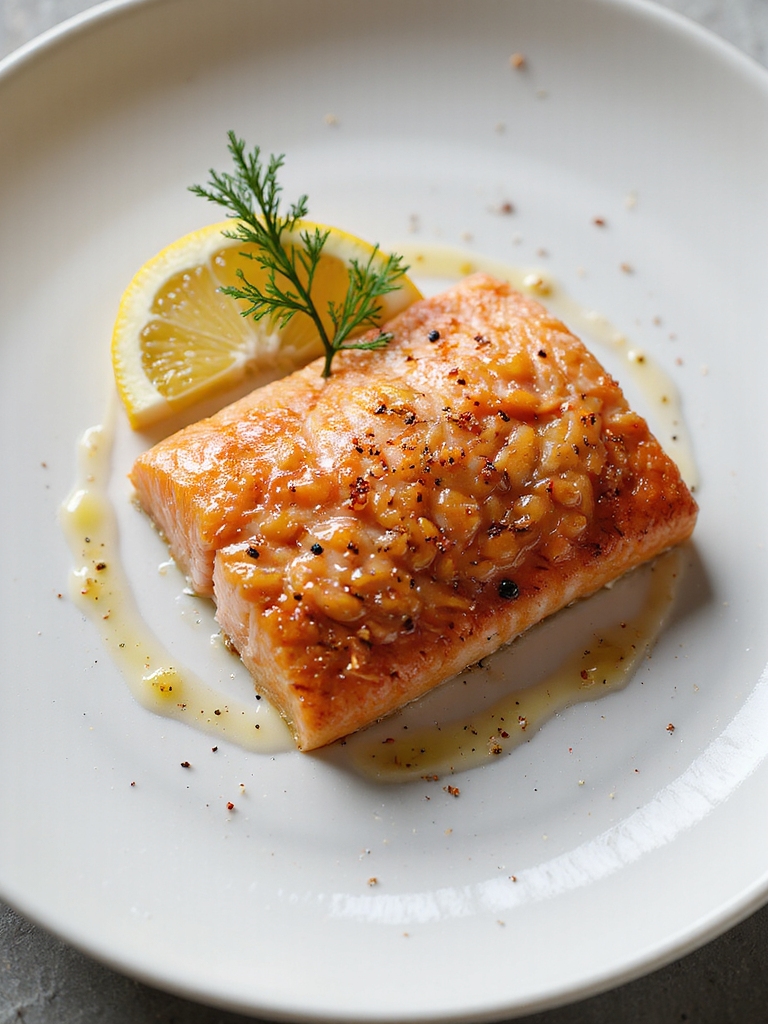
This honey mustard salmon with crispy skin delivers a contrast of textures — a golden, crackling skin and a glossy, tangy-sweet mustard glaze — achieved by patting the fillets dry, high-heat searing skin-side down, and finishing briefly in a hot oven; it’s quick, elegant, and works for weeknight dinners or special occasions.
- 4 skin-on salmon fillets (5–6 oz each)
- 2 tbsp Dijon mustard
- 1 tbsp whole-grain mustard
- 1 tbsp honey (or sugar-free syrup for low-sugar)
- 1 tsp lemon zest
- 1 tbsp lemon juice
- 1 tsp soy sauce or tamari
- 1 clove garlic, minced
- 1 tbsp olive oil + 1 tsp neutral oil (for searing)
- Salt and freshly ground black pepper
- 1 tbsp butter (optional, for basting)
- 1 tbsp chopped parsley or chives for garnish
Heat oven to 400°F (200°C).
Pat salmon skin very dry and season both sides with salt and pepper; whisk Dijon, whole-grain mustard, honey, lemon zest, lemon juice, soy sauce and garlic.
Place a heavy ovenproof skillet over medium-high heat with neutral oil until shimmering, lay fillets skin-side down and press gently to keep contact, sear 3–4 minutes until skin is deeply golden and releases, spoon off excess fat, flip briefly, brush glaze over flesh, transfer skillet to oven and roast 4–6 minutes until internal temp reaches 125–130°F (52–54°C).
Remove, brush with remaining glaze, rest 2–3 minutes and garnish with herbs.
Tip: Make sure skin is patted very dry and the pan is hot to get a crisp skin; finish in the oven to avoid overcooking and rest briefly so the glaze sets.
Searing the skin first and finishing in the oven helps produce the ideal texture and doneness while preserving perfectly baked salmon in the center.
Low-Sugar and Keto-Friendly Honey Mustard Options
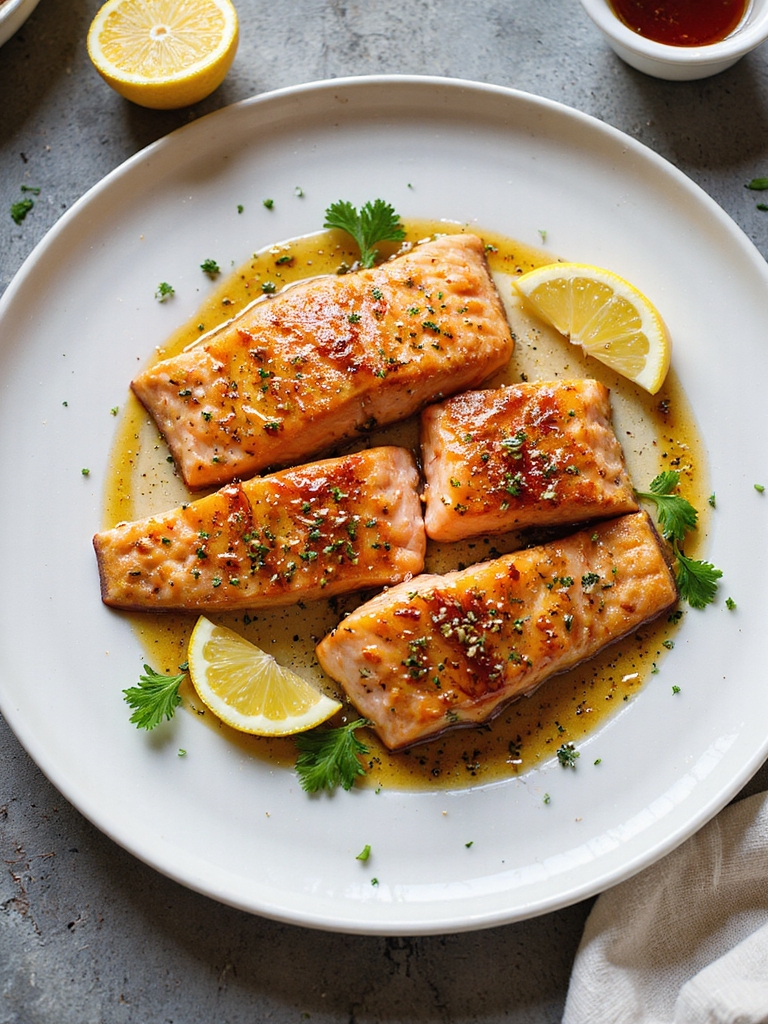
For a low-sugar, keto-friendly take on honey mustard salmon, swap honey for a small amount of erythritol-based syrup or monk fruit blend plus a splash of apple cider vinegar to mimic honey’s tang and viscosity; keep Dijon and whole-grain mustards for flavor, reduce soy for sodium-conscious eaters, and use olive oil and butter sparingly to keep it rich without carbs—this yields a glossy, tangy glaze with minimal carbs that still crisps beautifully when seared and finished in the oven.
- 4 skin-on salmon fillets (5–6 oz each)
- 1 tbsp Dijon mustard
- 1 tbsp whole-grain mustard
- 1½ tsp liquid erythritol or keto-friendly syrup (or 1 tsp powdered erythritol mixed with 1 tsp water)
- 1 tsp apple cider vinegar
- 1 tsp lemon juice
- 1 tsp lemon zest
- 1 clove garlic, minced
- 1 tsp soy sauce or tamari (optional)
- 1 tbsp olive oil + 1 tsp neutral oil (for searing)
- Salt and freshly ground black pepper
- 1 tbsp butter (optional, for basting)
- 1 tbsp chopped parsley or chives for garnish
Pat salmon very dry and season both sides with salt and pepper; whisk Dijon, whole-grain mustard, erythritol syrup, apple cider vinegar, lemon juice and zest, garlic and soy; heat a heavy ovenproof skillet over medium-high with neutral oil until shimmering, sear fillets skin-side down pressing gently 3–4 minutes until deeply golden and release, spoon off excess fat, flip briefly, brush glaze over flesh, transfer skillet to a 400°F (200°C) oven 4–6 minutes until 125–130°F (52–54°C) and glossy, remove, baste with butter and remaining glaze, rest 2–3 minutes and garnish with herbs.
Tip: Use very dry skin and a properly preheated pan for crisping, measure keto sweetener carefully to taste, and rest the fish briefly so the low-sugar glaze sets without burning. A quick pan sear before finishing in the oven helps lock in moisture and achieves crispy skin.
Tips for Perfect Caramelization and Timing
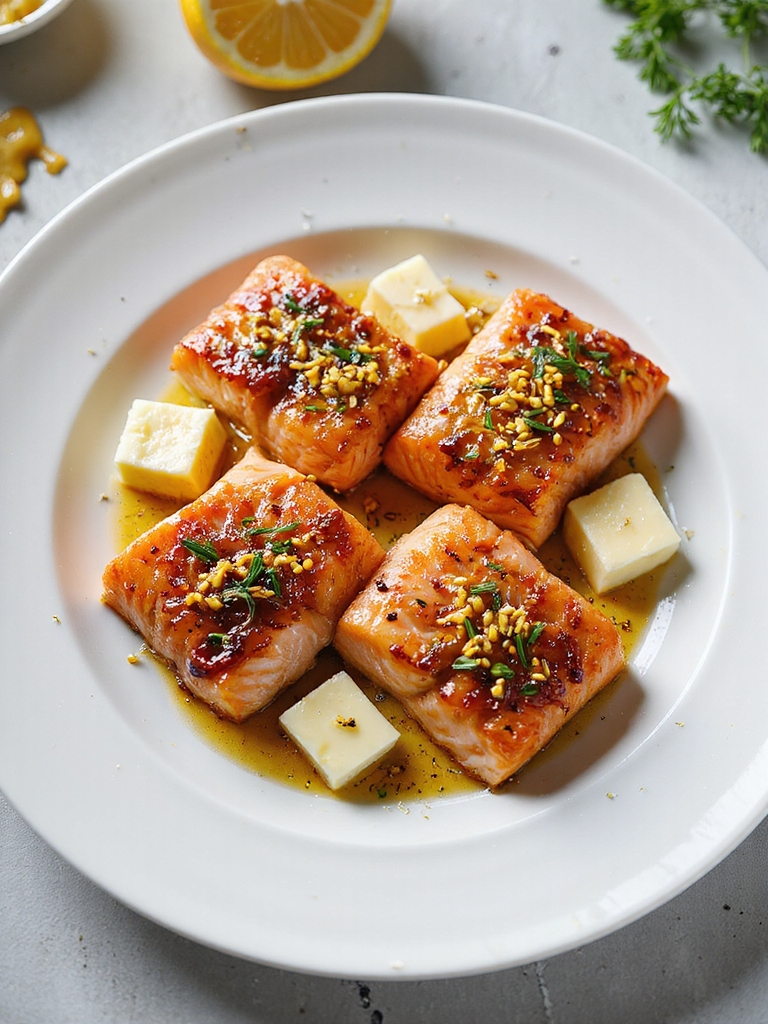
Achieving perfect caramelization on low-sugar, keto-friendly honey mustard salmon depends on dry skin, high heat, and precise timing so the glaze becomes glossy without burning; this recipe emphasizes searing for a deeply browned skin, a brief oven finish to reach just-rare to medium-rare doneness, and careful application of the reduced-sugar glaze so it caramelizes into a shiny coating while keeping the fish moist.
- 4 skin-on salmon fillets (5–6 oz each)
- 1 tbsp Dijon mustard
- 1 tbsp whole-grain mustard
- 1½ tsp liquid erythritol or keto-friendly syrup
- 1 tsp apple cider vinegar
- 1 tsp lemon juice
- 1 tsp lemon zest
- 1 clove garlic, minced
- 1 tsp soy sauce or tamari (optional)
- 1 tbsp olive oil + 1 tsp neutral oil (for searing)
- Salt and freshly ground black pepper
- 1 tbsp butter (optional, for basting)
- 1 tbsp chopped parsley or chives for garnish
Pat salmon very dry and season both sides with salt and pepper; whisk Dijon, whole-grain mustard, erythritol syrup, apple cider vinegar, lemon juice and zest, garlic and soy to form a glaze; heat a heavy ovenproof skillet over medium-high with neutral oil until shimmering, place fillets skin-side down and press gently for 3–4 minutes until deeply golden and releasing from the pan, spoon off excess fat, flip briefly, brush glaze over flesh, transfer skillet to a 400°F (200°C) oven 4–6 minutes until internal temp reaches 125–130°F (52–54°C) and glaze is glossy, remove, baste with butter and remaining glaze, rest 2–3 minutes and garnish with herbs.
Use a very hot, well-seasoned or stainless-steel pan and completely dry skin for the best sear; apply the glaze after the initial sear and finish briefly in a hot oven to caramelize without burning, and always rest the fish so the glaze sets and the juices redistribute. The same technique adapts well to cooking salmon in an air fryer for a similarly crisp result with less oil air fryer.
Serving Suggestions and Side Pairings
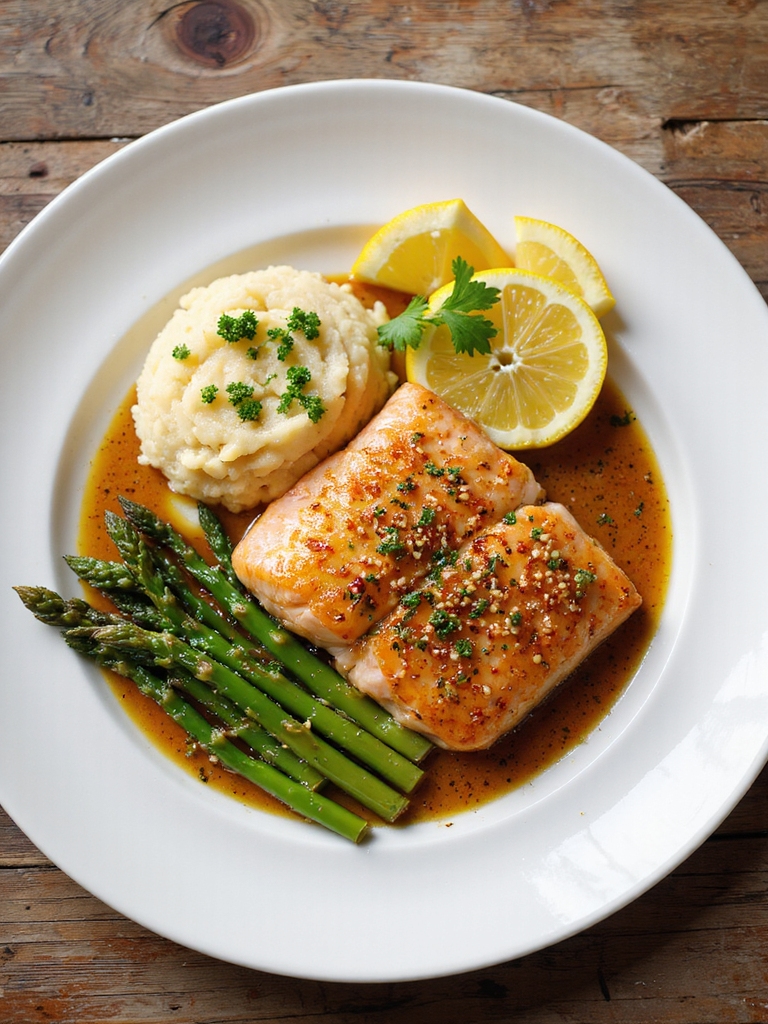
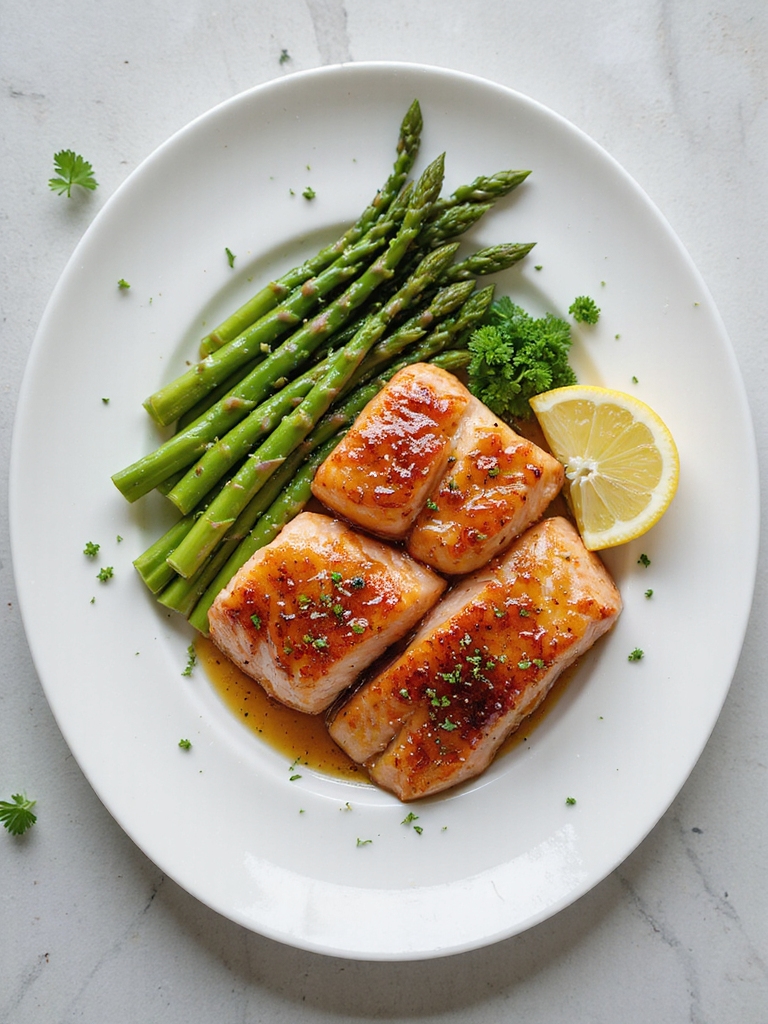
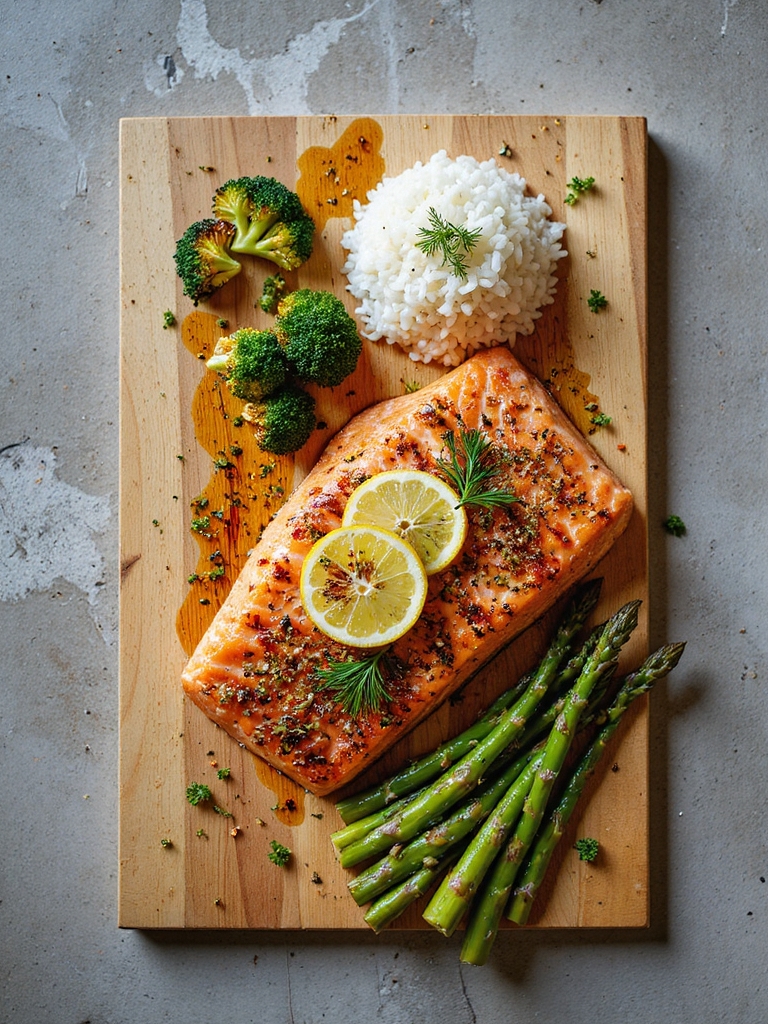
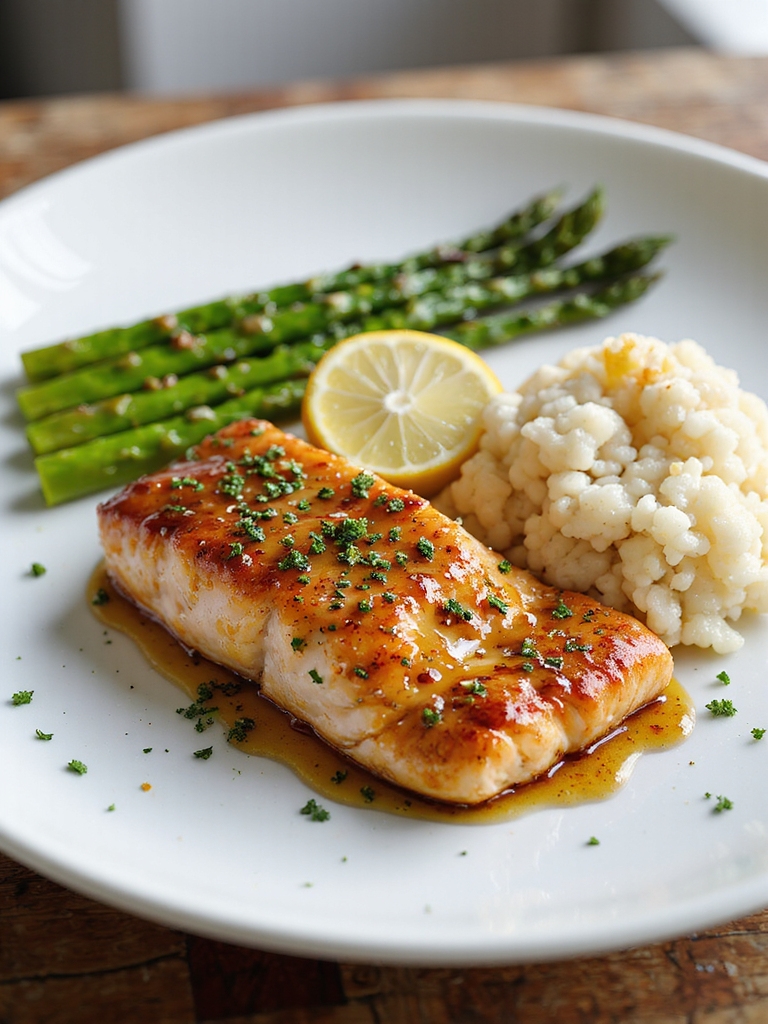
Serve the honey mustard salmon with bright, easy sides that complement its tangy glaze and crispy skin — think a crisp green salad with lemon vinaigrette, garlicky sautéed asparagus, roasted cauliflower, cauliflower rice, or a buttery mashed rutabaga for a low-carb option; finish plates with lemon wedges, extra chopped herbs, and a drizzle of reserved glaze for a restaurant-quality presentation.
- 4 skin-on salmon fillets (5–6 oz each)
- 1 tbsp Dijon mustard
- 1 tbsp whole-grain mustard
- 1½ tsp liquid erythritol or keto-friendly syrup
- 1 tsp apple cider vinegar
- 1 tsp lemon juice
- 1 tsp lemon zest
- 1 clove garlic, minced
- 1 tsp soy sauce or tamari (optional)
- 1 tbsp olive oil + 1 tsp neutral oil (for searing)
- Salt and freshly ground black pepper
- 1 tbsp butter (optional, for basting)
- 1 tbsp chopped parsley or chives for garnish
- Lemon wedges, for serving
- 1 bunch asparagus, trimmed (for sautéing)
- 1 head cauliflower or 1 bag cauliflower rice (for roasting or ricing)
Pat salmon very dry and season both sides with salt and pepper; whisk Dijon, whole-grain mustard, erythritol syrup, apple cider vinegar, lemon juice and zest, garlic and soy to form a glaze; heat a heavy ovenproof skillet over medium-high with neutral oil until shimmering, place fillets skin-side down and press gently for 3–4 minutes until deeply golden and releasing from the pan, spoon off excess fat, flip briefly, brush glaze over flesh, transfer skillet to a 400°F (200°C) oven 4–6 minutes until internal temp reaches 125–130°F (52–54°C) and glaze is glossy, remove, baste with butter and remaining glaze, rest 2–3 minutes and garnish with herbs.
For asparagus, sauté in olive oil with garlic 3–5 minutes until tender-crisp and season with lemon.
For roasted cauliflower, toss florets with oil, salt, pepper and roast at 425°F (220°C) 20–25 minutes until browned or pulse cauliflower into rice and quickly stir-fry with butter and herbs.
Tip: Use a thermometer to hit 125–130°F for moist salmon, wipe skin completely dry and use a very hot pan for a crisp sear, and reserve some glaze to finish the plated fillets so the sauce looks glossy without burning in the pan. A well-seared skin creates crispy texture that contrasts beautifully with the tender flesh.