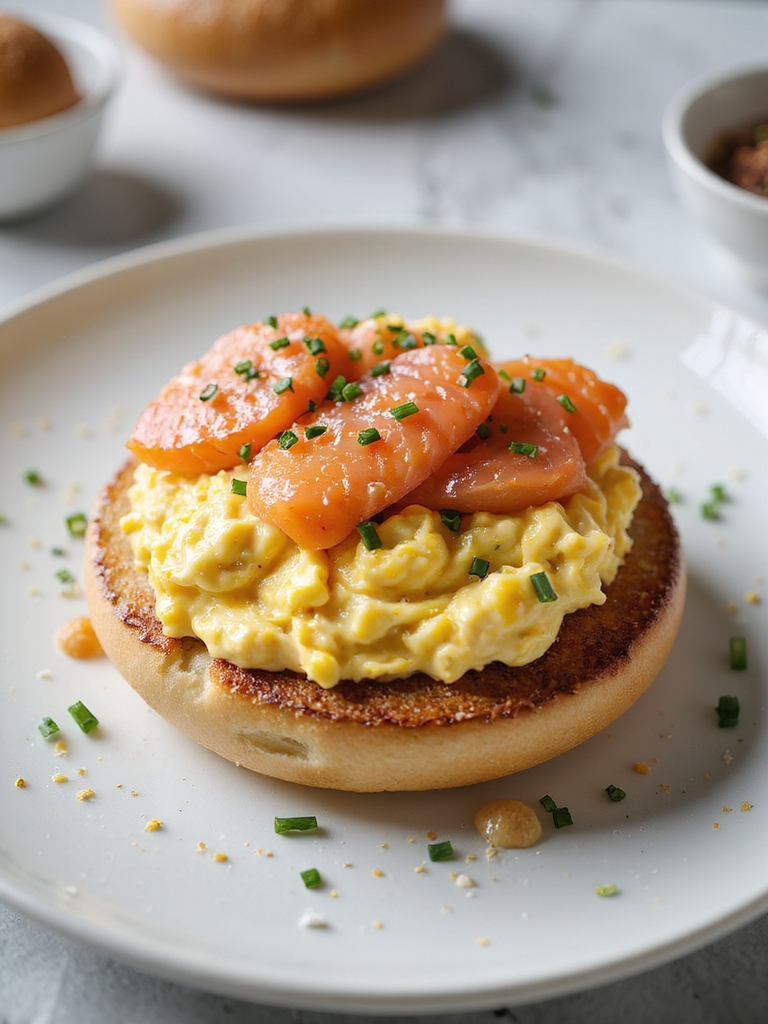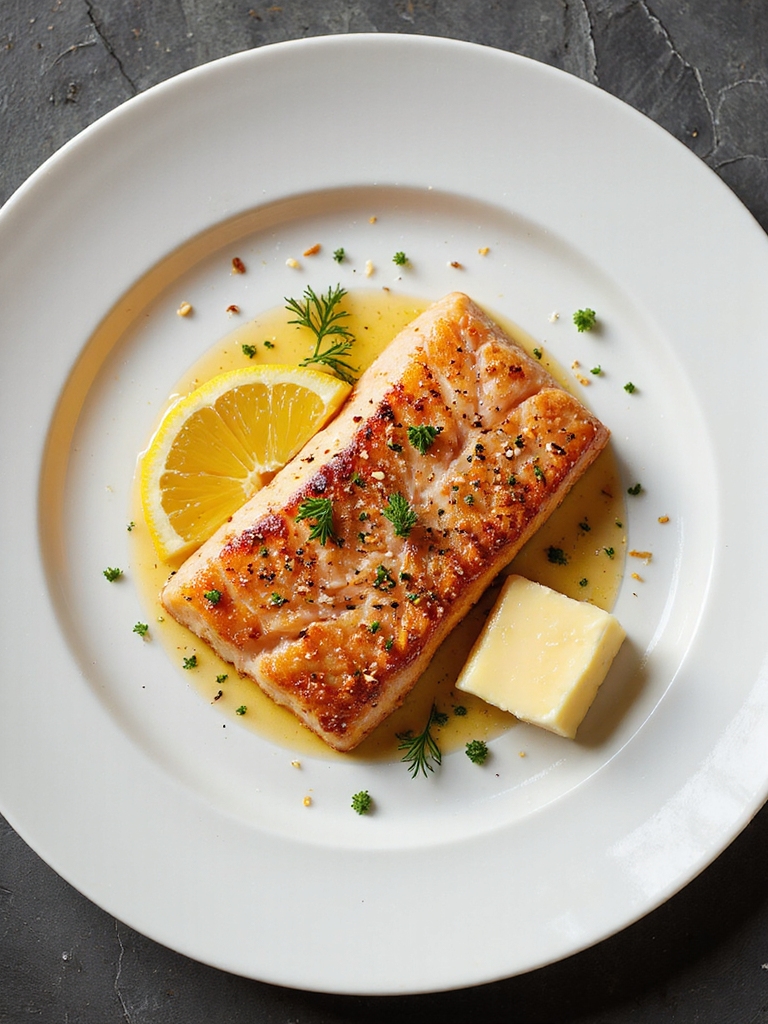
I love how oven-baked salmon feels like cheating—so simple, so reliably juicy—yet still somehow impressive. Let me walk you through the easy bits: picking the right fillet, a few no-fail seasonings, and the exact oven trick that keeps it tender every time.
Stick with me and you’ll have a weeknight hero that looks restaurant-ready, plus a couple of clever twists you’ll want to try next.
Why Oven-Baked Salmon Is the Easiest Way to Cook Fish
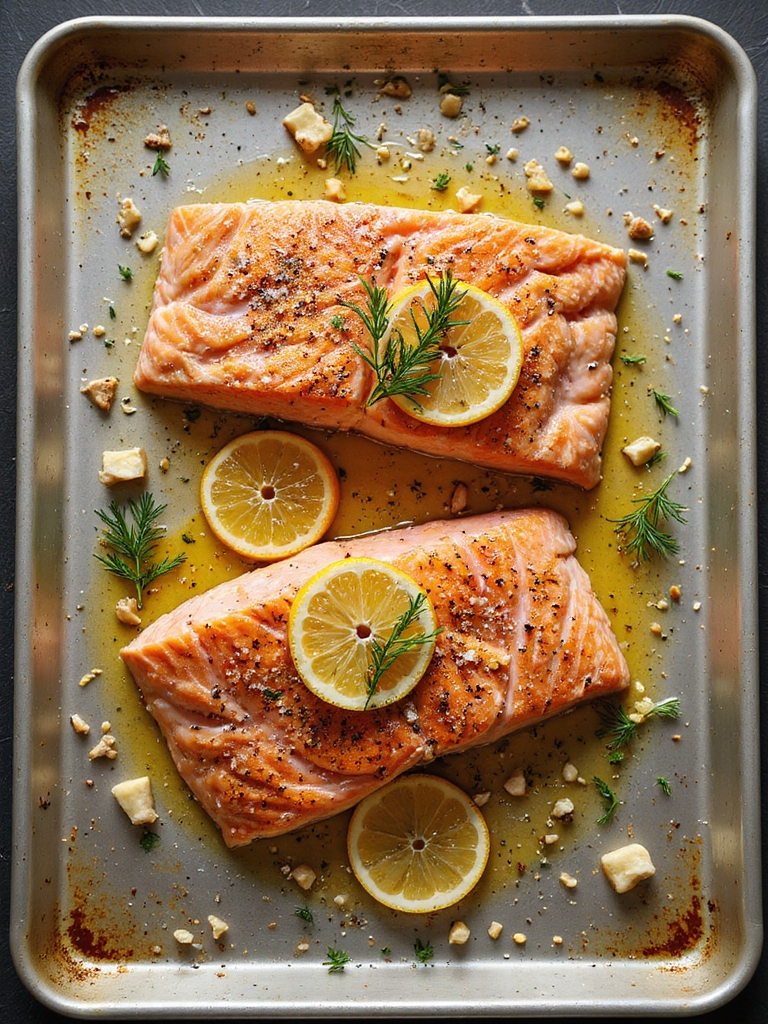
Oven-baked salmon is the easiest way to cook fish because it requires minimal hands-on time, yields reliable, evenly cooked fillets, and tolerates a range of seasonings and preparations while staying moist and flaky; simply season, pop it in a hot oven, and let gentle, consistent heat do the work while you prepare sides or relax.
- 1 lb salmon fillet (skin on or off)
- 1 tbsp olive oil or melted butter
- 1 tsp kosher salt
- 1/2 tsp freshly ground black pepper
- 1 lemon, sliced or juiced
- 1–2 cloves garlic, minced (optional)
- Fresh herbs (dill, parsley, or thyme) or 1 tsp dried herbs (optional)
- Lemon wedges for serving
Preheat oven to 400°F (200°C); place salmon on a foil- or parchment-lined baking sheet, brush with oil or butter, season with salt, pepper, garlic and herbs, arrange lemon slices on top or squeeze juice over, bake for 10–14 minutes depending on thickness or until internal temp reaches 125–130°F (51–54°C) for medium-rare to medium, then rest 3–5 minutes before serving.
Tip: Use a rimmed baking sheet and parchment or foil for easy cleanup, and avoid overcooking by checking thickness (about 10 minutes per inch) and removing from oven when salmon flakes easily but is still slightly translucent in the center.
Baking is a forgiving method that helps preserve healthy omega-3 fats when cooked at moderate temperatures, which is why many cooks prefer gentle oven heat for salmon.
Choosing the Best Salmon: Types, Freshness, and Portions
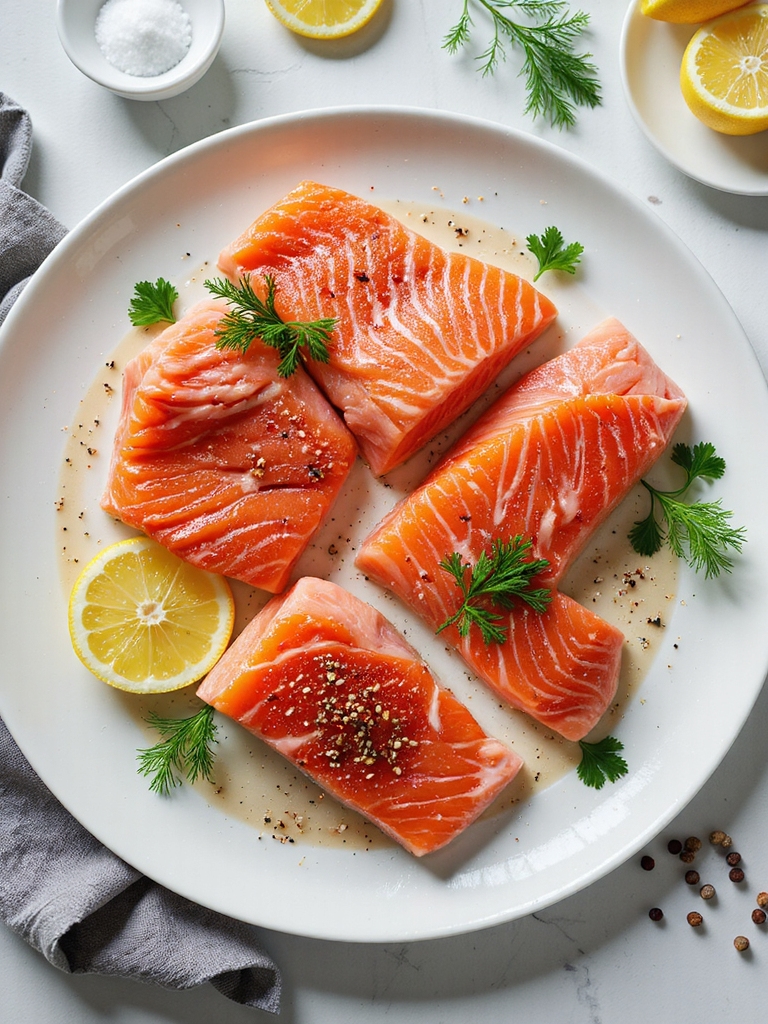
Choosing the best salmon starts with picking the right type (wild-caught Pacific varieties like sockeye or coho for stronger flavor, or farmed Atlantic for milder, fattier flesh), evaluating freshness by looking for bright firm flesh and a clean scent, and selecting portions based on appetite—plan 6–8 oz per person for fillets and consider skin-on for easier cooking and moisture retention.
- 1 lb salmon fillet (skin on or off)
- 1 tbsp olive oil or melted butter
- 1 tsp kosher salt
- 1/2 tsp freshly ground black pepper
- 1 lemon, sliced or juiced
- 1–2 cloves garlic, minced (optional)
- Fresh herbs (dill, parsley, or thyme) or 1 tsp dried herbs (optional)
- Lemon wedges for serving
Preheat oven to 400°F (200°C); choose salmon that’s bright, firm, and smells clean—if using thicker wild fillets, reduce cooking time slightly and for skin-on pieces place skin-side down on parchment-lined rimmed baking sheet, brush with oil or butter, season with salt, pepper, garlic and herbs, top with lemon, bake 10–14 minutes until 125–130°F (51–54°C) for medium-rare to medium and rest 3–5 minutes before serving.
Tip: Purchase from reputable sources, refrigerate or ice immediately, portion 6–8 oz per person, keep skin on to protect flesh when baking, and use a thermometer to avoid overcooking. For best results, try baking on a preheated baking sheet to help achieve even cooking and a nicely seared exterior.
Essential Tools and Bakeware for Perfect Salmon
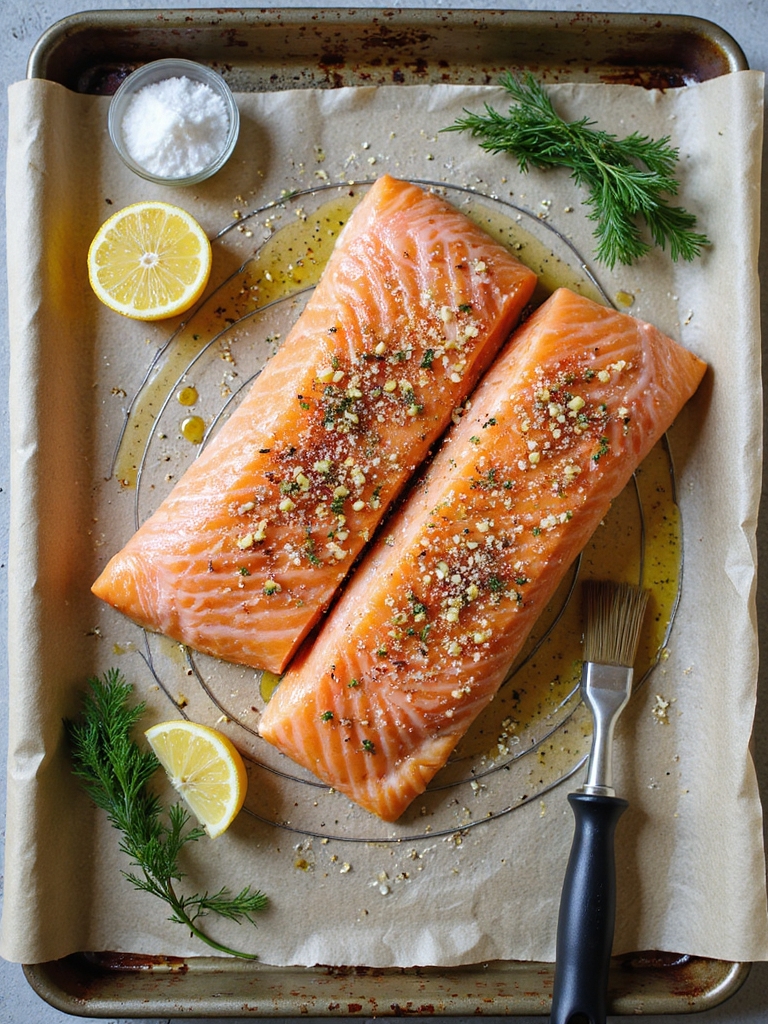
Perfectly baked salmon starts with the right tools: a rimmed baking sheet or shallow roasting pan, parchment paper or foil for easy cleanup, an oven-safe thermometer or instant-read probe, a silicone spatula or fish spatula for gentle transfer, a small bowl for mixing oil and seasonings, a basting brush, and a wire rack if you want air circulation under the fillet; having a rimmed baking sheet with sides helps catch juices and prevents spills while a probe thermometer guarantees precise doneness.
- 1 lb salmon fillet (skin-on recommended)
- 1 tbsp olive oil or melted butter
- 1 tsp kosher salt
- 1/2 tsp freshly ground black pepper
- 1 lemon, sliced or juiced
- 1–2 cloves garlic, minced (optional)
- Fresh herbs (dill, parsley, or thyme) or 1 tsp dried herbs (optional)
- Parchment paper or foil
- Rimmed baking sheet or shallow roasting pan
- Instant-read thermometer or oven-safe probe
Preheat oven to 400°F (200°C); line the rimmed baking sheet with parchment or foil and optionally set a wire rack in the sheet for air circulation then place the salmon skin-side down (if using skin), brush with oil or butter, season with salt, pepper, garlic and herbs, top with lemon slices or a squeeze of juice, insert an oven-safe probe into the thickest part if available, and bake 10–14 minutes until the probe reads 125–130°F (51–54°C) for medium-rare to medium or flakes easily with a fork; remove from oven and rest 3–5 minutes before serving.
Tip: Use an instant-read thermometer for best results, keep skin on to protect the flesh and prevent sticking, and choose a rimmed baking sheet large enough to avoid crowding the fillet while allowing hot air to circulate.
A probe thermometer offers the most reliable way to hit the ideal internal temperature for salmon, making it a smart purchase for consistent results probe thermometer.
Preparing Salmon: Skin-On vs. Skinless and Trimming Tips
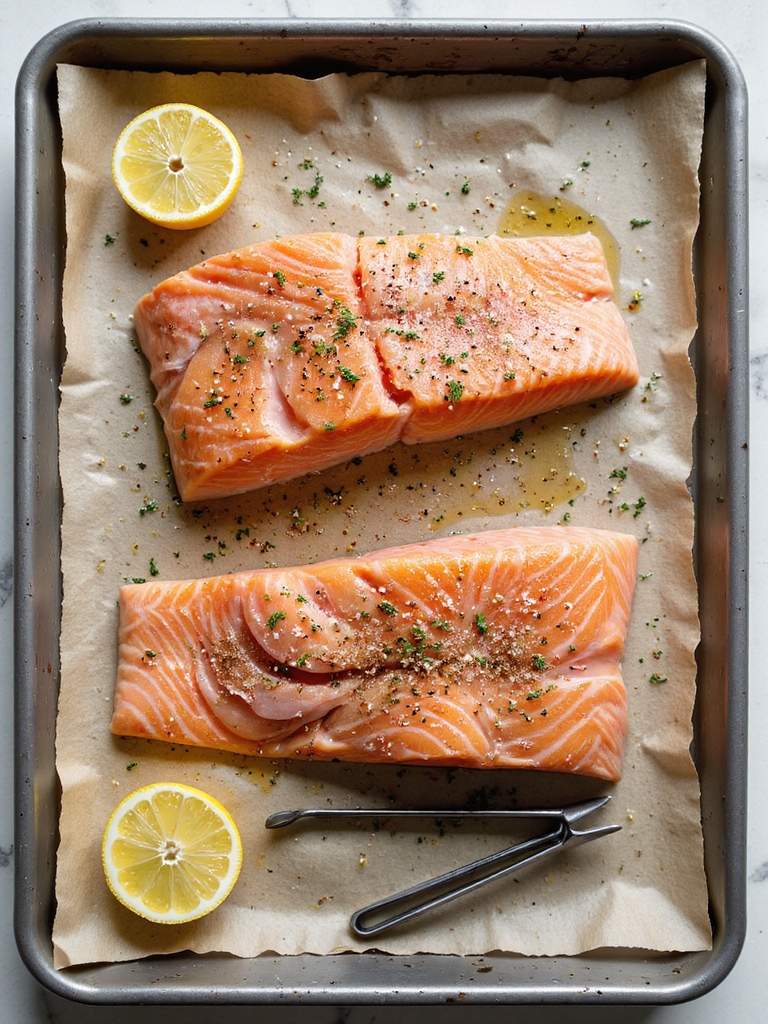
Choosing skin-on or skinless salmon and trimming it properly makes a big difference in texture and cooking; skin-on fillets protect the flesh, crisp nicely, and reduce sticking while skinless is convenient for certain plates — here’s a simple oven-baked method focusing on trimming and handling so you get even, attractive results.
- 1 lb salmon fillet (skin-on or skinless)
- 1 tbsp olive oil or melted butter
- 1 tsp kosher salt
- 1/2 tsp freshly ground black pepper
- 1 lemon, sliced or juiced
- 1–2 cloves garlic, minced (optional)
- Fresh herbs (dill, parsley, or thyme) or 1 tsp dried herbs (optional)
- Parchment paper or foil
- Rimmed baking sheet or shallow roasting pan
- Instant-read thermometer or oven-safe probe
Preheat oven to 400°F (200°C), pat the salmon dry with paper towels, remove any pin bones with fish tweezers by running your fingers along the flesh and plucking them out, trim ragged edges (especially at the tail) for even thickness, leave the skin on if you want protection and crisping, place skin-side down on a lined rimmed baking sheet, brush with oil or butter, season evenly with salt, pepper, garlic and herbs, top with lemon, insert an oven probe into the thickest part if using, and bake 10–14 minutes until 125–130°F (51–54°C) for medium-rare to medium or until it flakes easily; rest 3–5 minutes before serving.
Tip: Keep the skin on during cooking for protection and easiest handling, trim uneven thin tail pieces or fold them under for even doneness, and always use an instant-read thermometer for reliable results.
This method is perfect for a savory oven-baked salmon that works for every occasion.
Simple Seasoning Staples for Everyday Salmon
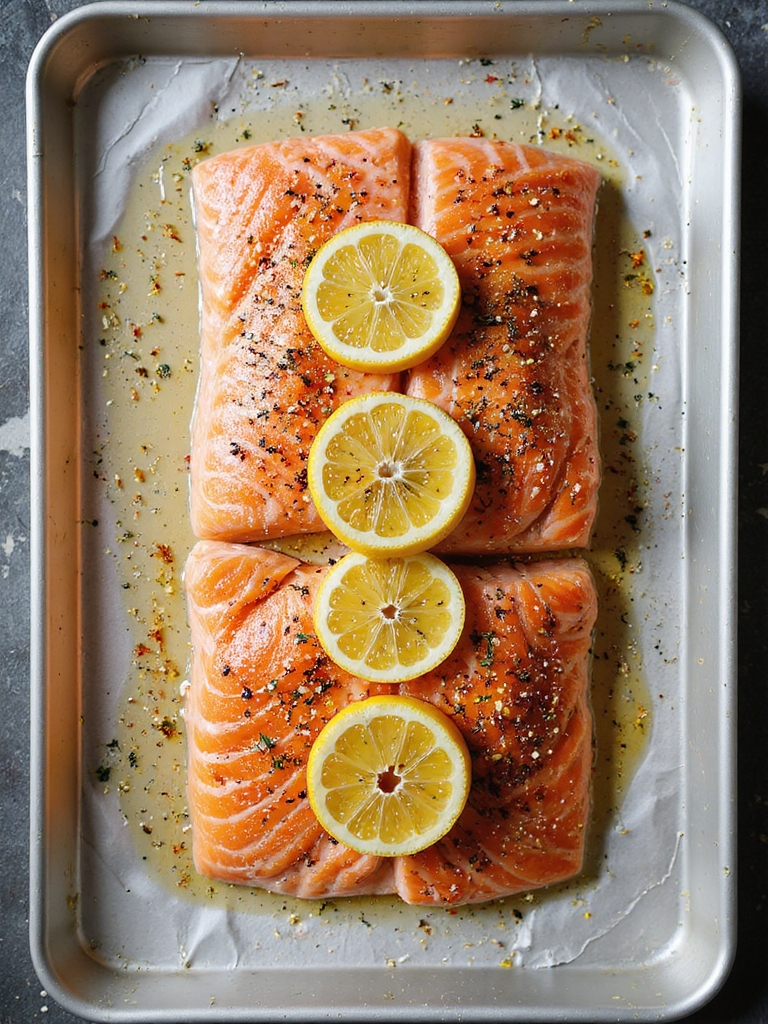
A quick, versatile seasoning mix makes oven-baked salmon effortless and delicious any night: this recipe uses a simple blend of salt, pepper, olive oil, garlic, and lemon with optional dried herbs or a pinch of smoked paprika to create bright, savory flavor that pairs with sides or salads and works on skin-on or skinless fillets.
- 1 lb salmon fillet
- 1 tbsp olive oil or melted butter
- 3/4 tsp kosher salt
- 1/2 tsp freshly ground black pepper
- 1/2 tsp garlic powder or 1 clove minced garlic
- 1/2 tsp dried dill or 1 tsp fresh chopped dill (optional)
- 1/4 tsp smoked paprika (optional)
- Zest and 1 tbsp lemon juice
- Lemon slices for topping (optional)
Preheat oven to 400°F (200°C), line a rimmed baking sheet with foil or parchment and pat salmon dry; rub oil over the fillet, sprinkle salt, pepper, garlic, herbs and paprika evenly, top with lemon zest and juice and optional lemon slices, place skin-side down and bake in the center of the oven 10–14 minutes until an instant-read thermometer reads 125–130°F (51–54°C) for medium-rare to medium or until it flakes easily, then rest 3–5 minutes before serving.
Tip: Keep the skin on for protection and easier handling, trim any thin tail pieces for even cooking, and always use an instant-read thermometer for reliable doneness.
Try finishing the baked fillet with a quick garlic butter glaze for extra richness and flavor.
Classic Lemon-Herb Oven-Baked Salmon Recipe
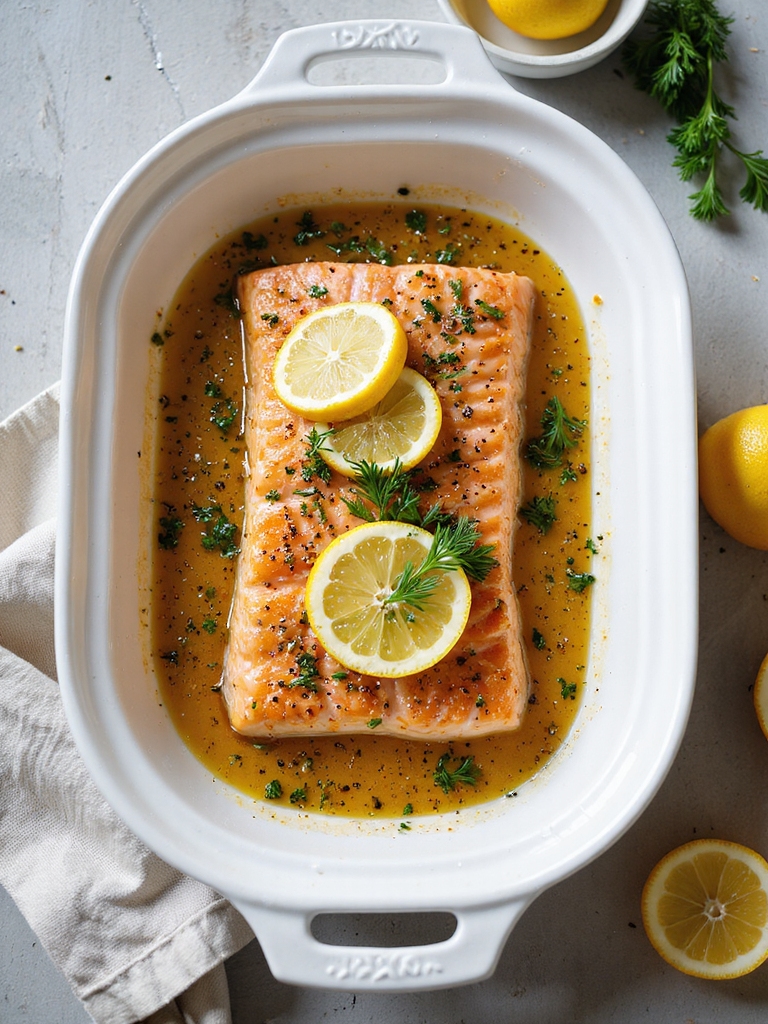
Bright, fragrant, and simple, this Classic Lemon-Herb Oven-Baked Salmon brings together lemon, fresh herbs, and olive oil to highlight the fish’s natural flavor; it’s quick enough for weeknights yet elegant for guests and works with skin-on or skinless fillets.
- 1 lb salmon fillet (skin-on or skinless)
- 1 1/2 tbsp olive oil
- 1 tsp kosher salt
- 1/2 tsp freshly ground black pepper
- 1 garlic clove, minced (or 1/2 tsp garlic powder)
- 1 tbsp fresh lemon juice
- Zest of 1 lemon
- 1 tbsp chopped fresh parsley
- 1 tbsp chopped fresh dill
- 1/2 tsp Dijon mustard (optional)
- Lemon slices for topping (optional)
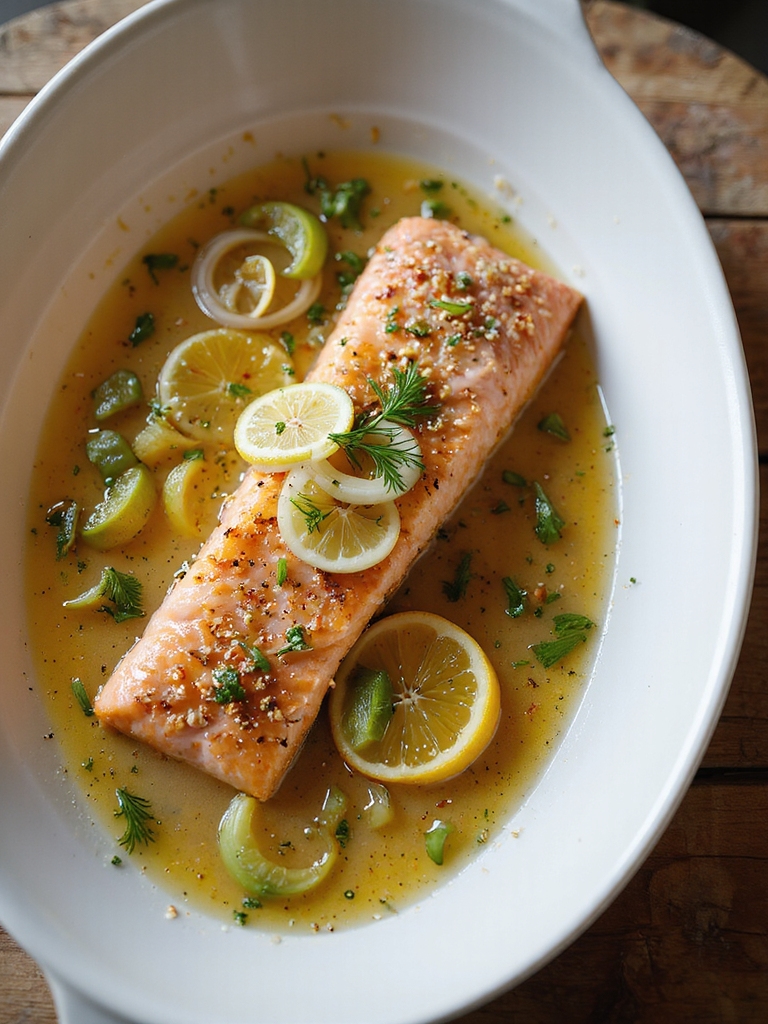
Preheat oven to 400°F (200°C), line a rimmed baking sheet with foil or parchment, pat the salmon dry, whisk together olive oil, lemon juice, zest, garlic, Dijon (if using), parsley, dill, salt and pepper, brush the mixture over the fillet, place skin-side down on the sheet, top with lemon slices if desired, and bake in the center of the oven 10–14 minutes until an instant-read thermometer reaches 125–130°F (51–54°C) for medium-rare to medium or until it flakes easily then rest 3–5 minutes before serving.
Tip: Keep the skin on for protection and easier handling, trim thin tail pieces for even cooking, and use an instant-read thermometer to avoid overcooking.
For best results, finish the salmon briefly under a hot broiler for a minute or two to develop a lightly crisped top and enhanced flavor.
Sweet-and-Spicy Glazed Salmon for Weeknights
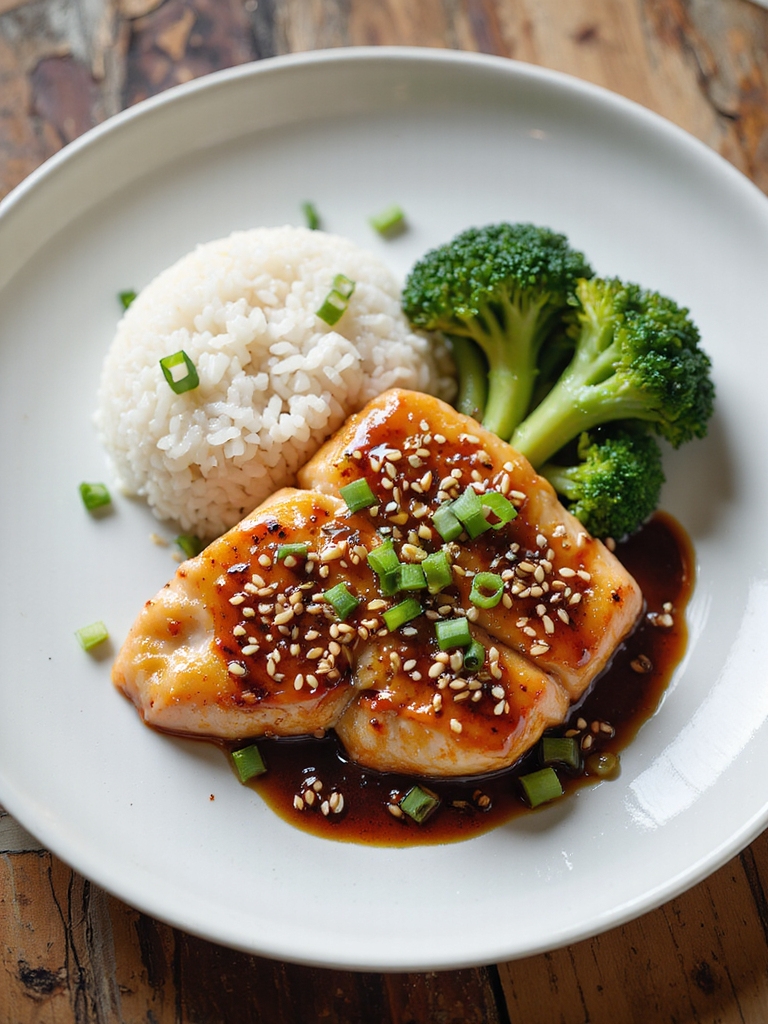
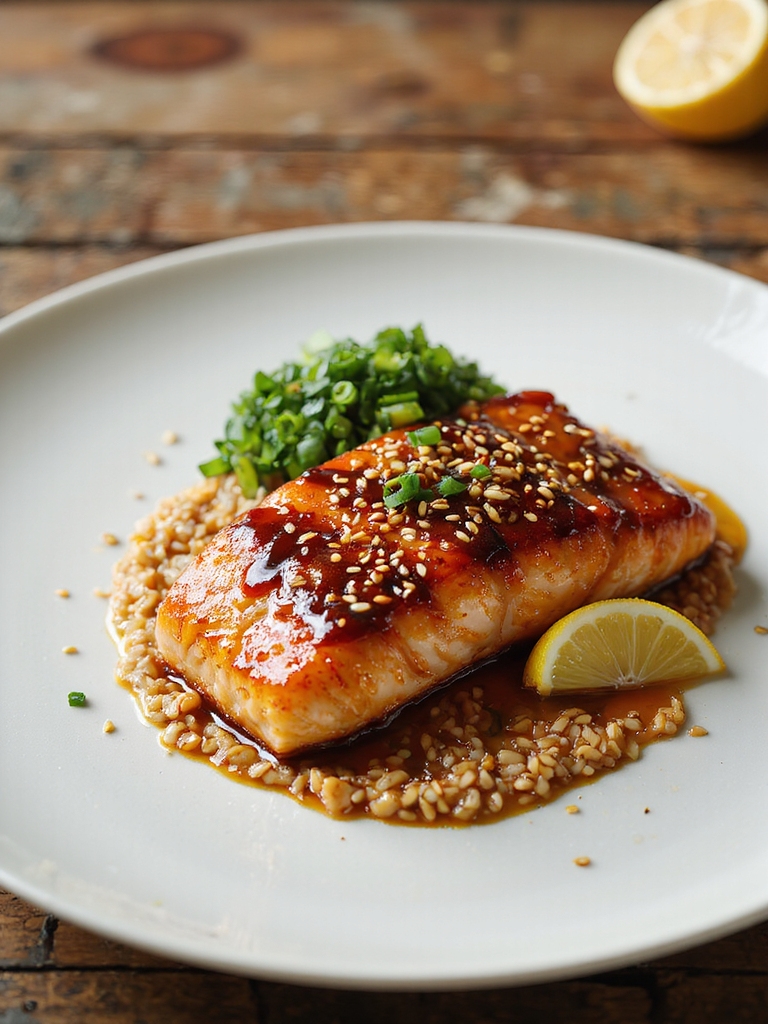
Sweet, sticky, and with a kick of heat, this Sweet-and-Spicy Glazed Salmon is a fast weeknight winner—pan-seared or oven-baked depending on time—and combines brown sugar, soy, sriracha, and a splash of citrus for a glossy glaze that caramelizes without burning; serve with rice and steamed greens for a complete meal.
- 1 lb salmon fillet (skin-on or skinless)
- 2 tbsp brown sugar (light or dark)
- 2 tbsp low-sodium soy sauce
- 1–2 tsp sriracha (adjust to heat preference)
- 1 tbsp rice vinegar or lime juice
- 1 tsp sesame oil
- 1 garlic clove, minced
- 1/2 tsp grated fresh ginger (or 1/4 tsp ground ginger)
- 1/4 tsp kosher salt
- 1/4 tsp freshly ground black pepper
- 1 tbsp chopped green onions (for garnish)
- 1 tsp toasted sesame seeds (optional garnish)
Preheat oven to 425°F (220°C) and line a rimmed baking sheet with foil or parchment; whisk brown sugar, soy sauce, sriracha, rice vinegar, sesame oil, garlic, and ginger until smooth, pat salmon dry and place skin-side down, brush half the glaze over the top, roast in center of oven 8–12 minutes depending on thickness until an instant-read thermometer reaches 125–130°F (51–54°C) for medium-rare to medium or flakes with a fork, then brush remaining glaze and broil 1–2 minutes to caramelize if desired.
Tip: Keep an eye during broil stage to prevent burning, trim thin tail pieces for even cooking, and adjust sriracha and brown sugar to balance heat and sweetness to your taste.
This method is inspired by classic teriyaki techniques that yield a similar glossy finish when using a sweet soy glaze.
Foil-Packet and Sheet-Pan Methods for No-Mess Meals
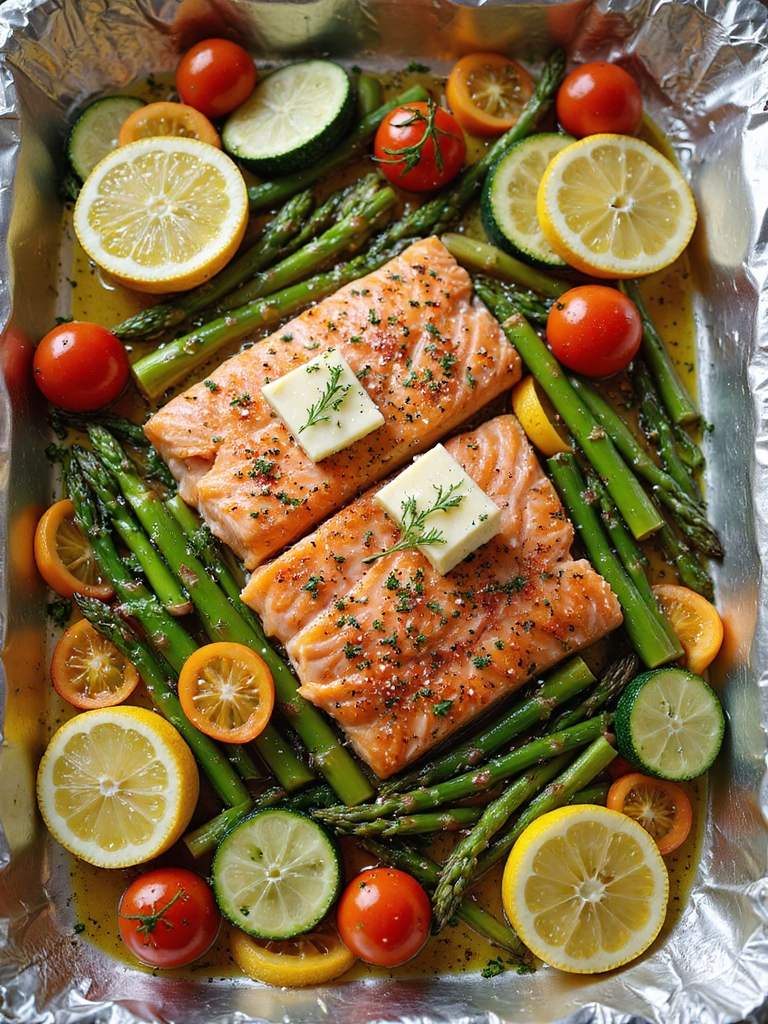
Foil-packet and sheet-pan salmon methods make cleanup trivial and lock in moisture and flavor; here’s a simple, flexible recipe using a sheet-pan or individual foil packets with vegetables and a bright lemon-herb butter glaze so you can bake everything together for an all-in-one no-mess meal.
- 1 lb salmon fillet, cut into portions or left whole
- 1 lemon, thinly sliced (plus 1 tbsp juice)
- 2 tbsp olive oil
- 2 tbsp unsalted butter, softened
- 1 garlic clove, minced
- 1 tbsp chopped fresh dill or parsley
- 1 lb mixed quick-cooking vegetables (asparagus tips, cherry tomatoes, thinly sliced zucchini)
- 1/2 tsp kosher salt
- 1/4 tsp black pepper
- 1/4 tsp smoked paprika (optional)
- 1 tbsp honey or maple syrup (optional for glaze)
- 1 sheet of heavy-duty foil or parchment for sheet-pan method
Preheat oven to 400°F (200°C); for individual packets, place each salmon portion skin-side down on a large piece of foil, drizzle with olive oil and lemon juice, top with a pat of herb butter, garlic, lemon slices and vegetables, season with salt, pepper and paprika, fold and seal packets;
for a sheet-pan, arrange salmon and vegetables on a lined pan, dot with herb butter, drizzle oil and honey if using, roast in the center of the oven 10–18 minutes depending on thickness until salmon reaches 125–130°F (51–54°C) for medium-rare to medium or flakes easily, or bake packets the same time and open carefully to avoid steam.
Tip: Trim vegetables into similar sizes for even cooking, use an instant-read thermometer for doneness, and if you want a browned finish open packets or remove foil for the last 1–2 minutes under the broiler while watching closely.
This sheet-pan approach is adapted from an easy, reliable method designed for busy weeknights with minimal cleanup and even cooking.
Temperature, Timing, and How to Tell When Salmon Is Done
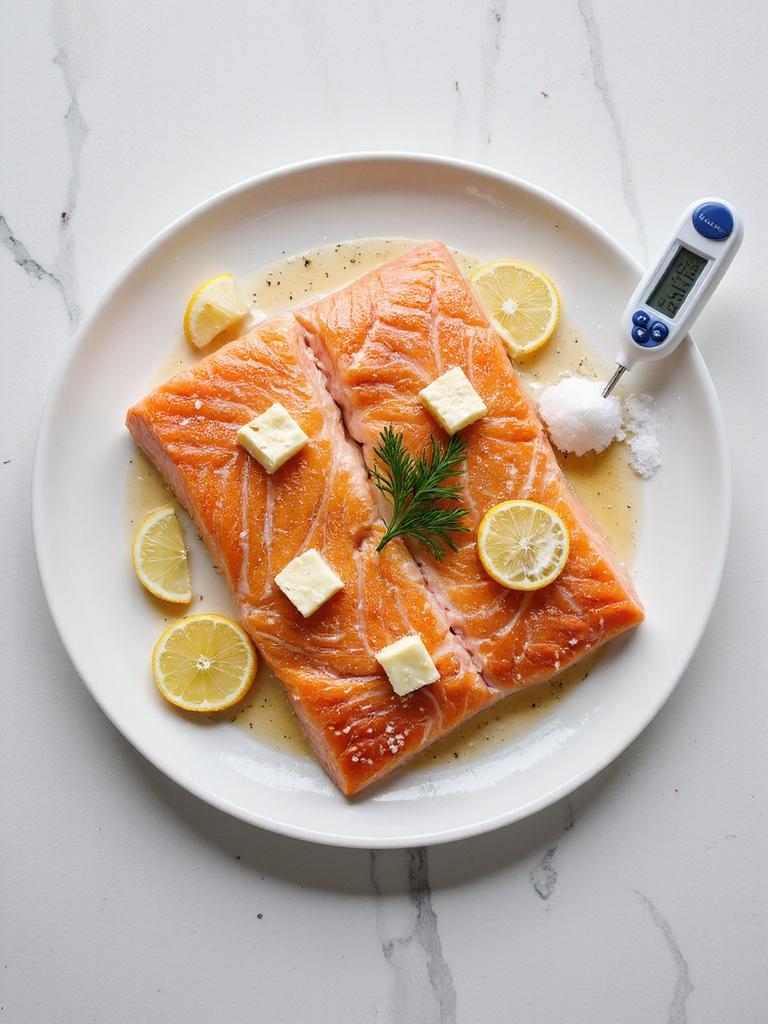
Cooking salmon to the right doneness in the oven is about matching temperature, timing, and simple cues — use moderate heat for even cooking, an instant-read thermometer for precision, and visual/tactile checks (flaky but moist) to avoid drying the fish; the following recipe works for a 1-lb fillet (skin-on or off) and gives target temperatures and times so you can choose rare, medium, or well-done results.
- 1 lb salmon fillet (about 1–1½ inches thick)
- 1 tbsp olive oil
- 1 tbsp unsalted butter, softened
- 1 lemon, thinly sliced (plus 1 tbsp juice)
- 1 garlic clove, minced
- 1 tsp chopped fresh dill or parsley
- 1/2 tsp kosher salt
- 1/4 tsp black pepper
- 1/4 tsp smoked paprika (optional)
- Cooking spray or a sheet of foil/parchment
- Instant-read thermometer
Preheat oven to 400°F (200°C) and line a sheet pan or prepare foil; brush salmon with oil and lemon juice, season with salt, pepper and paprika, place lemon slices and pats of butter on top, then roast on the middle rack: 8–10 minutes for rare (115–120°F/46–49°C), 10–12 minutes for medium-rare (120–125°F/49–52°C), 12–15 minutes for medium (125–130°F/52–54°C), or up to 16–18 minutes for well-done (135°F/57°C+), checking with an instant-read thermometer inserted into the thickest part and letting rest 3–5 minutes before serving (residual heat will raise temp a few degrees).
Tip: Remember carryover cooking during the 3–5 minute rest raises internal temperature 3–5°F, so pull salmon from the oven slightly below your target and use flaky texture plus thermometer rather than time alone. Pan-frying first can add a crispy skin and extra flavor when finishing in the oven, creating a perfect crust and moist interior.
Easy Sauces and Side Pairings to Serve With Oven Salmon
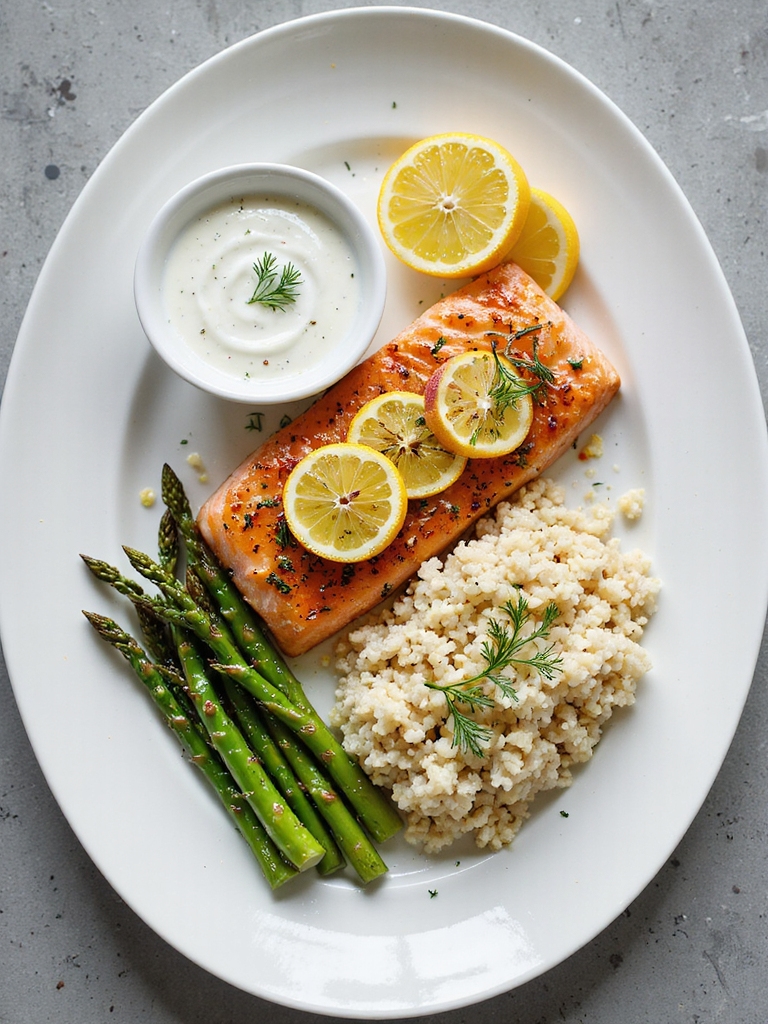
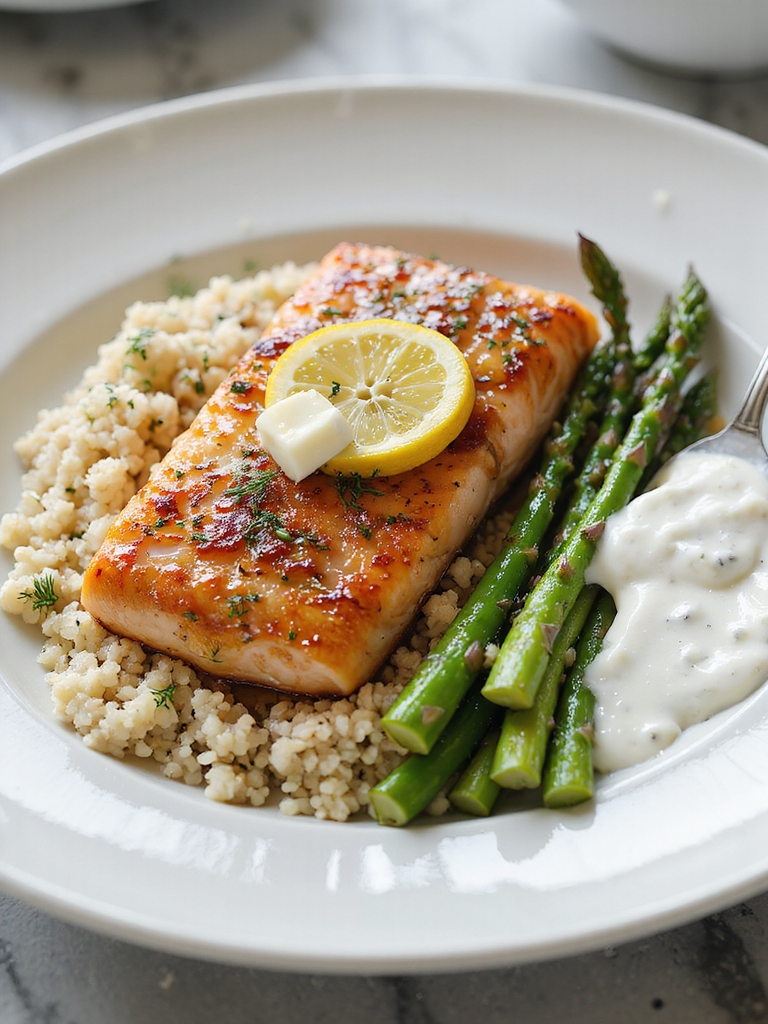
Roasted salmon is perfect with bright, creamy, or herb-forward sauces and simple vegetable or grain sides; this recipe uses the 1-lb fillet from the previous section and includes a quick lemon-dill yogurt sauce plus roasted asparagus and herbed couscous to make a balanced weeknight meal that highlights the fish without overpowering it.
- 1 lb salmon fillet (skin-on or off)
- 1 tbsp olive oil
- 1/2 tsp kosher salt
- 1/4 tsp black pepper
- 1 lemon (zest + 1 tbsp juice, plus slices for roasting)
- 1/2 cup Greek yogurt
- 1 tbsp mayonnaise (optional for richness)
- 1 tbsp chopped fresh dill (or parsley)
- 1 garlic clove, minced
- 1 tsp honey or maple syrup
- 1 bunch asparagus, trimmed
- 1 cup couscous
- 1 1/4 cups low-sodium chicken or vegetable broth
- 1 tbsp butter
- 1 tsp olive oil
- Pinch of smoked paprika (optional)
Preheat oven to 400°F (200°C); brush salmon with olive oil, season with salt, pepper and a light dusting of smoked paprika, place lemon slices and small pats of butter on top and roast on a lined sheet pan in the middle rack for 10–15 minutes depending on desired doneness (use an instant-read thermometer to hit 120–130°F for medium-rare to medium).
While salmon roasts toss asparagus with 1 tsp olive oil, salt and pepper and add to the pan for the last 8–10 minutes.
Meanwhile bring broth to a boil, stir in couscous, remove from heat and cover 5 minutes then fluff with butter and fold in chopped herbs.
Mix Greek yogurt, mayo (if using), lemon zest, juice, minced garlic, dill and honey, season to taste, and serve the salmon over couscous with asparagus alongside and a spoonful of the lemon-dill sauce.
Tip: Pull salmon from the oven a few degrees below target to allow for carryover cooking, rest 3–5 minutes before serving, and keep the sauce chilled until plating to preserve its bright flavor.
For a quick alternative, you can also cook frozen salmon directly in an air fryer for faster results and reliable texture, as air fryer frozen salmon often yields a crisp exterior while keeping the inside moist.