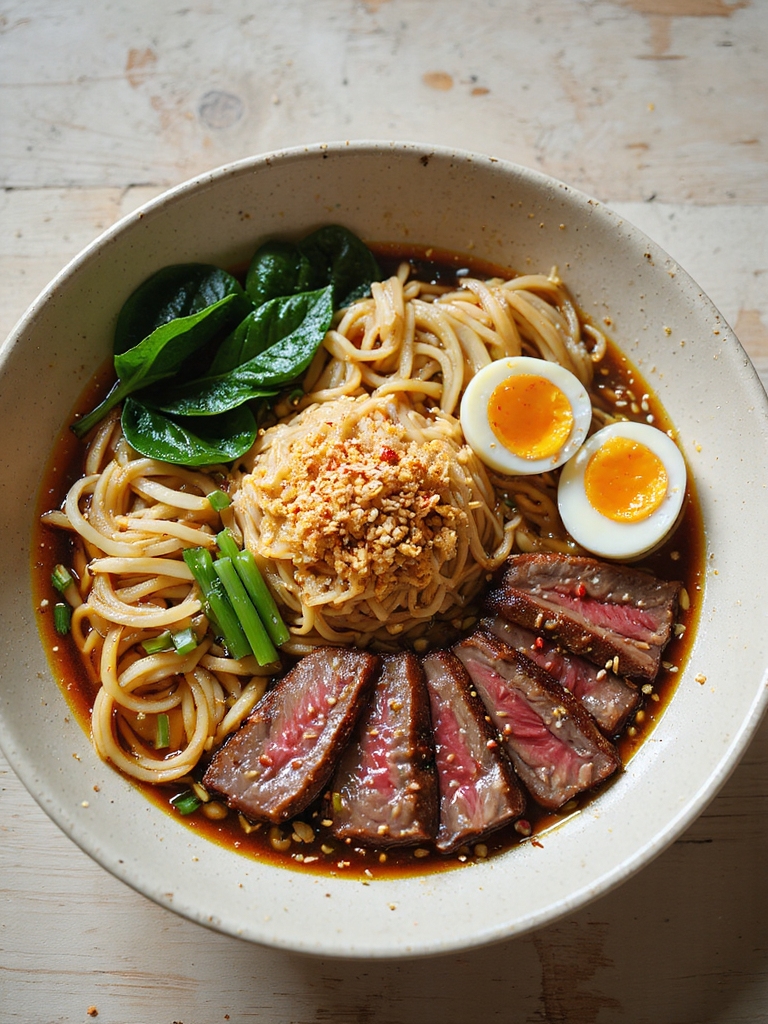
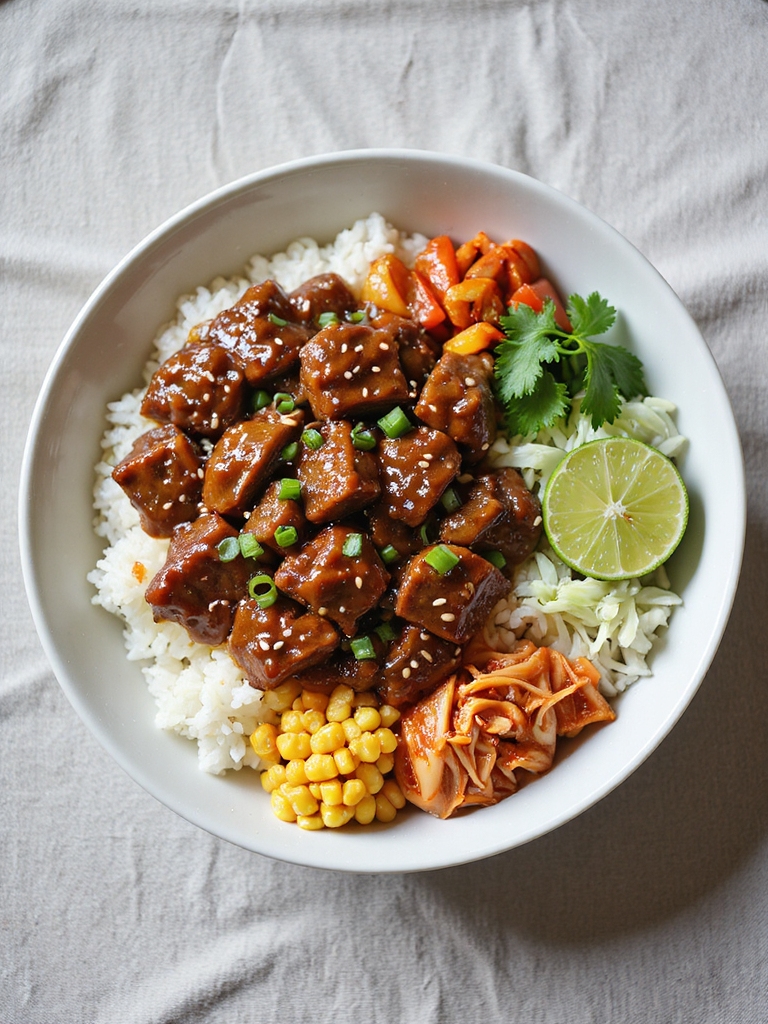
When I want big flavor fast, I reach for Korean beef bowls: ground beef sizzled with garlic and ginger, a glossy gochujang-soy glaze, and a quick pile-over of hot rice or greens. I keep scallions, sesame, and rice vinegar on hand for snap and balance, plus store-bought pickles for crunch.
The whole thing’s weeknight-easy, budget-friendly, and endlessly tweakable. Want the 15-minute plan, smart swaps, and meal-prep tricks that keep the sauce shiny and beef tender?
Why Korean Beef Bowls Belong in Your Weeknight Rotation
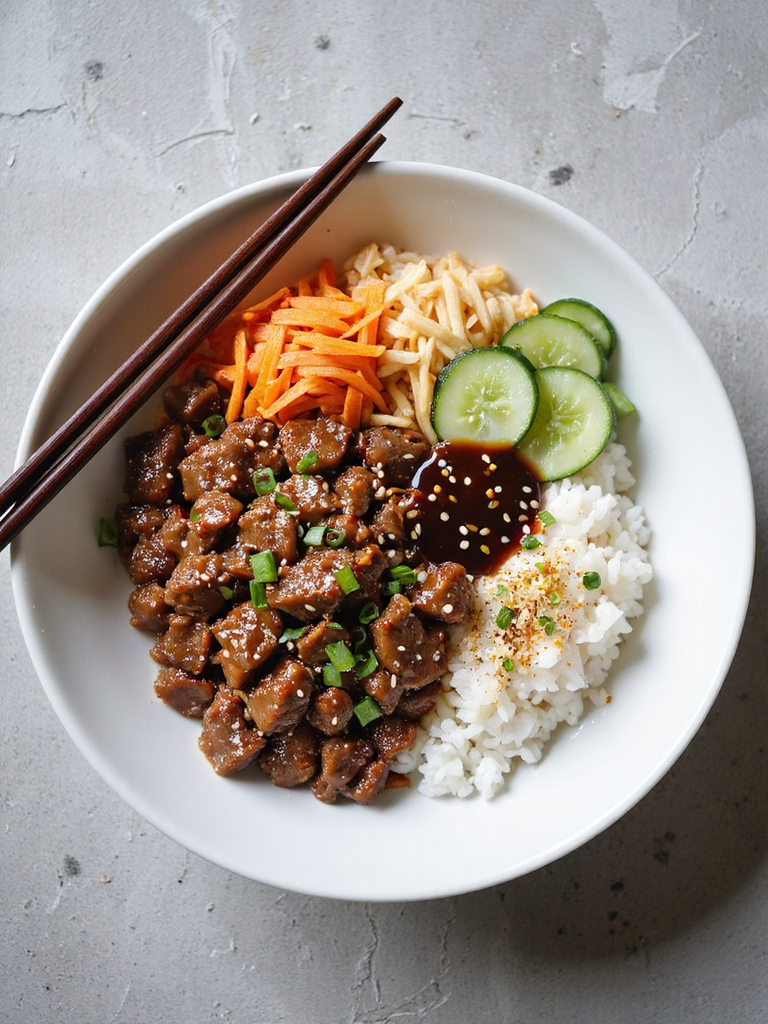
Busy nights call for bold flavor with minimal fuss, and Korean beef bowls deliver exactly that. Sweet-salty soy, garlic, ginger, and a touch of heat turn quick-cooking ground beef into something craveable, piled over steamy rice with crunchy veggies for balance. They’re budget-friendly, customizable, and ready in 20 minutes—perfect for rotating through your weeknight lineup without repeating the same old dinner.
- 1 lb ground beef (85–90% lean)
- 3 cloves garlic, minced
- 1 tbsp fresh ginger, minced
- 1/3 cup low-sodium soy sauce
- 3 tbsp brown sugar
- 1 tbsp sesame oil
- 1–2 tsp gochujang or 1/2 tsp red pepper flakes
- 2 tsp rice vinegar
- 2 green onions, thinly sliced
- 1 tbsp toasted sesame seeds
- 3 cups cooked white or brown rice
- 1 cup shredded carrots
- 1 cup cucumber, thinly sliced
- 1 tbsp neutral oil
Heat neutral oil in a large skillet over medium-high, add beef, and cook, breaking up, until browned with crisp edges, 5–7 minutes; drain excess fat if needed, then stir in garlic and ginger for 30 seconds. Whisk soy sauce, brown sugar, sesame oil, gochujang, and rice vinegar; pour into skillet and simmer 1–2 minutes until glossy, then serve over hot rice with carrots, cucumber, green onions, and sesame seeds.
Swap beef for turkey or firm tofu as needed, and adjust heat with more gochujang; double the sauce for meal prep and keep components separate for best texture—reheat beef gently while assembling bowls fresh to maintain crisp edges and vibrant veg. The recipe is inspired by classic Korean flavors like gochujang that add depth and spice to simple dishes.
Essential Ingredients to Stock for Faster Prep
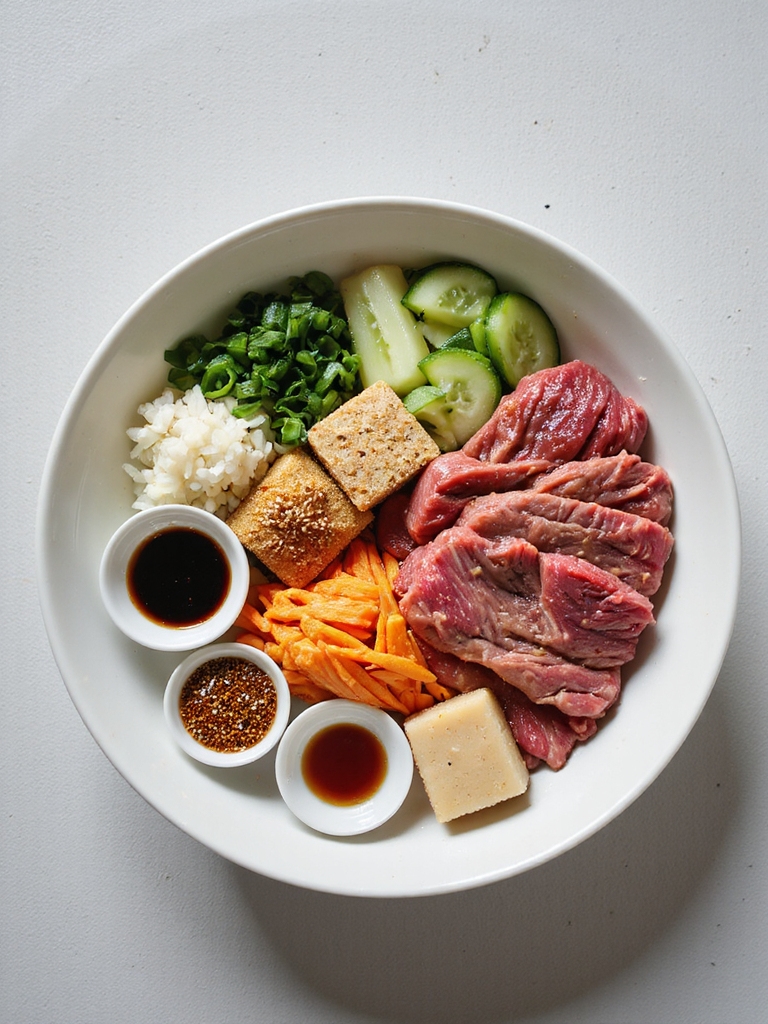
A well-stocked pantry turns Korean beef bowls into a true 20-minute meal any night: keep the sweet-salty-spicy core on hand (low-sodium soy, brown sugar, sesame oil, gochujang), plus fast aromatics (garlic, ginger), tangy lift (rice vinegar), and quick toppers (sesame seeds, scallions, carrots, cucumber). Pair these with freezer-friendly ground beef and microwavable rice or pre-cooked grains so you can sear, sauce, and serve without a grocery run.
- 1 lb ground beef (85–90% lean) or frozen portions
- 3 cloves garlic
- 1 tbsp fresh ginger
- Low-sodium soy sauce
- Brown sugar
- Sesame oil
- Gochujang or red pepper flakes
- Rice vinegar
- Green onions
- Toasted sesame seeds
- Pre-cooked or microwavable rice
- Shredded carrots
- Sliced cucumber
- Neutral oil
Heat neutral oil in a hot skillet and brown the beef, then add minced garlic and ginger; while it sears, whisk soy sauce, brown sugar, sesame oil, gochujang, and rice vinegar using pantry bottles kept together for speed. Microwave rice, slice scallions, and pull ready-to-eat carrots and cucumbers from the fridge; glaze beef with the sauce, simmer until glossy, then bowl up with toppings and sesame seeds.
Keep a “bowl bin” in the pantry with the bottled core and a freezer stash of beef or tofu; prep ginger-garlic ice cubes on weekends, and rotate quick veg (cabbage, edamame) so you can swap seamlessly without slowing dinner down. A quick stovetop sear concentrates flavors and creates the savory crust that defines classic Korean beef bowls.
The 15-Minute Cooking Game Plan
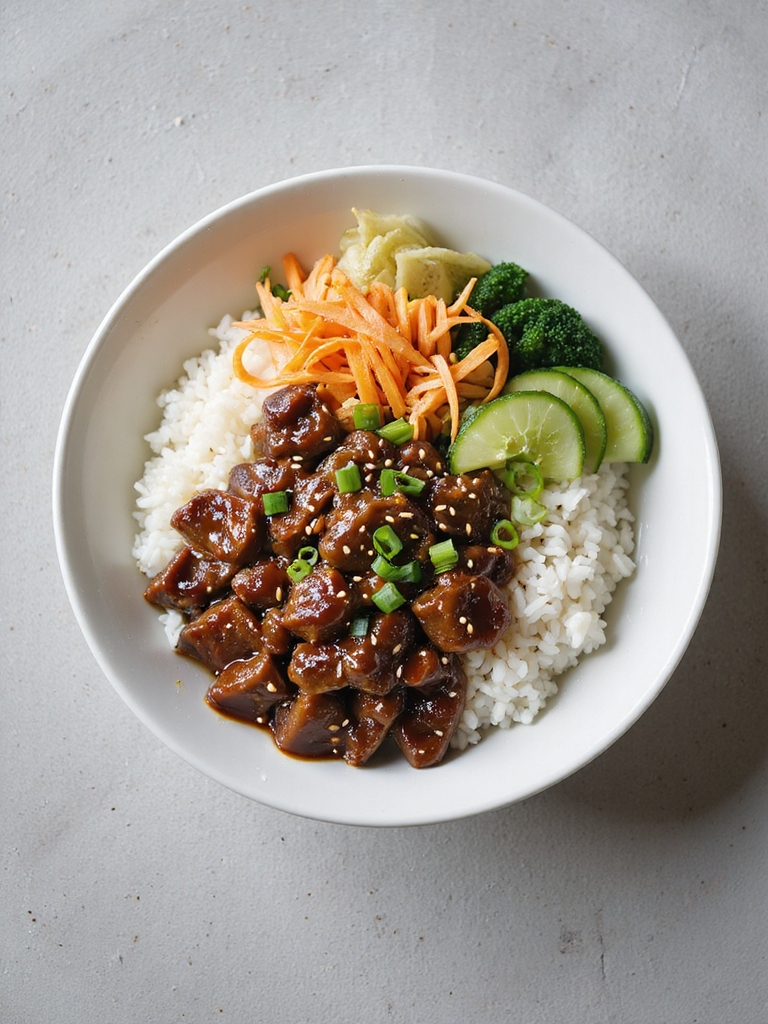
When you’ve got 15 minutes, this streamlined plan turns pantry staples into glossy, saucy Korean beef bowls with zero fuss: brown beef hard and fast, bloom aromatics, glaze with a sweet-salty-spicy sauce, and pile everything over hot rice with crisp, cool toppings for contrast. Keep your “bowl bin” handy, microwave rice while the beef sears, and you’ll be plating in record time.
- 1 lb ground beef (85–90% lean)
- 2 tsp neutral oil
- 3 cloves garlic, minced
- 1 tbsp fresh ginger, minced
- 1/4 cup low-sodium soy sauce
- 2 tbsp brown sugar
- 1–2 tbsp gochujang (to taste)
- 1 tsp sesame oil
- 1 tsp rice vinegar
- 3 cups hot cooked rice (microwavable)
- 2 green onions, thinly sliced
- 1/2 cup shredded carrots
- 1/2 cup thinly sliced cucumber
- 1 tsp toasted sesame seeds
Heat a large skillet over high; add oil and beef, breaking into crumbles and cooking until well-browned at the edges, 4–6 minutes, then stir in garlic and ginger for 30 seconds. Whisk soy, brown sugar, gochujang, sesame oil, and rice vinegar; pour over beef and simmer 1–2 minutes until glossy while microwaving rice, then bowl rice, top with beef, scallions, carrots, cucumber, and sesame seeds.
Swap in frozen beef or tofu crumbles without thawing fully—start them in the hot pan to steam off ice, then proceed. For speed, pre-mince ginger/garlic and portion sauce in advance; add extra vinegar or a splash of water if the glaze reduces too quickly. This method draws on the classic Beef Bowl technique of building savory-sweet layers for maximum flavor impact in minutes, inspired by Beef Bowl traditions.
Balancing Savory, Sweet, and Heat Like a Pro
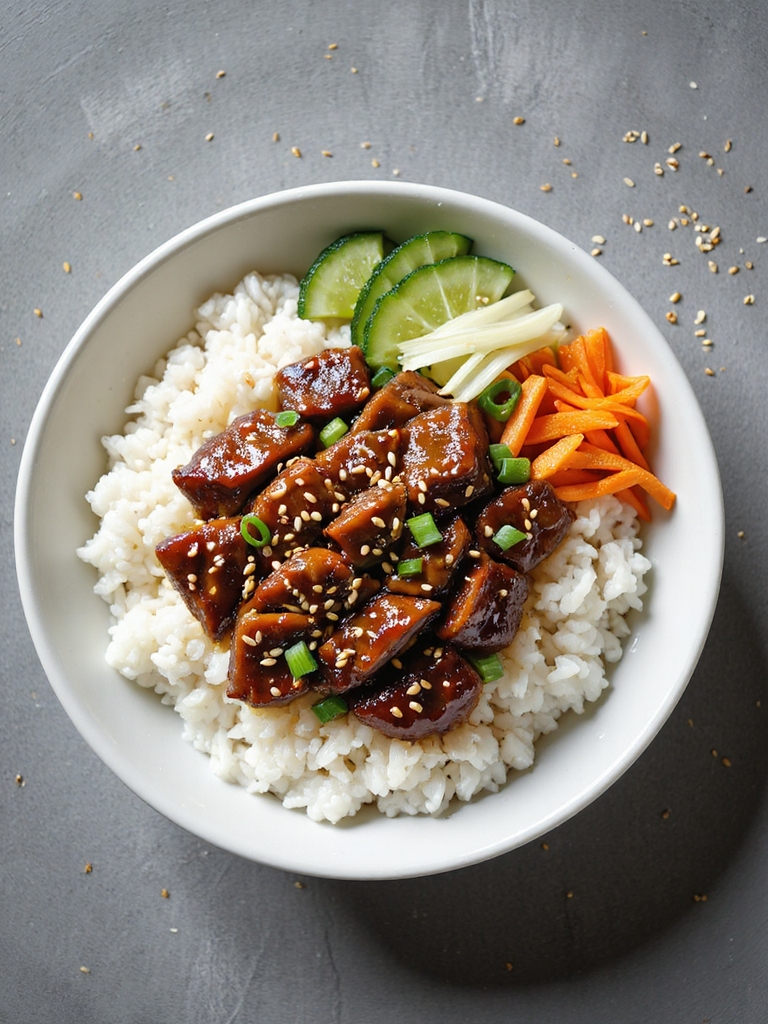
Dial in the signature Korean-beef balance by building a sauce that hits umami, sweetness, and spice in measured layers: soy for savory depth, brown sugar for gloss and caramel notes, and gochujang for chili heat and fermented tang, then fine-tune with acidity and nuttiness so each bite stays bright, not cloying.
- 1 lb ground beef (85–90% lean)
- 3 cloves garlic, minced
- 1 tbsp fresh ginger, minced
- 1/4 cup low-sodium soy sauce
- 1 tbsp oyster sauce
- 1–2 tbsp gochujang
- 1–2 tbsp brown sugar
- 1–2 tsp rice vinegar
- 1 tsp sesame oil
- 1/8 tsp white pepper
- 3 cups hot cooked rice
- 2 green onions, thinly sliced
- 1/2 cup shredded carrots
- 1/2 cup thinly sliced cucumber
- 1 tsp toasted sesame seeds
Heat a large skillet over high and brown beef in a thin film of oil, seasoning with white pepper; when crisp at the edges, stir in garlic and ginger for 30 seconds. Whisk soy, oyster sauce, gochujang, brown sugar, rice vinegar, and sesame oil; add to beef and simmer until glossy, adjusting balance by adding a pinch more sugar for sharpness, a splash more vinegar for sweetness, or a spoon of gochujang for more heat, then serve over rice with scallions, carrots, cucumber, and sesame seeds.
Taste in the pan and calibrate: if it’s flat, add 1–2 tsp soy; if too salty, add 1–2 tsp sugar and a splash of water; if heavy or sweet, brighten with 1–2 tsp vinegar; if hot but dull, finish with a few drops sesame oil to bloom aromatics and round the edges without adding more salt. Browned ground beef builds richer flavor through Maillard crusting and renders fat that carries the sauce — try to achieve a good sear for better depth.
Choosing the Right Ground Beef and Substitutions
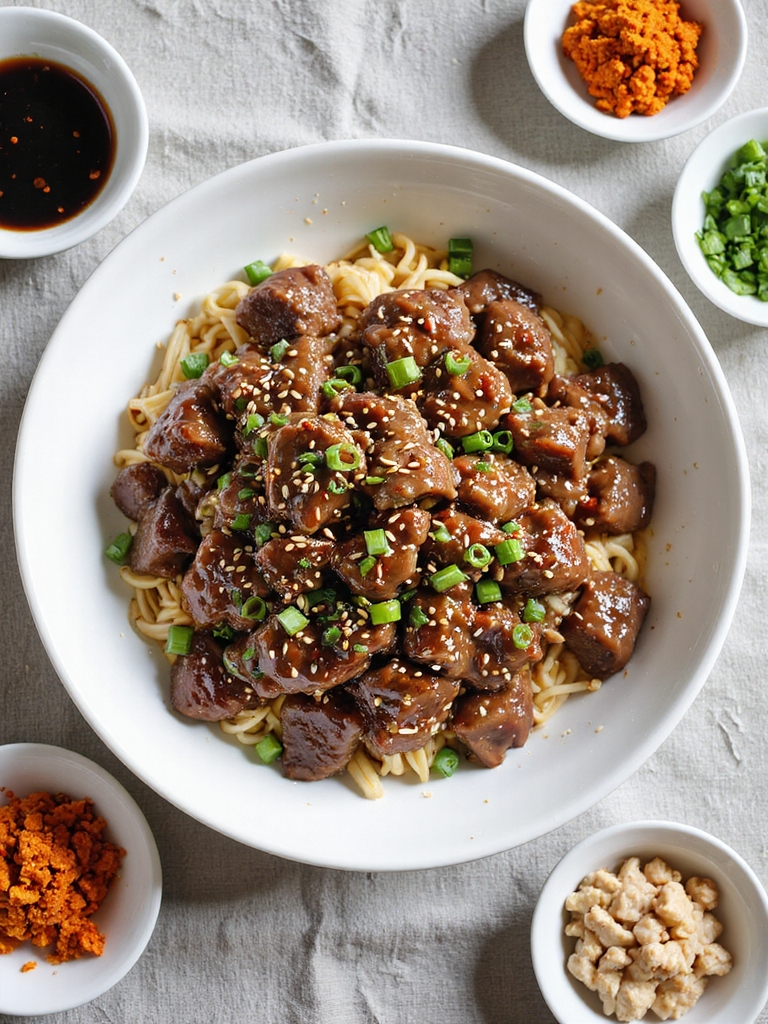
The right grind makes or breaks a Korean beef bowl: aim for 85–90% lean ground beef so you get flavorful browning without greasy sauce, and choose a coarser grind for meaty texture. If beef isn’t an option, ground turkey thigh, chicken thigh, pork, or plant-based crumbles all work—just adjust fat and seasoning to maintain juiciness and depth; darker poultry needs a touch more oil and soy, pork loves a little extra ginger, and veg crumbles benefit from added umami boosters like mushrooms or a splash of fish sauce (or extra oyster sauce) to mimic beefy savor.
- 1 lb ground beef (85–90% lean) or ground pork/turkey thigh
- 1 tbsp neutral oil (plus more if using lean poultry or plant crumbles)
- 3 cloves garlic, minced
- 1 tbsp fresh ginger, minced
- 1/4 cup low-sodium soy sauce
- 1 tbsp oyster sauce (or vegetarian oyster mushroom sauce)
- 1–2 tbsp gochujang (or chili-garlic sauce for non-fermented heat)
- 1–2 tbsp brown sugar
- 1–2 tsp rice vinegar
- 1 tsp sesame oil
- 1/8 tsp white pepper
- Optional umami booster: 1 tsp fish sauce or 1 tbsp finely minced mushrooms
Heat a large skillet until very hot, add oil, then beef; press into an even layer and brown hard without stirring for 2–3 minutes to develop fond, then crumble, season with white pepper, and cook until crisped at the edges (add 1–2 tsp oil if using lean turkey/chicken or plant crumbles). Stir in garlic and ginger for 30 seconds; whisk soy, oyster sauce, gochujang, brown sugar, rice vinegar, and sesame oil (plus fish sauce or mushrooms if using), pour over, and simmer 1–2 minutes until glossy, adjusting salt, sweetness, heat, and acidity to taste; serve immediately over your chosen base with fresh garnishes.
For beefy flavor in substitutions, prioritize fat and umami: pick darker cuts (thigh), don’t fear a teaspoon more oil, and bloom aromatics briefly to avoid bitterness; if the sauce tastes thin with lean meats or veg, add a splash of soy and a pinch more sugar, and reduce 30–60 seconds longer to concentrate without oversalting. Try pairing the bowls with simple sides like steamed rice or quick pickled vegetables for contrast and texture weeknight meals.
Rice, Noodles, or Greens: Best Bases for Your Bowl
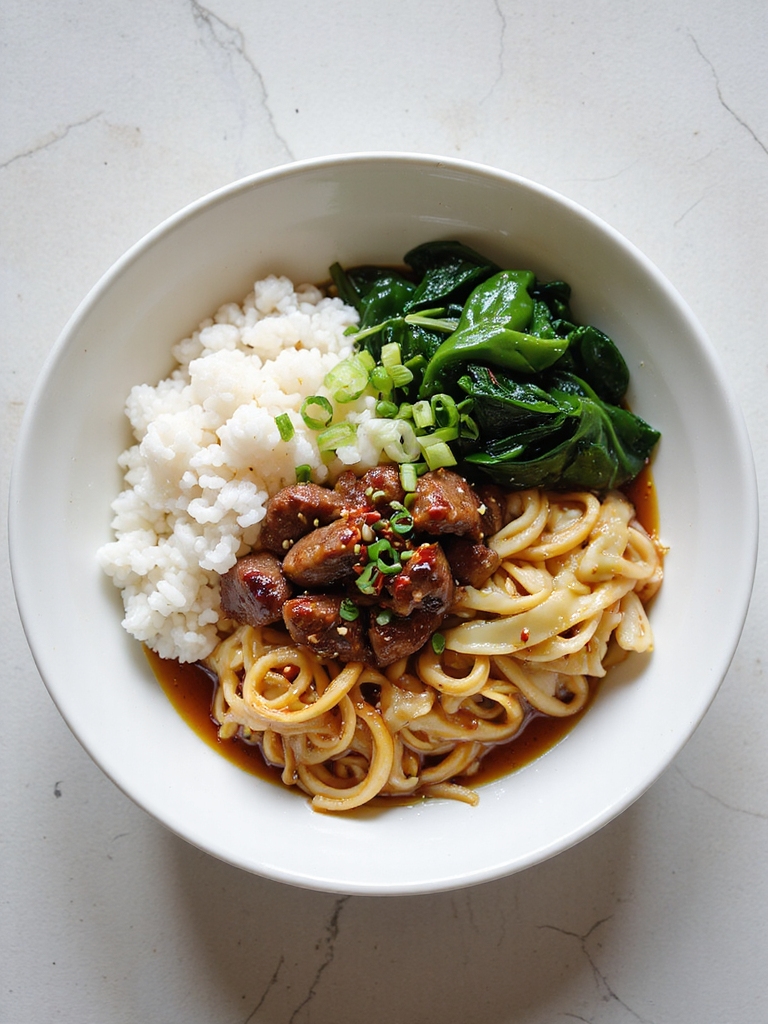
A great Korean beef bowl starts with the right base to catch all that savory-sweet sauce: steamed short-grain rice for classic stickiness, nutty brown rice for chew, quick-cooking ramen or udon for slurpable comfort, or a bed of garlicky greens and cauliflower rice for a lighter, low-carb option; each base changes the bowl’s personality, so pick according to texture and soak-up power, then match cook times so hot beef hits a hot base.
- 2 cups cooked short-grain white rice (or brown rice)
- 8 oz cooked noodles (ramen, udon, or rice noodles)
- 4 cups mixed greens (baby spinach, napa cabbage, or kale), chopped
- 2 cups cauliflower rice (optional, for low-carb)
- 1 tbsp sesame oil
- 1 tsp soy sauce
- 1 tsp rice vinegar
- Pinch of salt
Warm rice or noodles and keep covered; for greens, toss with sesame oil, soy, and a splash of vinegar, then quickly wilt in a hot pan or microwave until just tender; for cauliflower rice, sauté in a slick of oil with a pinch of salt until steamy and slightly nutty; build bowls by mounding your chosen base, ensuring it’s hot to absorb the sauce, then spoon the finished Korean beef over the top so juices mingle. If mixing bases, layer rice first for soak, add a nest of noodles for chew, or scatter warm greens on the side for contrast; finish with crunchy toppings and fresh herbs to balance richness and heat.
Keep bases hot so the sauce glosses instead of pooling; rinse noodles after boiling, then reheat with a touch of sesame oil to prevent clumping and help the sauce cling. For greens-forward bowls, salt lightly and cook just until vibrant to avoid watering down the beef; if using brown rice or cauliflower rice, season a touch more to match the beef’s boldness. A simple beef and broccoli stir fry can make a great weekday shortcut when you want similar savory flavors with minimal fuss.
Crunchy Toppings and Fresh Finishes
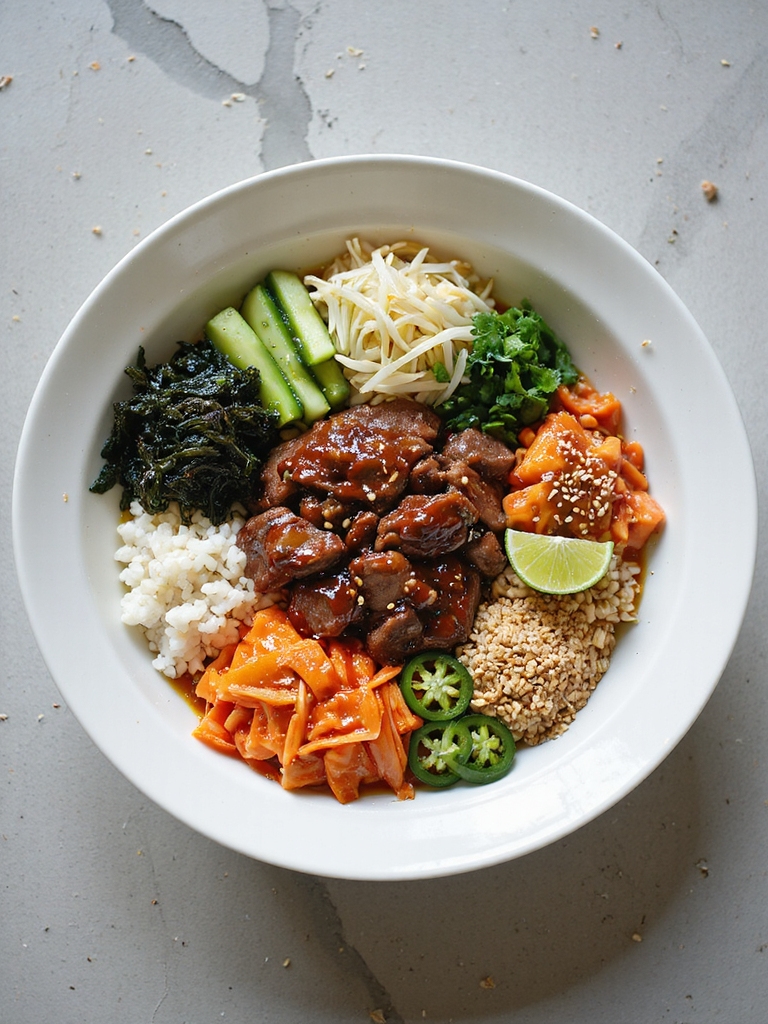
Finish your Korean beef bowl with a riot of textures and cool, fresh pops that balance salty-sweet richness: think crisp veg for snap, toasty seeds and nuts for savor, quick pickles for zing, and cooling herbs to brighten every bite. Layer high-contrast elements—something crunchy, something tangy, something fresh, and a little heat—so each spoonful hits differently and the glossy sauce doesn’t overwhelm.
- 1 cup cucumber, thinly sliced
- 1/2 small red onion, thinly sliced
- 1/2 cup shredded carrot or radish matchsticks
- 1 cup bean sprouts or shredded napa cabbage
- 2 scallions, thinly sliced
- 1/2 cup kimchi, chopped
- 1/4 cup roasted seaweed (gim/nori), crumbled
- 3 tbsp toasted sesame seeds
- 1/4 cup crushed roasted peanuts or almonds
- 1 small jalapeño or Fresno, thinly sliced
- 1/2 cup fresh cilantro and/or perilla leaves, torn
- 2 tbsp rice vinegar
- 1 tsp sugar or honey
- 1/2 tsp kosher salt
- 1 tsp sesame oil
- Lime wedges (optional)
Toss cucumber and red onion with rice vinegar, sugar, and salt; set aside 5–10 minutes for a quick pickle while you warm your base and beef. Assemble bowls: mound hot base, spoon on Korean beef, then scatter bean sprouts, carrots, scallions, jalapeño, kimchi, and cabbage; drizzle sesame oil lightly, add crumbled seaweed, sesame seeds, and nuts, tuck in herbs, and finish with a squeeze of lime to wake up the sauce.
Keep wet toppings (kimchi, pickles) in small piles to prevent soggy crunch, and add nuts and seaweed at the very end so they stay crisp; if making ahead, store herbs and crunchy bits separately and refresh with a quick toast or a dab of sesame oil before serving. For the best flavor and authentic caramelization, use thinly sliced beef and a hot pan to achieve the signature mixture of sweet and savory that defines perfect bulgogi.
Smart Shortcuts for Busy Nights
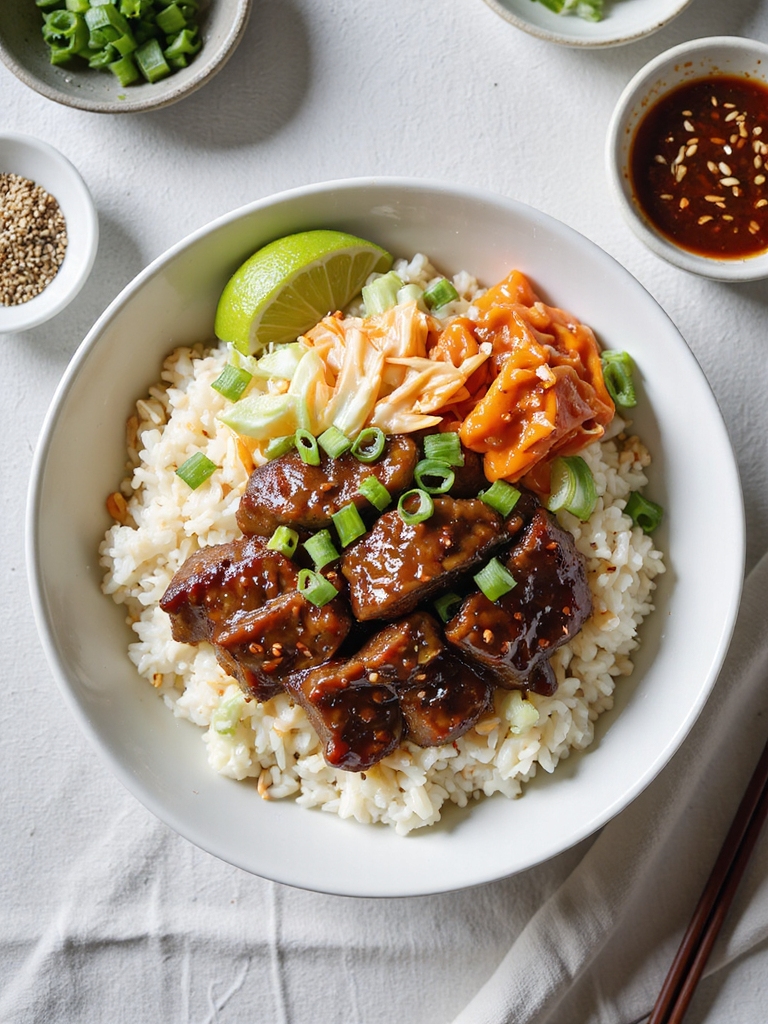
When time is tight, this weeknight Korean beef bowl leans on smart shortcuts: a 10-minute ground beef sauté, a fast pantry sauce, microwaveable rice, and pre-cut veggies. You’ll build bold, glossy flavor with minimal chops, borrow crunch from bagged slaw, and finish with jarred kimchi and a squeeze of lime—big takeout energy, home-kitchen speed.
- 1 lb ground beef (85–90% lean)
- 1 tbsp neutral oil
- 3 garlic cloves, minced (or 1 tbsp garlic paste)
- 1 tsp grated ginger (or 1/2 tsp ginger paste)
- 1/3 cup low-sodium soy sauce
- 3 tbsp brown sugar (or honey)
- 1 tbsp gochujang (or 1–2 tsp sriracha)
- 1 tsp sesame oil
- 2 microwave rice pouches (white or brown)
- 2 cups bagged coleslaw mix or shredded cabbage
- 1/2 cup sliced scallions
- 1/2 cup kimchi, chopped
- 1 tbsp rice vinegar
- 1 tbsp toasted sesame seeds
- Lime wedges (optional)
Heat oil in a large skillet on medium-high; brown beef 4–5 minutes, breaking up, then stir in garlic and ginger for 30 seconds. Whisk soy, brown sugar, gochujang, and sesame oil; pour over beef and simmer 2–3 minutes until glossy while you microwave rice pouches; splash in rice vinegar to brighten. Divide hot rice into bowls, top with saucy beef, handfuls of slaw, scallions, kimchi, and sesame seeds; add lime if using and serve immediately.
Swap in frozen rice, pre-minced aromatics, and a squeeze bottle of gochujang to cut prep to near-zero; if the sauce reduces too quickly, add 2–3 tablespoons water to re-gloss and keep the beef juicy without extra sugar. Modern weeknight cooks often rely on time-saving shortcuts to get dinner on the table fast.
Meal Prep and Storage Tips That Keep Flavor Fresh
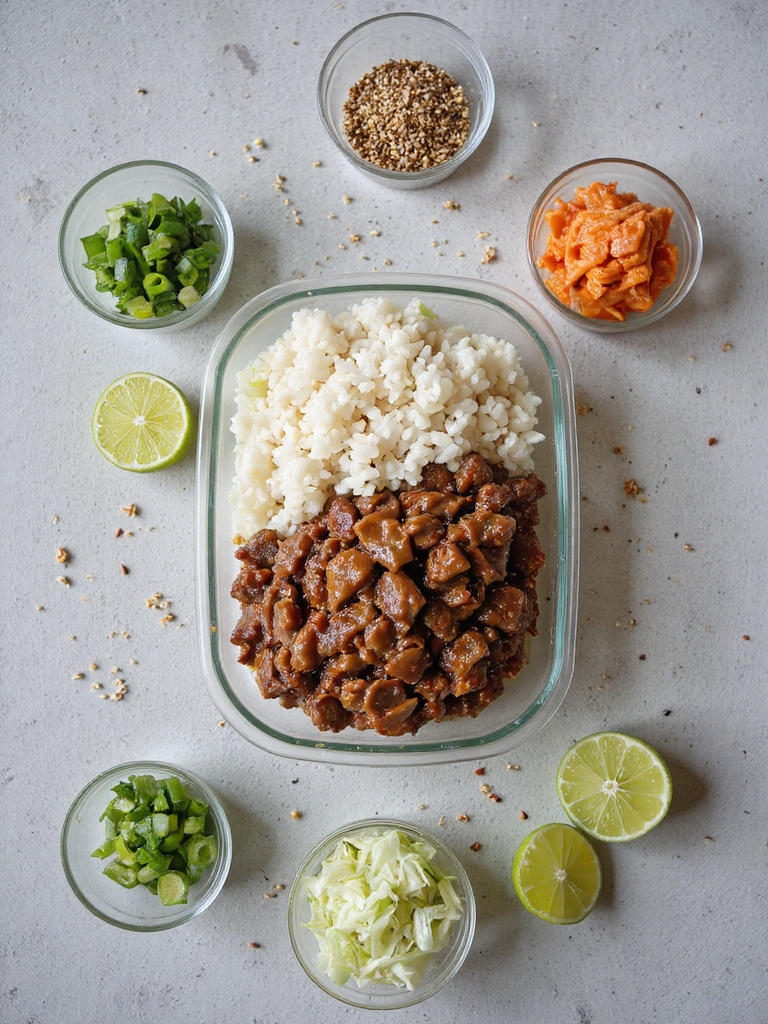
Cook once, eat smart all week: this Korean beef bowl is tailored for make-ahead ease, holding its glossy, savory-sweet sauce and crunchy toppings without turning soggy. Batch-cook beef and rice, cool quickly, and store components separately so you can assemble fresh-tasting bowls in minutes—perfect for desk lunches or quick dinners.
- 2 lb ground beef (85–90% lean)
- 2 tbsp neutral oil
- 6 garlic cloves, minced
- 2 tsp grated ginger
- 2/3 cup low-sodium soy sauce
- 6 tbsp brown sugar
- 2 tbsp gochujang
- 2 tsp sesame oil
- 4 cups cooked rice (white or brown)
- 4 cups shredded cabbage or coleslaw mix
- 1 cup sliced scallions
- 1 cup chopped kimchi
- 2 tbsp rice vinegar
- 2 tbsp toasted sesame seeds
- Lime wedges
Heat oil in a large skillet over medium-high, brown beef 6–7 minutes and drain if needed; add garlic and ginger for 30 seconds. Whisk soy, brown sugar, gochujang, and sesame oil; pour over beef and simmer 2–3 minutes until glossy, then stir in rice vinegar; cool beef and rice on sheet pans, then portion into 4–6 containers, keeping beef and rice together and crunchy toppings (slaw, scallions, sesame, kimchi, lime) separate; refrigerate up to 4 days or freeze beef up to 2 months.
Reheat beef and rice covered in the microwave with a splash of water (60–90 seconds), then add fresh slaw, scallions, sesame, and kimchi just before eating to preserve crunch; for frozen beef, thaw overnight, re-gloss with 1–2 tablespoons water or stock, and finish with lime to brighten. Slow cookers can also be used to make large batches of ground beef for easy meal prep when batch-cooking is preferred.
Creative Variations to Keep It Exciting
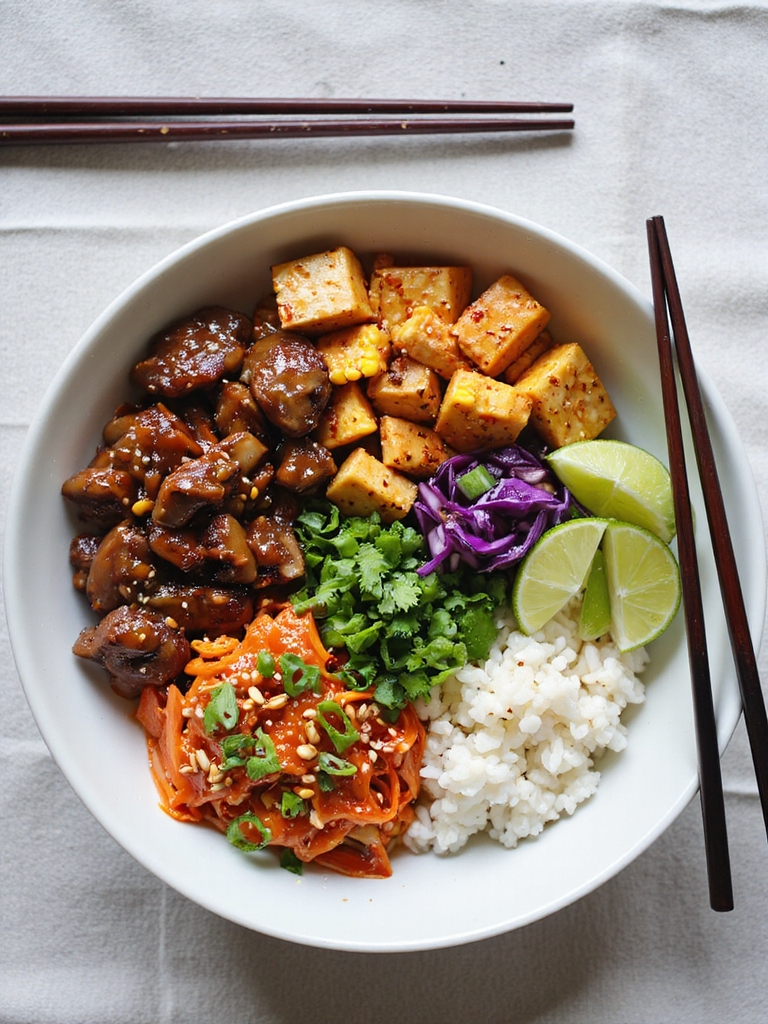
Shake up your Korean beef bowl with global spins and dietary twists that keep the sweet-heat comfort while changing textures, veggies, and carbs. Mix-and-match sauces (miso-maple, bulgogi-pepper jelly, or gochujang-honey), swap proteins (turkey, tofu, mushrooms), and play with bases from cauliflower rice to chewy barley. Add color with quick-pickled veggies, charred corn, or citrusy herbs, and finish with crunchy toppings like furikake, crushed nori, or chili-garlic peanuts for a fresh take every time.
- 2 lb ground beef or turkey (or 16 oz extra-firm tofu, crumbled)
- 2 tbsp neutral oil
- 6 garlic cloves, minced
- 2 tsp grated ginger
- 1/2 cup low-sodium soy sauce or tamari
- 2 tbsp gochujang or chili-garlic paste
- 2–4 tbsp sweetener (brown sugar, maple, or honey)
- 1 tbsp rice vinegar or lime juice
- 1 tsp sesame oil
- 4 cups base: steamed rice, quinoa, or cauliflower rice
- 3 cups mixed veg: shredded cabbage, corn, bell pepper, or mushrooms
- 1 cup kimchi or quick-pickled cucumbers
- 1/2 cup herbs: scallions, cilantro, or Thai basil
- 2 tbsp crunchy finish: sesame seeds, crushed peanuts, or furikake
- Optional: 1 tsp miso paste or 1 tbsp pepper jelly for flavor twist
Heat oil in a large skillet over medium-high, brown protein 5–7 minutes (press tofu to dry first), then add garlic and ginger for 30 seconds; whisk soy, gochujang, sweetener, sesame oil, vinegar, and optional miso or pepper jelly and simmer with protein 2–3 minutes until glossy. Char or quickly sauté mixed veg in a second pan for texture, then build bowls with warm base, saucy protein, veg, kimchi, herbs, and crunchy finish; taste and adjust with lime or vinegar for balance and a splash of water if sauce tightens.
For extra-craveable bowls, layer temperatures (hot base, cool toppings), contrast textures (creamy avocado vs. crunchy seeds), and use a 3-2-1 balancing rule: 3 salty/umami (soy, miso, kimchi), 2 sweet/heat (maple, gochujang), 1 acid (lime). Make it weeknight-easy by cooking the protein and base ahead, then rotate flavor add-ins—miso-maple Monday, pepper-jelly bulgogi Wednesday, and mushroom-tofu umami Friday. For simple, reliable meal-prep batches, brown your protein ahead and portion into containers with ground beef meal prep staples so reheating stays quick and tasty.