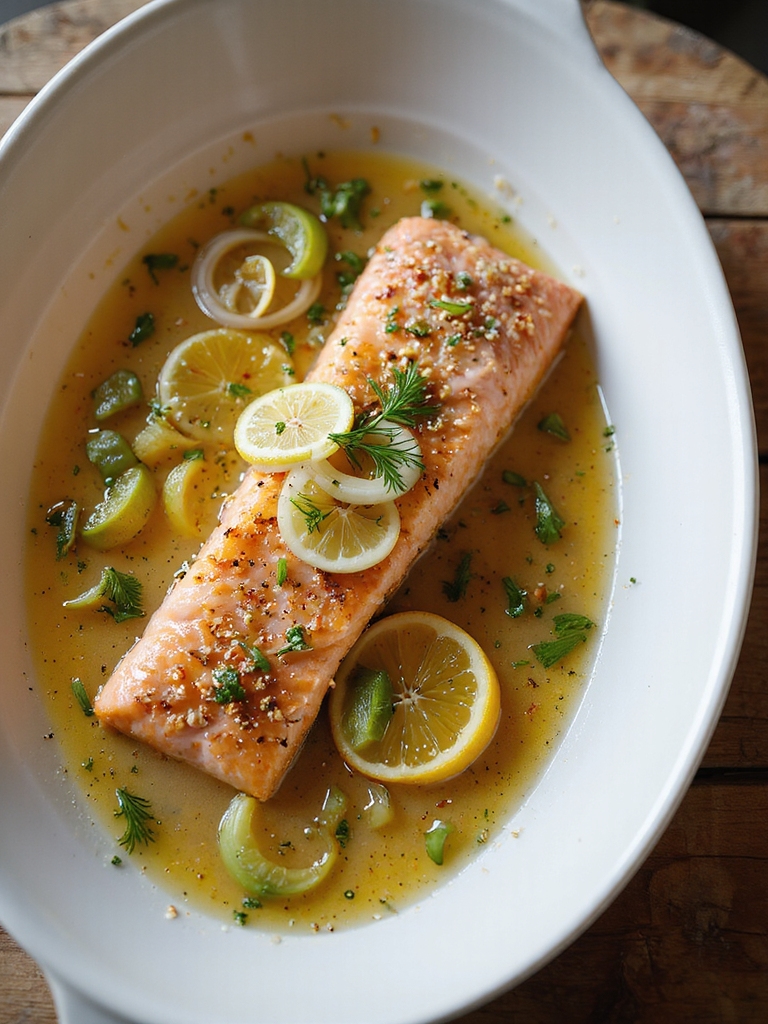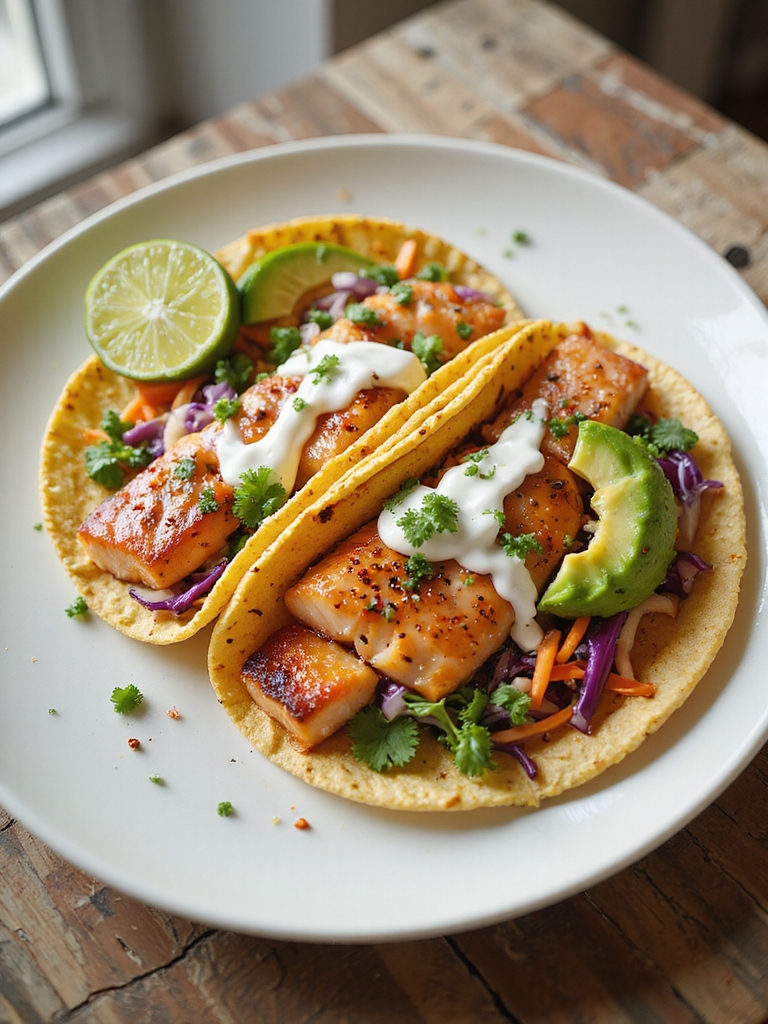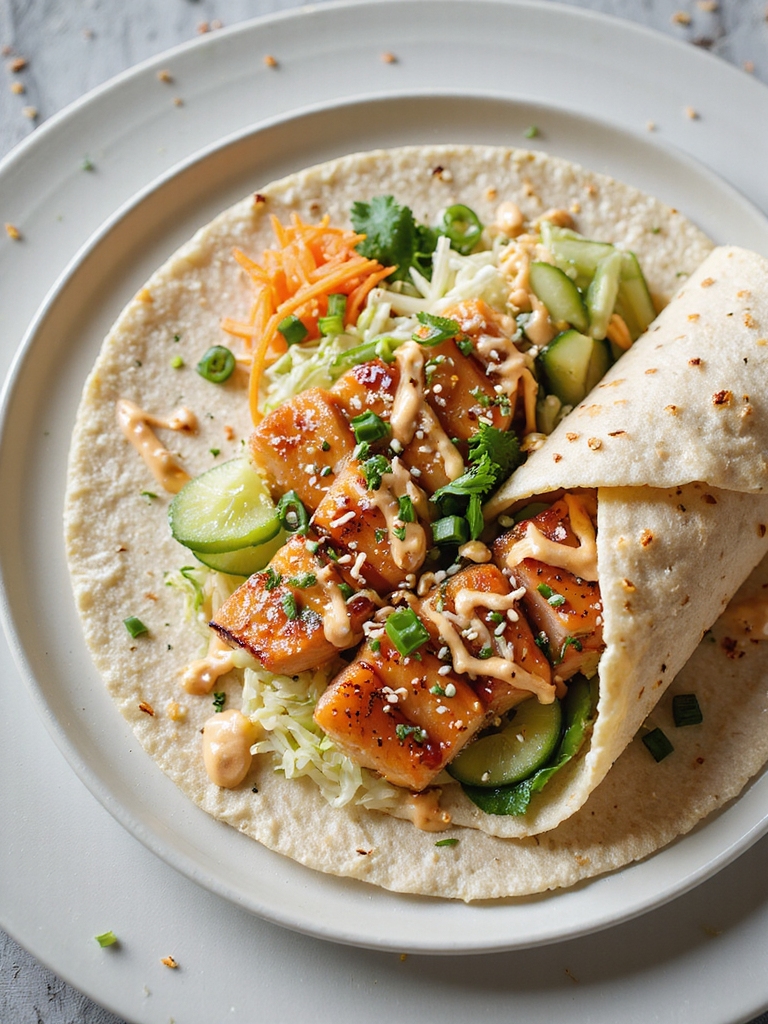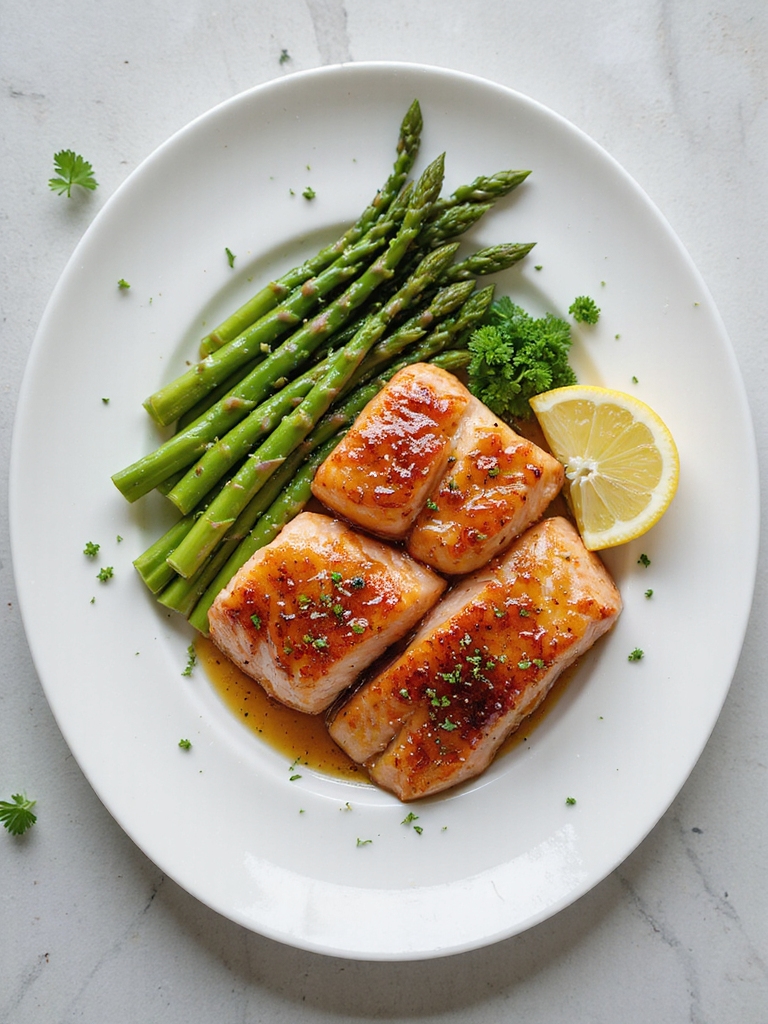
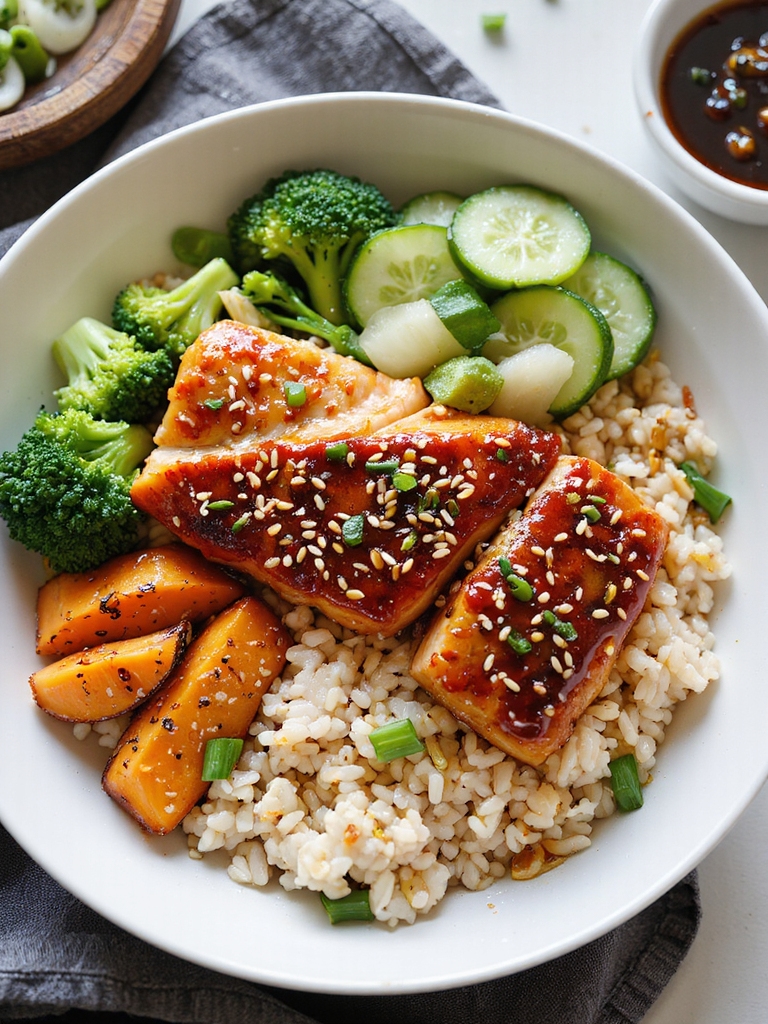
I love how a salmon teriyaki bowl turns pantry staples into something glossy, savory‑sweet, and totally satisfying with almost no fuss; imagine caramelized glaze clinging to flaky salmon, fluffy rice, crisp pickles, and a sprinkle of sesame—simple, elegant, and quick.
I’ll show you easy sauce ratios, three cooking methods, bright toppings, and smart meal‑prep tips so you can have bowls all week—start with the sauce and you’ll see how fast this comes together.
Why Salmon Teriyaki Bowls Are a Weeknight Winner
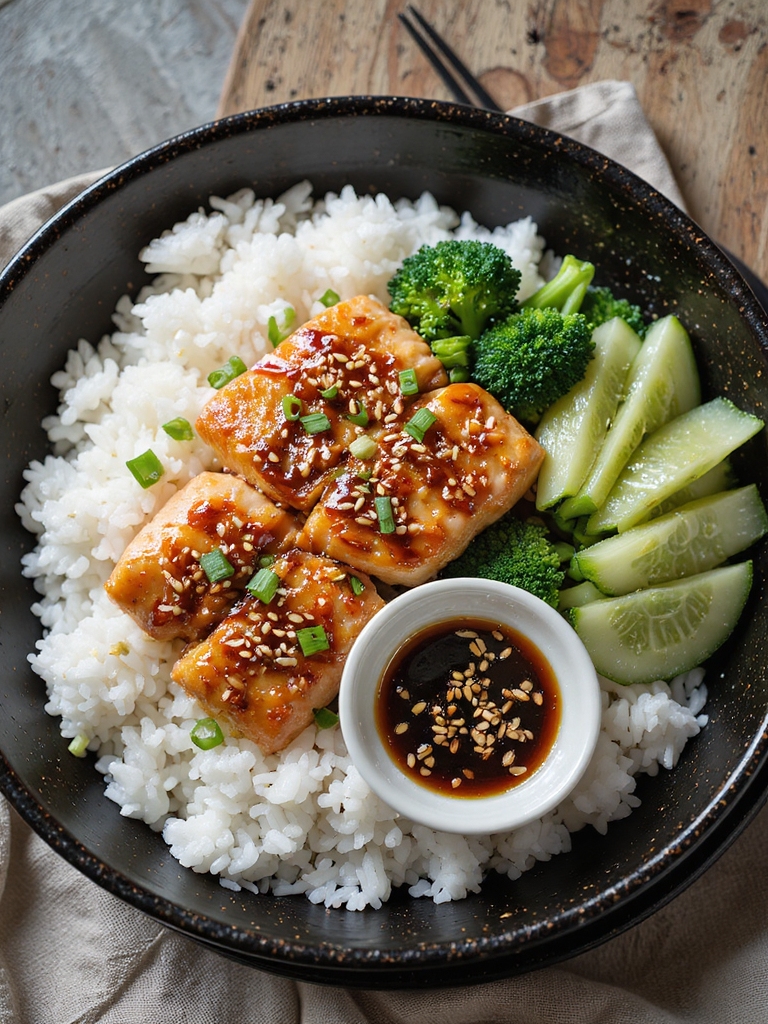
Salmon teriyaki bowls make a weeknight winner because they come together quickly, balance rich umami flavors with bright fresh elements, and can be customized with whatever veggies and rice you have on hand for an easy, satisfying meal that’s both healthy and comforting.
- 1 lb salmon fillets (skin on or off, cut into 4 pieces)
- 1/3 cup soy sauce (or tamari)
- 3 tbsp mirin
- 2 tbsp sake (or chicken/vegetable broth)
- 2 tbsp brown sugar or honey
- 1 tbsp sesame oil
- 1 clove garlic, minced
- 1 tsp ginger, grated
- 1 tbsp cornstarch + 2 tbsp water (slurry)
- 2 cups cooked white or brown rice
- 2 cups mixed vegetables (steamed broccoli, snap peas, or carrots)
- 1 scallion, thinly sliced
- 1 tsp toasted sesame seeds
- Pickled ginger and cucumber slices (optional)
Preheat oven to 400°F (200°C) and whisk soy sauce, mirin, sake, brown sugar, sesame oil, garlic, and ginger in a small saucepan over medium heat until sugar dissolves; bring to a simmer and stir in cornstarch slurry until thickened, then remove from heat and set aside.
Pat salmon dry, sear skin-side down in a hot ovenproof skillet 2–3 minutes until crisp, brush with teriyaki glaze and transfer skillet to oven for 6–8 minutes until just cooked through (or bake salmon on a lined sheet 10–12 minutes), then toss steamed vegetables in a little glaze and assemble bowls with rice, salmon, vegetables, extra sauce, scallions, sesame seeds, and optional pickles.
Let the glaze simmer to thicken so it clings to the salmon, taste and adjust sweetness or salt before glazing, don’t overcook the fish (remove at 125–130°F/52–54°C for medium and it will rise a few degrees while resting), and feel free to double the sauce to have extra for drizzling or marinating leftovers. Make extra glaze and store it in the fridge for up to a week so you always have sauce on hand.
Quick Teriyaki Sauce: From Pantry Staples
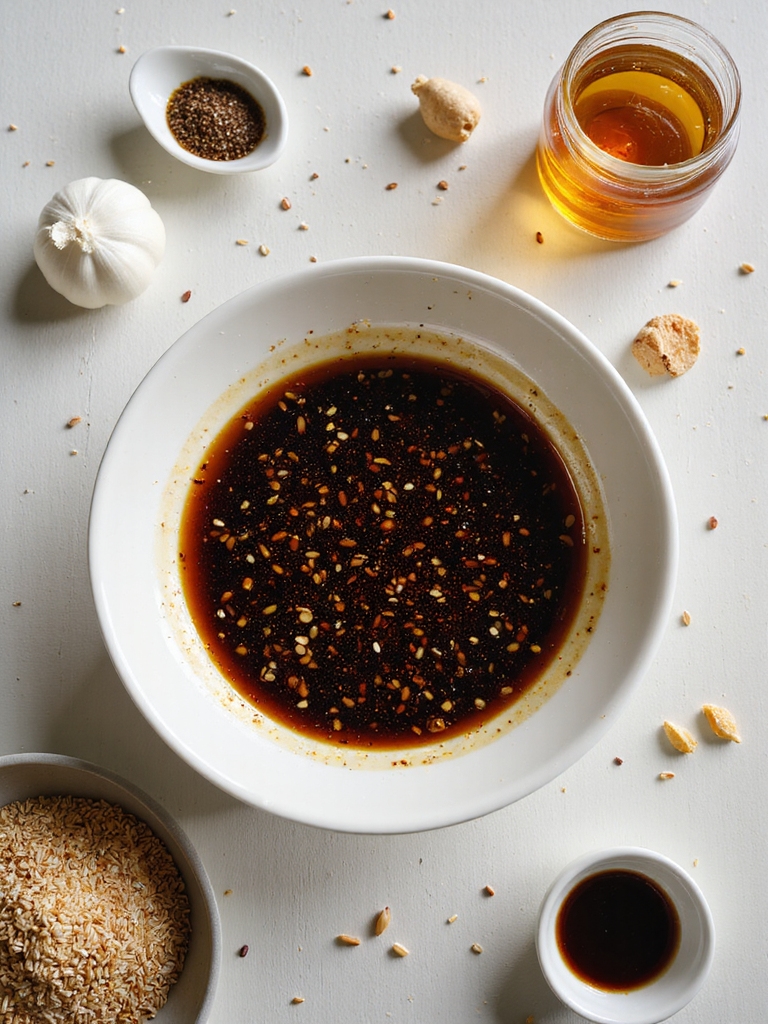
A quick teriyaki sauce made from pantry staples brings bright, savory-sweet flavor to salmon bowls in minutes; it requires just a few common bottles and seasonings, comes together on the stove while the fish or rice cooks, and can be adjusted for sweetness, salt, and thickness to suit your taste or what you have on hand.
- 1/3 cup soy sauce or tamari
- 3 tbsp mirin (or 2 tbsp rice vinegar + 1 tbsp sugar)
- 2 tbsp brown sugar or honey
- 1 tbsp sesame oil
- 1 clove garlic, minced (or 1/4 tsp garlic powder)
- 1 tsp grated fresh ginger (or 1/4 tsp ground ginger)
- 1 tbsp Sake or dry sherry (optional)
- 1 tbsp cornstarch + 2 tbsp cold water (slurry) or 1 tsp cornstarch for light glaze
- 1 tsp rice vinegar or lemon juice (optional, for brightness)
- 1 tbsp toasted sesame seeds (optional)
Whisk soy sauce, mirin, brown sugar, sesame oil, garlic, ginger, and sake in a small saucepan over medium heat until sugar dissolves and mixture is warm; stir in cornstarch slurry, bring to a gentle simmer and cook 1–2 minutes until glossy and thickened, taste and add a splash of rice vinegar or lemon juice if it needs brightness, then remove from heat and let cool slightly so it will cling to fish and vegetables.
Tip: Make the sauce ahead and refrigerate up to one week; reheat gently and whisk in a little water if too thick, and always taste before glazing—add salt, sweet, or acid to balance.
This simple sauce pairs especially well with oven-baked salmon for an easy, flavorful weeknight dinner.
Classic Pan-Seared Salmon With Glaze Finish
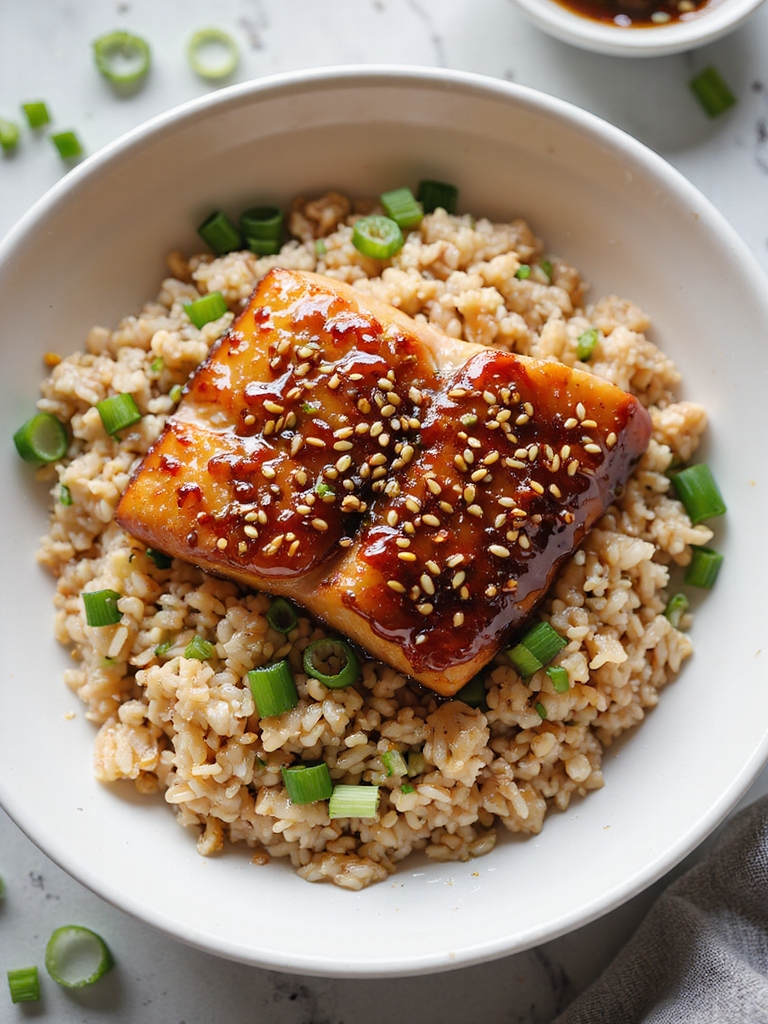
Pan-seared salmon finished with a glossy teriyaki glaze is a quick, restaurant-style dish that gives you crisp, golden skin and a tender, just-cooked interior while the sauce reduces to coat each fillet; this recipe uses the quick teriyaki sauce from the pantry-staples subtopic and shows how to properly season, sear, and finish salmon for a beautiful bowl-ready main.
- 4 salmon fillets (6 oz each), skin on, patted dry
- Salt
- Freshly ground black pepper
- 1–2 tbsp neutral oil (canola, vegetable, or grapeseed)
- 1/2 cup quick teriyaki sauce (from recipe)
- 1 tsp toasted sesame seeds (optional)
- 1 scallion, thinly sliced (optional)
- Lemon or lime wedges (optional)
Heat a large nonstick or stainless-steel skillet over medium-high heat until very hot, season salmon generously with salt and pepper, add oil and place fillets skin-side down, pressing gently for 10–15 seconds to prevent curling; cook undisturbed 4–5 minutes until skin is crisp and edges are opaque, flip carefully and cook 1–2 minutes for medium or 3–4 for well done.
Reduce heat to low, pour warmed teriyaki sauce into the pan and spoon over fillets as the sauce thickens and glazes them (about 30–60 seconds), remove to plates skin-side up, sprinkle with sesame seeds and scallions, and serve immediately with lemon or lime.
Tip: Use room-temperature salmon and a very hot pan for crisp skin, avoid overcrowding the pan, and always finish by glazing over low heat so the sauce clings without burning.
For best results, start with salmon at room temperature to ensure even cooking and crisp skin.
Oven-Roasted Salmon for Hands-Off Prep
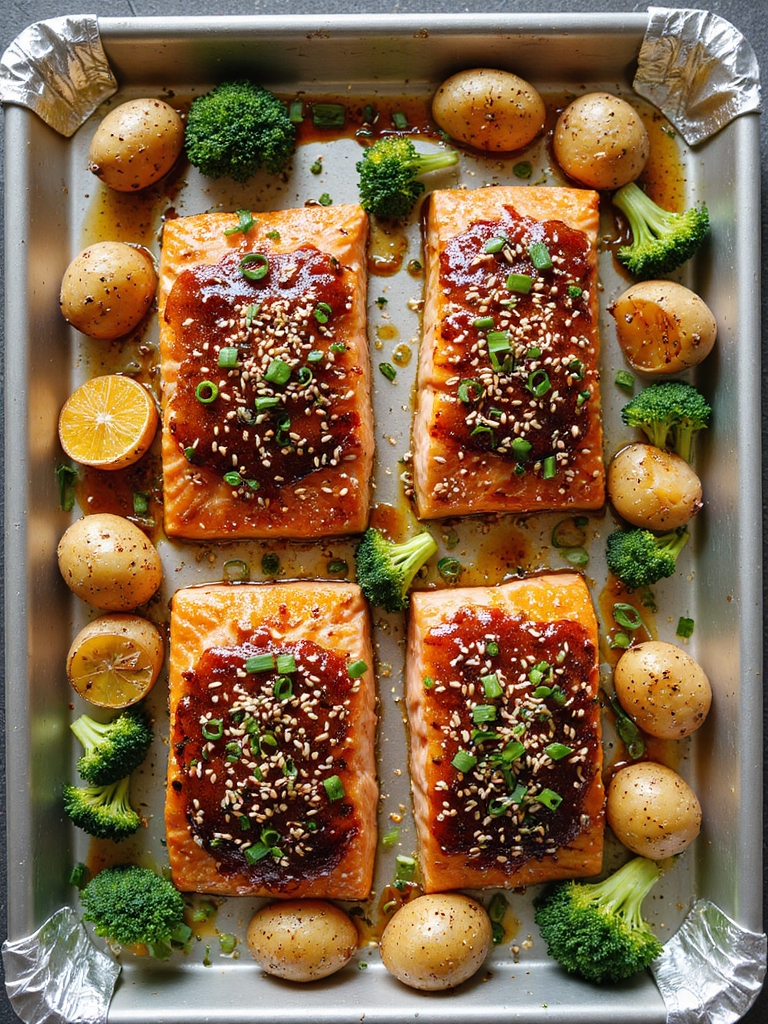
Oven-roasted salmon is an easy, hands-off way to get tender, evenly cooked fillets with minimal fuss — this method uses the quick teriyaki sauce to glaze the fish near the end for a glossy finish and can be done on a sheet pan with veggies or on a rack for crisper skin; it’s ideal when you want reliable results without standing at the stove and scales well for 2–6 servings.
- 4 salmon fillets (6 oz each), skin on, patted dry
- Salt
- Freshly ground black pepper
- 1–2 tbsp neutral oil (canola, vegetable, or grapeseed)
- 1/2 cup quick teriyaki sauce (from recipe)
- 1 tsp toasted sesame seeds (optional)
- 1 scallion, thinly sliced (optional)
- Lemon or lime wedges (optional)
Preheat oven to 425°F (220°C), line a baking sheet with foil or parchment and lightly oil it, season salmon with salt and pepper and brush skin and sides with oil, place fillets skin-side down spaced apart and roast on the middle rack until the fish is almost done — about 8–12 minutes depending on thickness; transfer to broil for 1–2 minutes while watching closely, remove and spoon warmed teriyaki sauce over the tops, then return to oven for 30–60 seconds or simply brush and let rest 1–2 minutes until the glaze is tacky, garnish with sesame seeds and scallions and serve with lemon.
Tip: Use room-temperature fillets, don’t overcook (internal temp ~125–130°F/52–55°C for medium), and apply the teriyaki near the end to avoid burning the sugars while still achieving a glossy glaze. A quick sheet pan method makes cleanup and serving especially simple.
Crispy Air-Fryer Salmon Teriyaki
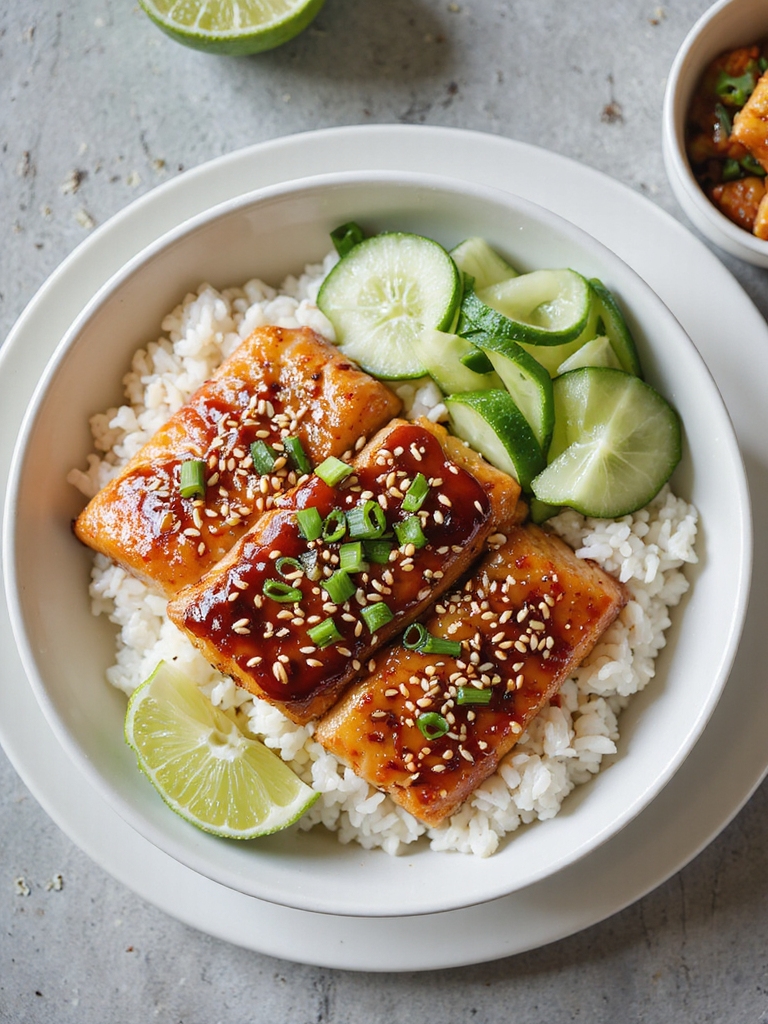
Crispy Air-Fryer Salmon Teriyaki gives you a quick, hands-off weeknight main with crackly edges and a sticky-sweet glaze; this method uses a light oil and high heat to crisp the skin, cooks fillets fast so they stay juicy, and finishes with a brush of teriyaki so the sugars caramelize without burning — makes 2–4 servings and pairs beautifully with steamed rice and quick-pickled cucumbers.
- 4 salmon fillets (6 oz each), skin on, patted dry
- Salt
- Freshly ground black pepper
- 1–2 tsp neutral oil (canola, vegetable, or grapeseed)
- 1/2 cup quick teriyaki sauce (from recipe)
- 1 tsp toasted sesame seeds (optional)
- 1 scallion, thinly sliced (optional)
- Lemon or lime wedges (optional)
Preheat your air fryer to 400°F (200°C); season salmon with salt and pepper and rub a thin film of oil on the skin, place fillets skin-side down in a single layer in the basket leaving space between pieces and cook for 7–9 minutes depending on thickness until the skin is crisp and internal temp reads 125–130°F (52–55°C), open the air fryer and brush tops with teriyaki sauce, return for 30–60 seconds to tack the glaze (watch closely to avoid burning) then remove and rest 1–2 minutes before garnishing with sesame seeds and scallions and serving with lemon wedges.
Tip: Use room-temperature fillets, don’t overcrowd the basket for even crisping, apply teriyaki at the end to prevent burning, and check doneness early since air-fryers vary in intensity.
For convenience, you can also start from frozen using a similar high-heat method, adjusting cook time as needed and ensuring the air fryer cooks through evenly.
Perfect Steamed Rice and Grain Alternatives
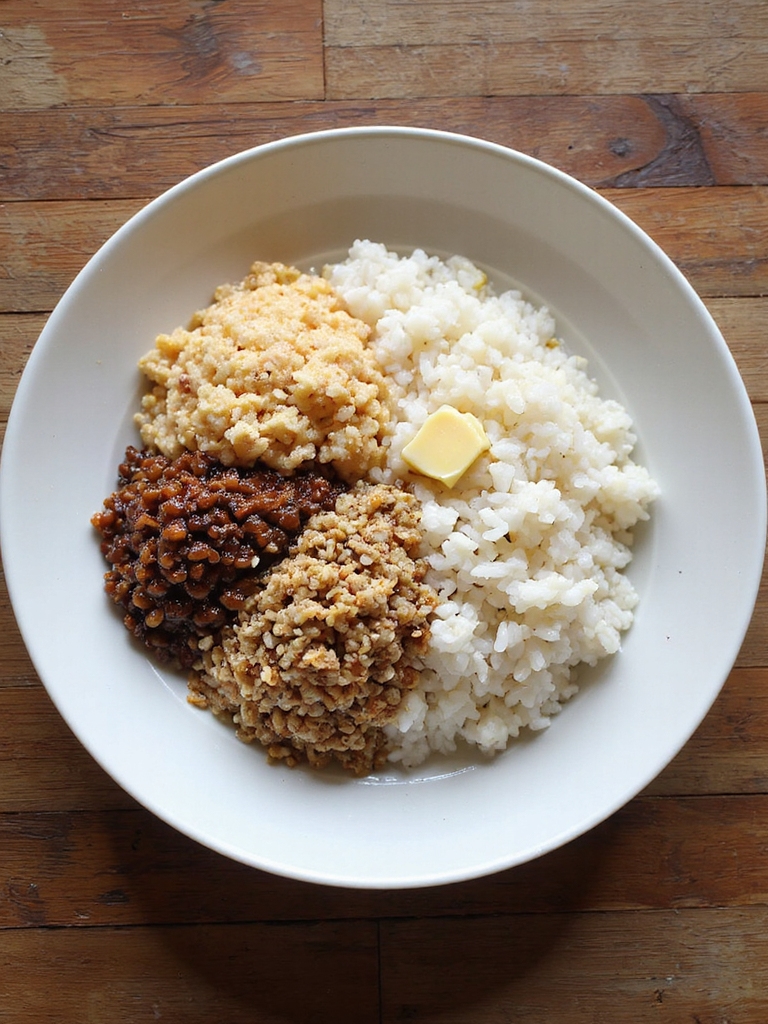
Perfect steamed rice is the easiest and most important foundation for a teriyaki salmon bowl, and you can swap in quick-cooking grains or nutritious alternatives like quinoa or farro to suit texture and time; this recipe gives foolproof stovetop steamed white rice with options for jasmine, brown rice, quinoa, or quick-cooking farro so your bowls come together perfectly whether you want fluffy, sticky, nutty, or chewy bases.
- 1 cup jasmine rice (or 1 cup long-grain white, brown rice, quinoa, or quick-cooking farro)
- 1¼ cups water for jasmine/long-grain white (1¾ cups water for brown rice; 1½ cups water for quinoa; 2 cups water for farro)
- ½ teaspoon fine salt
- 1 teaspoon neutral oil or 1 tablespoon butter (optional, for nonstick and flavor)
- 1 tablespoon rice vinegar (optional, for sushi-style finish)
- 1 teaspoon sugar (optional, with rice vinegar)
Rinse the rice or grain under cold water until the water runs mostly clear (for quinoa, rinse well to remove bitterness), combine rinsed grain, the appropriate water amount, salt, and oil or butter in a medium saucepan, bring to a low boil, stir once, cover tightly and reduce to the lowest heat simmer setting and cook undisturbed for 12–15 minutes for jasmine/long-grain white, 40–45 minutes for brown rice, 15 minutes for quinoa (then sit 5 minutes off heat), or 20–25 minutes for quick-cooking farro.
Remove from heat and let steam, covered, for 10 minutes before fluffing with a fork and if using rice vinegar and sugar, sprinkle and fold gently to finish.
Tip: Use the correct water ratio for your chosen grain, resist lifting the lid while it cooks, and let it rest covered to finish steaming so grains are tender and not gummy. Fresh-frozen salmon also pairs well with these bases when cooked directly from frozen for convenience and flavor frozen salmon.
Fresh and Pickled Veggie Toppings to Brighten Bowls
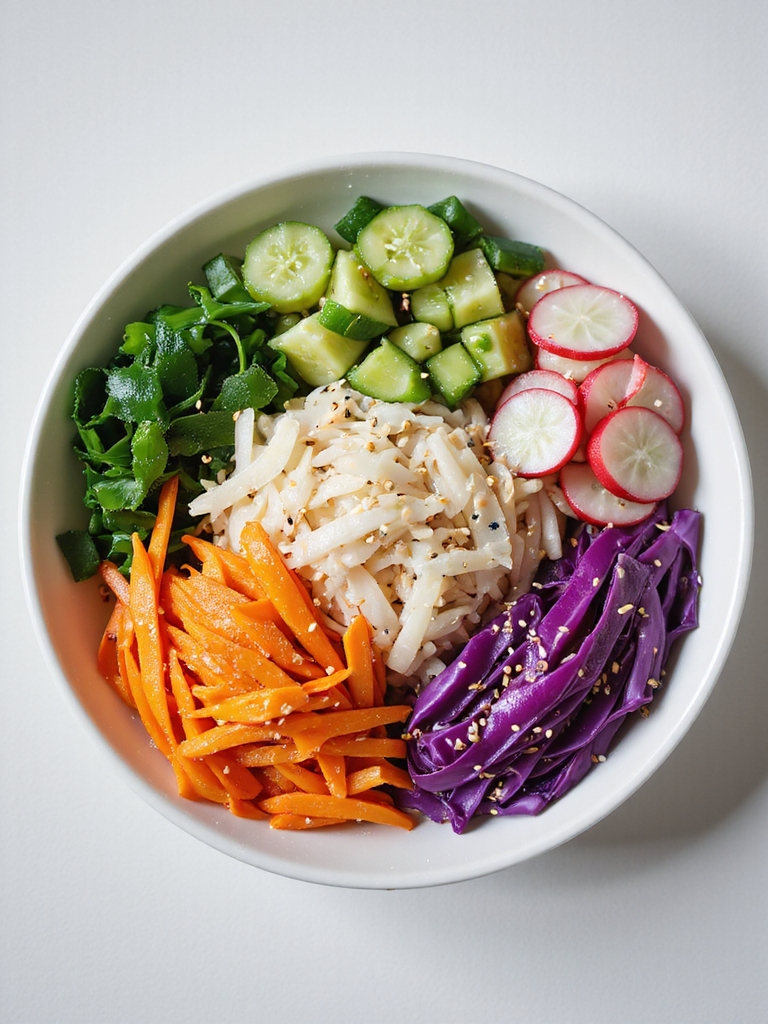
Bright, crunchy fresh and quick-pickled vegetables lift a teriyaki salmon bowl from good to great — this simple recipe gives you a mix of fast pickles and fresh toppings (cucumber, radish, scallions, carrots, and cabbage) that take 15–30 minutes and can be prepped ahead for weekday bowls or assembled right before serving to keep everything vibrant.
- 1 small English cucumber, thinly sliced
- 3–4 radishes, thinly sliced
- 1 medium carrot, julienned or shaved
- 1 cup thinly sliced red cabbage or napa cabbage
- 3 scallions, thinly sliced (white and green parts separated)
- 1/2 cup rice vinegar
- 1/4 cup water
- 1 tablespoon sugar
- 1 teaspoon fine salt
- 1 teaspoon sesame oil (optional)
- 1 teaspoon toasted sesame seeds (optional)
Toss cucumber, radish, carrot, and cabbage in a bowl then dissolve sugar and salt in rice vinegar and water, pour the pickling liquid over half the vegetable mix for quick pickles (let sit 10–20 minutes at room temperature or refrigerate for up to 24 hours) while reserving the other half fresh for crunch and mixing in scallion whites, sesame oil, and sesame seeds to finish; serve the pickled and fresh vegetables together atop steamed rice and teriyaki salmon with scallion greens and extra sesame seeds.
Make pickles ahead up to 24 hours for more flavor but keep some fresh veggies to maintain crisp texture and drain pickles briefly before assembling if you don’t want excess liquid on the rice. This recipe pairs especially well with a simple salmon bowl to showcase the balance of savory and bright flavors.
Make-Ahead Meal-Prep Salmon Bowls for the Week
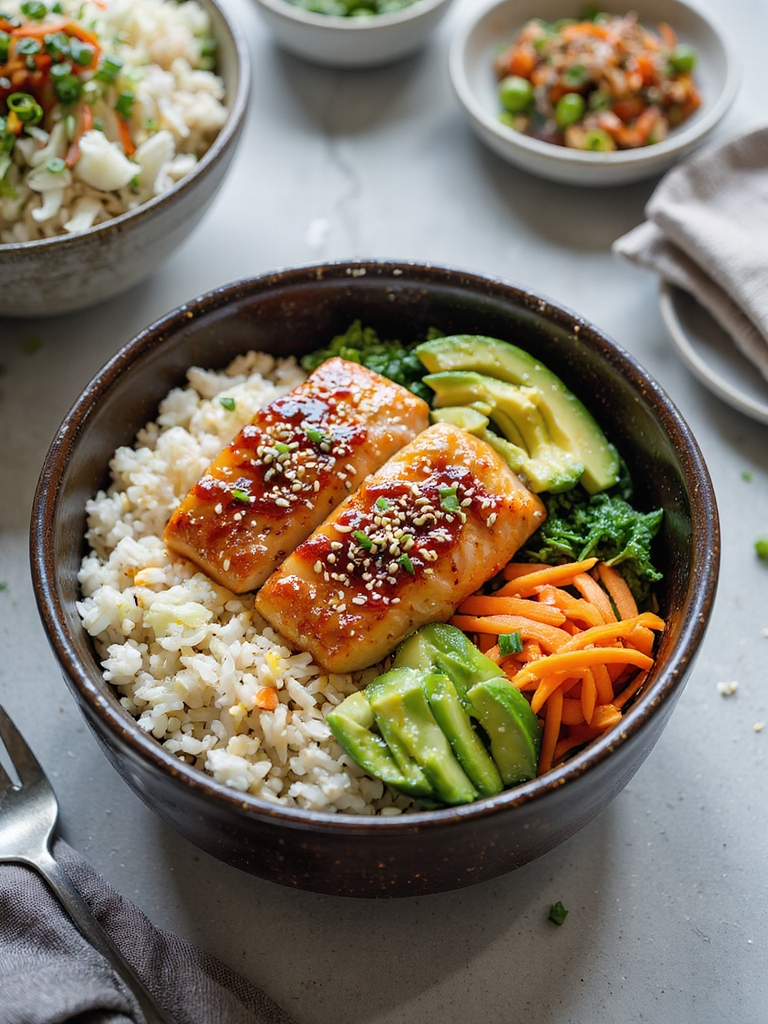
Make-ahead meal-prep salmon bowls streamline weekday dinners by cooking components in batches—roasted or pan-seared teriyaki salmon, steamed rice, and a mix of quick-pickled and fresh vegetables—then portioning into containers for 3–5 days of ready-to-heat bowls that stay bright and flavorful with minimal daily effort.
- 4 salmon fillets (4–6 oz each)
- 1 cup soy sauce
- 1/2 cup mirin
- 1/4 cup rice vinegar
- 1/4 cup brown sugar or honey
- 1 tablespoon grated ginger
- 2 cloves garlic, minced
- 3 cups cooked short-grain rice
- 2 cups quick-pickled cucumber/radish/carrot mix (prepared as above)
- 2 cups fresh shredded cabbage
- 4 scallions, sliced (separate whites and greens)
- 1 tablespoon sesame oil
- 1 tablespoon toasted sesame seeds
- Optional: steamed edamame, avocado slices, nori strips
Whisk soy sauce, mirin, rice vinegar, brown sugar, ginger, and garlic to make the teriyaki; marinate salmon 15–30 minutes (or up to 2 hours), then bake at 400°F (200°C) on a lined sheet for 10–14 minutes until just flaky, reduce and simmer remaining marinade to a glaze, cook rice and steam or blanch any additional vegetables, cool components, then portion rice, salmon, pickled and fresh veggies, and extras into airtight containers, drizzle each salmon with cooled glaze or pack glaze separately and refrigerate for up to 4 days.
Tip: Cool all components to near-room temperature before sealing to avoid sogginess; store dressings/glaze separately, reheat salmon gently (oven or skillet) and assemble with fresh elements on the day for best texture. Learn more about sheet pan salmon for an effortless cooking method that simplifies cleanup and timing.
Creative Sauce Variations and Add-Ins
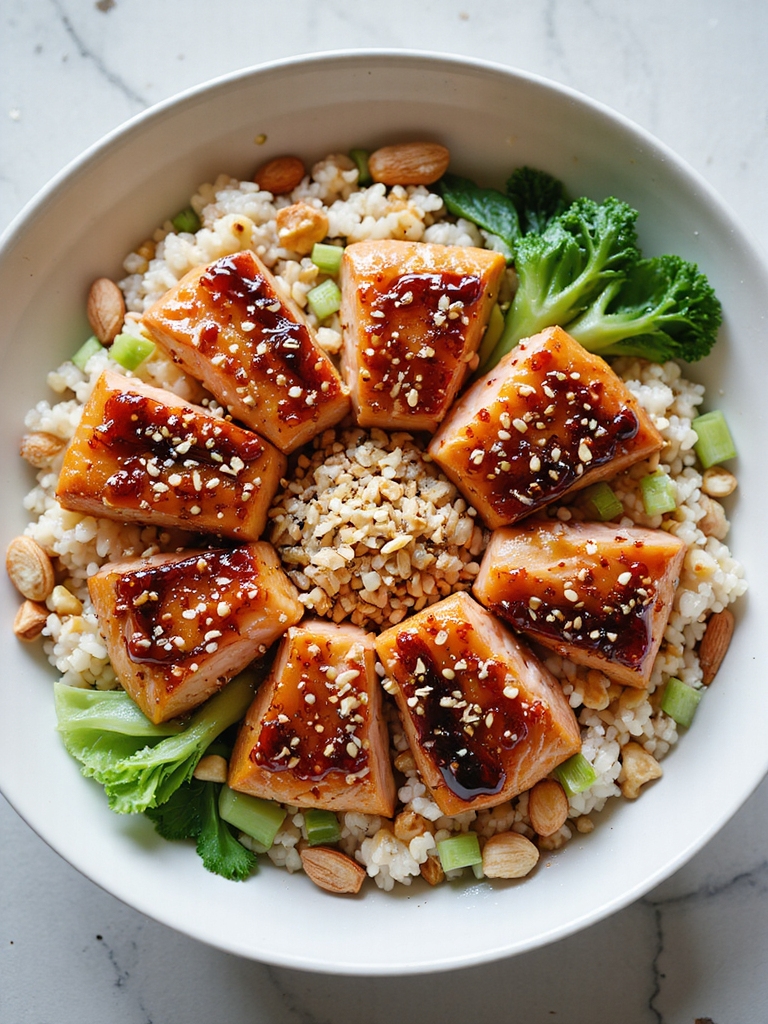
Give your teriyaki salmon bowls a flavor boost by experimenting with creative sauce variations and add-ins — from citrus-ponzu and spicy gochujang blends to miso-maple or coconut-lime dressings — and finish with textured toppers like crispy shallots, toasted nuts, furikake, or pickled shallots to add contrast; this recipe outlines three mix-and-match sauces and simple add-ins so you can customize bowls to sweet, spicy, or umami-forward profiles.
- 4 salmon fillets (4–6 oz each)
- 1/2 cup soy sauce
- 1/4 cup mirin
- 2 tbsp rice vinegar
- 2 tbsp brown sugar or honey
- 1 tbsp grated ginger
- 1 clove garlic, minced
- 1 tbsp gochujang (for spicy variation)
- 2 tbsp white miso + 1 tbsp maple syrup (for miso-maple)
- 2 tbsp ponzu + 1 tsp yuzu or lemon zest (for citrus-ponzu)
- 1 tbsp sesame oil
- 1 tbsp toasted sesame seeds
- Optional add-ins: toasted almonds, crispy shallots, furikake, sliced scallions, nori strips, pickled ginger, thinly sliced jalapeño
Preheat oven to 400°F (200°C) and whisk together your chosen sauce base (classic teriyaki: soy, mirin, rice vinegar, brown sugar, ginger, garlic; spicy: add gochujang; miso-maple: whisk miso and maple into a reduced soy-mirin mix; citrus-ponzu: swap rice vinegar for ponzu and add zest), marinate salmon 15–30 minutes, bake on a lined sheet 10–14 minutes until just flaky while simmering remaining marinade to thicken into a glaze, then brush or toss salmon with glaze and top with sesame seeds and chosen add-ins before serving over rice and vegetables.
Tip: Taste and adjust each sauce for balance—add a touch of acid for brightness, sweetener to round heat, or a dash of water to loosen thick glazes—and keep crunchy toppings separate until serving to maintain texture.
Garlic butter salmon is an indulgent alternative you can make with the same basic method to add richness and a buttery finish; try finishing with a pat of garlic herb butter while the fish rests to melt into the glaze and enhance the salmon fillets.
Tips for Plating, Storage, and Reheating
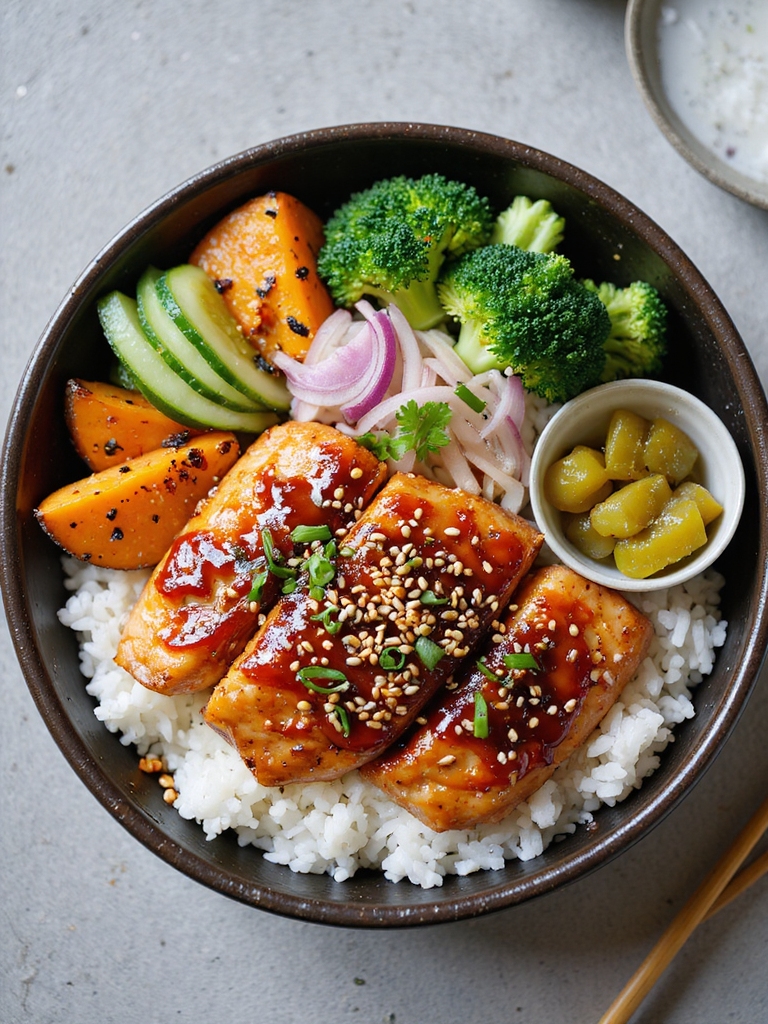
A well-plated teriyaki salmon bowl balances color, texture, and temperature: arrange steamed rice or grains as the base, nestle the glazed salmon fillet on top or to the side, add vibrant vegetables (blanched broccoli, thin cucumber ribbons, pickled radish, or roasted sweet potato), then finish with chosen crunchy toppers and a drizzle of reserved glaze, using small bowls for pickles or sauces to keep components neat and let each diner customize.
- 4 salmon fillets (4–6 oz each)
- 1/2 cup soy sauce
- 1/4 cup mirin
- 2 tbsp rice vinegar
- 2 tbsp brown sugar or honey
- 1 tbsp grated ginger
- 1 clove garlic, minced
- 1 tbsp gochujang (optional)
- 2 tbsp white miso + 1 tbsp maple syrup (optional)
- 2 tbsp ponzu + 1 tsp citrus zest (optional)
- 1 tbsp sesame oil
- 1 tbsp toasted sesame seeds
- Steamed rice or grains for serving
- Vegetables for bowls (broccoli, cucumber, carrots, edamame, or roasted sweet potato)
- Optional add-ins: toasted almonds, crispy shallots, furikake, sliced scallions, nori strips, pickled ginger, jalapeño slices
Preheat oven to 400°F (200°C), whisk your chosen sauce (classic teriyaki: soy, mirin, rice vinegar, brown sugar, ginger, garlic; spicy: add gochujang; miso-maple: stir miso and maple into reduced soy-mirin; citrus-ponzu: substitute ponzu and add zest), marinate salmon 15–30 minutes while reserving some marinade, bake on a lined sheet 10–14 minutes until just flaky, simmer reserved marinade to a glaze and brush over salmon, then plate over rice with vegetables and finish with sesame seeds and crunchy toppers.
Store leftover salmon and rice separately in airtight containers in the fridge up to 3 days, reheat gently in a 300°F oven or covered skillet with a splash of water to prevent drying, and keep crunchy toppings aside until serving to preserve texture. A simple oven method yields reliably moist fish when you bake salmon at 400°F (200°C).