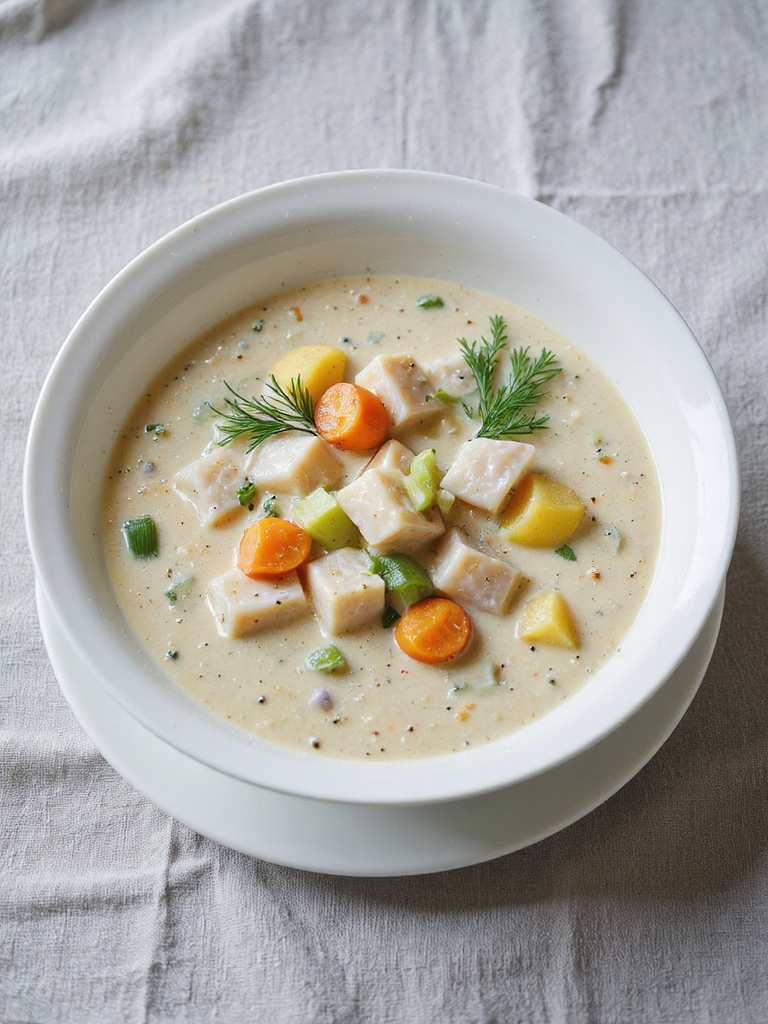
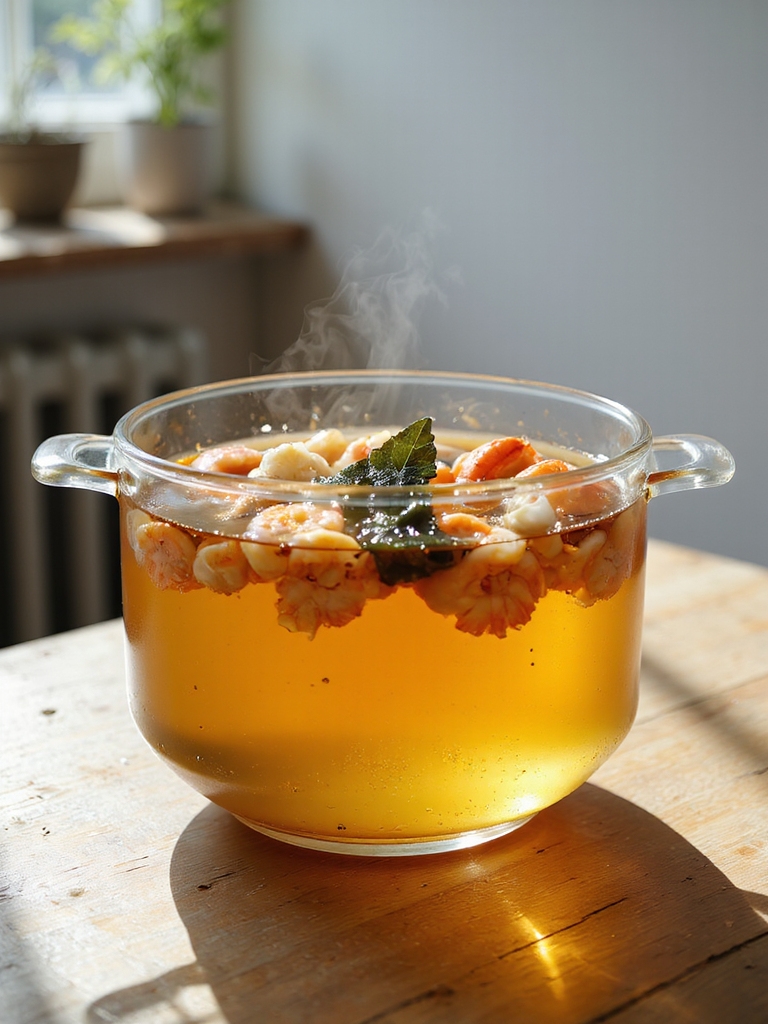
I’ve learned that a good seafood stock is the easiest way to lift soups and stews from fine to memorable. Use bones or shells, cold water, a splash of acid, and gentle aromatics, and you’ll get bright, savory depth with minimal fuss.
I’ll show quick weeknight options and richer reductions, plus tricks to avoid bitterness and store what you make—so you can always reach for a jar that actually improves the dish.
Why Seafood Stocks Matter: Flavor Principles and Ingredients
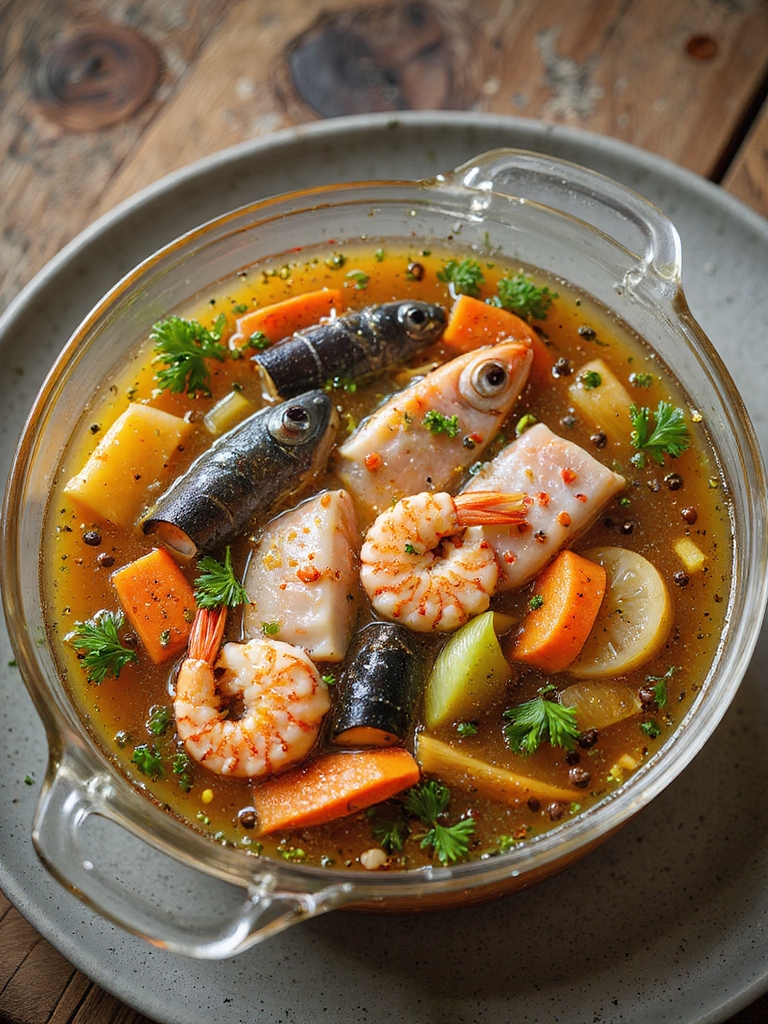
Making a good seafood stock is the foundational skill that elevates soups, risottos, sauces, and chowders by extracting the concentrated essence of shellfish and fish bones while balancing aromatics, herbs, and acids for clear, umami-rich flavor without muddiness.
- 2 lb (900 g) mixed fish bones and heads (non-oily white fish)
- 1 lb (450 g) shrimp shells and crab shells (optional for shellfish stock)
- 2 carrots, rough-chopped
- 2 celery stalks, rough-chopped
- 1 large onion, halved (no need to peel)
- 6 cloves garlic, smashed
- 1 leek (white part only), washed and sliced
- 1 bay leaf
- 6 sprigs fresh parsley
- 4 sprigs fresh thyme or 1 tsp dried thyme
- 6–8 black peppercorns
- 1–2 tbsp tomato paste (for color and depth, optional)
- 1/2 cup dry white wine or 2 tbsp white wine vinegar (acid)
- 10 cups cold water
- 1–2 tsp salt (adjust after reducing)
Combine bones and shells with cold water, add wine or vinegar, bring slowly to a bare simmer over medium-low heat, skimming foam frequently, then add vegetables, aromatics, and tomato paste if using; continue to simmer gently for 30–45 minutes for mixed fish and 45–60 minutes for shells-only, avoid boiling to prevent cloudiness, strain through a fine-mesh sieve lined with cheesecloth, cool quickly, skim fat, season to taste and use or refrigerate/freezer for later.
Tip: Use mostly white-fleshed fish bones, keep the simmer gentle and skim often, add a small acidic element to help extract flavor, and don’t overcook to avoid bitter or fishy off-notes. A quick initial cold soak with the bones and cold water helps extract clearer flavor and reduces impurities.
Quick Shrimp Shell Stock for Weeknight Chowders
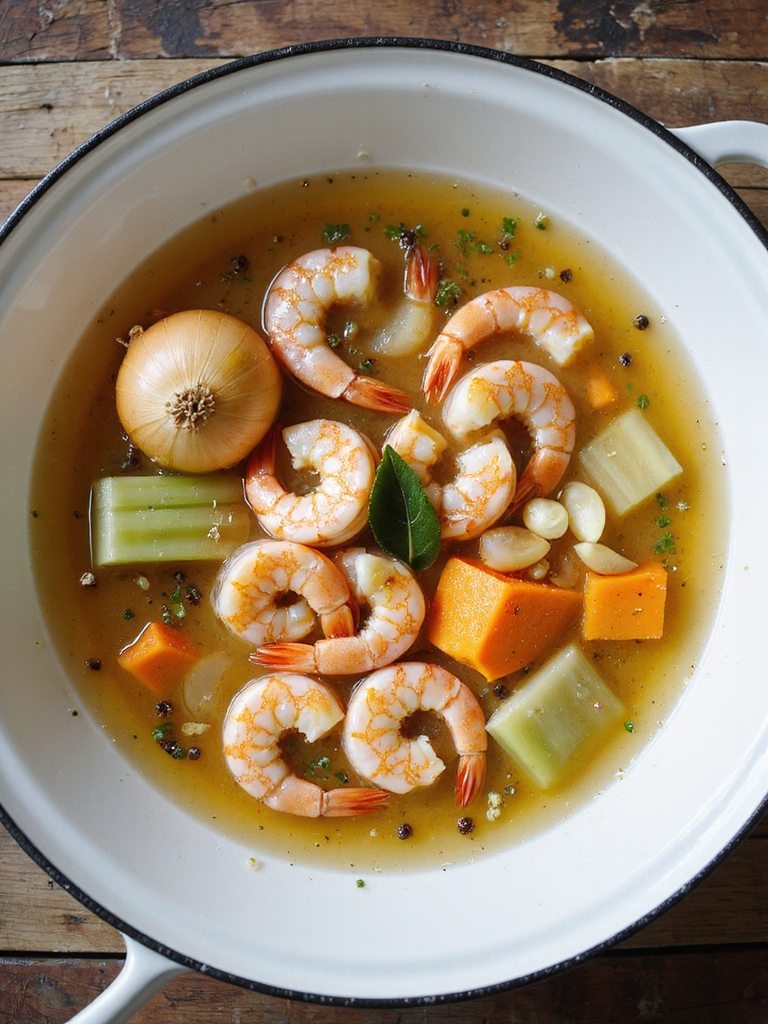
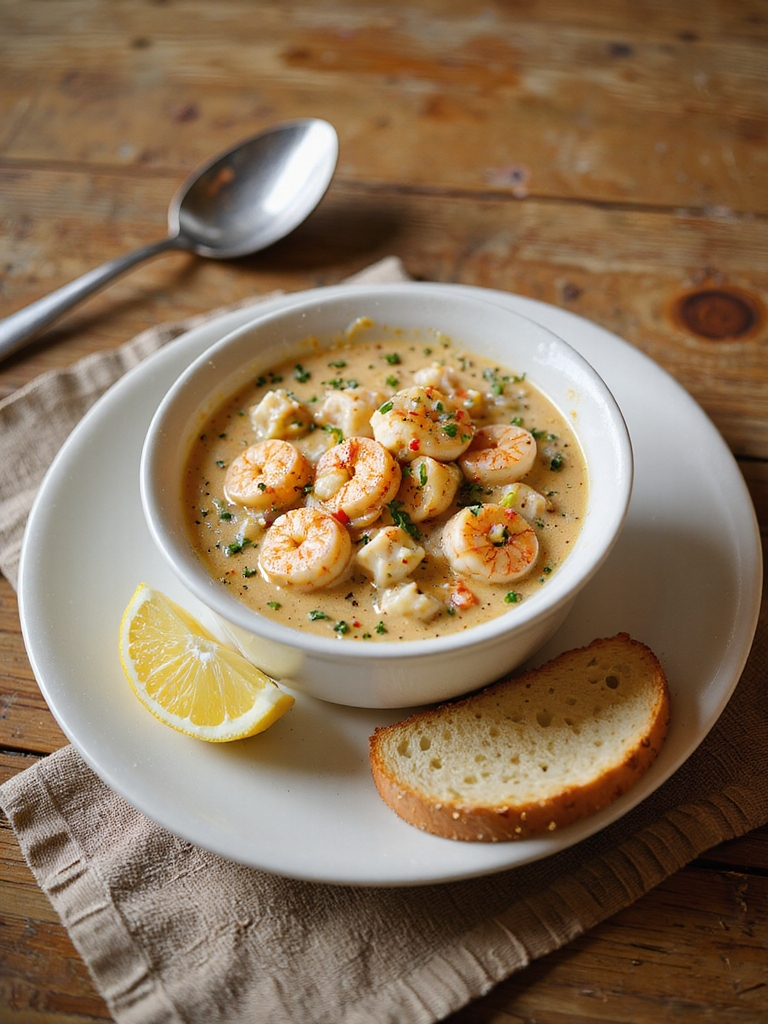
This quick shrimp shell stock is a fast, flavorful base for weeknight chowders that uses sautéed shells, aromatics, a splash of acid, and a short simmer to extract maximum flavor without long cooking; it yields a bright, savory stock in about 30–40 minutes and can be frozen in portions for future use.
- 1 lb (450 g) shrimp shells (from peeled shrimp)
- 1 small onion, roughly chopped
- 1 carrot, roughly chopped
- 1 celery stalk, roughly chopped
- 3 cloves garlic, smashed
- 1 bay leaf
- 6–8 black peppercorns
- 1 sprig fresh parsley or 1 tsp dried parsley
- 1 tbsp olive oil or butter
- 1/4 cup dry white wine or 1 tbsp white wine vinegar
- 6 cups cold water
- 1/2 tsp salt (adjust after reducing)
Heat oil in a medium pot over medium-high, add shrimp shells and sauté until fragrant and pink (about 3–4 minutes) to develop flavor.
Add chopped onion, carrot, celery and garlic and cook 2–3 minutes to soften.
Pour in wine or vinegar and let it reduce for 1 minute.
Add cold water, bay leaf, peppercorns and parsley, bring to a gentle simmer, skim any foam, and cook gently for 20–25 minutes.
Then strain through a fine sieve or cheesecloth, press lightly on solids, cool quickly, adjust seasoning and use immediately or chill/freeze.
Tip: Use fresh shells (or thawed) and sauté them first for deeper flavor, avoid boiling to keep clarity, and taste and salt only after reducing so the seasoning isn’t too strong.
Keeping the stock light and bright is easy when you sauté shells first to build a deeper, more concentrated flavor before simmering.
Classic Fish Bone Stock for Clear Broths
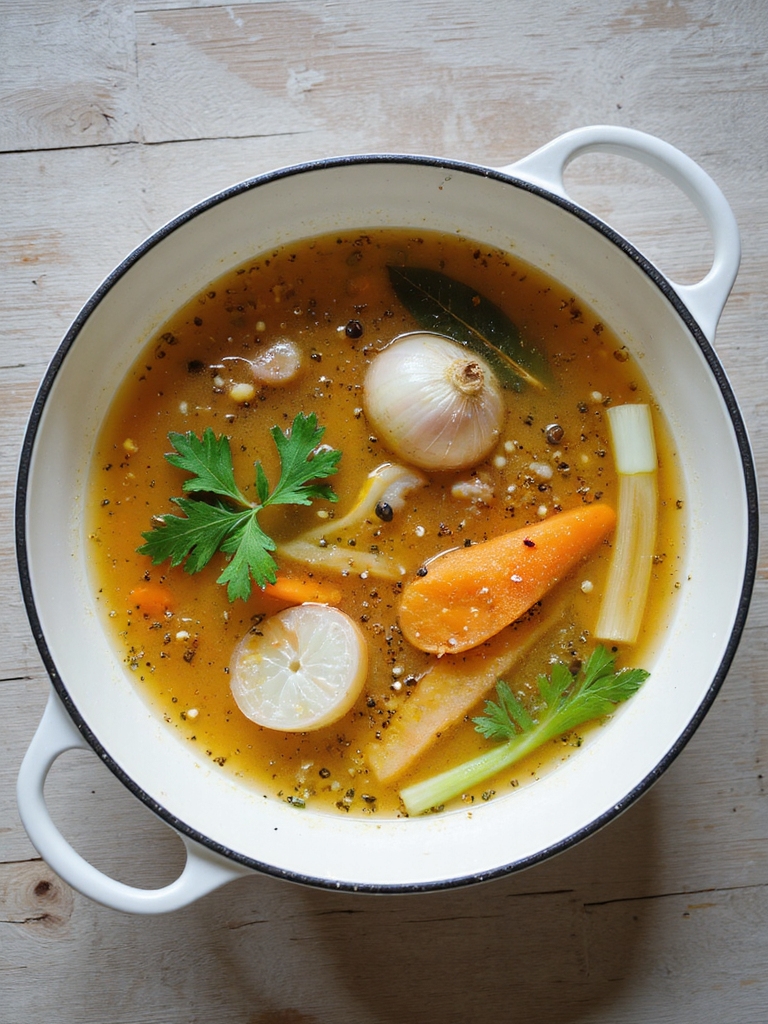
A clean, gently flavored classic fish bone stock is the backbone of clear broths and delicate soups; this recipe uses white-fleshed fish bones and heads, modest aromatics, a splash of acid and a low, patient simmer to extract gelatin and nuance without clouding the liquid, yielding a clear, savory stock in about 45–60 minutes that’s perfect for consommés, clear fish soups, and light sauces.
- 2–3 lb (900–1350 g) white fish bones and heads (cod, haddock, snapper; avoid oily fish)
- 1 small onion, halved (no peeling required)
- 1 small leek, white part only, halved and rinsed
- 1 carrot, halved
- 1 celery stalk, halved
- 3 cloves garlic, smashed
- 1 bay leaf
- 6–8 black peppercorns
- 4–6 sprigs fresh parsley or 1 tsp dried parsley
- 2 tbsp white wine or 2 tsp white wine vinegar (acid helps extract flavor)
- 8 cups cold water
- 1/2 tsp salt (adjust at end)
Place bones and heads in a large heavy pot and cover with cold water, add wine or vinegar and bring just to a bare simmer over medium-low heat (do not boil) skimming scum that rises until water is clear on top, add onion, leek, carrot, celery, garlic, bay, peppercorns and parsley, maintain a very gentle simmer (tiny bubbles) for 30–45 minutes until flavorful and slightly reduced, strain through a fine-mesh sieve lined with cheesecloth, gently press solids for liquid, cool rapidly in an ice bath, adjust seasoning and refrigerate or freeze in portions.
Tip: Use very fresh bones, keep the simmer gentle to avoid cloudiness, and always taste and salt the stock only after straining and any reduction. Fresh fish and seafood are central to many Delicious Dishes and contribute bright, clean flavors to this stock.
Shellfish Reduction for Rich Bisques
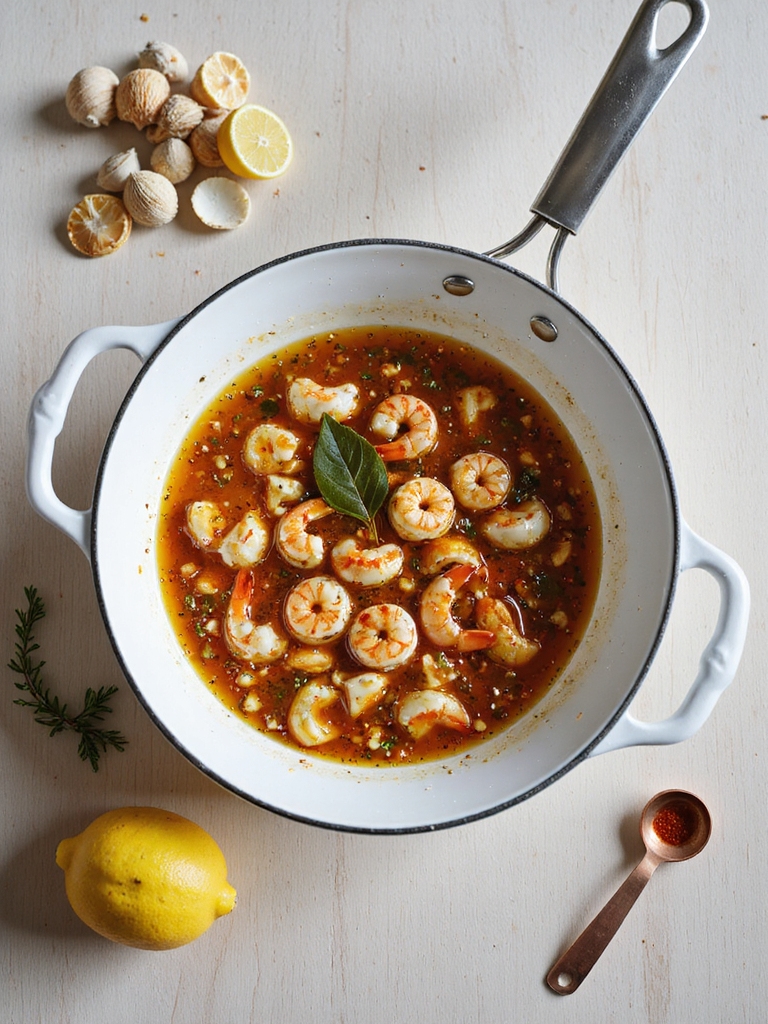
A concentrated shellfish reduction builds the backbone of luxurious bisques and creamy soups by simmering shells and aromatics down to an intensely flavored, slightly gelatinous stock that’s then strained and reduced further with cream or tomato for richness; this recipe uses shrimp and crab shells, mirepoix, wine and tomato paste to extract deep umami and body in about 45–60 minutes, yielding a versatile base for bisque, seafood sauces, or risottos.
- 1–2 lb (450–900 g) shrimp shells and crab shells (from cooked or raw shellfish)
- 2 tbsp olive oil or butter
- 1 medium onion, finely chopped
- 1 carrot, finely chopped
- 1 celery stalk, finely chopped
- 3 cloves garlic, crushed
- 2 tbsp tomato paste
- 1/2 cup dry white wine
- 4–6 cups water or fish stock
- 1 bay leaf
- 4–6 black peppercorns
- 2 sprigs thyme or 1 tsp dried thyme
- 1 tsp salt (adjust later)
- 1/2 cup heavy cream (optional, for finishing)
Heat oil or butter in a heavy pot over medium heat, add shells and cook, stirring, until they color and smell aromatic (5–8 minutes).
Add onion, carrot and celery and cook until softened.
Stir in garlic and tomato paste and cook 1–2 minutes, deglaze with white wine and reduce by half.
Add water or fish stock to cover shells, bay, peppercorns and thyme, bring to a gentle simmer and cook uncovered 30–40 minutes.
Strain through a fine sieve pressing shells to extract liquid, return to pot and reduce over medium heat to desired concentration (about 20–30 minutes) then finish with cream if making bisque and adjust seasoning.
Tip: Use toasted shells for deeper flavor, don’t boil (keep a gentle simmer) to avoid bitter extraction, strain well and cool quickly before refrigerating or freezing.
A flavorful seafood gumbo can also benefit from this concentrated reduction to deepen its seafood base and add remarkable body and aroma.
Clam and Mussel Broth for Lighter Soups
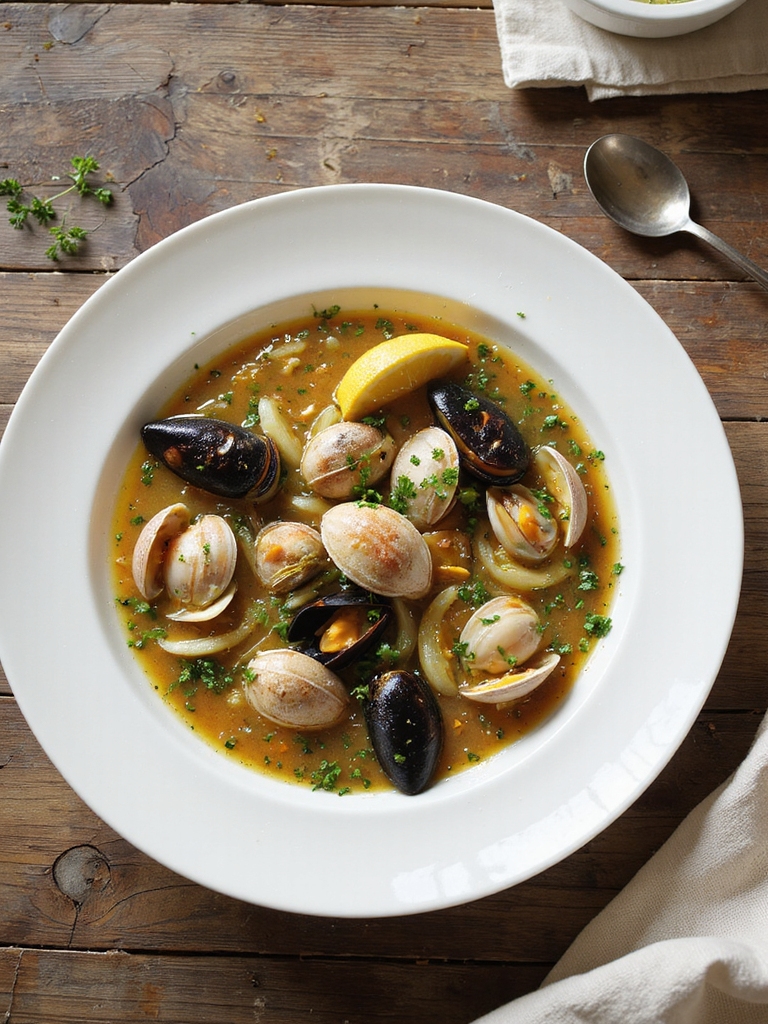
Clam and mussel broth is a bright, briny base perfect for lighter seafood soups, chowders, or to poach delicate fish — this recipe uses fresh clams and mussels, aromatics and white wine for a clean, ocean-forward broth that cooks quickly and captures shellfish sweetness without heaviness.
- 1–2 lb (450–900 g) mixed clams and mussels, cleaned and debearded
- 2 tbsp olive oil
- 1 small onion, finely chopped
- 1 fennel bulb, thinly sliced (or 1 celery stalk)
- 2 cloves garlic, smashed
- 1 cup dry white wine
- 4 cups low-sodium fish or vegetable stock (or water)
- 1 bay leaf
- 4–6 black peppercorns
- 1 small bunch parsley, stems reserved, leaves chopped
- Zest and juice of 1 lemon
- Salt to taste
- Optional: pinch of red pepper flakes or 1 small sliced chili
Heat the olive oil in a large pot over medium heat, add onion and fennel (or celery) and cook until softened, stir in garlic and cook 30 seconds, add wine and reduce slightly, add stock, bay leaf, peppercorns and parsley stems and bring to a gentle simmer; add cleaned clams and mussels, cover and steam until shells open (3–6 minutes), discard any that remain closed, remove shells (reserve some for garnish if desired) and strain broth through a fine sieve lined with cheesecloth or a chinois, press gently on solids, return strained broth to pot, stir in lemon zest and juice, chopped parsley leaves, adjust seasoning and serve hot or cool for later use.
Tip: Work quickly with shellfish, rinse and purge clams in cold salted water if sandy, discard any unopened shells after cooking, and cool the broth rapidly before refrigerating or freezing to preserve flavor and safety.
This recipe fits well within a collection called Savor the Ocean, which highlights recipes that showcase fresh seafood flavors.
Aromatic Veggie and Herb Pairings for Seafood Stocks
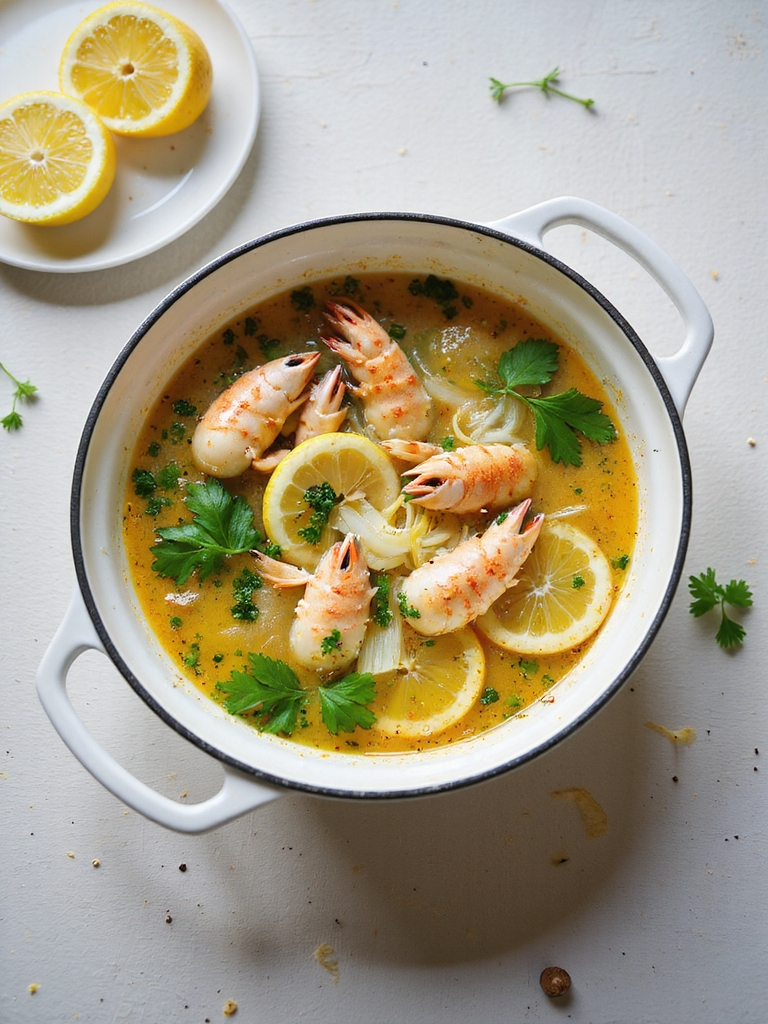
Aromatic Veggie and Herb Stock for Seafood is a versatile, fragrant base that layers sweet vegetables and bright herbs to complement delicate fish and shellfish without overpowering them; this recipe focuses on gentle aromatics (onion, fennel, celery), carrot for sweetness, citrus peel, and a bouquet of parsley, dill, and thyme to create a clear, balanced stock perfect for soups, poaching liquid, or risottos.
- 1 large onion, halved
- 1 fennel bulb, fronds reserved, bulb roughly chopped
- 2 celery stalks, roughly chopped
- 1 large carrot, roughly chopped
- 4 garlic cloves, smashed
- 1 small leek, white part only, sliced
- Zest of 1 lemon (avoid pith)
- 6–8 sprigs flat-leaf parsley
- 4 sprigs dill
- 4 sprigs thyme
- 1 bay leaf
- 8–10 black peppercorns
- 8 cups cold water (or low-sodium fish stock for more depth)
- 1–2 tsp olive oil
- Salt to taste
Heat olive oil in a large stockpot over medium heat and add onion, fennel, carrot, celery, leek and garlic, sweat gently until vegetables soften but don’t brown (about 6–8 minutes).
Add lemon zest, parsley stems, dill stems, thyme, bay leaf, peppercorns and cold water (or fish stock), bring to a slow simmer, skim any foam briefly, then reduce heat and simmer very gently for 30–40 minutes to extract flavors without clouding or bitter notes.
Strain through a fine sieve or cheesecloth, press solids gently, taste and season with salt, add chopped parsley leaves and fennel fronds if using immediately, or cool rapidly and refrigerate or freeze.
Tip: Keep the simmer low and avoid boiling, remove foam/skimmings early, use mostly stems for herbs (reserve leaves for finishing) and omit bitter greens to maintain a clean, bright seafood-friendly stock.
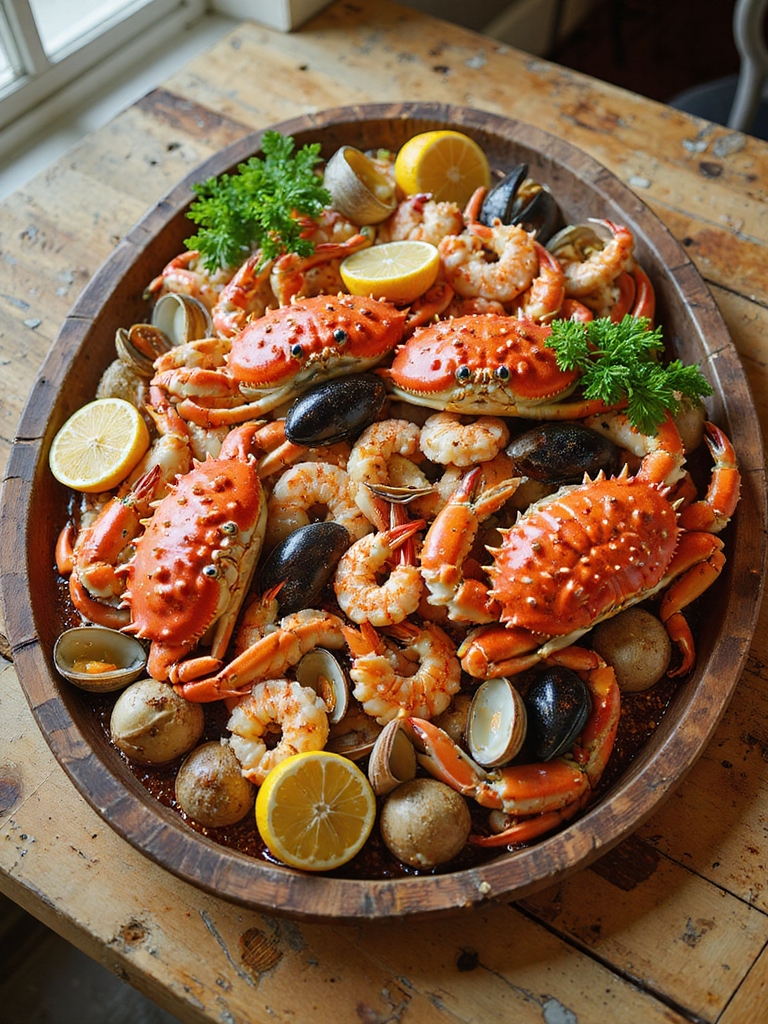
This aromatic blend also pairs well with an oven seafood boil for an easy, hands-off seafood feast incorporating shared flavor elements like fennel and citrus oven seafood boil.
Techniques to Avoid Bitterness and Overcooking
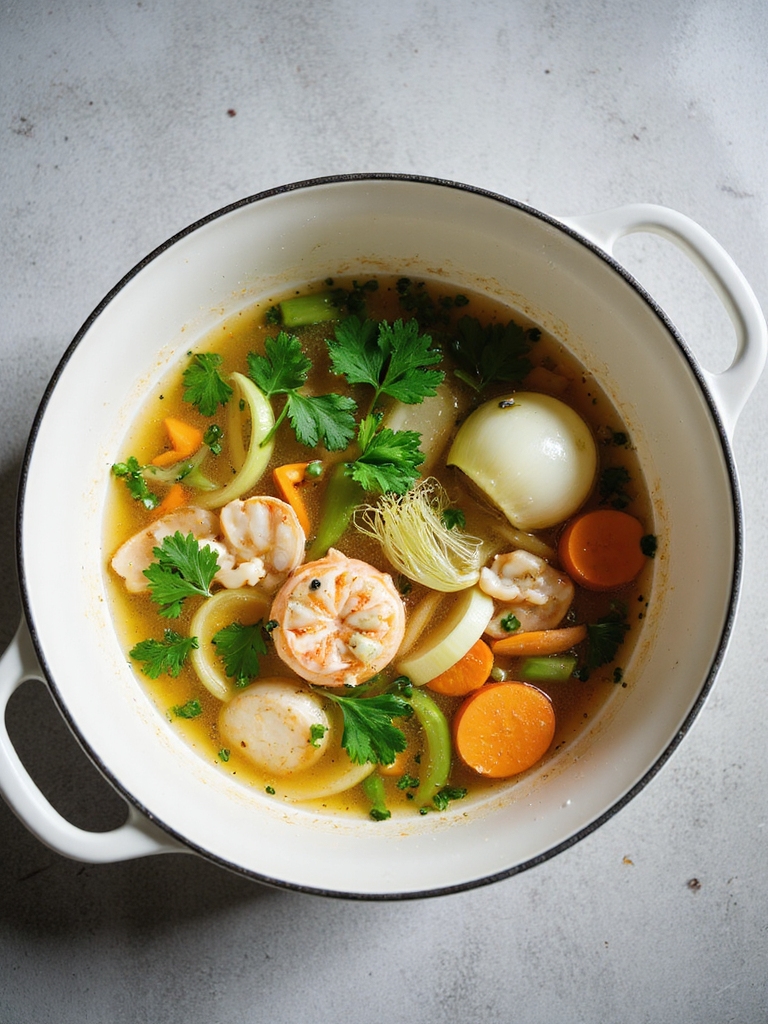
Bitterness and cloudiness can ruin a delicate seafood stock; this recipe focuses on gentle techniques—low heat, short simmer times, careful use of aromatic parts, and timely skimming—to extract bright flavor without drawing tannins or overcooking vegetables and herbs.
- 1 large onion, halved
- 1 fennel bulb, roughly chopped (reserve fronds)
- 2 celery stalks, roughly chopped
- 1 large carrot, roughly chopped
- 4 garlic cloves, smashed
- 1 small leek, white part only, sliced
- Zest of 1 lemon (no pith)
- 6–8 sprigs flat-leaf parsley (use stems)
- 4 sprigs dill (use stems)
- 4 sprigs thyme
- 1 bay leaf
- 8–10 black peppercorns
- 8 cups cold water (or low-sodium fish stock)
- 1–2 tsp olive oil
- Salt to taste
Heat the olive oil in a heavy-bottomed pot over medium-low heat, add onion, fennel, carrot, celery, leek and garlic and sweat gently until translucent but not browned (about 6–8 minutes).
Add lemon zest, herb stems, bay leaf and peppercorns, pour in cold water (or fish stock) and immediately bring just to a bare simmer, skim any foam that rises within the first 5–10 minutes, then reduce to the gentlest simmer and cook uncovered for 30–35 minutes total to avoid releasing bitter compounds.
Strain through a fine sieve or cheesecloth pressing only lightly, season to taste and finish with reserved parsley leaves and fennel fronds if using right away.
Tip: Keep the simmer minimal, avoid boiling, use mostly herb stems not leaves, remove foam early, and cool rapidly to prevent further flavor change. A light sauté of the vegetables before adding liquid helps develop fond and deepens the stock’s flavor.
How to Season and Finish Stocks for Different Dishes
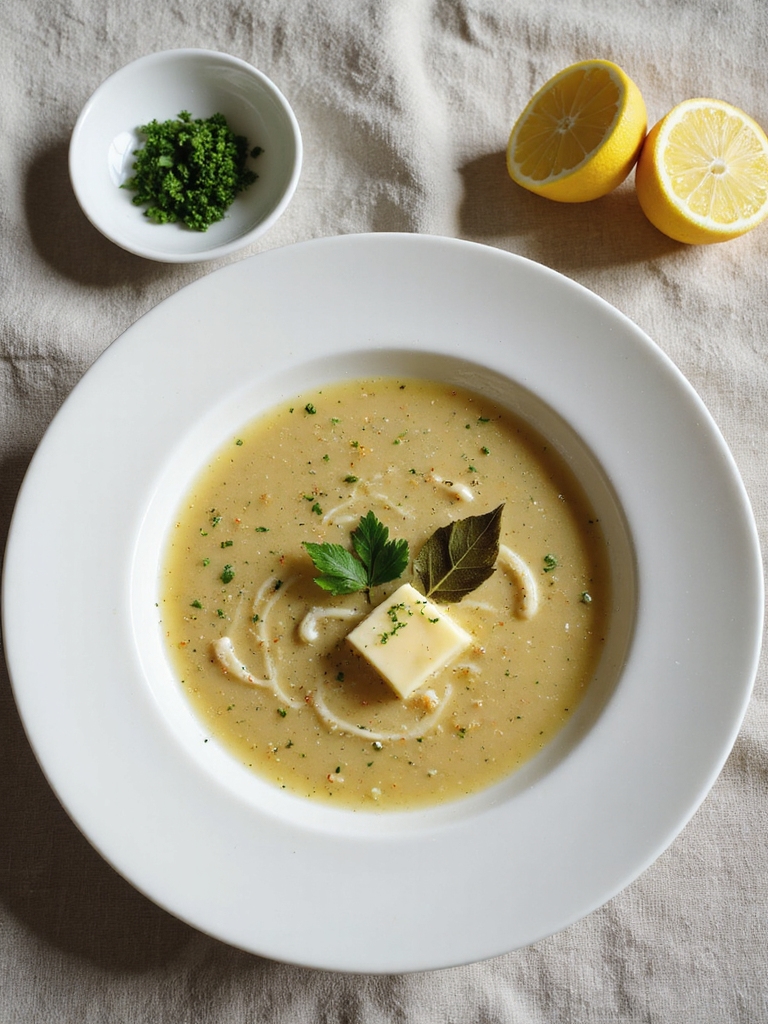
Seasoning and finishing a seafood stock is about balance—enhance its natural briny sweetness with gentle salt, bright acid, contrasting fats, and finishing herbs suited to the dish you’ll make; this recipe shows versatile finishing approaches for soups, risottos, sauces, and pan sauces so you can tailor the stock to the final preparation without overpowering its delicate flavors.
- 8 cups prepared seafood stock, cooled
- 1–2 tsp fine sea salt (adjusted to dish)
- 1 tbsp unsalted butter or 1 tsp neutral oil (optional)
- 1 tbsp lemon juice or 2 tsp white wine vinegar
- 1–2 tbsp chopped flat-leaf parsley or chives
- 1 tsp fish sauce or 1–2 anchovy fillets (optional, for depth)
- 1/4 cup dry white wine or 1 tbsp dry sherry (optional)
- 1 bay leaf (for reheating only)
- Freshly ground black pepper to taste
Warm the stock gently in a saucepan over low heat with the bay leaf if using, taste and season incrementally with salt and a small splash of acid (lemon juice or vinegar) to brighten.
For soups add butter or oil for silkiness, for risotto use a neutral oil and keep it hot, for pan sauces reduce with wine or sherry and finish with cold butter off-heat and minced herbs, and for clear consommés avoid emulsified fats and finish with delicate herbs just before serving.
If using fish sauce or anchovy, add sparingly and taste as you go to avoid saltiness.
Tip: Always finish with acid and fresh herbs at the end, season gradually, and reserve a small amount of unsalted stock to adjust texture without over-salting.
When serving a communal seafood boil, toss the cooked seafood in a warm, buttery, well-seasoned boil sauce to finish and add an extra layer of flavor, especially when paired with buttery sauce.
Storing, Freezing, and Reusing Seafood Stocks
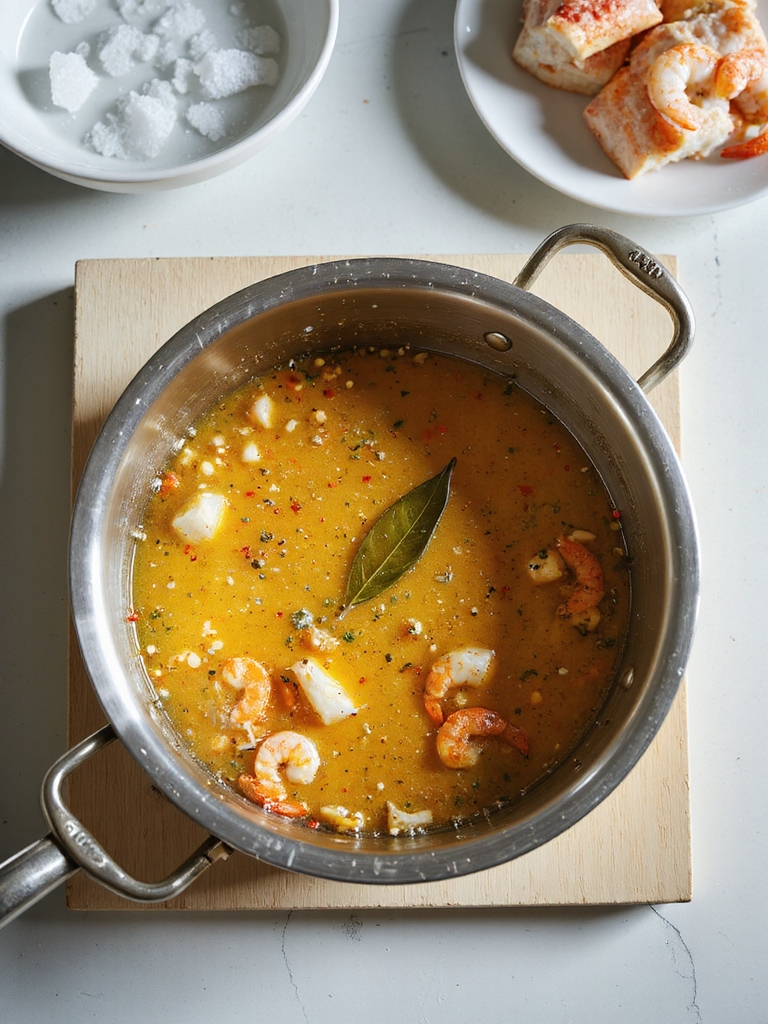
Storing, freezing, and reusing seafood stocks properly preserves their delicate flavors and guarantees food safety while giving you a versatile base for future dishes; this recipe explains how to cool, portion, freeze, thaw, and refresh seafood stock for soups, risottos, sauces, and pan reductions so you can make the most of every batch.
- Prepared seafood stock (any amount)
- Ice bath (for cooling)
- Airtight containers or heavy-duty freezer bags
- Measuring spoons
- Baking sheet or tray (for rapid cooling)
- Permanent marker and labels
- Small saucepan (for reheating)
- Lemon juice or vinegar (optional, for brightening)
- Unsalted butter or neutral oil (optional, for finishing)
Cool stock quickly by straining into a clean pot then place the pot in an ice bath and stir until lukewarm, portion into labeled airtight containers or freezer bags leaving 1 inch headspace, flatten bags for quick thawing and freeze for up to 3 months.
To reuse, thaw in the refrigerator overnight or in a warm water bath, skim any fat and solids, reheat gently without boiling, taste and adjust seasoning with salt, acid, and a splash of wine or fish sauce as needed, and reserve a small unsalted portion to adjust dilution when reducing.
Tip: Label containers with date and contents, cool quickly to prevent bacterial growth, and when repurposing frozen stock for delicate dishes, always re-season after reduction and add fresh herbs or acid at the end to restore brightness.
Seafood stocks pair exceptionally well with other seafood dishes and are a foundational element in many classic seafood recipes, making them a useful component to keep on hand for delicious seafood recipes.
Adapting Stocks for Dietary Needs and Flavor Profiles
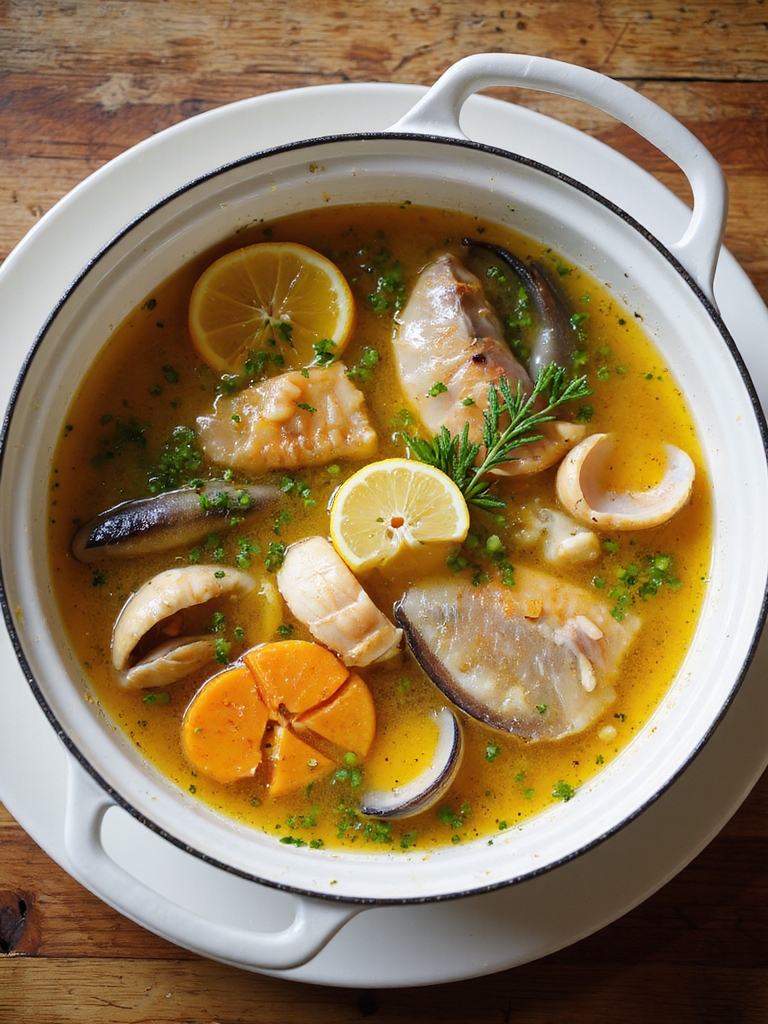
Adapting seafood stocks for dietary needs and different flavor profiles means adjusting ingredients, techniques, and finishing touches so the stock supports diets like low-sodium, gluten-free, dairy-free, pescatarian, or nightshade-free while delivering bright, balanced flavor; this recipe shows how to modify a basic seafood stock base, swap aromatics and seasonings, and finish stocks to suit specific restrictions and cuisines.
- 2 lb mixed shells and heads (shrimp, crab, fish bones)
- 1 large onion, quartered
- 2 carrots, chopped
- 2 celery stalks, chopped (omit for FODMAP if needed)
- 1 leek, white part only, rinsed (optional)
- 1 bay leaf
- 6–8 peppercorns (omit for pepper-free diets)
- 1–2 small tomatoes or 1 tbsp tomato paste (omit for nightshade-free)
- 1 small piece kombu (for umami, omit for low-iodine)
- 8 cups cold water
- 1–2 tbsp neutral oil or 1 tbsp olive oil (omit if strict fat-free)
- 1 tbsp apple cider vinegar or lemon juice
- Kosher salt or low-sodium alternative (to taste)
Place shells and heads in a large pot with oil over medium heat and sauté briefly to develop color, add vegetables and aromatics, cover with cold water and vinegar, bring to a gentle simmer while skimming foam, then lower heat and simmer 25–40 minutes (shorter for delicate fish), strain through a fine sieve or cheesecloth, cool quickly in an ice bath, portion and refrigerate or freeze; adjust final seasoning after reduction using low-sodium salt, citrus, or fish sauce alternatives for sodium-free diets and finish with fresh herbs or a small knob of unsalted butter or neutral oil if dairy is allowed.
Tip: For gluten-free use only certified gluten-free vinegar and avoid any packaged bouillon; to reduce allergens, leave out shellfish and make a fish-only stock or use vegetable stock plus kombu for a pescatarian-friendly umami boost. A classic seafood boil concept like using mixed shells and heads gives the stock depth and richness mixed shells and heads.