I love showing people how easy salmon can be—quick, forgiving, and full of flavor—and I’ll walk you through simple techniques that make dinner feel a little fancier without the fuss.
From pan-searing to gentle poaching, you’ll learn small tricks that boost crispness, glaze, and seasoning so each bite sings. Stick with me and I’ll share straightforward recipes and swaps that turn a basic fillet into a weeknight win.
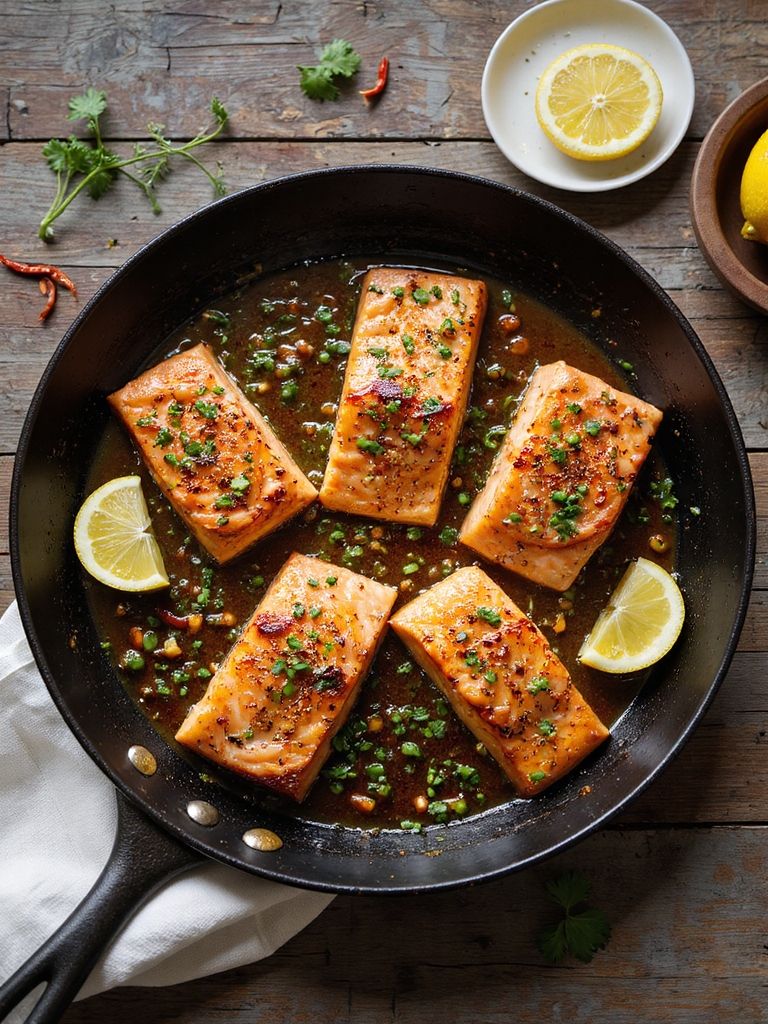
Quick Pan-Seared Salmon With Lemon Butter
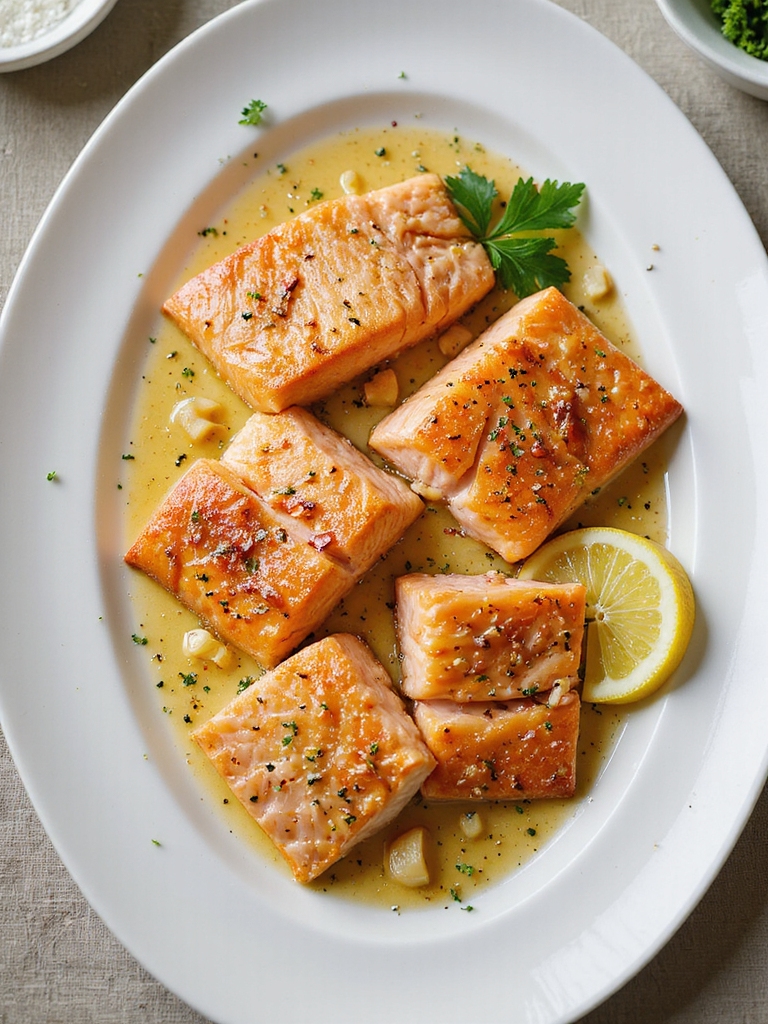
This quick pan-seared salmon with lemon butter is a simple, flavorful weeknight main that delivers a crispy skin and a silky lemon-butter sauce in under 20 minutes; it’s perfect served over rice, salad, or with roasted vegetables for a fast but impressive meal.
- 4 salmon fillets (6 oz each), skin-on
- Salt and freshly ground black pepper
- 2 tablespoons olive oil
- 2 tablespoons unsalted butter
- 2 garlic cloves, minced
- Juice of 1 lemon (about 2 tablespoons) plus lemon slices for garnish
- 1 tablespoon chopped fresh parsley (optional)
Pat salmon dry and season both sides with salt and pepper, heat olive oil in a large skillet over medium-high until shimmering then place fillets skin-side down and press gently for 30 seconds to prevent curling, cook 4–5 minutes until the skin is crisp and browned, flip and add butter and garlic, spoon the melted butter over the fillets for 1–2 minutes until cooked to desired doneness, remove salmon and deglaze the pan with lemon juice, stir into the butter to make a quick sauce and pour over the fillets before serving.
For best results use fillets of even thickness for uniform cooking, keep the pan hot so the skin crisps without sticking, and let the salmon rest a minute after cooking to finish gently and retain juices. This method emphasizes achieving a crisp skin and moist interior by using a hot skillet and pan-frying technique for optimal texture.
Honey Soy Glazed Salmon
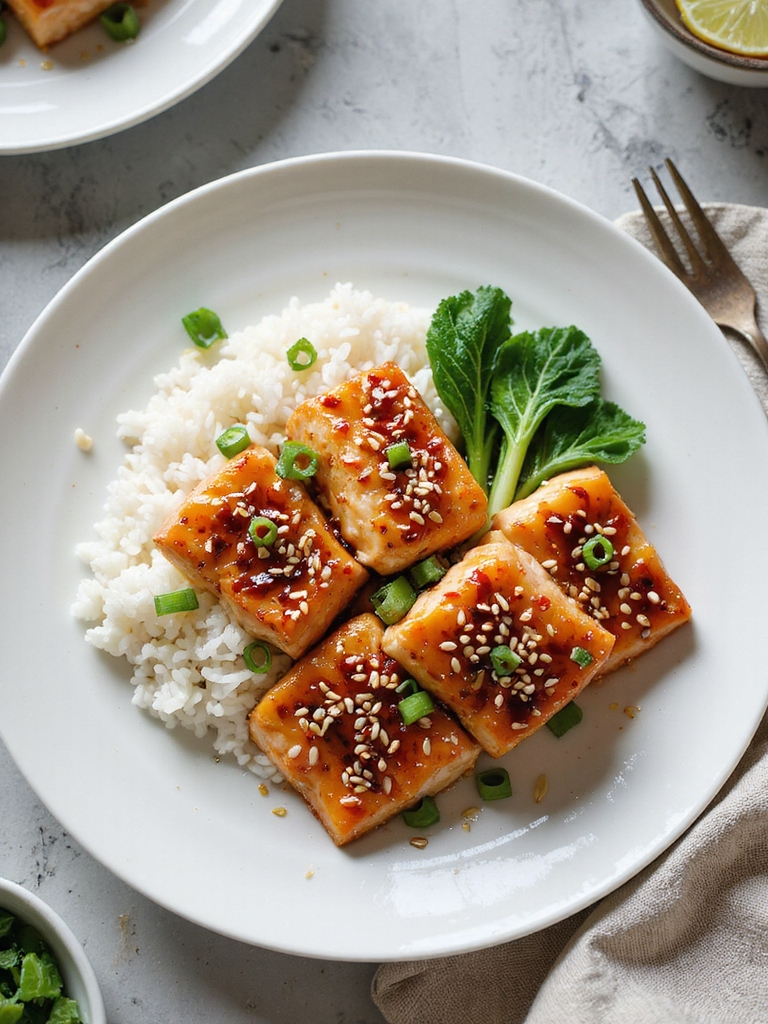
This honey soy glazed salmon is a sweet-savory weeknight favorite that combines a sticky, caramelized glaze with tender, flaky salmon; it’s quick to make, pairs well with steamed rice or greens, and can be broiled or pan-seared depending on your preferred texture and time.
- 4 salmon fillets (6 oz each), skin-on or skinless
- 3 tablespoons honey
- 3 tablespoons soy sauce (or tamari)
- 1 tablespoon rice vinegar or lemon juice
- 1 teaspoon sesame oil
- 1 clove garlic, minced
- 1 teaspoon fresh ginger, grated (or 1/4 tsp ground ginger)
- 1/4 teaspoon red pepper flakes (optional)
- 1 tablespoon vegetable oil or olive oil
- 1 tablespoon chopped green onions and 1 teaspoon toasted sesame seeds for garnish (optional)
Whisk honey, soy sauce, rice vinegar, sesame oil, garlic, ginger, and red pepper flakes in a small bowl and reserve a few tablespoons of the sauce for serving.
Heat oil in a nonstick skillet over medium-high heat, pat salmon dry and season lightly with pepper, sear skin-side down 3–4 minutes until crisp, flip and pour half the sauce over the fillets, cook 2–4 minutes more until salmon is opaque and glaze is sticky while basting occasionally, remove from pan and spoon reserved sauce over each fillet before garnishing with green onions and sesame seeds.
For best results use room-temperature fillets for even cooking, watch the glaze closely so it caramelizes but doesn’t burn, and adjust honey or soy to taste if you prefer sweeter or saltier. Salmon is also a good source of omega-3 fats which makes it a nutritious choice for regular meals.
Sheet-Pan Salmon With Roasted Vegetables
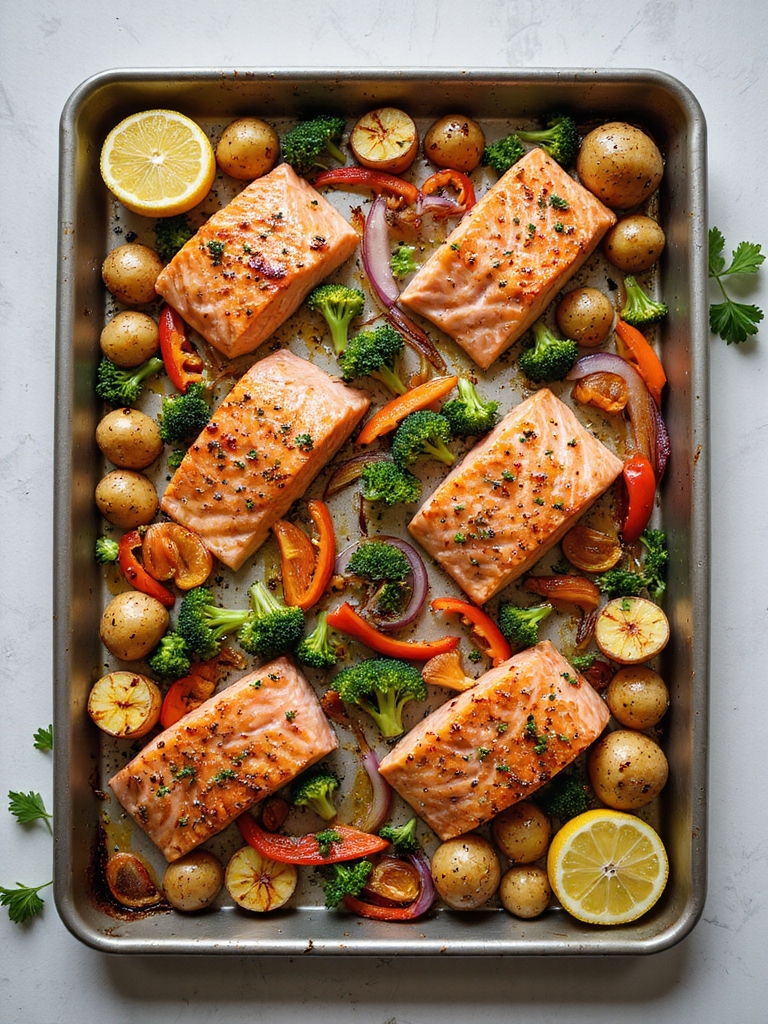
Sheet-pan salmon with roasted vegetables is an easy, hands-off dinner that cooks everything together for a flavorful, colorful meal: tender salmon fillets roast alongside a mix of seasonal vegetables tossed in olive oil and herbs so you get crisp edges on the veggies and a juicy, flaky fish with minimal cleanup.
- 4 salmon fillets (6 oz each), skin-on or skinless
- 1 lb small potatoes or halved baby potatoes
- 1 red bell pepper, sliced
- 1 small red onion, cut into wedges
- 1 cup broccoli florets or asparagus spears
- 3 tablespoons olive oil
- 1 tablespoon Dijon mustard
- 1 tablespoon lemon juice
- 1 teaspoon dried oregano or Italian seasoning
- 1 teaspoon garlic powder
- Salt and black pepper to taste
- Lemon wedges and chopped parsley for serving (optional)
Preheat the oven to 425°F (220°C); toss potatoes, bell pepper, and onion with 2 tablespoons olive oil, half the garlic powder, half the oregano, salt and pepper and spread on a large rimmed baking sheet, roast for 15 minutes while you pat salmon dry and brush with a mixture of remaining olive oil, Dijon, lemon juice, remaining garlic powder and oregano then nestle the salmon and broccoli/asparagus among the partially roasted vegetables and return to the oven for 10–12 minutes until the salmon reaches desired doneness and vegetables are tender and browned; finish under the broiler 1–2 minutes if you want extra color, then serve with lemon wedges and parsley.
For best results cut vegetables into uniform pieces so they cook evenly, use room-temperature salmon so it cooks through without drying, and avoid overcrowding the sheet pan to make certain vegetables roast rather than steam. Sheet pan meals are ideal for busy weeknights and can be adapted to seasonal produce or different cooking times depending on the vegetables you choose.
Garlic Herb Baked Salmon
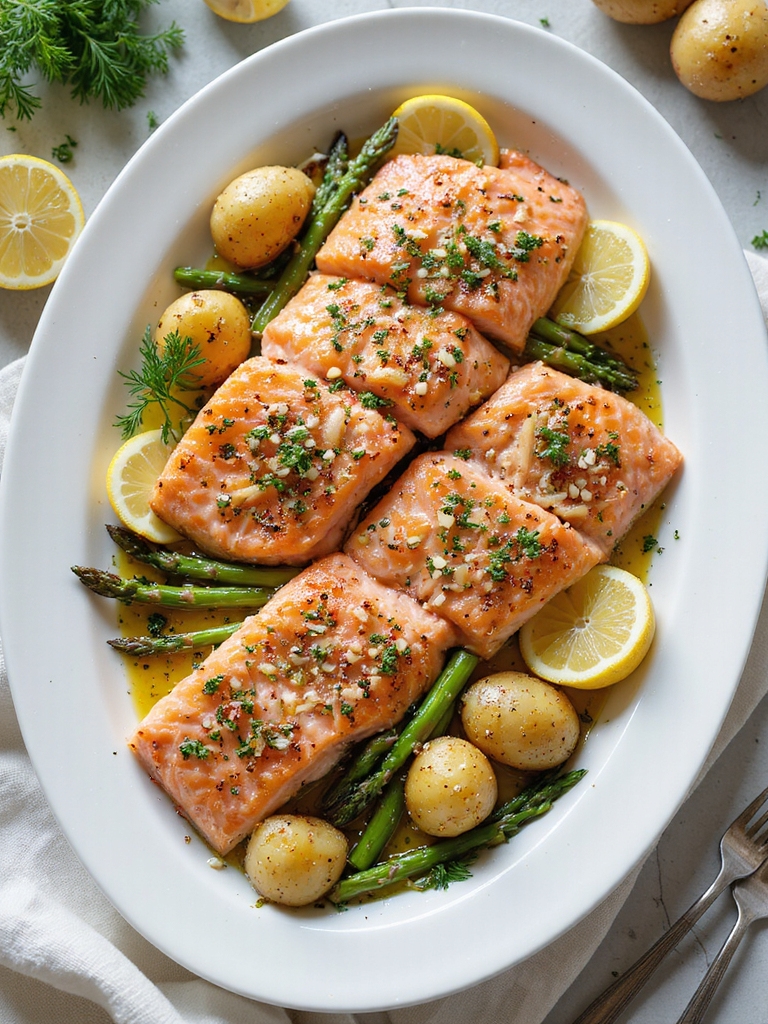
Garlic Herb Baked Salmon is a simple, aromatic dish where salmon fillets are coated in a mix of fresh garlic, herbs, olive oil and lemon, then baked until flaky and tender for an elegant weeknight meal that pairs well with roasted vegetables, rice or a crisp salad.
- 4 salmon fillets (6 oz each), skin-on or skinless
- 3 tablespoons olive oil
- 3 cloves garlic, minced
- 2 tablespoons fresh parsley, chopped
- 1 tablespoon fresh dill, chopped (or 1 tsp dried dill)
- 1 teaspoon fresh thyme leaves (or 1/2 tsp dried thyme)
- 1 lemon, zested and juiced
- 1/2 teaspoon lemon pepper or cracked black pepper
- 1/2 teaspoon salt, or to taste
- 1 tablespoon melted butter or mayonnaise (optional, for extra richness)
Preheat oven to 400°F (200°C); place salmon on a lined baking sheet, whisk together olive oil, garlic, herbs, lemon zest and juice, melted butter if using, salt and pepper, brush the mixture generously over the fillets and let sit 10–15 minutes while oven heats; bake for 10–14 minutes depending on thickness until salmon flakes easily with a fork and registers 125–130°F (52–54°C) for medium, then broil 1–2 minutes for a lightly golden top if desired.
Tip: Use fresh herbs if possible, don’t overbake—remove the salmon from the oven just before it reaches your target temperature since it will carryover-cook, and let it rest a few minutes before serving to keep it moist.
This method highlights how simple techniques produce reliable results with perfectly baked salmon when you follow proper timing and temperature.
Maple Dijon Salmon
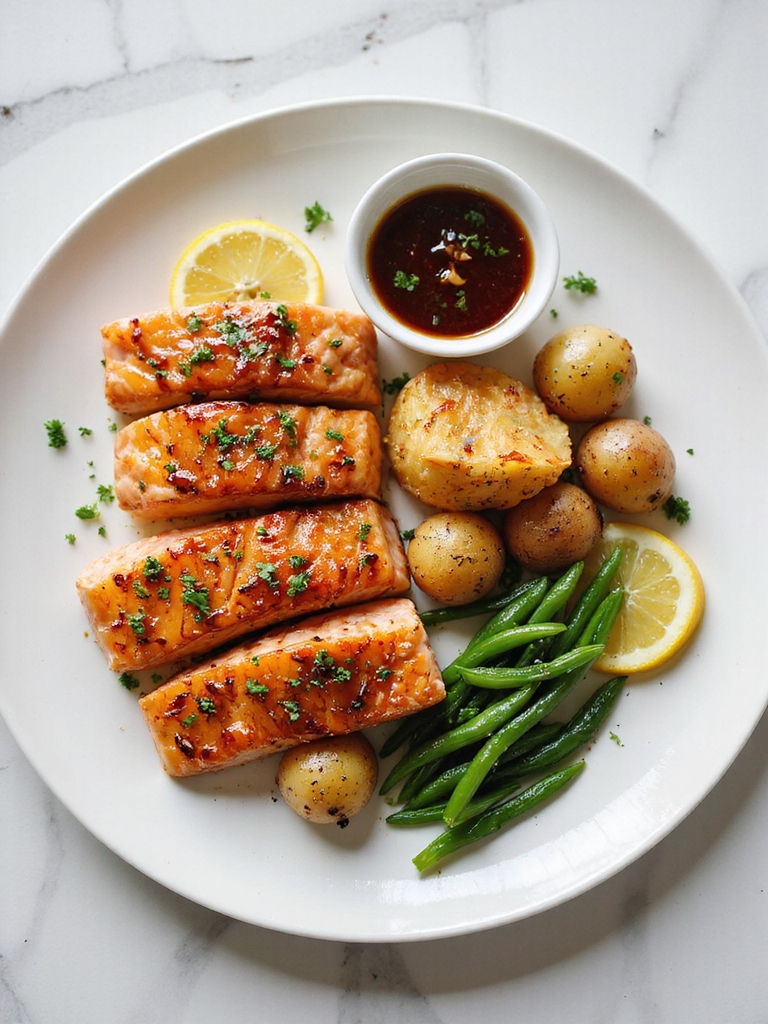
Maple Dijon Salmon is a sweet-and-savory pan-seared salmon dish where a glossy glaze of pure maple syrup and tangy Dijon mustard caramelizes on the fillets for a quick, flavorful weeknight dinner that pairs beautifully with roasted potatoes or steamed greens.
- 4 salmon fillets (6 oz each), skin-on or skinless
- 3 tablespoons pure maple syrup
- 2 tablespoons Dijon mustard
- 1 tablespoon soy sauce or tamari
- 1 tablespoon olive oil
- 1 clove garlic, minced
- 1 teaspoon lemon juice
- 1/4 teaspoon smoked paprika (optional)
- Salt and freshly ground black pepper, to taste
- Chopped fresh parsley or chives, for garnish
Pat salmon dry and season lightly with salt and pepper;
whisk together maple syrup, Dijon, soy sauce, garlic, lemon juice and smoked paprika,
heat olive oil in a large skillet over medium-high heat and sear salmon skin-side up 3–4 minutes until golden,
flip and brush the top with half the glaze then cook 3–5 minutes more until nearly done,
pour remaining glaze into the pan and spoon over the fillets as it thickens for 1–2 minutes until salmon is glossy and registers 125–130°F (52–54°C) for medium,
remove from heat and let rest briefly; garnish with parsley or chives and serve.
Tip: Use real maple syrup (not pancake syrup) and watch the glaze closely as it can burn quickly; remove salmon a few degrees below target temp since it will continue to cook while resting.
For a buttery finish, spoon a small amount of warm garlic butter over the fillets just before serving to enhance the richness of the glaze and complement the salmon’s flavor with garlic butter.
One-Pan Salmon and Asparagus
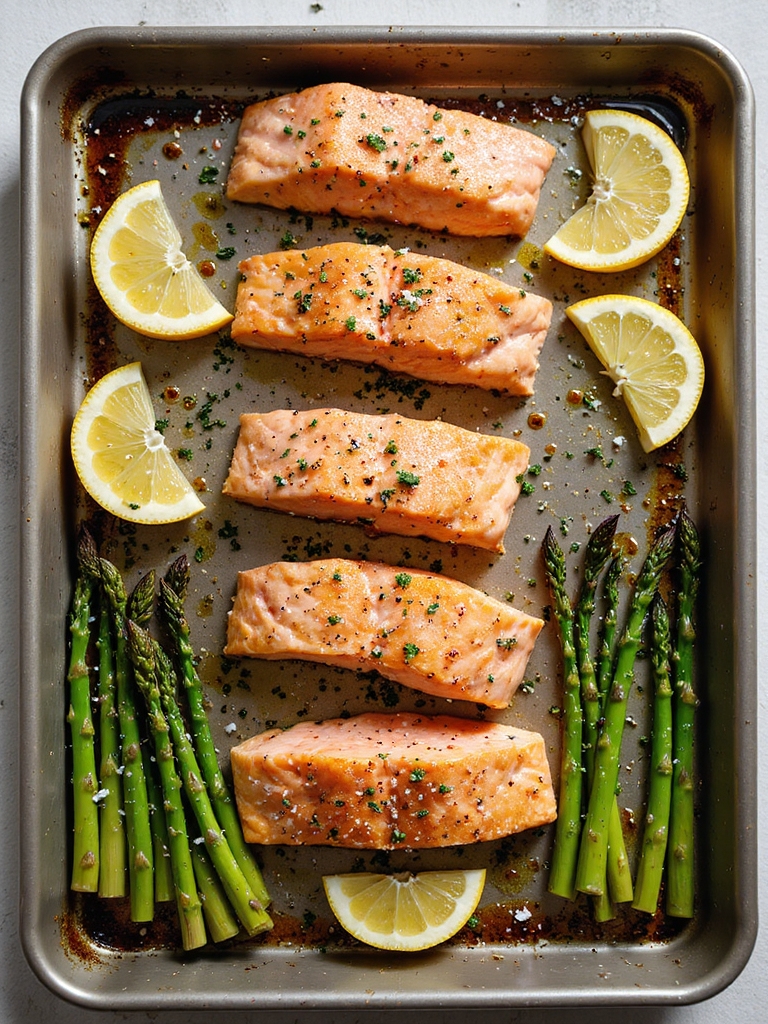
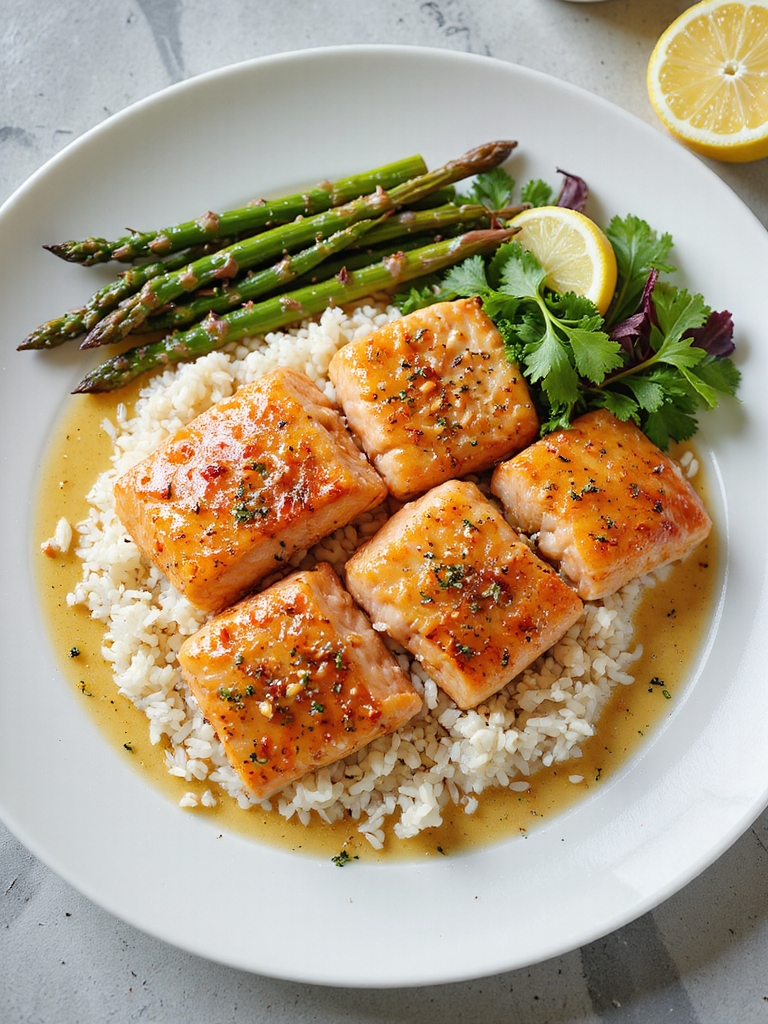
One-Pan Salmon and Asparagus is a quick, healthy weeknight meal where salmon fillets roast alongside tender-crisp asparagus on a single sheet pan, flavored with olive oil, lemon, garlic, and herbs for easy cleanup and vibrant flavor.
- 4 salmon fillets (6 oz each), skin-on or skinless
- 1 lb asparagus, woody ends trimmed
- 2 tablespoons olive oil
- 1 lemon (zested and juiced)
- 2 cloves garlic, minced
- 1 teaspoon Dijon mustard (optional)
- 1/2 teaspoon dried thyme or oregano
- Salt and freshly ground black pepper, to taste
- Lemon wedges and chopped parsley, for serving
Preheat oven to 425°F (220°C); toss asparagus with 1 tablespoon olive oil, half the lemon zest, half the garlic, salt and pepper on one side of a rimmed baking sheet and place salmon fillets on the other side skin-side down (or skin-side up if skinless).
Brush salmon with remaining olive oil mixed with lemon juice, Dijon, remaining garlic and herbs, roast for 10–14 minutes until asparagus is tender-crisp and salmon registers 125–130°F (52–54°C) for medium, then broil 1–2 minutes if you want a bit of color.
Tip: Arrange fillets and asparagus with space between for even roasting, use thicker fillets for juicier results and remove salmon a few degrees below target temperature because it will continue to cook while resting.
This pairing highlights how well salmon and asparagus complement each other in both flavor and nutrition.
Crispy Skin Salmon With Simple Salsa
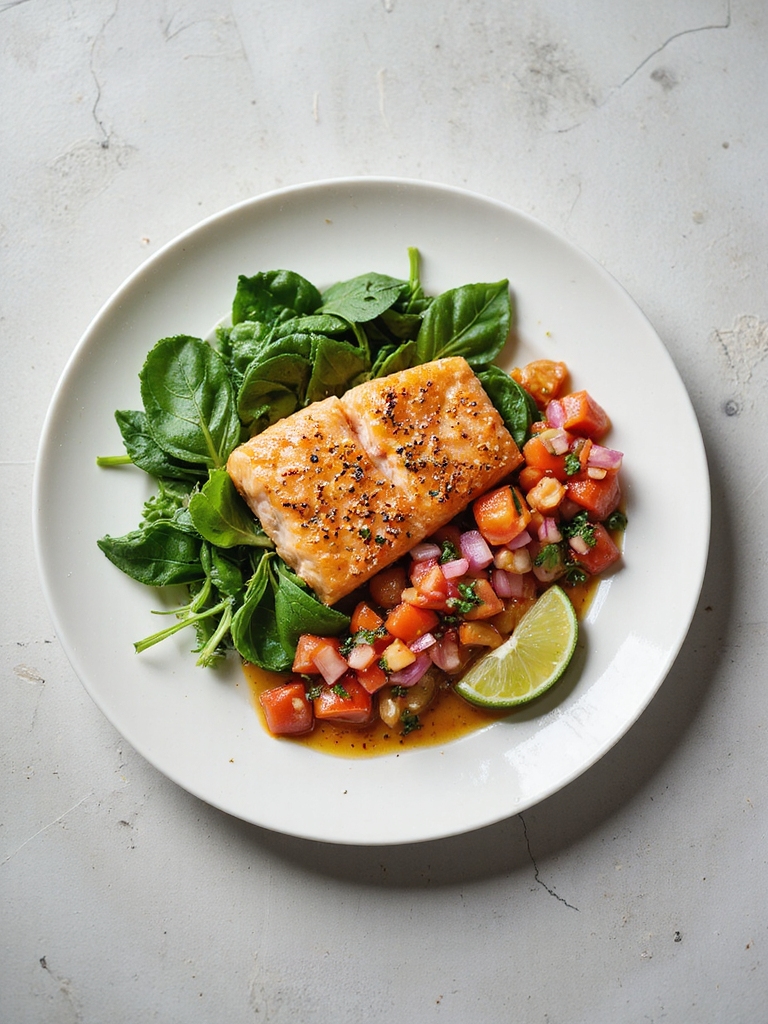
Crispy Skin Salmon With Simple Salsa is a quick, flavorful dish that pairs pan-seared salmon fillets cooked skin-side down until ultra-crispy with a bright, chunky salsa made from fresh tomatoes, red onion, herbs, and a squeeze of lime; it’s ideal for a weeknight dinner and comes together in about 20 minutes.
- 4 salmon fillets (6–7 oz), skin-on, patted very dry
- 1 tablespoon neutral oil (canola, grapeseed)
- 1 tablespoon butter (optional)
- 2 medium tomatoes, seeded and diced
- 1/4 cup red onion, finely diced
- 1 jalapeño, seeded and finely chopped (optional)
- 2 tablespoons fresh cilantro, chopped
- 1 tablespoon lime juice (plus more to taste)
- 1 teaspoon olive oil
- Salt and freshly ground black pepper
Heat a large nonstick or well-seasoned cast-iron skillet over medium-high heat until hot, season the salmon skin and flesh with salt and pepper, add the neutral oil and carefully place fillets skin-side down pressing gently for 15–20 seconds to make certain even contact, cook undisturbed for 6–8 minutes until the skin is deeply golden and crispy and the fish is cooked about two-thirds of the way through, flip briefly (30–60 seconds) if you want a touch of sear on the top then transfer to a plate to rest.
Meanwhile toss tomatoes, red onion, jalapeño, cilantro, lime juice, olive oil and salt in a bowl, then spoon the salsa over each rested fillet and serve.
Tip: Use very dry skin, press the fillets flat when they first hit the pan, and cook mostly skin-side down for maximum crispiness while removing from heat a few degrees before desired doneness because residual heat will finish the salmon.
This recipe adapts well to baking if you prefer to make oven-baked salmon for a hands-off option.
Teriyaki Salmon Bowls
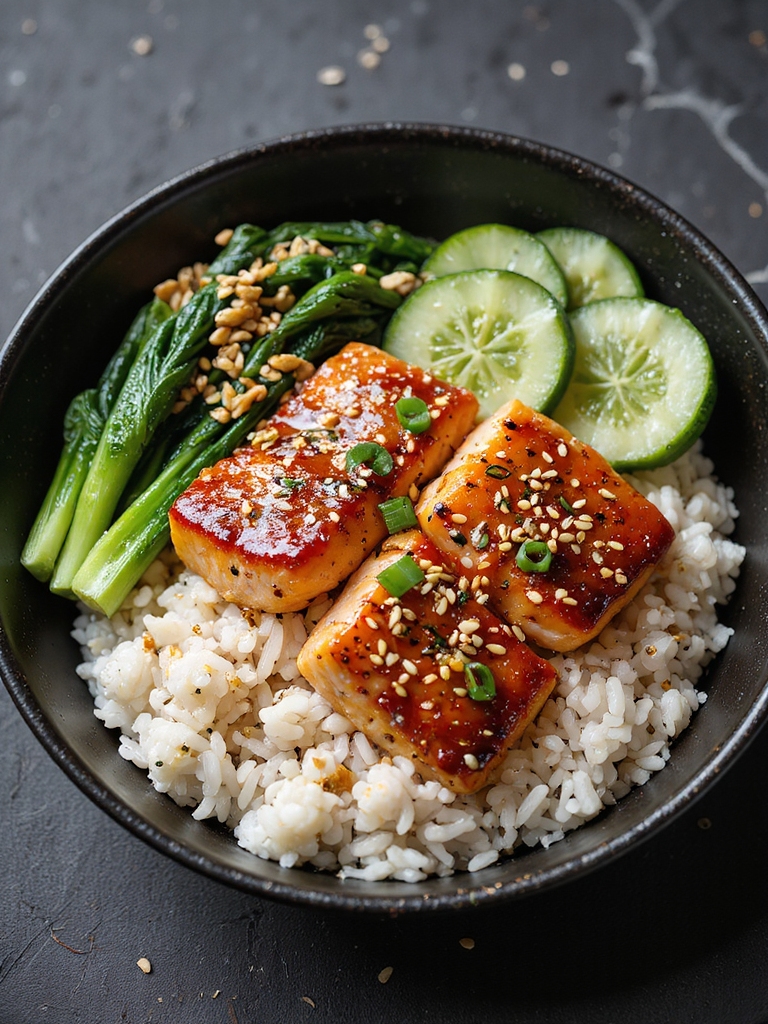
Teriyaki Salmon Bowls are an easy, weeknight-friendly meal that layers sticky-sweet homemade teriyaki-glazed salmon over steamed rice with quick-pickled cucumbers, sautéed baby bok choy (or spinach), sliced scallions, sesame seeds, and a drizzle of sriracha mayo for heat; the salmon cooks in a simple pan sauce made from soy, mirin, brown sugar, garlic, and ginger, then rests while the sauce reduces and thickens so every bite is glossy and flavorful.
- 4 salmon fillets (6–7 oz), skin-on or skinless
- 1/3 cup low-sodium soy sauce
- 1/4 cup mirin (or 2 tbsp rice wine + 2 tbsp water)
- 2 tbsp brown sugar or honey
- 1 clove garlic, minced
- 1 tsp fresh ginger, grated
- 1 tsp cornstarch mixed with 1 tbsp water (slurry)
- 2 tbsp neutral oil
- 3 cups cooked short-grain rice
- 1 cup cucumber, thinly sliced
- 2 tbsp rice vinegar
- 1 tsp sugar
- 2 cups baby bok choy or spinach
- 2 scallions, sliced
- 1 tsp toasted sesame seeds
- Sriracha mayo (optional) for drizzling
Heat a skillet over medium-high, add oil and sear seasoned salmon skin-side down (or presentation-side down if skinless) 4–5 minutes until mostly cooked, flip 30–60 seconds, remove to a plate to rest; wipe the pan, add soy, mirin, brown sugar, garlic, and ginger, simmer 2–3 minutes then stir in cornstarch slurry until glossy, return salmon to coat briefly and spoon sauce over rice bowls topped with quick-pickled cucumbers (toss cucumber with rice vinegar and sugar), sautéed greens, scallions, sesame seeds, and sriracha mayo.
Tip: Dry the salmon well and don’t overcrowd the pan so it gets a good sear, adjust sugar or mirin to taste for sweetness, and make the sauce ahead to save time when assembling bowls. This recipe pairs perfectly with a side of steamed vegetables and sticky short-grain rice for an authentic texture contrast.
Broiled Salmon With Parmesan Crust
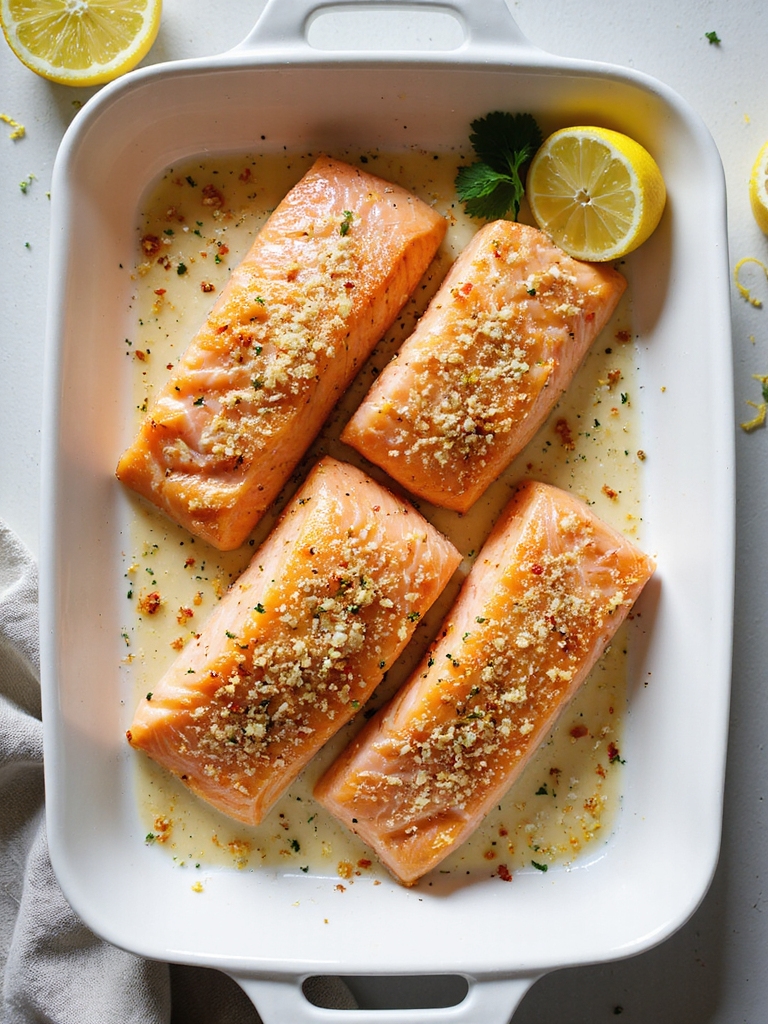
Broiled Salmon with Parmesan Crust is a quick, flavorful dinner where salmon fillets are topped with a crisp, cheesy, herb-scented crust and finished under the broiler for a golden, crunchy top while the fish stays tender and moist beneath; it’s perfect with a simple salad, roasted vegetables, or lemony rice and takes about 15–20 minutes from start to finish.
- 4 salmon fillets (6–7 oz each), skin-on or skinless
- 1/2 cup grated Parmesan cheese
- 1/3 cup panko breadcrumbs
- 2 tbsp unsalted butter, melted
- 1 tbsp olive oil
- 2 tsp lemon zest
- 1 tbsp fresh parsley, finely chopped
- 1 tsp Dijon mustard
- 1 garlic clove, minced
- Salt and freshly ground black pepper
- Lemon wedges, for serving
Preheat the broiler with a rack 6–8 inches from the heat and line a baking sheet with foil or parchment; pat salmon dry, season lightly with salt and pepper, mix Parmesan, panko, melted butter, olive oil, lemon zest, parsley, Dijon, and garlic to form a slightly crumbly paste, press an even layer onto the top of each fillet, place on the prepared sheet and broil 6–8 minutes (depending on thickness) until crust is golden and fish flakes easily at the thickest part, letting the salmon rest 2 minutes before serving with lemon wedges.
Tip: For an extra-crisp crust, briefly toast the panko in a dry skillet until golden before mixing with the Parmesan and watch closely under the broiler to prevent burning.
This recipe pairs especially well with classic oven-baked sides like roasted potatoes or green beans for a complete savory oven-baked meal.
Lemon Dill Poached Salmon
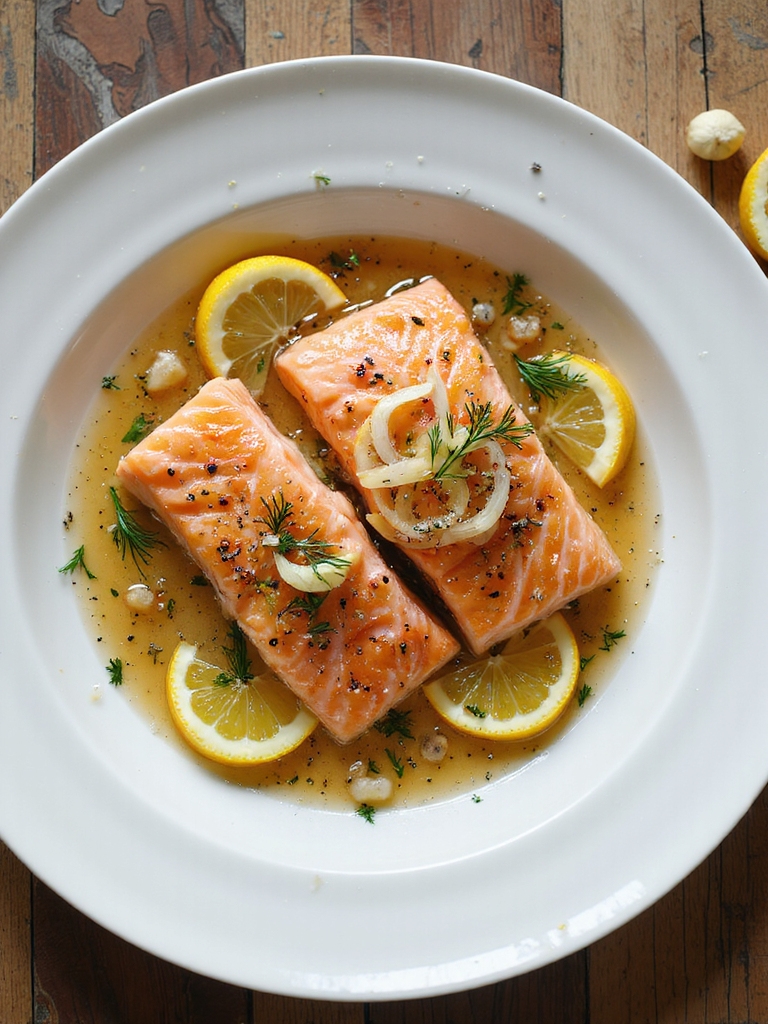
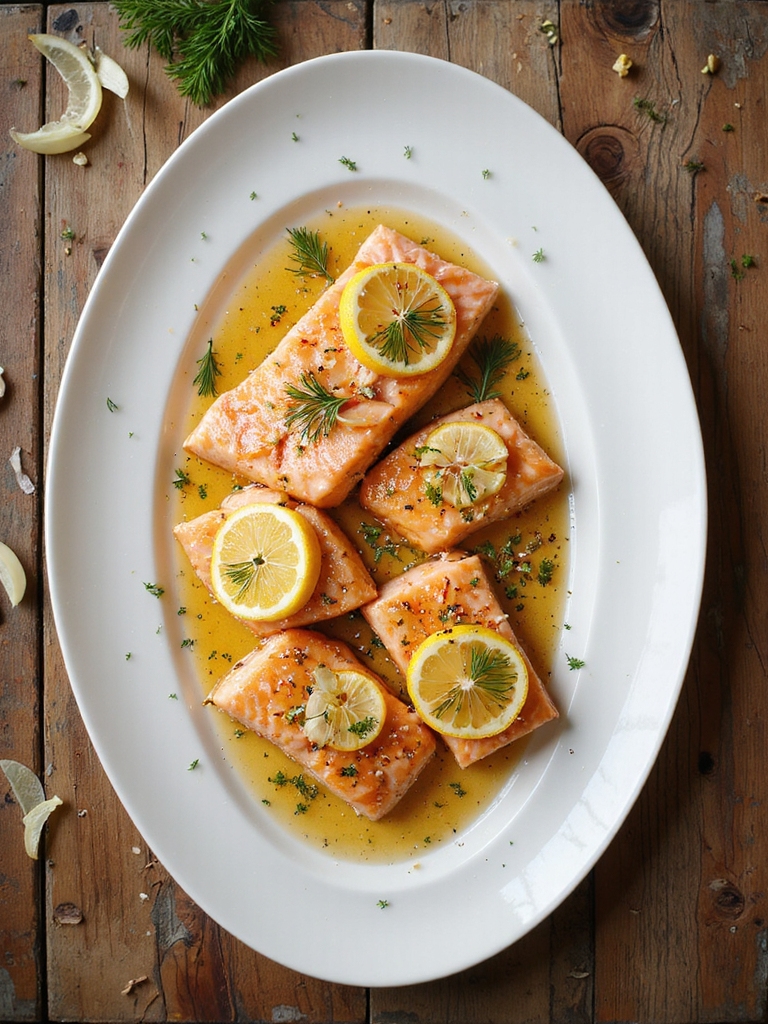
Lemon Dill Poached Salmon is a gentle, hands-off way to cook salmon that yields tender, flaky fillets infused with bright citrus and fresh herb flavors; the fish is simmered just below a simmer in a fragrant broth of lemon, dill, white wine (or broth), and aromatics until opaque and cooked through, making it perfect for a light weeknight meal or a simple special-occasion starter served with steamed vegetables, rice, or a crisp salad.
- 4 salmon fillets (6–7 oz each), skin-on or skinless
- 1 cup dry white wine or low-sodium chicken/vegetable broth
- 1 cup water
- 1 lemon, thinly sliced plus 2 tbsp juice
- 4–6 sprigs fresh dill, plus 2 tbsp chopped
- 1 small shallot, thinly sliced (or 1/4 small onion)
- 2 garlic cloves, smashed
- 1 bay leaf
- 1 tsp whole peppercorns or 1/2 tsp freshly ground black pepper
- 1 tbsp olive oil or unsalted butter
- Salt to taste
Pour wine (or broth) and water into a wide skillet large enough to hold the fillets in a single layer, add lemon slices, lemon juice, shallot, garlic, bay leaf, peppercorns, olive oil/butter, and whole dill sprigs, bring to a gentle simmer over medium heat, lower to maintain a bare simmer and slide in the salmon skin-side down, poach uncovered 6–10 minutes depending on thickness until the salmon is opaque and flakes easily at the thickest part, remove fillets with a slotted spatula and spoon some cooking liquid and chopped dill over the top before serving.
Tip: Keep the liquid at a gentle simmer (not a boil) to avoid overcooking, and use a wide shallow pan so the fillets cook evenly and you can lift them out whole.
For a slightly different savory finish, you can finish the salmon in the oven for a few minutes after poaching to develop a light crust and oven-baked salmon retains moistness while adding texture.